Tatemichiya occupies a narrow address in Sarugakucho, one of Shibuya's quieter residential pockets, where the dining scene trades spectacle for precision. The address places it alongside a growing cohort of low-profile Tokyo restaurants that earn attention through word of mouth and repeat custom rather than marketing reach. Planning ahead is advisable, tables at this level of Shibuya dining rarely sit uncontested for long.
Pearl is the En Primeur Club membership app — saves, bookings, and concierge access live there. Same editors, same standards.
- Address
- 30-8 Sarugakucho, Shibuya, Tokyo 150-0033, Japan
- Phone
- +81 3 5459 3431
- Directions
- Get directions
 Saves & bookings on Pearl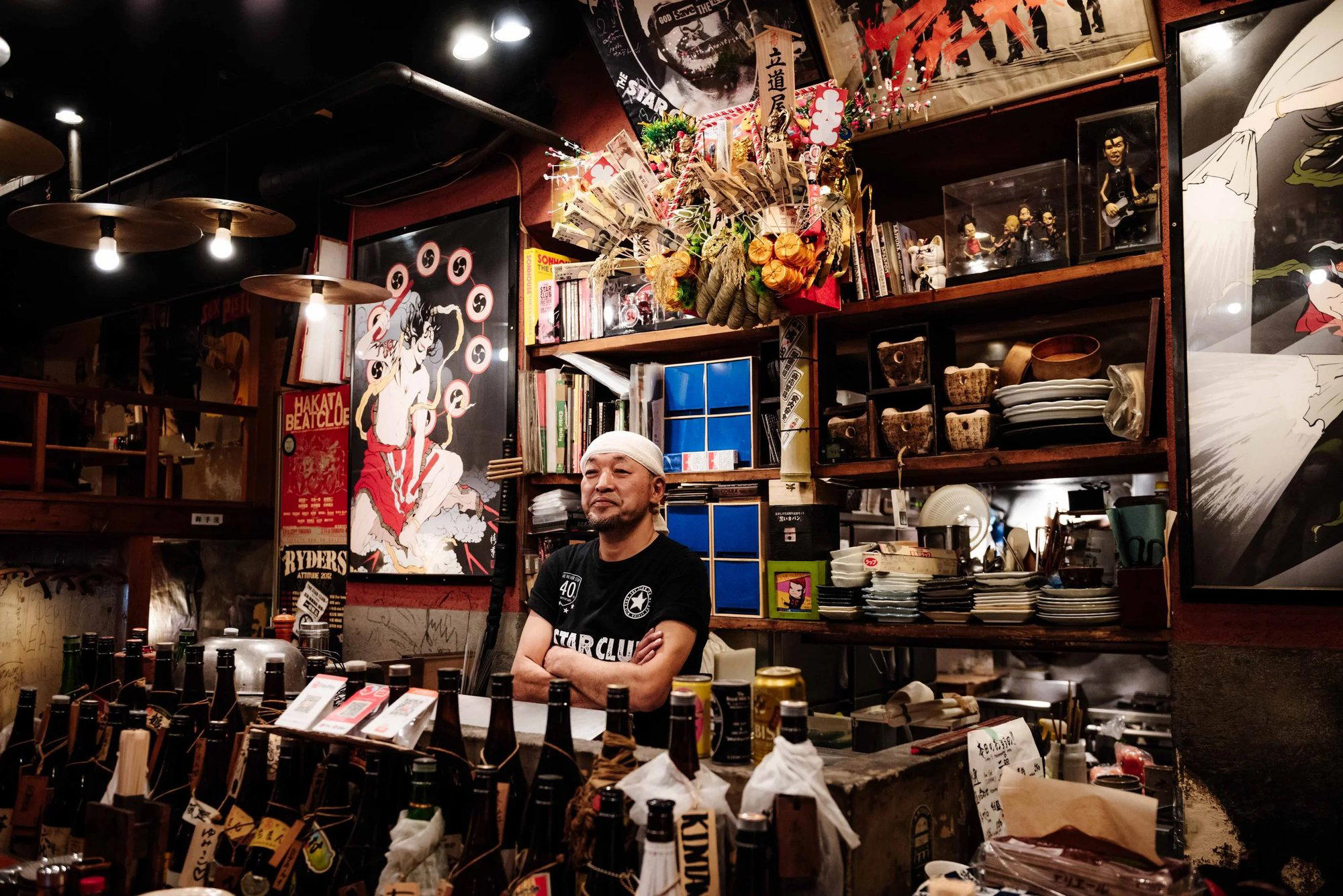
Sarugakucho and the Case for Shibuya's Quieter Side
Most visitors arrive in Shibuya expecting noise: the crossing, the department stores, the fluorescent press of crowds moving in every direction. Sarugakucho, the residential enclave that wraps around the back of Daikanyama station, operates at a different register entirely. The streets narrow, the retail thins out, and what remains tends to be small, purposeful, and local in orientation. It is precisely the kind of neighbourhood where Tokyo's dining scene does some of its most interesting work, away from the Michelin pilgrimage routes and the tourist maps, in buildings that require you to know the address before you go looking. Tatemichiya is a Punk Rock Izakaya at 30-8 Sarugakucho, Shibuya, Tokyo 150-0033, Japan.
This part of Shibuya, technically Sarugakucho, adjacent to the design-conscious stretch of Daikanyama, has attracted a consistent stream of independent restaurants and bars over the past decade. The neighbourhood's character owes something to its proximity to Daikanyama T-Site and the slower-paced residential streets between there and Nakameguro, a cluster that functions as something of a counterweight to the commercial intensity further up the hill. Restaurants here tend to be owner-operated, format-specific, and built for repeat visitors rather than one-time traffic.
Booking Tatemichiya: What the Address Signals
Tokyo's small-format, independently run restaurants in neighbourhoods like Sarugakucho tend to operate without the infrastructure of large reservation platforms. Many rely on phone bookings or direct contact through LINE or a venue website; walk-in availability at peak hours is rarely guaranteed. For a restaurant at this address and in this neighbourhood cohort, planning several weeks in advance is a reasonable baseline expectation, not a notable precaution.
Venues like Harutaka in Ginza operate omakase counters that book months out; RyuGin in Roppongi coordinates reservations through a dedicated system that rewards early movers. Even French-influenced houses such as L'Effervescence and Sézanne, both operating in the ¥¥¥¥ bracket, require weeks of lead time during peak travel periods. Researching the current booking method before your travel dates is the single most practical step you can take.
This is not a Tokyo-specific problem, it is a consistent feature of small-format dining across Japan, from Gion Sasaki in Kyoto to HAJIME in Osaka, but it is worth stating plainly for anyone building an itinerary around Tatemichiya specifically.
The Shibuya Independent Dining Tier
Tokyo's dining geography has become more distributed over the past five years. Ginza and Roppongi remain the address of choice for venues with large international profiles and Michelin recognition as a primary marketing signal. But a parallel tier has consolidated in the Shibuya, Daikanyama, and Nakameguro corridor, smaller rooms, tighter formats, and a guest base that skews local and repeat rather than tourist-heavy. Crony, with its innovative French approach, operates in adjacent territory both geographically and conceptually.
This tier is not defined by a single cuisine type. The Sarugakucho and Daikanyama stretch contains izakayas, wine bars, counter-format Japanese restaurants, and hybrid formats that resist easy categorisation. What they share is a scale model: small rooms, limited covers, and an owner-operator relationship with the guest that creates a different kind of accountability than you find in a hotel restaurant or a group-backed venue. The trade-off is legibility, these places can be harder to find, harder to book, and harder to assess in advance. The reward, when it works, is a meal that feels deliberately constructed for its specific context rather than optimised for a broad audience.
Japan's regional dining scene mirrors this structure at a national level. Venues like akordu in Nara, Goh in Fukuoka, and Abon in Ashiya all operate with similar structural logic: small, specific, and leading approached with pre-trip planning rather than spontaneous curiosity. The same principle applies to more geographically remote addresses like affetto akita in Akita, Aji Arai in Oita, Ajidocoro in Yubari District, Akakichi in Imabari, and aki nagao in Sapporo. Tatemichiya belongs to this national pattern as much as it belongs to its Shibuya postcode.
Timing and Seasonal Considerations
Shibuya's restaurant scene compresses hardest during sakura season (late March to early April) and the autumn foliage period (mid-November), when Tokyo's overall visitor numbers peak and local dining rooms fill faster than usual. If your travel dates fall within these windows, add additional lead time to whatever booking approach you would normally use. The Daikanyama and Sarugakucho pocket is popular with Tokyo's own residents during these periods, which means demand at neighbourhood-level independents can spike independently of tourist flows.
Conversely, the summer months, particularly August, when many Tokyo residents leave the city, and the post-New Year lull in January can offer slightly more flexibility. That said, small-format rooms with limited covers can fill even in quieter seasons when a single private group claims the space.
Planning Your Visit
Tatemichiya's address at 30-8 Sarugakucho places it within walking distance of Daikanyama station on the Tokyu Toyoko Line, and roughly fifteen minutes on foot from Shibuya station via the quieter residential streets rather than the main commercial strip. The neighbourhood is leading approached on foot; the streets are narrow and the signage at this end of Sarugakucho is understated. Arriving with the address confirmed in Japanese characters, rather than relying solely on romanised transliteration, will save time.
For further context on how Tatemichiya fits within Tokyo's broader dining map, Lazy Bear in San Francisco and Le Bernardin in New York City represent two different models, the former built around communal ticketed dining, the latter a long-established institution with a formal reservations structure, both of which illustrate how booking architecture shapes the guest experience before anyone sits down.
City Peers
Comparable venues nearby, for context on price, style, and recognition.
| Venue | Cuisine | Price | Notes |
|---|---|---|---|
| TatemichiyaThis venue — the venue you are viewing | Punk Rock Izakaya | $$ | Not listed |
| Yamacho (黒うどん 山長) | Black Udon (Kuro Udon) | $$ | Harajuku |
| Mahakala | Kushikatsu Izakaya | $$ | Meguro |
| Teyandei | Creative Okinawan Izakaya | $$ | Minato |
| Enseigne d'angle Harajuku ten | Classic Japanese kissaten & coffeehouse | $$ | Shibuya |
| Tonkatsu Gensuiton | Artisanal Tonkatsu (Pork Cutlet) | $$ | Setagaya |













At a Glance
- Cozy
- Lively
- Trendy
- Casual Hangout
- After Work
- Group Dining
- Open Kitchen
- Sake Program
Current opening hours
- Monday
- 6 PM–12 AM
- Tuesday
- 6 PM–12 AM
- Wednesday
- 6 PM–12 AM
- Thursday
- 6 PM–12 AM
- Friday
- 6 PM–12 AM
- Saturday
- 6 PM–12 AM
- Sunday
- Closed
Hours can change for holidays and private events. Last verified .
Smoky, bouncy atmosphere with rough-hewn wooden tables, tatami floored attic, and punk rock music playing.