Tabelog 100 #51
Our verdict
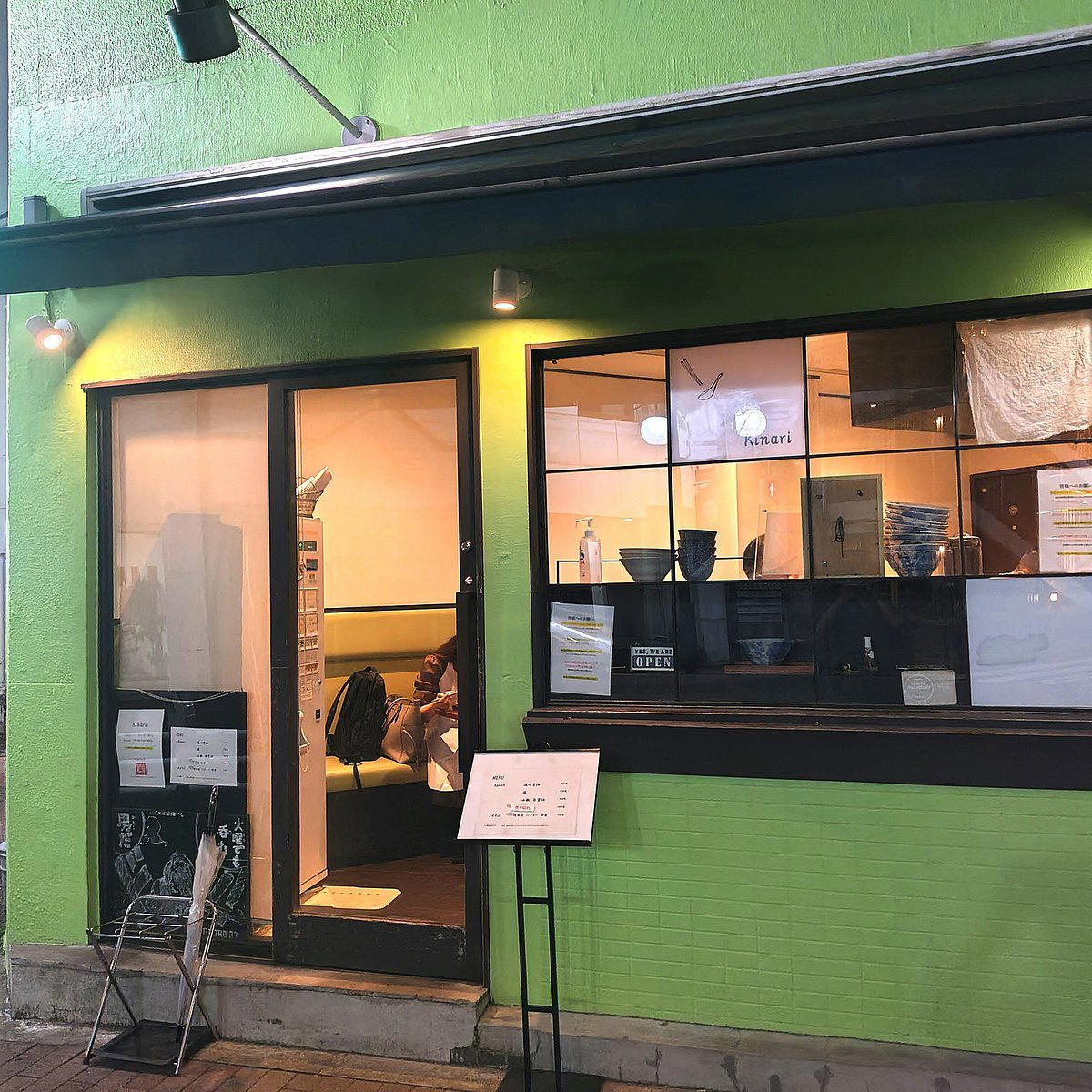
Mendokoro Kinari operates in Higashinakano, a residential pocket of Nakano City that sits well outside Tokyo's usual fine-dining circuit. The restaurant draws attention for its approach to ingredient provenance at a neighborhood scale, occupying a tier where sourcing specificity matters more than Michelin visibility. For those tracing how serious Japanese cooking extends beyond the central wards, it represents a useful reference point.

Pearl is the En Primeur Club membership app, where members save venues, book tables and use the concierge.
The menu
What to order
- Koikuchi Shoyu Ramen
- Yuzu Shio Ramen
- Sansho Shiroshoyu Ramen
Outside the Circuit: Serious Eating in Nakano
Tokyo's restaurant conversation tends to concentrate in a tight geographic band: Ginza, Azabu, Shinjuku, and the handful of high-density dining blocks that accumulate Michelin stars and press attention in proportional lockstep. Higashinakano, a low-rise residential stretch in Nakano City, sits outside that band entirely. The streets are quieter, the storefronts smaller, and the ambient pressure to perform for international food tourists noticeably absent. Mendokoro Kinari has its address at 1 Chome-51-4 Higashinakano, which means a clientele drawn primarily from the surrounding neighbourhood and from the kind of Tokyo diner who already knows that the most considered cooking in any city rarely clusters where the guidebooks point.
That geographic remove is not incidental. Restaurants that operate outside premium-area rent structures often have more latitude over sourcing decisions, format, and price positioning. In Tokyo, this pattern shows up across the outer wards: pockets of genuine cooking ambition running at a lower overhead, where the menu can follow the produce rather than the produce following the marketing. Mendokoro Kinari fits that pattern, and understanding its context means understanding how Tokyo's dining culture distributes itself across twenty-three wards, not just the five that dominate coverage.
Ingredient Sourcing as the Organising Principle
The editorial angle most relevant to Mendokoro Kinari is not a single dish or a chef lineage, it is the question of where the food comes from, and why that question matters at a neighbourhood restaurant scale. In Japan, ingredient provenance carries particular weight across cooking traditions. The kaiseki framework at places like RyuGin treats seasonal ingredient calendars as the structural spine of the menu; the omakase format at Harutaka ties its reputation to market relationships built over years. These are high-investment, high-capital approaches to sourcing. What Mendokoro Kinari suggests is that the underlying philosophy, let the ingredient decide, can operate at a neighbourhood scale without the apparatus of starred visibility.
Japan's regional food production network supports this kind of cooking in ways that fewer other countries can match. Specific prefectural rice strains, small-producer dashi components, single-origin proteins from designated growing regions: these supply chains exist and are accessible to chefs at every price tier. A restaurant in Nakano can draw on Akita-grown ingredients, Kyushu-sourced proteins, or seasonal vegetables from farming cooperatives in a way that would be logistically implausible for a similarly positioned neighbourhood restaurant in most European or American cities. That network is the infrastructure behind any credible provenance claim in Japanese cooking, and it gives restaurants like Mendokoro Kinari a foundation that the address alone does not signal.
For comparison, the sourcing conversation at L'Effervescence or Sézanne happens at the top of a French-inflected fine-dining tier where ingredient budgets are structurally larger and the story of the product is part of what the diner is paying for at the table. At Mendokoro Kinari, the same underlying commitment to sourcing operates without that explanatory apparatus, you are eating the result rather than being narrated through it.
How This Fits the Broader Tokyo Picture
Tokyo's dining structure is more distributed than its reputation for concentration suggests. The city's highest-profile restaurants, those on the annual 50 Best lists, those holding three Michelin stars, the tasting-menu operations that price against international peers, occupy one end of a long spectrum. The other end includes deeply local eating that never registers in international press but sustains neighbourhood food culture at the level most Tokyo residents actually experience daily.
Mendokoro Kinari occupies a middle register of this spectrum: attentive enough to draw visitors willing to cross ward boundaries, local enough to remain genuinely embedded in Higashinakano's residential character. That positioning is worth tracking for anyone building a Tokyo itinerary that goes beyond the canonical list. Restaurants at this tier, also visible in how Crony operates at the innovative end of a mid-premium French bracket, often deliver the most unmediated version of a city's actual food culture.
Japan's broader regional dining scene reflects the same pattern at a national scale. Serious cooking with strong sourcing credentials appears in less-trafficked cities: Gion Sasaki in Kyoto, HAJIME in Osaka, Goh in Fukuoka, akordu in Nara. The concentration of press attention in Tokyo and Kyoto does not reflect an equivalent concentration of cooking quality. Mendokoro Kinari in Nakano is one local instance of a pattern that repeats across the country, from Nanao to Sapporo to the rural dining circuits of Takashima and Nishikawa Machi.
Planning Your Visit
Nakano City is served directly by the JR Chuo Line and the Tokyo Metro Tozai Line at Nakano Station, making access direct from central Tokyo. Higashinakano Station on the JR Sobu Line is the closest stop to the restaurant's address on 1 Chome-51-4. Journey times from Shinjuku run under ten minutes on either line.
Seasonal transitions in Japanese cooking, the shift from spring mountain vegetables to summer produce in June and from autumn mushrooms to winter root vegetables from November onward, often produce the most focused menus at sourcing-led kitchens.
| Venue | Area | Price Tier | Cuisine | Booking Complexity |
|---|---|---|---|---|
| Mendokoro Kinari | Higashinakano, Nakano | Not confirmed | Not confirmed | Verify direct |
| Harutaka | Ginza | ¥¥¥¥ | Sushi | High, months in advance |
| RyuGin | Roppongi | ¥¥¥¥ | Kaiseki | High, weeks to months |
| Crony | Shibuya area | ¥¥¥¥ | Innovative French | Moderate to high |
For a wider view of where Mendokoro Kinari sits within Tokyo's full dining picture, see our full Tokyo restaurants guide. Those building a Japan itinerary with stops beyond the capital may also find useful reference in comparable dining at Birdland in Sakai or Bistro Ange in Toyohashi, both of which demonstrate how Japan's mid-tier serious eating operates at the regional level. For international comparison points on ingredient-forward tasting formats, Le Bernardin in New York and Atomix represent the peer conversation at a different price tier and cultural context.
Frequently asked questions
What part of town is Mendokoro Kinari in?
Mendokoro Kinari is located at 1 Chome-51-4 Higashinakano, Nakano City, Tokyo 164-0003, Japan, Tokyo.
How does Mendokoro Kinari differ from Tokyo's central-district noodle restaurants?
Mendokoro Kinari operates in Nakano City, a residential ward served by the JR Chuo Line at Nakano Station, roughly 10 minutes from Shinjuku but well outside the high-visibility dining blocks where press attention concentrates. That location matters: it signals a restaurant built for repeat local custom rather than tourist footfall, which in Tokyo's noodle culture often correlates with a tighter, less compromised menu. The sourcing-first approach documented in editorial coverage reinforces that reading.
What do people recommend at Mendokoro Kinari?
Mendokoro Kinari is consistently discussed in the context of its sourcing discipline, regular visitors point to the noodle preparation and broth construction as the draws, rather than any single headline item. The restaurant sits in Nakano City at 1 Chome-51-4 Higashinakano, and the focused format suggests a short, considered menu rather than a sprawling one.
Can I walk in to Mendokoro Kinari?
Arriving early or timing a visit outside peak lunch hours (roughly 11:30–13:00) is the standard approach at comparable counters in Nakano City. No booking phone number or website is currently listed.
What's the defining dish or idea at Mendokoro Kinari?
The organising principle at Mendokoro Kinari, as the venue's name and editorial coverage suggest, is ingredient sourcing rather than a single signature dish. This positions it alongside a subset of Tokyo noodle restaurants, particularly outside the Ginza and Shinjuku belt, where provenance of components drives the menu structure. The Nakano City address places it in a residential neighbourhood where that kind of quiet, craft-oriented approach tends to take root.
Can Mendokoro Kinari adjust for dietary needs?
No dietary accommodation policy is publicly documented for Mendokoro Kinari. Noodle counters in Tokyo's residential wards rarely offer extensive substitutions due to the precision involved in broth and dough preparation, so guests with specific requirements should check the venue's official channels before visiting, though no phone number or website is currently listed in public records.
Is Mendokoro Kinari worth the price?
Pricing details for Mendokoro Kinari are published details are limited, but noodle counters of this type in Tokyo's outer residential wards, Nakano City included, typically run ¥1,000–¥2,000 per bowl, which represents strong value relative to the sourcing standards applied. Check the venue's official channels for the latest details.
Nearby-ish Comparables
Comparable venues nearby, for context on price, style, and recognition.
| Venue | Cuisine | Price | Awards | Notes |
|---|---|---|---|---|
| Mendokoro KinariThis venue (the venue you are viewing) | Modern Shoyu Ramen | $10–20 | Tabelog 100 #51 | Not listed |
| La Strada | Traditional Soba Counter in Nakano | $50–100 | Tabelog 100 #26 | Nakano |
| Kirimugi Ya Jinroku | Udon and Tempura | $10–20 | Tabelog 100 #68 | Shinjuku |
| Kaikaya by the Sea | Japanese Seafood Izakaya | $30–50 | Not listed | Shibuya |
| 赤坂詠月 | Japanese Tea Ceremony Dining | Not listed | Not listed | Minato |
| Yoshoku Wine Fritz | Yoshoku & wine (Japanese-style Western cuisine) | Not listed | Tabelog 100 #85 | Bunkyō |
Recognition history
Dated appearances from independent guides and award organizations, with the underlying list record or original source where available.
Tabelog 100 #51 · No. 51
Tabelog · Tabelog 100 - Ramen - TOKYO - 2025