Our verdict
赤坂 詠月 pairs Japanese Tea Ceremony Dining with formal service, a quiet room, dinner pacing, a chefs counter, sake program, and a 4F Akasaka address.

Pearl is the En Primeur Club membership app, where members save venues, book tables and use the concierge.
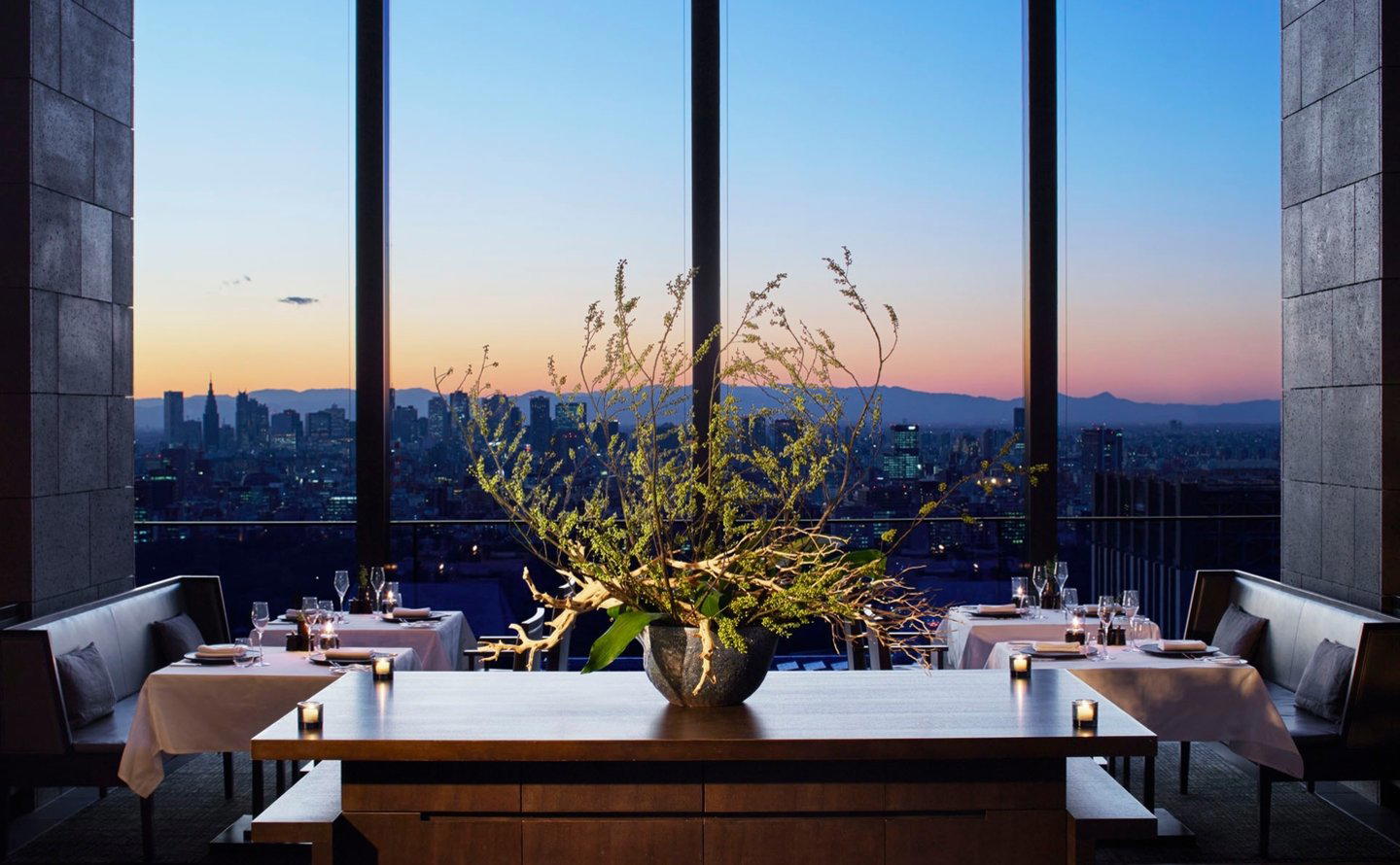
Akasaka After Dark: What the Fourth Floor Signals
Akasaka occupies a specific register in Tokyo's dining geography. It is neither the tourist-facing brightness of Shinjuku nor the quietly competitive omakase corridors of Ginza. The neighbourhood carries a more embedded energy: government offices, broadcast headquarters, and the residue of decades of high-table business entertaining. Restaurants here have traditionally served a clientele that values discretion over spectacle, and the building addresses reflect that, fourth-floor venues accessed by narrow lifts, signage modest to the point of invisibility. 赤坂鮪 匠, located on the fourth floor of the Social Akasaka building in Minato City's Akasaka 3-chome, fits precisely into that tradition.
The approach tells you something before you arrive. Akasaka's streets in this pocket run between low-rise commercial blocks and older residential lanes, and the building itself offers no particular announcement. That restraint is a common grammar in this part of Tokyo: the address functions as a credential in itself, readable only to those already in the network.
The Sensory Register of a Tuna-Specialist Counter
In Tokyo's premium fish dining scene, tuna specialisation has become its own distinct sub-genre, separate from the broad omakase model. The name 赤坂鮪 匠 makes the subject explicit, 鮪 (maguro, tuna) is not one item among many but the organising principle. Visitors arriving expecting the full range of an omakase counter are at the wrong address; those who understand tuna as a subject of serious study are at the right one.
The sensory experience of a tuna-specialist counter in Tokyo differs from broader sushi formats in specific ways. The temperature management of each cut, the progression from leaner akami through to the fat-rich toro grades, and the visual contrast between deep crimson and pale marbling give the meal a structure that reads almost like a vertical tasting. There is an aural restraint to these settings too: counters of this type tend to run with minimal background sound, which focuses attention on the preparation itself. The knife work at a maguro counter is its own kind of theatre, one that requires silence to register properly.
Within Tokyo's broader dining scene, comparable intensity of focus on a single product exists at venues like Harutaka, where the omakase format demands deep familiarity with a narrow range of ingredients, or at RyuGin, where kaiseki disciplines apply similar rigour to seasonal produce. The specialist tuna counter operates on analogous logic: constraint as a form of expertise.
Akasaka in the Tokyo Dining Order
Tokyo's premium dining addresses cluster in recognisable zones. Ginza and Nihonbashi anchor the old-money end of the market. Minami-Aoyama and Daikanyama attract the design-led international set. Akasaka occupies a quieter middle ground, one that has historically been sustained by political and media spending rather than tourism or global brand-building. The consequence is a restaurant culture that tends toward solidity over trend-chasing, with venues that build regular clienteles rather than waiting lists driven by social media.
That context shapes the experience of eating in this neighbourhood. An evening in Akasaka tends to feel more local in character than an equivalent meal in Ginza, even at a comparable price point. The room is less likely to contain foreign visitors on a prestige-hunting itinerary and more likely to contain Tokyo regulars who consider the neighbourhood a working part of their dining geography. For visitors looking to move beyond the well-mapped premium circuits, this part of Minato City offers a genuinely different register. For broader context on where this fits in Tokyo's dining order, our full Tokyo restaurants guide maps the neighbourhood breakdown in detail.
Tokyo's French and innovative fine-dining circuit runs in parallel to its Japanese-cuisine specialists. Venues like L'Effervescence, Sézanne, and Crony represent the French and crossover end of Tokyo's high-end market, while the Japanese-specialist tier, covering sushi, kaiseki, and product-led counters, operates on separate booking rhythms and different guest expectations. 赤坂鮪 匠 belongs to the Japanese-specialist side of that divide, and its Akasaka location places it outside the highest-visibility sushi corridors, which itself shapes both pricing dynamics and the likely difficulty of securing a reservation.
Across Japan more broadly, the product-specialist model appears in various forms. Gion Sasaki in Kyoto applies comparable rigour to kaiseki sourcing, HAJIME in Osaka works within a different conceptual discipline entirely, and Goh in Fukuoka represents the regional variant of serious Japanese fine dining. The tuna-specialist counter as a format sits within this broader pattern of Japanese dining culture that prizes depth over breadth, and positions the chef's sourcing relationships as the primary credential.
For those extending a trip beyond the main cities, the spectrum of serious Japanese dining includes destinations from 一本杉 川嶋制 in Nanao to 夕初山乃 in Sapporo, 湖鄰庵 in Takashima, and 庄羽屋 in Nishikawa Machi, each representing a regional expression of the same underlying commitment to ingredient integrity that defines counters like this one. Equally, those curious about how Japanese-inflected precision reads in a global context might look at Atomix in New York City or the seafood discipline of Le Bernardin as comparative reference points. And for more accessible price points within Japan's serious dining scene, Bistro Ange in Toyohashi and Birdland in Sakai offer a different entry into regional craft, while akordu in Nara bridges Japanese produce with a European format.
Know Before You Go
- Address: Social Akasaka 4F, 3-11-7 Akasaka, Minato City, Tokyo 107-0052
- Neighbourhood: Akasaka, Minato, fourth floor access via building lift
- Nearest transit: Akasaka-mitsuke Station (Tokyo Metro Ginza and Marunouchi lines) and Akasaka Station (Tokyo Metro Chiyoda Line) both within walking distance of this block
- Format: Tuna-specialist counter; confirm current format and course options directly with the venue
- Booking: Contact details and reservation method not publicly listed, approach via hotel concierge or a specialist reservation service for Tokyo's counter dining circuit
- Hours, pricing, and seasonal availability: Confirm directly; this type of counter frequently operates on limited seatings
Frequently asked questions
Is 赤坂鮪 匠 child-friendly?
Tuna-specialist counters in Tokyo are built around focused, quiet dining where the progression of cuts and preparation commands full attention from guests. 赤坂鮪 匠 sits within that format at its Akasaka address in Minato City, making it a poor fit for young children. The fourth-floor setting reinforces the adult-oriented character of the experience.
Where exactly is 赤坂è© 月?
赤坂è© 月 is located at Japan, 〒107-0052 Tokyo, Minato City, Akasaka, 3 Chome−11−7 ソシアル赤坂 4F, Tokyo.
How hard is it to get a table at 赤坂è© 月?
Reservations are recommended for 赤坂è© 月 in Tokyo. Confirm current policy via the venue's official channels.
Is 赤坂鮪 匠 better for a quiet night or a lively one?
Quiet, without question. The maguro-specialist counter format prioritises concentration over conviviality, and 赤坂鮪 匠's Akasaka location places it in a neighbourhood known for professional dining rather than after-hours energy. Come expecting restraint, not atmosphere in the conventional sense.
Where It Fits
Comparable venues nearby, for context on price, style, and recognition.
| Venue | Cuisine | Price | Awards | Notes |
|---|---|---|---|---|
| 赤坂詠月This venue (the venue you are viewing) | Japanese Tea Ceremony Dining | Not listed | Not listed | Not listed |
| 餃子歩兵 | Kyoto-style Gyoza | $10–20 | Not listed | Ginza |
| Azabu Shokudo (麻布食堂) | Yoshoku Omurice | $20–30 | Tabelog 100 #77 | Nishiazabu |
| Yamacho (黒うどん 山長) | Black Udon (Kuro Udon) | $10–20 | Not listed | Harajuku |
| 豪龍 久保 | japanese | Not listed | Not listed | Minato |
| 白寧 | Modern French-Japanese Fusion | $200–300 | 1 Michelin Star | Minato |
Continue exploring
More in Tokyo
Restaurants in Tokyo
All restaurants in Tokyo →
Bars in Tokyo
All bars in Tokyo →




Details
- Special Occasion
- Chefs Counter
- Sake Program
- Counter Dining