
La Strada belongs to Tokyo’s serious soba tier: tiny room, reservation-led dinner, no menu, and a price band that separates it from casual noodle shops. Its Tabelog 100 Soba EAST 2025 selection and earlier Tabelog Award Bronze wins place it in a narrow category where buckwheat, sake, and format discipline matter more than decoration.
Pearl is the En Primeur Club membership app — saves, bookings, and concierge access live there. Same editors, same standards.
- Address
- 2 Chome-41-2 Honcho, Nakano City, Tokyo 164-0012, Japan
- Phone
- +81 3-6276-8364
- Website
- ge54300.gorp.jp
 Saves & bookings on Pearl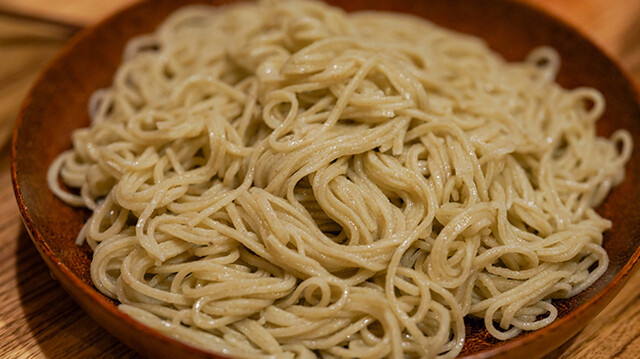
In Nakano-sakaue, the approach is part of the sorting mechanism. La Strada has no noren and no sign, shifting attention from street theatre to recognition: the landmark is a ladybug painting on an outdoor light. The understatement fits Tokyo soba culture at its most severe. The room is tiny, the format controlled, and the point is not a quick bowl between trains but soba as a full evening structure.
Tokyo runs many noodle economies at once. Ramen and curry deliver speed and value at lower-priced peers such as COCHIN NIVAS, Raa Menya Shima, and Kashiwagi. Soba here works differently. La Strada sits in a JPY 8,000 to JPY 9,999 dinner band, with seven seats and reservation-led service, closer to small-format Japanese restaurants where sequencing, sake, and restraint define the meal than to everyday noodle counters. Its Tabelog 100 Soba EAST 2025 selection, plus Tabelog Award Bronze recognition in 2017, 2019, and 2020, gives that positioning a public benchmark beyond neighbourhood reputation.
No menu, three soba cuts, and a meal built around buckwheat rather than choice
The defining idea is menu architecture. La Strada is listed as soba, but not in the choose-your-tempura-and-noodle lunch model. Dinner is reservation only and operates without a menu, shifting the meal from selection to progression. The public description names three types of soba: thin, thick, and flat. That frames buckwheat as texture and structure, not just flavour. Thin noodles privilege delicacy and timing; thicker cuts alter chew and weight; flat soba adds surface area. The meal’s argument comes through variation within one tradition.
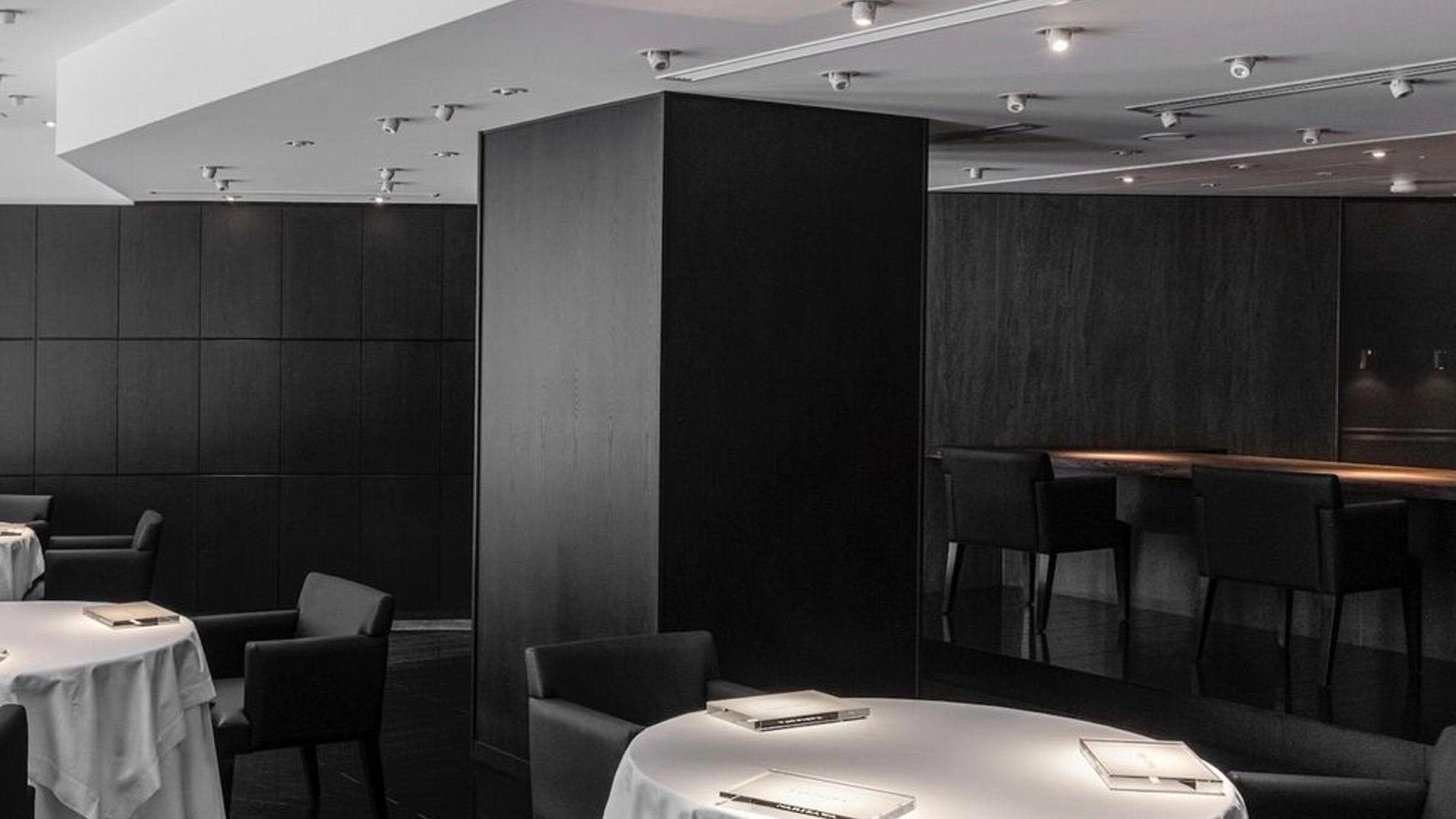
That also explains the price tier. Many visitors know soba as station-adjacent, fast, inexpensive, and functional. Tokyo also has specialist rooms where the craft sits closer to kappo in rhythm than casual noodle dining. With seven seats, three at the counter and four at low tables, the restaurant belongs to that second camp. Capacity creates focus and removes flexibility. This is not for large groups, menu scanning, or late indecision.
Sake is not incidental. The drink listing emphasizes nihonshu, including a particular focus on sake, aligning with soba’s older drinking-house associations. In Edo-style soba culture, noodles often follow small dishes and sake rather than opening the meal. Without inventing a course list, the structure reads through that tradition: buckwheat anchors the restaurant, but pacing matters more than volume. The absence of a menu is information, not mystique; it tells diners to accept the house sequence or choose another room.
Why Nakano-sakaue suits this kind of soba
Nakano-sakaue is practical from central Tokyo yet removed from luxury-hotel dining corridors and trophy-table traffic. That matters for soba, a tradition that rewards concentration over spectacle. Residential edges often suit small rooms better than high-rent avenues. A house-restaurant setting, no private rooms, no smoking, and counter seating point to proximity: diner, cook, noodles, sake, table.
The restaurant’s Honcho address sits outside the obvious Ginza, Roppongi, and Marunouchi circuits that dominate many visitor itineraries. That does not make it casual; it makes it a different commitment. A Tabelog score of 3.77 and repeated Tabelog 100 soba selections indicate a specialist audience that understands the category. For travellers mapping Tokyo by cuisine rather than landmark, the lesson is useful: soba depth is not confined to the city’s better-known dining districts.
The restaurant’s size changes the social contract. Seven seats cannot absorb sloppy planning, oversized parties, or unclear expectations. Payment is cash-oriented; credit cards, electronic money, and QR payments are not accepted. Parking is unavailable, though coin parking exists nearby. These are not charming inconveniences but the operating reality of small Tokyo restaurants. The reward is focus, if the diner meets the format on its terms.
How to place it within a Tokyo dining itinerary
Read the restaurant as a specialist soba dinner, not a broad Japanese restaurant. It pairs poorly with a day built around excess and well with an itinerary that studies one category at high resolution. Lunch service appears on Saturday, while the evening rhythm is narrower, so planning should be intentional. The nearest station is Nakano-sakaue, and the restaurant is listed as a short walk from Exit 3 on the Marunouchi and Oedo lines, making it easier to fold into a west-side Tokyo evening than its discreet frontage suggests.
For a broader Tokyo dining map, contrast matters. A visitor could treat soba here as one chapter in a wider noodle-and-rice study, then compare with curry at 3 Chome no Curry Ya San, yakitori at 124. KAGURAZAKA (Yakitori), casual visual culture at 2D Cafe, or a different Tokyo register at 12/10 Shinjuku ten and . 鮪と炭火焼き うお炭 秋葉原店. The wider city context sits in Our full Tokyo restaurants guide, with parallel planning in Our full Tokyo hotels guide, Our full Tokyo bars guide, Our full Tokyo wineries guide, and Our full Tokyo experiences guide.
Japan’s small-format dining culture is not confined to Tokyo, and useful comparisons can come from outside the capital: -Grilled beef Sukiyaki- KAMAKURA TANUKIAN 鎌倉 たぬき庵 in Kamakura.cafe in Osaka.know in Kumamoto, (Shoku) Vietnam in Kawasaki, [Curry Senmon Ten] Maruyama Kyoju. in Sapporo, and [ki:] in Kyoto. For readers tracking Japanese drinking and rice culture abroad, Jōdo Saké Bar in Los Angeles and Onigiri Time in Pasadena show how fragments of the same grammar travel.
The editorial case is clear: this is for diners who want soba presented with consequence. The room’s scale, no-menu dinner format, sake focus, repeated Tabelog soba selections, and cash-only practicality point in the same direction. Choose it to understand how far Tokyo can narrow a category without making it feel small.
Cuisine-First Comparison
Side-by-side context: comparable cuisine and price.
| Venue | Cuisine | Price | Notes |
|---|---|---|---|
| La StradaThis venue — the venue you are viewing | Traditional Soba Counter in Nakano | $$ | Not listed |
| Tantantei | Old-School Chuka Soba | $$ | Hamadayama |
| Shio Ramen Shinka | Traditional Shio Ramen | $$ | Machida |
| Mendokoro Honda | Shoyu Ramen Specialist | $$ | Akihabara |
| 梢 | Modern Zero Waste Cafe | $$ | Shinjuku |
| Itteki Hassenya Shinjuku honten | Japanese Udon Izakaya | $$ | Shinjuku |
Recognition history
Dated appearances from independent guides and award organizations, with the underlying list record or original source where available.
Tabelog 100 #26 · No. 26
Tabelog · Tabelog 100 - Soba - EAST - 2025












At a Glance
- Intimate
- Quiet
- Classic
- Cozy
- Solo
- After Work
- Casual Hangout
- Date Night
- Chefs Counter
- Standalone
- Sake Program
Current opening hours
- Monday
- Closed
- Tuesday
- Closed
- Wednesday
- 6–9 PM
- Thursday
- 6–9 PM
- Friday
- 6–9 PM
- Saturday
- 12–3 PM
- Sunday
- Closed
Hours can change for holidays and private events. Last verified .
An intimate, reservation-oriented hideaway in a residential Nakano building, with just a small counter, no smoking, and a calm, quietly focused atmosphere centered on the chef preparing soba and side dishes in front of guests.