


Michelin Plate · Tabelog Bronze #252
Our verdict
The 18-seat room offers both à la carte and omakase formats at JPY 20,000–29,999 for dinner, with a daily-changing menu anchored by fish sourced directly from named producers.

Pearl is the En Primeur Club membership app, where members save venues, book tables and use the concierge.
The menu
What to order
- Tajima beef Chateaubriand with Genovese linguine
- Mont Blanc dessert
- Charcoal-grilled fish
- Seasonal pasta dishes
Italian in Tokyo's Premium Tier: Where malca Sits
Tokyo's Italian dining scene has matured into something that bears little resemblance to what it was two decades ago. The city now runs a credible tier of producer-led Italian restaurants operating at price points and format disciplines that would compete seriously in any European context. Within that tier, a clear division exists between large-format restaurants with celebrity-adjacency (see Gucci Osteria da Massimo Bottura Tokyo) and smaller, counter-focused rooms where the daily catch and direct producer relationships drive the menu. malca, which opened on 27 October 2022 in a basement-level space on Minamiaoyama's 2-chome, falls squarely in the second category.
The name itself carries a story worth noting as context rather than biography: it references the signboard of a fish shop on Awaji Island, marked with a hiragana 'ka' inside a circle (maru-ka), tracing a lineage back to the chef's grandfather's trade. That provenance is not decorative. The restaurant's documented emphasis on fish, its daily-changing selection tied to the day's catch, and its direct producer connections reflect a philosophy grounded in that inheritance. The menu lists the origin of each dish, an approach more common in high-end Japanese kaiseki or sushi contexts than in Italian dining anywhere outside Japan.
What JPY 20,000–29,999 Buys You Here
The value question at this price point is worth examining directly. Dinner at malca runs JPY 20,000–29,999 on posted pricing, with review-based averages reaching JPY 30,000–39,999 when wine is factored in. Lunch comes in at JPY 15,000–19,999 (course only, reservation required, available Thursday through Saturday). For comparison, a meal at Aroma Fresca, one of Tokyo's longer-established Italian references, or at PRISMA, positions this tier as genuinely competitive rather than entry-level. The ¥¥¥¥ rooms, RyuGin, L'Effervescence, Harutaka, operate at the next bracket up; malca at ¥¥¥ delivers Tabelog recognition and Michelin Plate status at a price that still allows a wine-inclusive dinner without crossing into the top tier of Tokyo's luxury dining spend.
Format is an important part of the value calculation. Dinner is served à la carte, with an omakase course also available. That flexibility is uncommon at this award level in Tokyo, where most recognized rooms lock guests into a fixed tasting format. The ability to calibrate your spend, ordering around the counter's eight seats or using one of two private rooms for four or six, gives malca a practical edge over comparably priced restaurants with rigid course-only structures. Portions are adjusted to preference, which at a counter of this size translates to a more responsive, less assembly-line experience than the standard omakase circuit offers.
The Room and the Reservation
Eighteen seats is a deliberate constraint. Eight of those are at the counter; the remaining capacity sits across two private rooms, one for four guests and one for six. That breakdown shapes the atmosphere significantly: the counter seats are where the evening's sourcing logic becomes visible, while the private rooms serve a different need (family meals, quieter business dinners, parties with young children, families with strollers are explicitly welcomed in the private rooms). The Tabelog listing categorizes the space as a hideout, which reflects a consistent pattern among Minami-Aoyama's basement-level dining rooms: they reward those who know to look rather than those who stumble in.
Reservations are handled through TableCheck, accessible via malca's Instagram profile or website. The restaurant does not accept cash; cashless payment only, across Visa, Mastercard, JCB, Amex, Diners Club, iD, and QUICPay. A 10 percent service charge applies. QR code payments are not accepted. These logistics are worth confirming before arrival, as the cashless requirement and advance reservation structure leave no room for walk-in flexibility.
From Gaienmae Station on the Tokyo Metro Ginza Line, the restaurant is a three-minute walk. Operating hours run Tuesday and Wednesday evenings (17:00–23:00) and Thursday through Saturday for both lunch and dinner (12:00–15:00, then 18:00–23:00). Monday and Sunday are closed.
The Awards Case and What It Signals
malca's recognition record in under three years of operation is consistent rather than spectacular, which is arguably the more durable signal. What the awards do not yet represent is a Michelin star, which means this is a room that peer review and Japan's most-used dining platform have validated, but which has not yet crossed into the starred cohort.
That positioning matters for the value argument. Tabelog Bronze-level restaurants with scores above 4.20 consistently represent Tokyo's most competitive price-to-recognition ratio. The rooms operating at Michelin one-star or above in Italian dining, or the broader Tokyo fine dining circuit spanning HAJIME in Osaka or Gion Sasaki in Kyoto at the kaiseki end, carry pricing structures that reflect that accreditation. malca operates below that ceiling while delivering recognition that places it meaningfully above the general Italian dining pool in Tokyo.
Fish-Forward Italian in a Japanese Context
The documented emphasis on fish at malca is worth reading against the broader context of Japanese Italian cooking. Tokyo's most distinctive Italian restaurants have consistently found their point of difference not in replicating regional Italian tradition but in applying Japanese sourcing precision to Italian frameworks. The daily-changing menu tied to the catch, the per-dish listing of provenance, and the direct relationships with producers are practices borrowed from the kaiseki and premium sushi traditions that surround Italian dining in this city. For diners arriving from cenci in Kyoto or comparing to 8½ Otto e Mezzo Bombana in Hong Kong, the register is familiar: Italian form, Japanese sourcing discipline.
The wine program is described as a particular focus, consistent with the à la carte format and the flexibility built into the dinner structure.
Know Before You Go
- Address: B1F, 2-27-16 Minamiaoyama, Minato-ku, Tokyo 107-0062
- Access: 3-minute walk from Gaiemmae Station (Tokyo Metro Ginza Line)
- Hours: Tue–Wed 17:00–23:00; Thu–Sat 12:00–15:00 and 18:00–23:00; closed Monday and Sunday
- Dinner price range: JPY 20,000–29,999 (posted); JPY 30,000–39,999 (review average including wine)
- Lunch price range: JPY 15,000–19,999 (course only, reservation required, Thu–Sat)
- Format: À la carte at dinner; omakase course available; lunch is course-only
- Seats: 18 total (8 counter, 2 private rooms for 4 and 6 respectively)
- Reservations: Via TableCheck through the restaurant's Instagram or website; no walk-ins
- Payment: Cashless only (Visa, Mastercard, JCB, Amex, Diners, iD, QUICPay); no cash, no QR code payments
- Service charge: 10%
- Awards: Tabelog Bronze 2025 and 2026; Tabelog Italian TOKYO Top 100 (2023, 2025); Michelin Plate 2024 and 2025; Tabelog score 4.30
- Families: Private rooms welcome children including infants and strollers
For broader planning in the city, see our full Tokyo restaurants guide, our full Tokyo hotels guide, our full Tokyo bars guide, our full Tokyo wineries guide, and our full Tokyo experiences guide. If your trip extends beyond the capital, akordu in Nara, Goh in Fukuoka, 1000 in Yokohama, and 6 in Okinawa represent comparable levels of precision at different points in Japan's dining geography.
Frequently asked questions
Is malca more mid-range or high-end?
Pricing at malca is listed as ¥¥¥.
Where is malca located?
malca is located at Japan, 〒107-0062 Tokyo, Minato City, Minamiaoyama, 2 Chome−27−16 B1, Tokyo.
How It Stacks Up
Comparable venues nearby, for context on price, style, and recognition.
| Venue | Cuisine | Price | Awards | Notes |
|---|---|---|---|---|
| malcaThis venue (the venue you are viewing) | Modern Italian with Japanese Seasonal Ingredients | $100–150 | Michelin Plate · Tabelog Bronze #252 | Not listed |
| falò | Modern Italian Charcoal Grill | $50–100 | Michelin Bib Gourmand · Tabelog 100 #96 | Shibuya |
| Ristorante Angelo | Seasonal Italian Omakase | $50–100 | Michelin Plate | Shinagawa |
| AlCeppo | Rustic Italian Trattoria | $50–100 | Michelin Bib Gourmand · Gambero Rosso 1 Forchetta | Minato |
| TRATTORIA SICILIANA Don Ciccio | Authentic Sicilian Trattoria | $100–150 | Michelin Plate | Minato |
| Osteria da K. [káppa] | Modern Italian Seafood Osteria | $100–150 | Michelin Bib Gourmand | Chūō |
Recognition history
Dated appearances from independent guides and award organizations, with the underlying list record or original source where available.
Michelin Plate
Michelin
Opinionated About Dining Top Restaurants in Japan Recommended
Opinionated About Dining
Tabelog Bronze #252
Tabelog
Full recognition history (7 entries)
Michelin Plate
Michelin
Tabelog Bronze
Tabelog
Tabelog 100 #40 · No. 40
Tabelog · Tabelog 100 - Italian - TOKYO - 2025
Michelin Plate
Michelin
Continue exploring
More in Tokyo
Restaurants in Tokyo
All restaurants in Tokyo →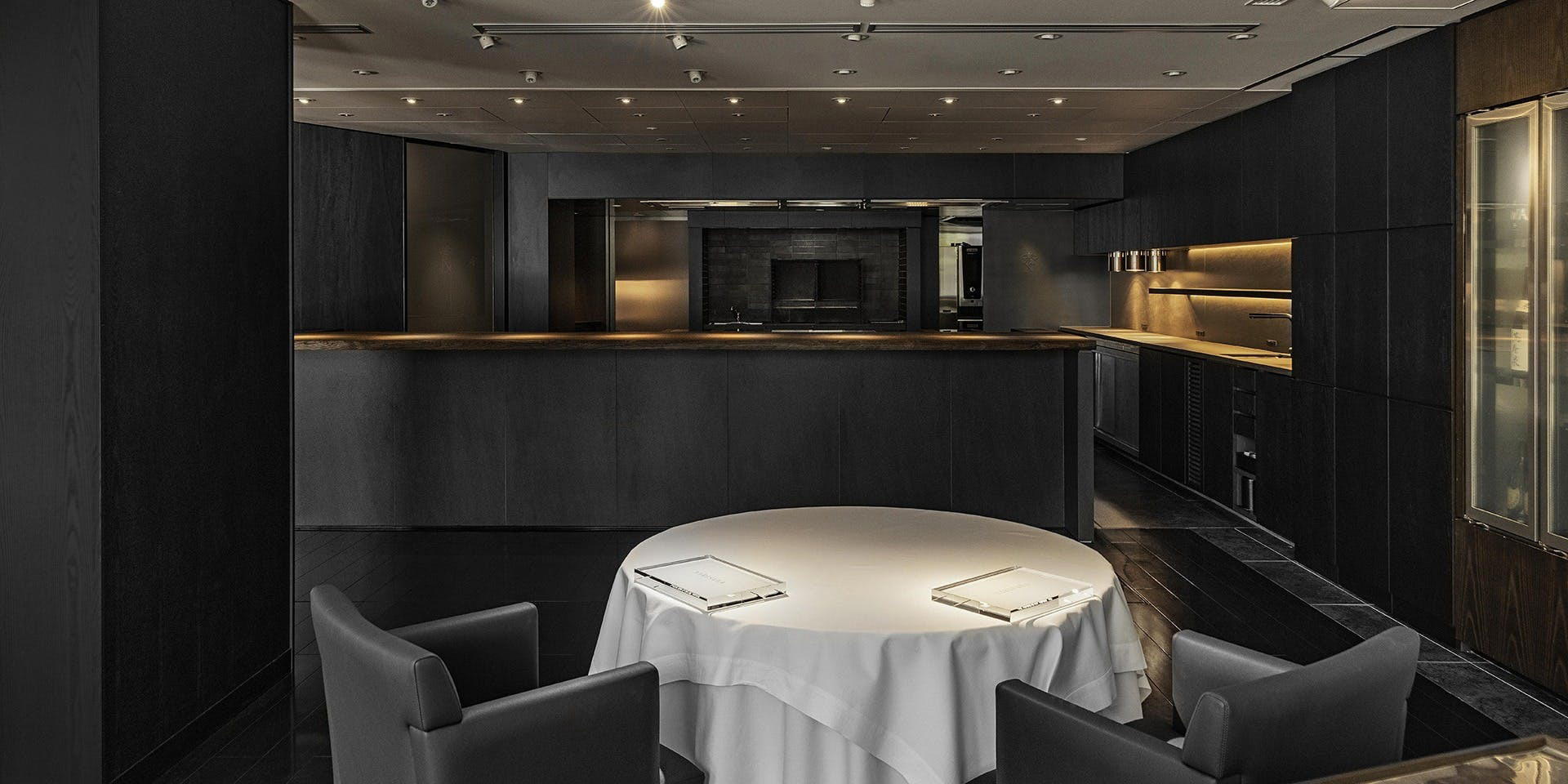



Bars in Tokyo
All bars in Tokyo →






Details
- Elegant
- Minimalist
- Intimate
- Sophisticated
- Date Night
- Special Occasion
- Celebration
- Business Dinner
- Group Dining
- Chefs Counter
- Open Kitchen
- Private Dining
- Extensive Wine List
- Sommelier Led
- Local Sourcing
- Omakase
- A La Carte
- Tasting Menu
- Wine
- Spumante
- Allergy Accommodating
Current opening hours
- Monday
- Closed
- Tuesday
- 5 PM–12 AM
- Wednesday
- 5 PM–12 AM
- Thursday
- 12–3 PM, 6 PM–12 AM
- Friday
- 12–3 PM, 6 PM–12 AM
- Saturday
- 12–3 PM, 6 PM–12 AM
- Sunday
- Closed
Hours can change for holidays and private events. Hours as of .
Minimalist yet inviting with an eight-seat counter as the focal point; intimate private dining rooms available; cool temperature in winter months.