Mahakala occupies a first-floor apartment-style space in Meguro's Aobadai neighbourhood, operating in the quieter residential register that defines this part of southwest Tokyo. The address places it outside the central fine-dining circuits of Ginza or Minami-Aoyama, positioning it instead within a smaller, locally rooted tier of the city's restaurant scene.
Pearl is the En Primeur Club membership app — saves, bookings, and concierge access live there. Same editors, same standards.
- Address
- Japan, 〒153-0042 Tokyo, Meguro City, Aobadai, 1 Chome−17−5 メゾン青葉 102
- Phone
- +81 3 3463 5147
- Website
- mahakala-nakameguro.com
- Directions
- Get directions
 Saves & bookings on Pearl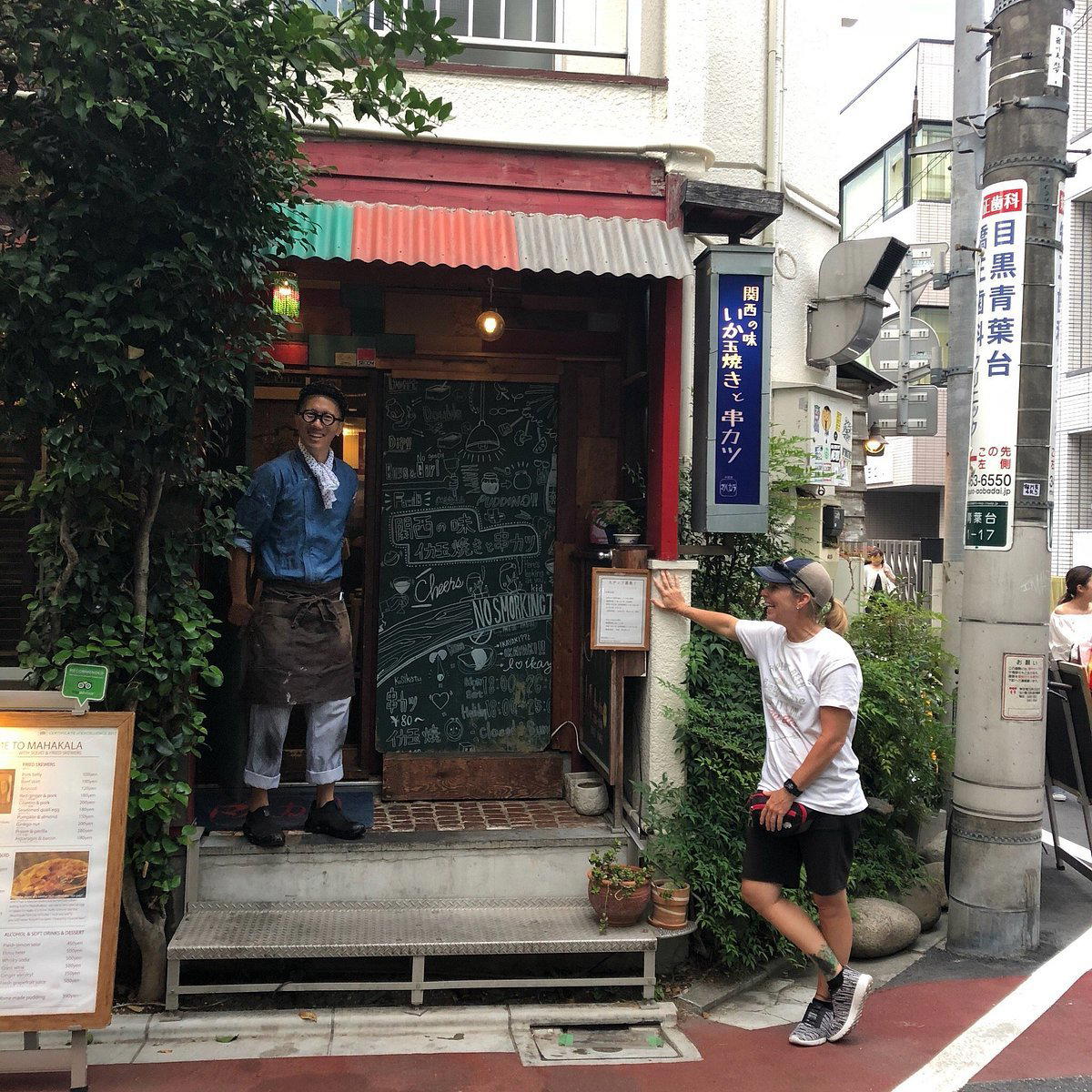
Aobadai and the Case for Dining Outside Tokyo's Centre
Southwest Tokyo's Meguro ward rarely appears in the first paragraph of restaurant guides written for visitors. Ginza, Shinjuku, and Minami-Aoyama absorb most of that attention, and for understandable reasons: award density is higher, international recognition is greater, and the logistical infrastructure around those districts makes first-time navigation easier. But Tokyo's most interesting eating has always spread further than its headline postcodes suggest, and Meguro's quieter residential pockets have consistently produced the kind of low-profile, locally sustained restaurants that reward repeat visits far more than one-off trophy dining. Mahakala is a Kushikatsu Izakaya in Aobadai, Meguro City, Tokyo, with a casual dress code and reservations recommended. Mahakala sits in Aobadai, a sub-neighbourhood within Meguro City that reads more as a place people live than a place people travel to eat, which is precisely the point.
The address, a first-floor unit within a residential building on Aobadai's 1-chome, signals something about how the venue positions itself relative to the wider Tokyo dining field. Properties in converted or residential-adjacent buildings typically operate outside the volume economics that drive larger, more visible restaurants. That structural choice shapes everything from capacity expectations to the pace at which tables turn, and it places Mahakala in a peer category that includes other small-format, neighbourhood-anchored operations rather than the city's high-traffic fine-dining institutions.
For a comparative frame: Tokyo's ¥¥¥¥-tier counters, venues like Harutaka in the sushi category, or L'Effervescence and Sézanne at the French end, operate with defined booking windows often stretching two to four months ahead, and a price architecture calibrated to international visitors as much as local regulars. Venues in more residential settings tend to build their clientele differently: through neighbourhood proximity, word-of-mouth, and a rhythm that suits people returning often rather than arriving once for an occasion.
The Lunch-Dinner Divide in Tokyo's Residential Dining
In Tokyo's more central districts, the gap between lunch and dinner service is mostly a pricing gap. The same kitchen, the same chef, a shorter menu at lunch for roughly half the dinner tariff, that formula runs across kaiseki houses like RyuGin and through the contemporary French tier represented by venues like Crony. It exists because the economics of high-rent central locations require high covers, and lunch is how those kitchens fill midday hours without compromising the evening's higher-margin service.
Residential neighbourhood restaurants operate on different logic. When a venue is drawing primarily from a local catchment rather than a destination-dining circuit, lunch often functions as the more casual social meal, shorter stays, lighter formats, tables occupied by people with somewhere to be in the afternoon. Evening service in these settings tends to carry the slower, more deliberate quality that central venues can only approximate: guests are less likely to be tracking a performance schedule or a hotel check-in, and the room doesn't reset at the same speed. The distinction matters for anyone deciding when to visit. If the goal is to understand how a neighbourhood restaurant reads to its regulars, the evening sitting is typically the more complete version of the experience. Lunch, where offered, provides the value entry point, a way to assess the kitchen's range before committing to the fuller format.
Mahakala is open Mon: 5-11 PM; Tue: 5-11 PM; Wed: Closed; Thu: 5-11 PM; Fri: 5-11 PM; Sat: 3-11 PM; Sun: 3-11 PM, and reservations are recommended. This is true across Tokyo's smaller independent operations: hours, formats, and seasonal adjustments are often communicated through direct contact rather than through third-party listing sites.
Reading Meguro Against the Wider Tokyo Restaurant Map
Tokyo's restaurant geography rewards understanding. The city's award-heavy spine runs through Ginza, Azabu, and the central luxury corridors, where Michelin density per square kilometre is among the highest anywhere. But the wards surrounding that core, Meguro, Setagaya, Nakameguro, function as the city's working dining culture: neighbourhood French bistros, standing ramen counters, small izakayas that have been serving the same block for thirty years, and increasingly, a newer tier of small-format serious restaurants that choose residential rents and local clientele over the visibility of a central address.
Japan's broader fine-dining geography follows a similar pattern at the national scale. Cities like Osaka (HAJIME), Kyoto (Gion Sasaki), and Fukuoka (Goh) have each developed serious restaurant cultures that don't simply defer to Tokyo's primacy. Even smaller cities, Nara (akordu), Ashiya (Abon), Akita (affetto akita), Oita (Aji Arai), Imabari (Akakichi), Sapporo (aki nagao), and Yubari District (Ajidocoro), have operations that hold their own against city-centre benchmarks. That dispersal pattern matters: it suggests that seriousness of purpose and residential address are not in tension in Japanese dining culture. They often go together.
At the international level, the tension between high-profile urban positioning and quieter neighbourhood credibility appears in different forms. Le Bernardin in New York City and Lazy Bear in San Francisco both occupy a tier where reservation demand and public visibility are part of the venue's identity. Tokyo's residential-tier restaurants generally do not. That absence of public profile is a feature rather than a gap for regulars who prefer the lower temperature.
Planning a Visit
Mahakala's address, メゾン青葉 102, 1 Chome-17-5 Aobadai, Meguro City, places it within walking distance of Ikejiri-Ohashi Station on the Den-en-toshi Line and a short taxi or transit ride from Nakameguro, which gives visitors coming from central Tokyo a direct approach. The residential building format means the entrance is unlikely to announce itself the way a street-level restaurant in Ginza would; arriving with the address confirmed on a map application is the practical approach. Phone and website details are not listed in the record, so one reliable method for confirming current opening hours, reservation availability, and menu format is direct contact through whatever channel the venue maintains. Tokyo's smaller independent operations often rely on social media or direct messaging rather than formal booking platforms, particularly for venues that keep seat counts low and clientele closely managed. See our full Tokyo restaurants guide for broader context on the city's dining districts and how to approach reservations across different venue tiers.
Cuisine and Credentials
Comparable venues nearby, for context on price, style, and recognition.
| Venue | Cuisine | Price | Notes |
|---|---|---|---|
| MahakalaThis venue — the venue you are viewing | Kushikatsu Izakaya | $$ | Not listed |
| Azabu Shokudo (麻布食堂) | Yoshoku Omurice | $$ | Nishiazabu |
| Yamacho (黒うどん 山長) | Black Udon (Kuro Udon) | $$ | Harajuku |
| Tokyo Dosanjin | Traditional Soba Noodle Restaurant | $$ | Meguro |
| Shinsen Horumon Sambyakuya | Japanese Yakiniku & Horumon | $$ | Shibuya |
| Hototogisu | Michelin-Starred Seafood Ramen | $$ | Shinjuku |











At a Glance
- Cozy
- Trendy
- Intimate
- Casual Hangout
- After Work
- Sake Program
- Street Scene
Current opening hours
- Monday
- 5–11 PM
- Tuesday
- 5–11 PM
- Wednesday
- Closed
- Thursday
- 5–11 PM
- Friday
- 5–11 PM
- Saturday
- 3–11 PM
- Sunday
- 3–11 PM
Hours can change for holidays and private events. Last verified .