Yamacho (黒うどん 山長) occupies a basement address in Sendagaya, Shibuya-ku, serving kuro udon, noodles darkened with squid ink or similar traditional preparations, within a district that balances creative food culture and everyday neighbourhood life. The format sits in Tokyo's mid-register noodle tradition, where craft and accessibility coexist at the same counter.
Pearl is the En Primeur Club membership app — saves, bookings, and concierge access live there. Same editors, same standards.
- Address
- 千駄ヶ谷3-52-3 (B1F), 渋谷区, 東京都, 151-0051
- Directions
- Get directions
 Saves & bookings on Pearl
Sendagaya and the Quiet Seriousness of Tokyo's Noodle Craft
Tokyo's most decorated dining rooms tend to cluster in Ginza, Minami-Aoyama, and Nishi-Azabu, where Harutaka and RyuGin anchor a premium strip that prices accordingly. Sendagaya, a few minutes' walk from the national stadium and Shinjuku Gyoen, operates on a quieter frequency. The neighbourhood has long supported a working population of designers, fashion studios, and sports facilities, and its food culture reflects that: purposeful, craft-oriented, and rarely self-congratulatory. It is into this context that Yamacho (黒うどん 山長) fits, a basement-level udon specialist on 千駄ヶ谷3-52-3 whose address alone signals that spectacle is not the point.
Kuro udon, the black noodle tradition that gives Yamacho its name, occupies a particular corner of Japan's noodle canon. While the mainstream udon conversation in Tokyo centres on Sanuki-style thick white noodles and the broth traditions of Kagawa Prefecture, darker preparations, whether coloured through squid ink, bamboo charcoal, or other natural pigments, represent a smaller, more deliberate lineage. The colour signals intent: a kitchen choosing to work with kuro udon is making a statement about differentiation within a category that already rewards restraint and precision. That choice carries its own sustainability implication. Natural pigments derived from seafood or plant sources align with a broader craft-food ethic that prioritises ingredient transformation over additive intervention.
The Sustainability Case Inside a Bowl of Black Noodles
Tokyo's craft food movement has increasingly intersected with environmental thinking, though the conversation looks different at the noodle counter than it does at the kaiseki table. At places like L'Effervescence and Sézanne, sustainability frameworks appear in ingredient provenance documentation, supplier relationships, and menu design around lesser-used cuts and seasonal surpluses. At a specialist udon counter, the equivalent conversation happens at the level of the noodle itself: flour sourcing, water quality, the use of byproduct ingredients as colouring agents rather than waste streams. Squid ink, when used in kuro udon, is a byproduct of seafood processing that would otherwise be discarded. Its incorporation into the noodle dough converts a waste element into a defining characteristic, which is the kind of low-intervention, high-concept thinking that serious craft kitchens practise without necessarily advertising it.
This approach echoes what restaurants across Japan have been doing at different price points. HAJIME in Osaka frames its entire philosophy around ecological balance; Gion Sasaki in Kyoto works within kaiseki's seasonal discipline to minimise surplus; akordu in Nara sources within tight regional parameters. Yamacho operates at a different scale and price register, but the underlying logic of using what exists fully rather than importing novelty sits in the same current. For a neighbourhood counter in Sendagaya, that is not a marketing position, it is simply how the work gets done.
Where Yamacho Sits in Tokyo's Noodle Register
Tokyo's noodle culture is stratified in ways that outsiders sometimes miss. Ramen commands international attention, soba carries a traditional prestige associated with Edo-period craft, and udon occupies a middle ground that can run from fast-casual chains to dedicated counters with defined sourcing positions. Yamacho's kuro specialisation places it in the latter category, alongside a small number of Tokyo operations that treat udon as a serious craft medium rather than a volume product. The comparison set is not the chains of Shinjuku station or the tourist-oriented bowls of Asakusa; it is the handful of basement and street-level counters in residential and semi-commercial neighbourhoods where the work happens quietly.
In that context, the basement location at B1F of a Sendagaya building is not a liability. Tokyo's serious eating has always had a subterranean dimension, Crony and similar chef-driven formats have demonstrated that depth of program matters more than street visibility when a venue is operating for an informed audience. For Yamacho, the B1F address means the room can be designed for function and atmosphere without the compromises of a ground-floor retail frontage.
Seasonal Timing and What the Calendar Does to a Kuro Udon Counter
Noodle craft in Japan is deeply seasonal, even when the product looks consistent year-round. Wheat flour behaves differently in summer humidity than in the dry cold of Tokyo winters, and broths that feel appropriate in January can read as heavy by late April. Kuro udon, with its richer visual weight, tends to find its most natural audience in the cooler months, autumn through early spring, when the bowl's depth of colour and the presumed richness of accompanying broths match the physical context of eating. Visiting Yamacho between October and March positions the experience at its most seasonally coherent, though the noodle craft itself operates independently of tourist calendars.
For practical planning: Sendagaya is served by the Chuo-Sobu Line at 千駄ヶ谷 station, a short walk from the venue's address. The Oedo Line stop at 国立競技場 also serves the area. Given the basement format and the specialist nature of the operation, Yamacho is walk-in friendly.
Japan's Broader Craft Food Network
Yamacho exists within a national conversation about craft and specificity that extends well beyond Tokyo. Goh in Fukuoka has built a regional reputation on ingredient precision; a counter in Nanao draws on Noto Peninsula seafood with similar seriousness; a Sapporo address works within Hokkaido's distinct agricultural calendar. Across these geographies, the shared thread is a refusal to separate ingredient quality from technique, the idea that what you use and how you use it are not separable decisions. Kuro udon, as a format, enacts that principle at the bowl level. The noodle colour is not decoration; it is the product of a material choice that carries the rest of the dish's character with it.
Readers building a broader Japan itinerary will find useful counterpoints in Takashima and Nishikawa Machi, both of which operate in regional contexts where craft food and local identity are tightly linked. Atomix in New York and Le Bernardin demonstrate how craft specificity translates into different economic and cultural contexts. Birdland in Sakai and Bistro Ange in Toyohashi.
Planning Notes for Yamacho
The address, 千駄ヶ谷3-52-3, B1F, Shibuya-ku, is precise enough to navigate with standard mapping applications. The Sendagaya neighbourhood is walkable and compact; combining a visit with Shinjuku Gyoen or the surrounding fashion and design district makes practical sense for visitors allocating a half-day to the area.
Nearby-ish Comparables
Comparable venues nearby, for context on price, style, and recognition.
| Venue | Cuisine | Price | Notes |
|---|---|---|---|
| Yamacho (黒うどん 山長)This venue — the venue you are viewing | Black Udon (Kuro Udon) | $$ | Not listed |
| Tonkatsu Ouryu | Tonkatsu specialist | $$ | Minato |
| Ogawa | Traditional Yakitori | $$ | Chūō |
| Toyoda | Japanese chicken & kara-age specialist | $$ | Meguro |
| Tamacho Honten Yaesu ten | Nagoya-style miso nikomi udon & Nagoya regional cuisine | $$ | Chūō |
| Ochanomizu Ogawa Ken | Japanese Western / Yoshoku Cafe | $$ | Bunkyō |






At a Glance
- Rustic
- Cozy
- Casual Hangout
- Standalone
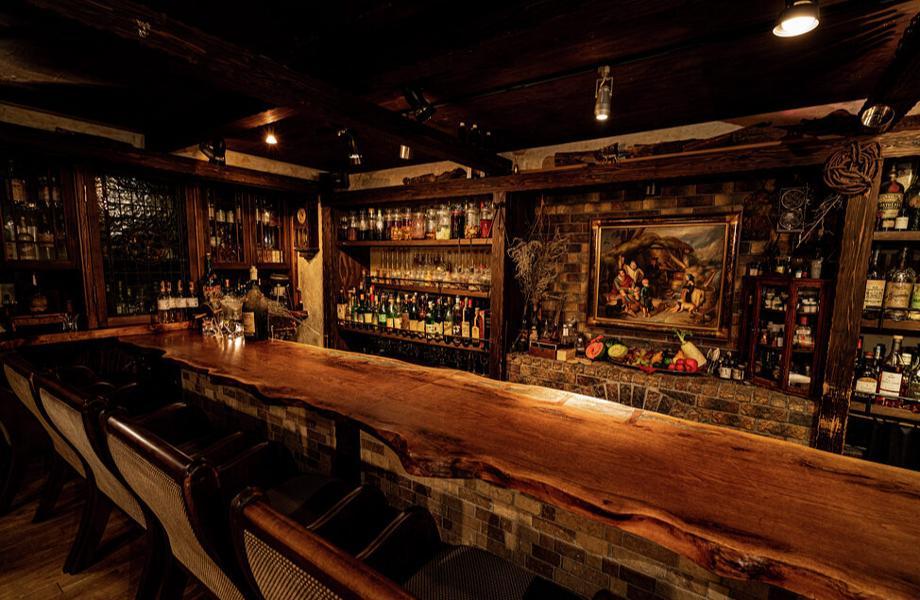
Casual underground spot with homey, comforting atmosphere focused on hearty noodle dishes.