Few addresses in Beirut carry the street-level authority of M. Sahyoun Falafel, a name woven into the city's daytime eating culture long before the capital's restaurant scene began chasing international recognition. This is falafel at its most grounded: a neighbourhood institution that locals use as a reference point rather than a destination. For anyone building a serious picture of Beirut's food culture, it belongs on the itinerary alongside formal dining rooms and rooftop tables alike.
Pearl is the En Primeur Club membership app — saves, bookings, and concierge access live there. Same editors, same standards.
- Address
- Beirut, Lebanon
- Phone
- +961 1 659 139
- Website
- falafelsahyoun.com
- Directions
- Get directions
 Saves & bookings on Pearl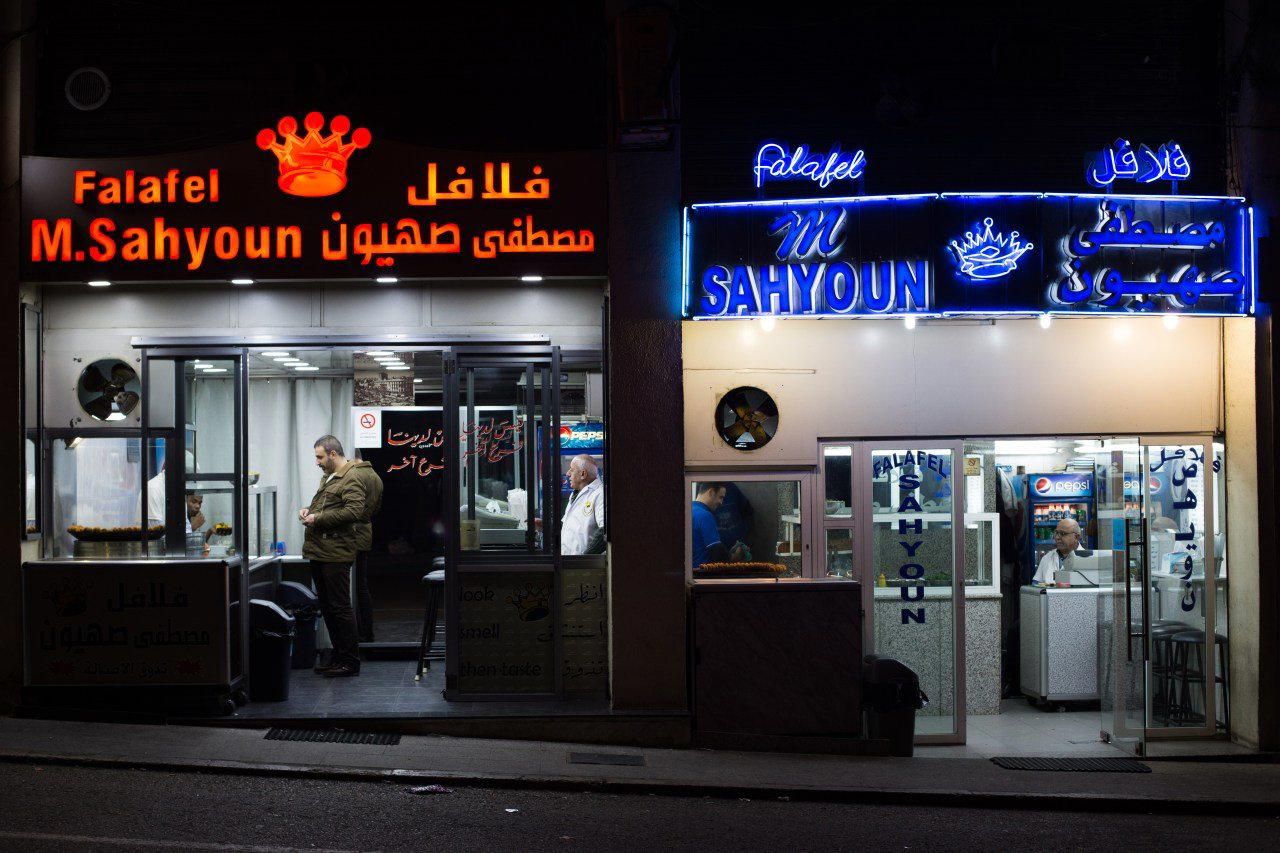
The Street, the Queue, and What It Signals
Beirut's relationship with falafel is not casual. In a city where street food functions as both sustenance and social ritual, the falafel sandwich occupies a specific cultural register: eaten standing up, wrapped in thin flatbread, consumed fast and without ceremony. The-known addresses operate less like restaurants and more like neighbourhood infrastructure, the kind of places that define a block's character across generations. M. Sahyoun Falafel is a Lebanese falafel restaurant in Beirut, Lebanon, known for its casual walk-in setup and affordable prices. M. Sahyoun Falafel sits squarely in that category. The approach to the counter, the rhythm of the queue, the speed at which orders move, these are the signals that separate a genuine local institution from a tidied-up approximation of one.
Street-level falafel culture in Lebanon draws a sharp contrast with the more composed presentations found at formal Lebanese restaurants such as Em Sherif or the relaxed sit-down format of Al Falamanki Sodeco. At M. Sahyoun, the transaction is direct: you are here for the sandwich, and the sandwich is the point.
Place as Context: What the Neighbourhood Tells You
Beirut's eating culture is deeply spatial. Different districts carry different culinary identities, and where a falafel stand operates says something about who it feeds and how. The city's most enduring street food addresses tend to cluster in older, densely populated quarters where the daily foot traffic of residents, workers, and traders sustains a counter that operates on volume and repetition rather than occasion. M. Sahyoun belongs to this pattern: a spot embedded in the lived texture of the city rather than positioned for tourist discovery or destination dining.
Understanding Beirut's food culture requires reading it at multiple registers simultaneously. The formal end of Lebanese cuisine, the kind served at Al Halabi or the rooftop setting of Albergo Rooftop, represents one layer. The mezze-and-grill tradition at neighbourhood institutions like Al Rawda Shatila represents another. M. Sahyoun operates at a third register entirely: fast, affordable, local, and indifferent to the dining calendar of the capital's restaurant scene.
Falafel as Craft: The Lebanese Standard
Lebanese falafel differs in measurable ways from versions produced elsewhere in the region. The mix is predominantly chickpea-based (rather than the broader fava bean proportion used in Egyptian ta'ameya), seasoned with parsley, coriander, and a spice profile that varies by household and stand. The quality markers are consistent across the better addresses: the exterior should carry a firm crust from high-heat frying, the interior should be green and moist, and the sandwich construction, typically involving tomato, parsley, pickled vegetables, and tahini, should hold without collapsing.
The reputation of addresses like M. Sahyoun rests on consistency and volume. A stand frying at scale, day after day, develops a cadence that one-off kitchens cannot replicate: the oil temperature is managed instinctively, the falafel size is calibrated, and the wrapping is done without thought because it has been done ten thousand times before. That kind of operational depth is what gives long-running street food addresses their authority.
For a broader view of Lebanese culinary craft outside Beirut, the restaurant scene extends well into the surrounding regions: Onno Bistro in Bourj Hammoud and Al Halabi in the Matn District illustrate how Lebanese cooking shifts register and format across Greater Beirut. Further afield, BRUT by Youssef Akiki in Keserwan and Feniqia in Byblos show how the country's dining ambition extends well beyond the capital.
How M. Sahyoun Sits Within Its comparable set
Within Beirut's falafel category specifically, Falafel Sahyoun represents a related point of reference, the shared name signals a lineage and local recognition that operates independently of formal awards or press coverage. In a city where economic instability has repeatedly reshaped the restaurant sector, street food addresses that have maintained their position across decades carry a form of credibility that no accolade system fully captures.
The comparison point for M. Sahyoun is not the rooftop dining room or the tasting counter but the handful of other falafel addresses that Beirut residents themselves rank and debate with genuine seriousness. That internal competition is where the venue's reputation is built and tested.
Planning Your Visit
Arriving outside peak hours risks encountering falafel that has sat, acceptable, but not the same. No reservation is required; this is counter service, walk-in only. Prices here are affordable. For visitors combining street food with broader Beirut dining, Jammal in Batroun District, Kitchen Garage in Aley District, Shams Restaurant in Aanjar, Laiterie Massabki in Chtoura, and Lakkis Farm in Baalbek offer a map of how Lebanese food culture extends across the country's geography.
At a Glance
Comparable venues nearby, for context on price, style, and recognition.
| Venue | Cuisine | Price | Notes |
|---|---|---|---|
| M. Sahyoun FalafelThis venue — the venue you are viewing | Ras El-Nabeh, Lebanese Falafel | $ | Not listed |
| Falafel Sahyoun | Ras El-Nabeh, Lebanese Falafel | $ | Not listed |
| Basterma Mano | Not listed | $ | Borj Hammoud, Armenian Shawarma & Basterma |
| Liza | Achrafieh, Modern Lebanese | $$$ | Not listed |
| Malak Al Tawouk | Dora, Lebanese Tawouk & Fast Food | $$ | Not listed |
| Le Chef | Not listed | $$ | Gemmayze, Authentic Lebanese Home Cooking |
Continue exploring
More in Beirut
Restaurants in Beirut
Browse all →
Bars in Beirut
Browse all →
Hotels in Beirut
Browse all →

At a Glance
- Well Known
- Casual Hangout
- Standalone
Current opening hours
- Monday
- 9 AM–10 PM
- Tuesday
- 9 AM–10 PM
- Wednesday
- 9 AM–10 PM
- Thursday
- 9 AM–10 PM
- Friday
- 9 AM–10 PM
- Saturday
- 9 AM–10 PM
- Sunday
- Closed
Hours can change for holidays and private events. Last verified .
Casual street food spot with limited seating at a bar or standing, featuring a constant line and simple, clean setup.