Our verdict
Malak Al Tawouk is among Beirut's most recognizable names in grilled chicken and fast-casual Lebanese street food, drawing steady queues from locals who treat it as a reference point rather than a destination. Where peers lean into sit-down mezze traditions, Malak Al Tawouk holds its position in the counter-service tier, built on consistent execution of a tight, focused menu in a city that takes its tawouk seriously.

Pearl is the En Primeur Club membership app — saves, bookings, and concierge access live there. Same editors, same standards.
- Address
- Beirut, Lebanon
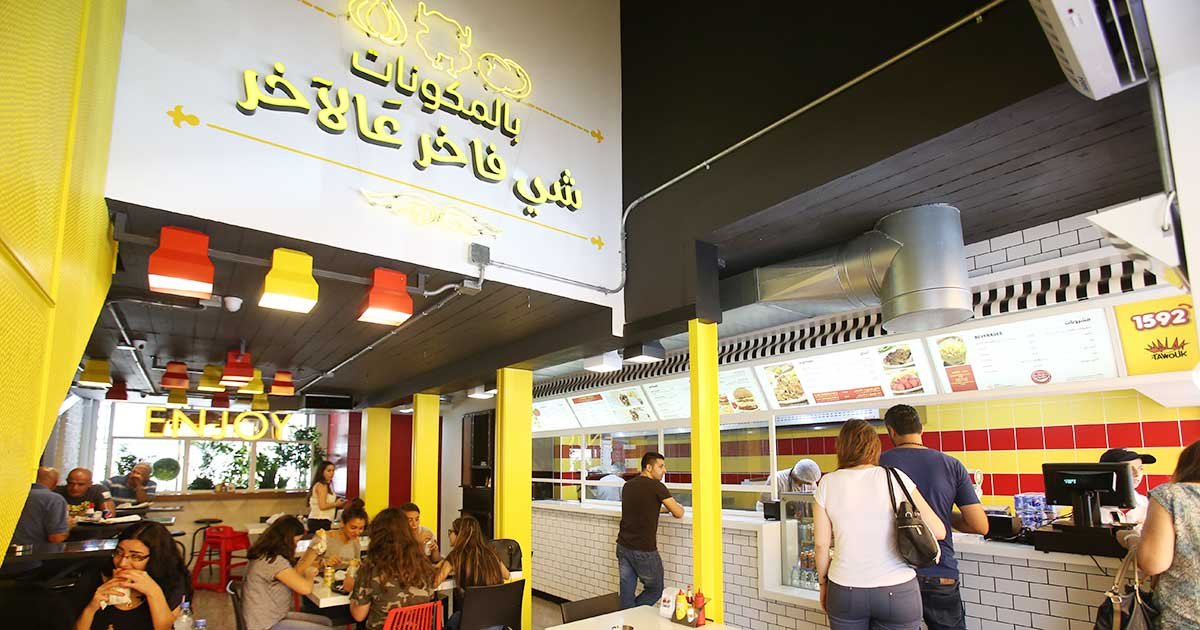
The menu
What to order
- Chicken Tawouk Sandwich
- Charcoal-Grilled Tawouk
- Lebanese Burger
- Grilled Potato
Where Beirut Measures Its Tawouk
Beirut's street food scene does not operate on the logic of discovery. The city's best-known counters for grilled chicken, falafel, and shawarma have been reference points for decades, their reputations built through repetition and local loyalty rather than press coverage. In that context, Malak Al Tawouk occupies a specific position: a name that Beirutis use as a benchmark when debating the city's grilled chicken standards, which is a genuinely contested subject in a place where the marinade, the char, and the bread-to-filling ratio are all taken seriously.
The tawouk sandwich, in its Beirut form, is a tightly choreographed thing. Marinated chicken cubes, grilled over high heat, land inside Lebanese flatbread alongside toum (the garlic emulsion that separates a serious Lebanese chicken counter from a casual one), pickled vegetables, and sometimes a thin smear of heat. The margin between a good version and an average one is narrower than it appears from the outside, which is precisely why Beirutis have strong opinions about which counters get it right. Malak Al Tawouk has earned its place in that conversation.
The Counter-Service Tier in a City of Formal Tables
To understand where Malak Al Tawouk sits in Beirut's dining structure, it helps to understand how stratified that structure actually is. At the formal end, restaurants like Em Sherif and Al Halabi serve Lebanese cuisine as a multi-course, tablecloth experience, with mezze spreads that function as a kind of cultural performance. The Albergo Rooftop adds an architectural dimension to that formal register. At the other end, the city's street-level counters, sandwich shops, and fast-casual spots operate on volume, speed, and the confidence that comes from making the same thing well for a very long time.
Malak Al Tawouk belongs firmly to the counter-service end. That is not a diminishment. In Beirut, the leading fast-casual operations carry as much cultural weight as the formal restaurants, and in some cases more, because they are where people eat daily rather than on occasion. Al Falamanki Sodeco represents a different expression of the same impulse: casual, social, embedded in neighbourhood routine. Falafel Sahyoun holds a comparable position in falafel specifically. Malak Al Tawouk occupies the grilled chicken lane of that same tier.
Space, Format, and the Physical Logic of a Grilled Chicken Counter
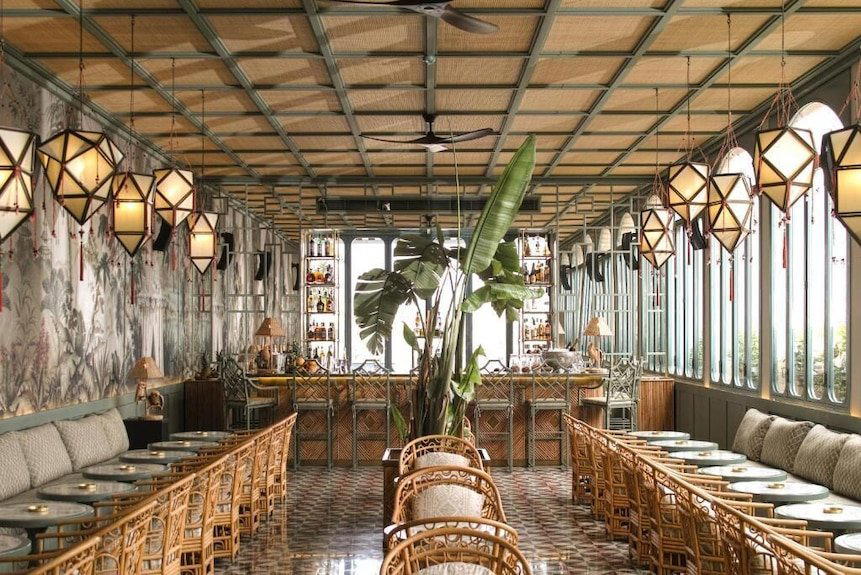
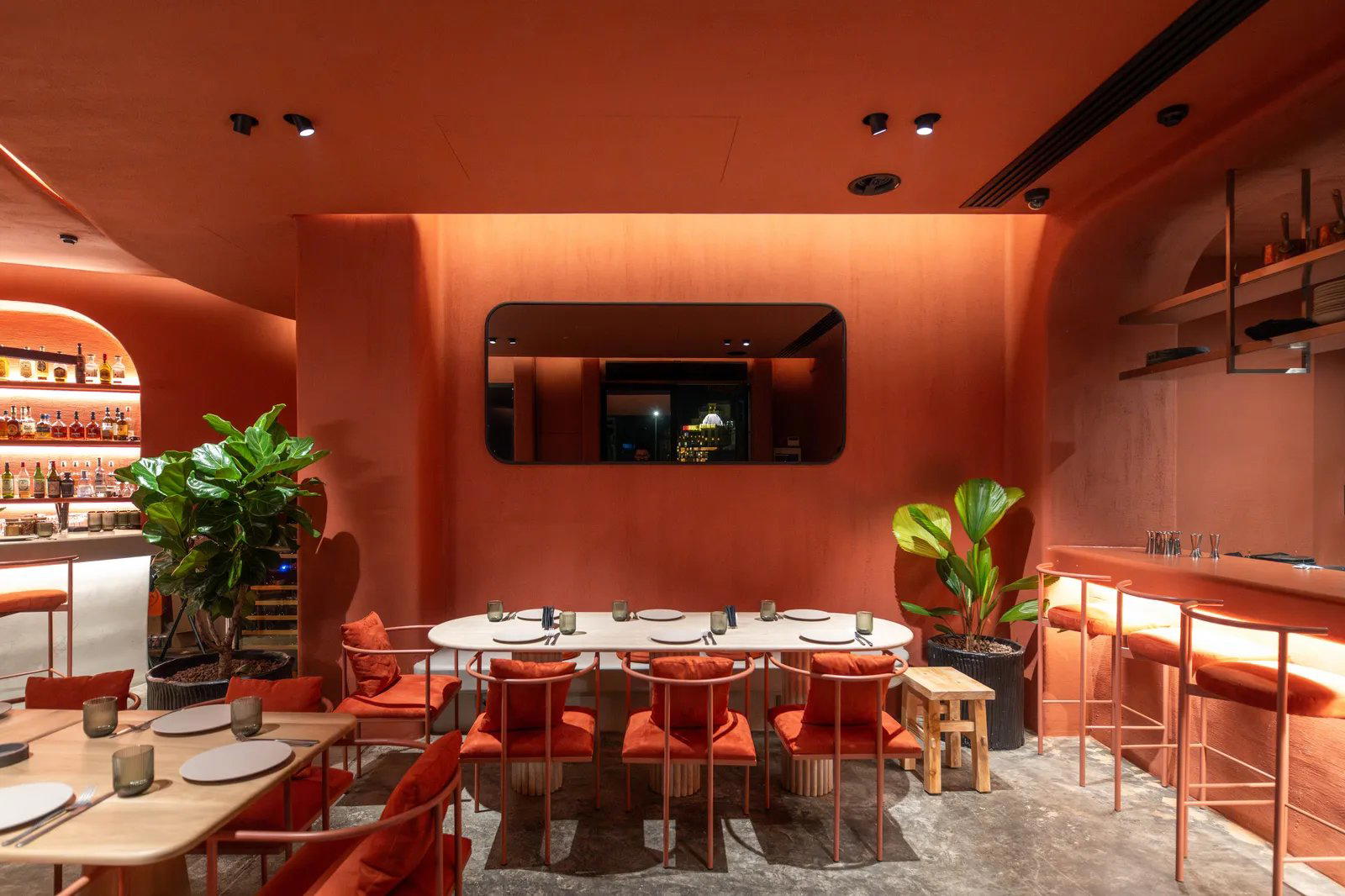
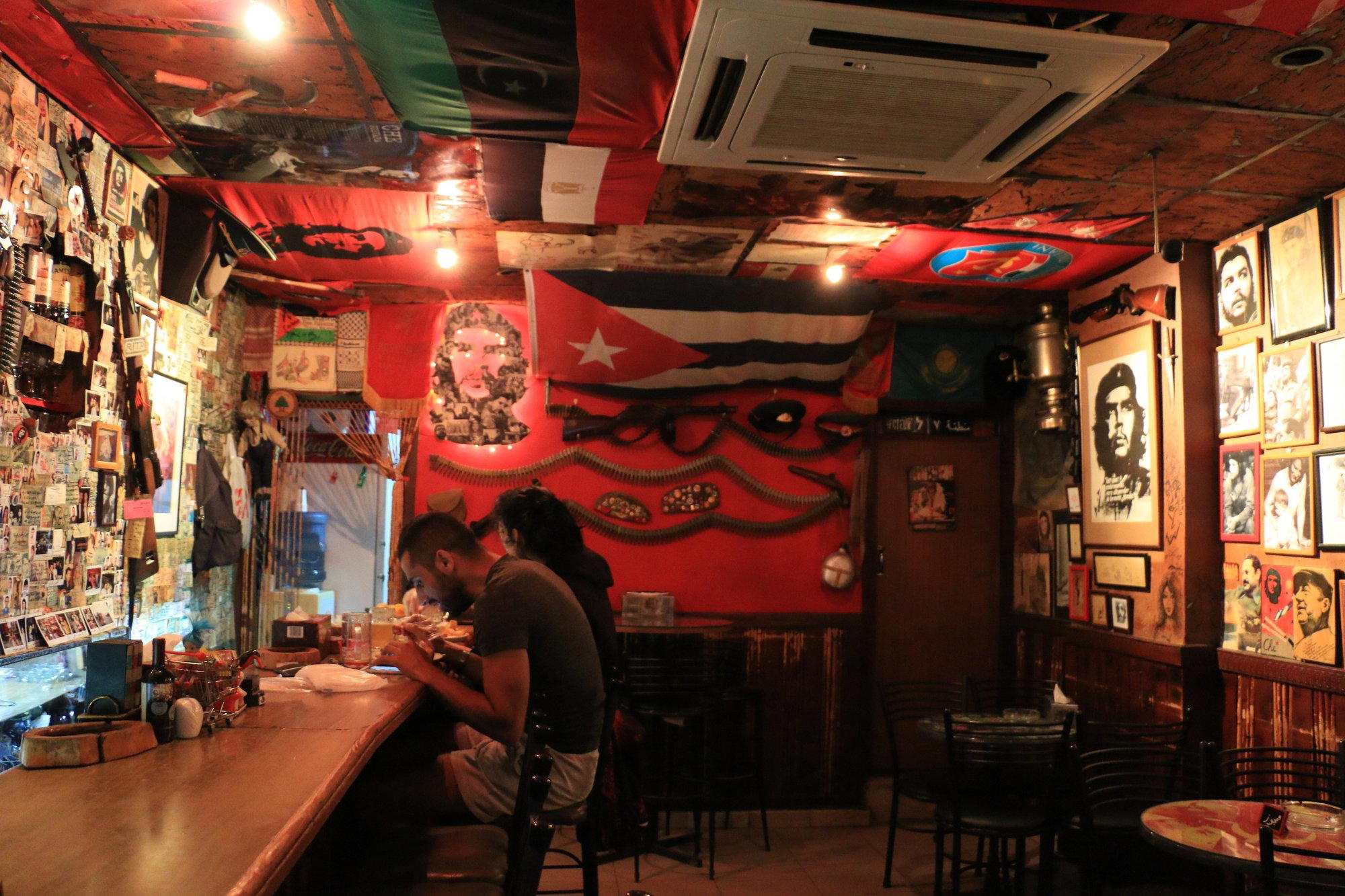
The design logic of a tawouk counter in Beirut follows function before aesthetics. The grill sits at or near the front, visible from the street, so that the smoke and char are part of the proposition rather than hidden in a kitchen. The counter itself is narrow, built for transaction speed, with the assembled sandwich handed over quickly enough that the bread is still warm from contact with the filling. Seating, where it exists, tends toward the minimal: stools, a ledge, a few small tables that keep the focus on the food rather than the room.
This physical format is worth taking seriously as an editorial point, because it shapes the entire experience. You are not here to sit for two hours. You are here because you know what you want, you have probably been here before, and the measure of success is whether the execution matches your memory of the last visit. That kind of repeat-visit accountability is what keeps Beirut's leading fast-casual counters honest. There is no tasting menu to hide behind, no atmosphere to compensate for an off night. The sandwich is the whole story.
In that sense, Malak Al Tawouk operates under stricter scrutiny than a formal restaurant. A table-service meal at Al Rawda involves enough moving parts that any single component can be forgiven in the context of the whole. At a grilled chicken counter, there are three or four components, and each one is visible. The toum either holds its emulsification or it doesn't. The chicken either has char or it doesn't. The bread is either fresh or it isn't.
Lebanese Street Food Beyond Beirut
The same traditions that define Malak Al Tawouk's menu extend well beyond the city limits. The Bekaa Valley, which supplies much of Lebanon's produce and protein, has its own grilling culture, visible in places like Lakkis Farm in Baalbek and Shams Restaurant in Aanjar. The mountain districts carry different expressions of the same ingredient logic, from Kitchen Garage in Aley District to Laiterie Massabki in Chtoura, where the dairy traditions shape a different kind of casual eating. On the coast, Feniqia in Byblos and Jammal in Batroun District each represent the seafood-forward variation of Lebanese casual dining.
What connects all of these to Malak Al Tawouk is the underlying principle: Lebanese food at its most direct is ingredient-led, technique-specific, and skeptical of elaboration. The counter format enforces that discipline more rigorously than any tasting menu could. For context on how that compares to precision-driven formal kitchens elsewhere, the distance between a tawouk counter and a restaurant like Le Bernardin in New York City or Atomix is not just price and format: it is a fundamentally different theory of what cooking is for.
For a broader map of where Malak Al Tawouk fits within Beirut's full dining range, the EP Club Beirut restaurants guide covers the city across price tiers and cuisine types. The Al Halabi Restaurant in Matn District and Onno Bistro in Bourj Hammoud represent adjacent parts of greater Beirut's dining geography. BRUT by Youssef Akiki in Keserwan District shows how Lebanese ingredients are being reframed in a fine-dining register, which is a useful counterpoint to what a counter like Malak Al Tawouk is doing.
Planning a Visit
Malak Al Tawouk operates as a counter-service spot in Beirut, which means walk-in is the standard mode of arrival. There is no reservation system for a grilled chicken sandwich, and the queue, when it forms, moves at the pace of the grill. The practical calculus is simple: come during off-peak hours if you want speed, or accept the wait as a signal of consistent quality. Specific hours, branch locations, and current pricing are best confirmed directly, as Malak Al Tawouk has operated across multiple sites in the city and formats can vary by location. The price point positions it firmly at the affordable end of Beirut's eating options, consistent with the counter-service tier across the city.
Frequently asked questions
How does Malak Al Tawouk compare to other grilled chicken counters in Beirut?
Beirut's grilled chicken scene is competitive and locally debated, with multiple counters holding strong neighbourhood followings. Malak Al Tawouk has crossed from local fixture into a name cited across the city, which in Beirut's street food tier is a meaningful distinction. The tight menu focus on tawouk rather than a broad mixed-grill format is part of what gives it a defined identity in that conversation.
What do people recommend at Malak Al Tawouk?
The tawouk sandwich is the standard order at Malak Al Tawouk and the dish the Beirut counter is known for. In a city where grilled chicken is a seriously contested category, this is the item that established the venue's name. First-time visitors default to it; so do regulars.
Can I walk in to Malak Al Tawouk?
Yes. Malak Al Tawouk operates as a counter-service spot in Beirut, so walk-in is the standard mode of arrival and no reservation system is in place. During busy periods, expect a queue at the counter, which is typical of the format across the city's grilled chicken tier.
What has Malak Al Tawouk built its reputation on?
The name Malak Al Tawouk has become a Beirut reference point specifically for grilled chicken, a category that locals debate with genuine seriousness. Its standing comes from consistency at the counter rather than formal dining credentials, which is how reputation is earned in this tier of Lebanese food culture.
Can Malak Al Tawouk adjust for dietary needs?
The core menu at Malak Al Tawouk centres on grilled chicken, which in its basic form is free of pork and compatible with several common dietary patterns observed in Beirut and across Lebanon. The counter-service format means customisation tends to be straightforward rather than complex. Specific allergen or preparation queries are best confirmed on arrival.
| Venue | Cuisine | Price | Awards | Notes |
|---|---|---|---|---|
| Malak Al TawoukThis venue — the venue you are viewing | Lebanese Fast Food | $1–10 | Not listed | Not listed |
| Albergo Rooftop | Mediterranean with Italian Accents | $50–100 | Relais Chateaux Award | Lebanese Cuisine |
| Em Sherif | Traditional Lebanese Fine Dining | $50–100 | World's 50 Best #13 | Not listed |
| Beihouse | Modern Levantine Mediterranean | $50–100 | World's 50 Best #5 · The Best Chef One Knife | Not listed |
| Buco | Modern Gastro Burgers | Not listed | World's 50 Best #39 | Not listed |
| Liza | Modern Lebanese | $50–100 | Not listed | Not listed |

Details
- Lively
- Casual
- Casual Hangout
- Solo
- Family
- Standalone
- A La Carte
- Halal
Quick-service fast-food setting focused on sandwiches, burgers, platters, and online ordering.