Our verdict
麺処くるり 市ヶ谷本店 serves Miso Ramen Specialist cooking at counter service, with みそらぁめん and 辛味噌ラーメン suited to lunch or dinner.

Pearl is the En Primeur Club membership app — saves, bookings, and concierge access live there. Same editors, same standards.
- Address
- 市谷田町3-2 (TOUビル 1F), 新宿区, 東京都, 162-0843
- Phone
- +81332690801
- Website
- twitter.com
- Directions
- Get directions
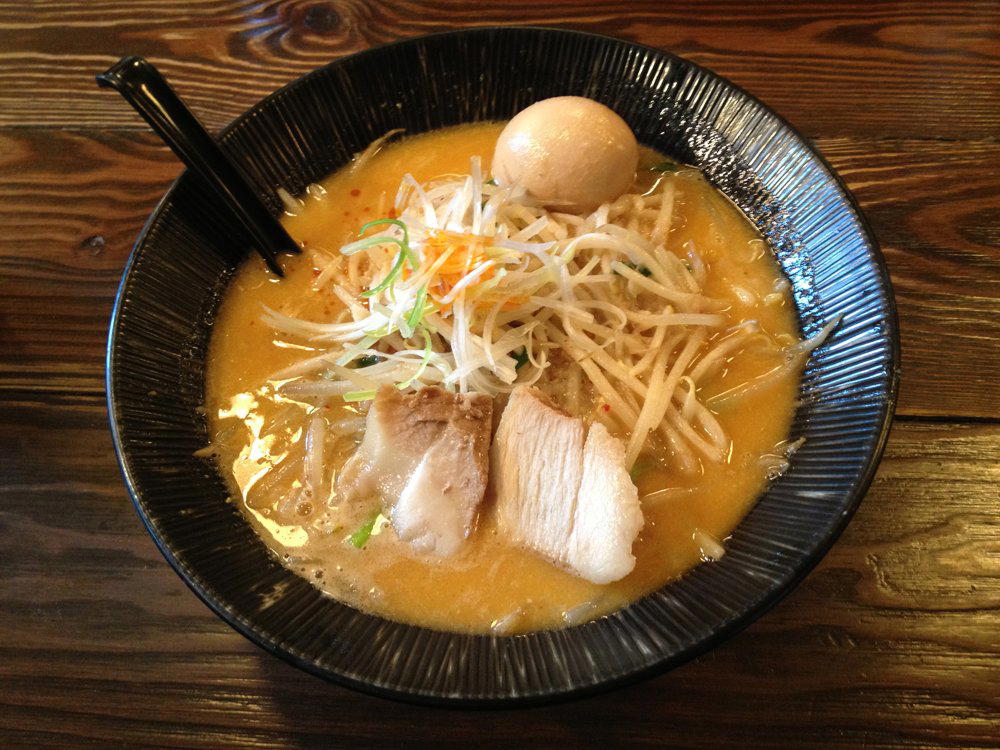
Ramen in Ichigaya: Reading the Room Between Lunch and Dinner
In Tokyo's ramen hierarchy, neighbourhood shops occupy a different register than the destination bowls of Shinjuku or the trophy counters of Ebisu. Ichigaya sits between those poles: a working district of government offices, universities, and the quiet residential blocks of Shinjuku-ku, where the lunch crowd is salaried and purposeful and the evening diner is more deliberate. 麺処くるり 市ヶ谷本店, in the TOU Building on Ichiya-tamachi, operates inside that rhythm rather than against it.
That address matters more than it might first appear. Ichigaya is not a ramen destination in the way that, say, Ogikubo or Takadanobaba carry reputational weight among bowl-hunters. It is a neighbourhood that rewards ramen shops capable of building a loyal local base across both dayparts rather than drawing day-trippers for a single sitting. Shops that survive and repeat in this kind of district tend to do so on consistency and format discipline rather than novelty.
The Lunch and Dinner Divide
Tokyo ramen culture splits cleanly along time-of-day lines, and くるり reflects that pattern. The midday service at shops in districts like Ichigaya draws office workers operating on a compressed schedule — a bowl, perhaps a small rice accompaniment, payment at the ticket machine, done inside twenty minutes. That format demands a broth and noodle combination that performs reliably under volume, where the tenth bowl of the service should read the same as the first.
Evening service shifts the calculus. The post-work diner in a neighbourhood shop is not in the same hurry, and the bowl can be treated more like a considered meal. In practical terms, this is when ramen shops in residential-adjacent districts tend to see customers linger over toppings, add sides, or order a second item. The atmosphere changes from transactional to something closer to a local izakaya without the alcohol. For shops without late hours, that window between roughly 6pm and 8pm is where evening identity gets built.
Tokyo's broader ramen scene has, over the past decade, bifurcated between high-investment tasting-format shops (where a bowl commands ¥1,500 to ¥2,000 or more and the presentation mirrors fine dining plating) and the enduring workhorse neighbourhood counter. くるり's Ichigaya location sits in the second category, in a city where that category still commands genuine craft attention rather than being left to industrial shortcuts. Comparison points at the premium end of Tokyo dining — three-Michelin venues like RyuGin or Harutaka, operate in an entirely separate tier, but they share one structural trait with the leading neighbourhood ramen counters: the menu is narrow enough that the kitchen cannot hide behind variety.
What the Ichigaya Location Signals
The TOU Building address in Shinjuku-ku places くるり in a commercial ground-floor slot typical of ramen shops that prioritise accessibility over atmosphere theatrics. This is not a design-forward space built for social media framing. The neighbourhood's character, civil servants, Sophia University students, weekend walkers cutting between Ichigaya Station and the quieter streets toward Yotsuya, means the shop serves a cross-section rather than a self-selecting enthusiast crowd. That is, in many ways, a harder audience to satisfy than the destination-seeking bowl-hunter who has already decided to be impressed before sitting down.
Ichigaya Station itself is served by the JR Chuo-Sobu Line, the Tokyo Metro Yurakucho Line, Namboku Line, and the Toei Shinjuku Line, making the area direct to reach from most of central Tokyo. That connectivity is part of why commercial ground-floor ramen in this pocket of Shinjuku-ku can sustain a regular clientele rather than depending on foot traffic from a single transit line.
For broader Tokyo restaurant context across price tiers and cuisines, the EP Club Tokyo guide maps the full range, from neighbourhood counters to the capital's multi-Michelin French rooms like L'Effervescence and Sézanne.
Tokyo sustains more ramen shops per square kilometre than any other city, and the differentiation between them is increasingly granular. The major stylistic divisions, tonkotsu, shio, shoyu, miso, and the newer niboshi-forward and chicken-paitan schools, have each developed sub-traditions that serious shops are expected to execute with technical precision. Neighbourhood shops that anchor themselves to one or two styles tend to build deeper regulars than those that range widely.
The comparison set for a Shinjuku-ku neighbourhood ramen counter is not Crony or the kaiseki rooms that dominate Tokyo's Michelin lists. It is the cluster of serious but unheralded counters that fill the space between convenience-chain ramen and the trophy destination bowl. Japan's regional dining circuit, from HAJIME in Osaka to Gion Sasaki in Kyoto, or further out to akordu in Nara and Goh in Fukuoka, operates at very different price points and ambitions, but all share the underlying principle that a narrow, well-executed menu outperforms an ambitious but diluted one. That principle applies equally at the ramen counter level.
Planning a Visit
麺処くるり 市ヶ谷本店 is located at 市谷田町3-2, TOUビル 1F, Shinjuku-ku, Tokyo, 162-0843. Ichigaya Station is the nearest hub, accessible via four separate lines. Current hours and queue patterns are best confirmed through local aggregator platforms such as Tabelog or Google Maps before visiting, as these update more reliably than static sources for this category of shop. Lunch service in this district typically runs from around 11am and can sell out by early afternoon at popular counters, so timing a visit to the first hour of service reduces the risk of a closed shutter.
Visitors building a wider Japan itinerary around serious eating might also consider properties and restaurants covered elsewhere in the EP Club network: 一本杉川嶋 in Nanao, 奥芝商店 in Sapporo, 湖畔荘 in Takashima, 庄羽屋 in Nishikawa Machi, Birdland in Sakai, and Bistro Ange in Toyohashi. For international reference points in the serious-dining conversation, Le Bernardin and Atomix in New York represent the kind of format discipline at the high end that the leading neighbourhood counters reflect in their own, much more modest register.
Frequently asked questions
What part of town is 麺処くるり 市ヶ谷本店 in?
麺処くるり 市ヶ谷本店 is located at 市谷田町3-2 (TOUビル 1F), 新宿区, 東京都, 162-0843, Tokyo.
How does 麺処くるり 市ヶ谷本店's Ichigaya location compare to Tokyo's destination ramen districts?
The TOUビル 1F address in Shinjuku-ku places くるり in a commercial ground-floor slot in Ichigaya, a working district built around government offices and universities rather than food tourism. That contrasts with the trophy ramen counters of Ebisu or the high-footfall queues of Shinjuku proper, where out-of-town visitors dominate the lunch hour. Ichigaya shops like this one draw a predominantly local and office crowd, which often means shorter waits and a more regularised daily pace.
What do people recommend at 麺処くるり 市ヶ谷本店?
As a neighbourhood ramen counter in Shinjuku-ku, the shop follows the Tokyo pattern of specialising in one or two core bowl styles — your best reference is checking recent visitor posts or arriving at the counter and reading the day's offerings directly.
What's the best way to book 麺処くるり 市ヶ谷本店?
No booking phone number or website is listed for 麺処くるり 市ヶ谷本店. Tokyo neighbourhood ramen counters of this type operate on a walk-in basis, so arriving at TOUビル 1F, 市谷田町3-2, Shinjuku-ku at opening or just before the lunch rush is the standard approach. Ichigaya Station, accessible via four lines, puts you within easy walking distance.
What's the signature at 麺処くるり 市ヶ谷本店?
The name くるり (kururi, meaning 'to spin' or 'to turn around') gives no direct clue to a house style, and without a published menu or editorial attribution, any claim about a flagship bowl would be speculative. Visiting the counter at 市谷田町3-2 and asking the staff directly is the only reliable approach.
Is 麺処くるり 市ヶ谷本店 good for vegetarians?
No menu or dietary information is documented for this Ichigaya location. Tokyo ramen broths are most commonly pork- or chicken-based, and vegetarian options remain the exception rather than the rule at neighbourhood counters in Shinjuku-ku. Confirming directly at the shop before ordering is advisable.
Cost and Credentials
| Venue | Cuisine | Price | Awards | Notes |
|---|---|---|---|---|
| 麺処くるり 市ヶ谷本店This venue — the venue you are viewing | Miso Ramen Specialist | $10–20 | Not listed | Not listed |
| Harutaka | Edo-Style Omakase Sushi | $200–300 | 3 Michelin Stars · World's 50 Best #76 | Sushi |
| L'Effervescence | Modern French with Japanese Influences | $200–300 | 3 Michelin Stars · World's 50 Best #69 | French |
| RyuGin | Modern Kaiseki | $500+ | 3 Michelin Stars · World's 50 Best #41 | Kaiseki, Japanese |
| Crony | Modern French with Japanese Influences | $150–200 | 2 Michelin Stars · World's 50 Best #34 | Innovative, French |
| Florilège | Modern French-Japanese Plant-Based Fine Dining | $50–100 | 2 Michelin Stars · World's 50 Best #31 | French |