
Tabelog 100 #62
Our verdict
北京遊膳 serves Japanese izakaya in Ogikubo, Tokyo, with casual, quiet service and a 2026 Tabelog 100 #62 placement at 3.8 points.

Pearl is the En Primeur Club membership app, where members save venues, book tables and use the concierge.
Ogikubo and the Quiet End of the Line
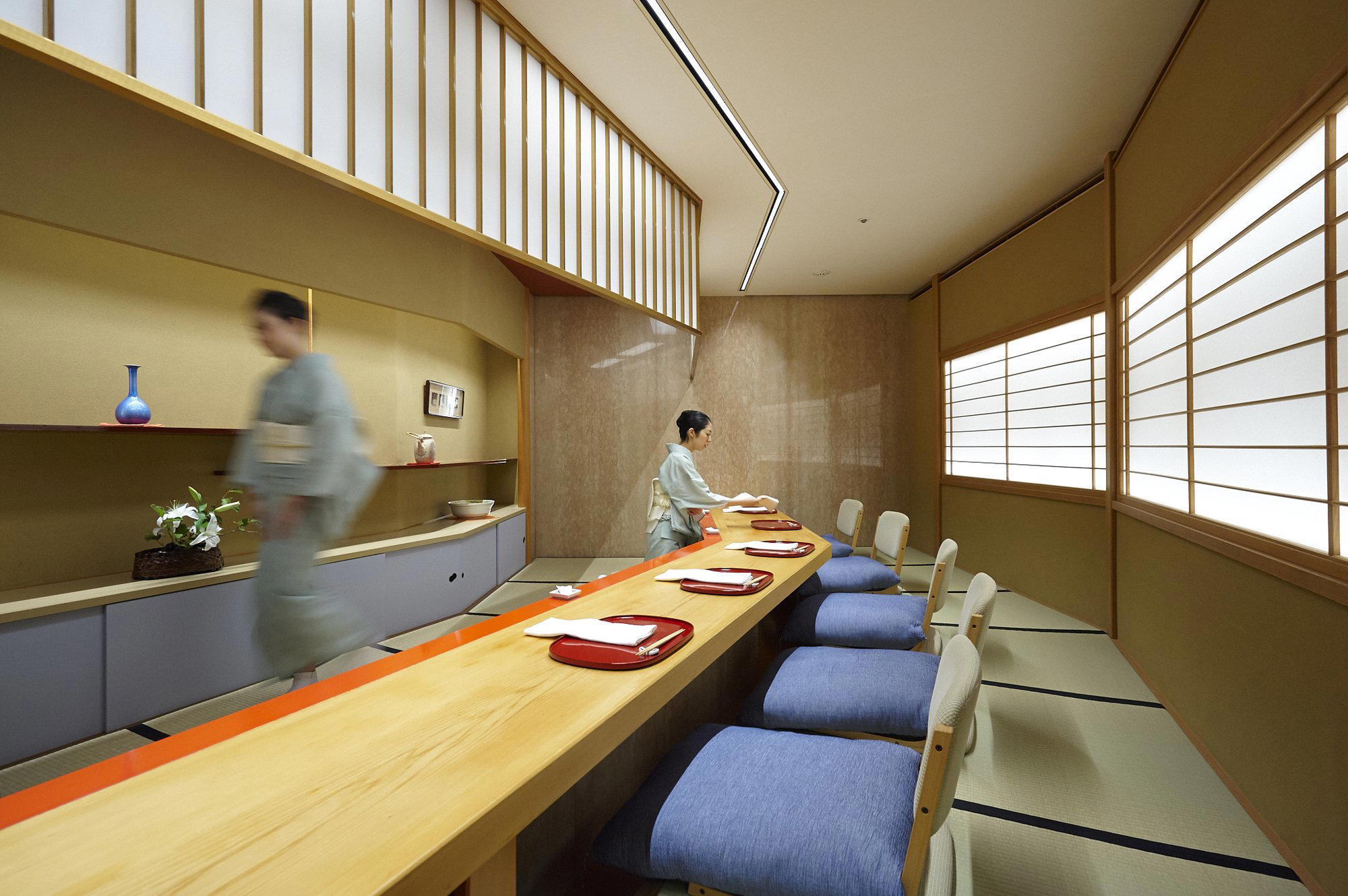
Suginami City sits at the residential western fringe of Tokyo, where the Chuo Line slows and the density of central wards gives way to narrower streets and neighbourhood shotengai. Ogikubo, the ward's best-known station stop, has long occupied an ambiguous position in the city's dining conversation: too far west to attract the expense-account circuits of Ginza or Nishiazabu, too local in character to draw the destination-dining crowds that orbit Roppongi Hills. That positioning, which might read as a liability elsewhere, has historically allowed a particular kind of restaurant to operate here, one oriented around the rhythms of regular guests rather than tourist throughput.
It is in this context that 京亰食堂 registers as worth understanding. The address, 5 Chome-24-7 Ogikubo, Suginami, places it deep in a residential pocket rather than on any obvious high street, the kind of location that in Tokyo signals either a legacy establishment with a settled clientele or a deliberate choice by an operator who has decided that repeat visitors matter more than walk-in volume. Either reading carries editorial weight.
The Ritual of the Meal in Neighbourhood Tokyo
To understand how a room like this functions, it helps to step back from any single venue and consider what the dining ritual looks like at the quieter, non-destination end of Tokyo's serious restaurant scene. The mechanics of a well-run neighbourhood dining room in this city differ substantially from their counterparts in London or New York. Pacing is unhurried but not leisurely in any sense, it is simply calibrated to the meal rather than to table-turn targets. Courses, where they exist, arrive without theatrical announcement. The exchange between kitchen and table tends toward economy: a few words about provenance, nothing more. Guests who arrive knowing what they want are accommodated without fuss; those who want guidance receive it proportionally.
This kind of hospitality is common to the better neighbourhood establishments across Tokyo's outer wards, from the shotengai-adjacent rooms of Koenji to the residential pockets of Kichijoji a few stops further west. The ritual is defined less by ceremony than by a kind of mutual competence, the kitchen does its job, the diner does theirs, and the result is a meal conducted at the right temperature in every sense. For visitors accustomed to the more choreographed omakase format dominant in central Tokyo, the distinction is worth noting before booking.
Where 京亰食堂 Sits in the Tokyo Context
Tokyo's restaurant scene is often discussed as if it were a single competitive field, but in practice it operates in distinct tiers and geographies that rarely overlap. The Michelin-starred omakase counters of Ginza, venues like Harutaka, and the multi-starred French rooms of central Tokyo, including L'Effervescence and Sézanne, compete on a global stage with price points to match. Kaiseki destinations such as RyuGin and French-influenced innovators like Crony occupy similarly premium terrain, drawing international reservation queues months in advance.
Ogikubo operates at a remove from that circuit. The guest base here is predominantly local, the booking window shorter, and the value calculus different. That does not imply a lesser standard, some of Tokyo's most technically accomplished cooking exists at price points well below the four-star bracket, but it does mean the experience is structured around different expectations. The outer-ward neighbourhood restaurant in Tokyo is its own distinct tradition, and 京亰食堂 participates in it.
For broader orientation across Japan's serious dining scene, the EP Club guide covers destinations from HAJIME in Osaka and Gion Sasaki in Kyoto to akordu in Nara and Goh in Fukuoka. Regional depth is also captured in entries covering 一本木 石川製 in Nanao, 大仙山之 in Sapporo, 湖辺庄园 in Takashima, 庭羽屋 in Nishikawa Machi, Birdland in Sakai, and Bistro Ange in Toyohashi, a reminder that Japan's dining culture distributes its ambition widely. The full Tokyo picture is assembled in our Tokyo restaurants guide.
For international comparison, the neighbourhood-anchored, ritual-forward dining model that defines rooms like this has equivalents at the high end of the New York scene, where venues such as Le Bernardin and the Korean-influenced Atomix demonstrate that disciplined, unhurried service formats translate across culinary traditions. The underlying logic, precision over spectacle, repetition over novelty, is consistent across geographies.
Approaching the Meal: Etiquette and Expectations
Tokyo's neighbourhood dining rooms tend to reward a particular kind of attentiveness from guests. Arriving on time matters more than at casual Western restaurants; kitchen timing in Japanese establishments is often calibrated to the stated reservation, and a late arrival can compress the meal in ways that affect both the food and the room's rhythm. For first-time visitors, the standard protocol is to wait to be seated, to follow the pace set by the service rather than requesting acceleration, and to ask any questions about the menu early rather than mid-course.
Seasonal Timing
Tokyo's dining calendar turns on ingredient seasons in ways that register even in neighbourhood establishments. Autumn brings the matsutake and early citrus that define October and November menus across the city. Winter shifts toward root vegetables, nabe formats, and the cold-weather comfort register that neighbourhood rooms handle particularly well. Spring's brief window of mountain vegetables, fuki no tou, taranome, warabi, marks the sharpest seasonal inflection in Japanese cooking, and even modest kitchens acknowledge it. Visiting with an awareness of what the season is offering improves the meal at any level of the market.
Know Before You Go
Address: 5 Chome-24-7 Ogikubo, Suginami City, Tokyo 167-0051, Japan
Nearest Station: Ogikubo (Chuo Line / Tokyo Metro Marunouchi Line)
Price Range: Not confirmed, verify directly before booking
Booking: No confirmed online booking method available; contact directly or visit in person to enquire
Hours: Not confirmed, verify before visiting
Awards: No current award data available
Frequently Asked Questions
Frequently asked questions
What's å京éè³'s location?
å京éè³ is located at 5 Chome-24-7 Ogikubo, æä¸¦åº Suginami City, Tokyo 167-0051, Japan, Tokyo.
What's the best thing to order at 京亰食堂?
No confirmed menu has been documented for 京亰食堂, and the venue holds no publicly recorded awards or signature dish citations. Neighbourhood dining rooms in Ogikubo typically rotate offerings around seasonal Japanese ingredients, autumn matsutake, winter root vegetables, so arriving with flexibility rather than a fixed order in mind is the practical approach. Ask staff directly what is freshest that day.
What's the best way to book å京éè³?
Reservations are recommended for å京éè³ in Tokyo. Confirm current policy via the venue's official channels.
What do critics highlight about å京éè³?
å京éè³ is best approached by focusing on the core concept and signature offerings.
Nearby-ish Comparables
Comparable venues nearby, for context on price, style, and recognition.
| Venue | Cuisine | Price | Awards | Notes |
|---|---|---|---|---|
| 北京遊膳This venue (the venue you are viewing) | Japanese Izakaya | Not listed | Tabelog 100 #62 | Not listed |
| 餃子歩兵 | Kyoto-style Gyoza | $10–20 | Not listed | Ginza |
| やきそばー HIT | Japanese Yakisoba & Ramen Bar | $10–20 | Not listed | Sugamo |
| Menya Hanabi (麺屋はなび 新宿店) | Taiwan Mazesoba | $1–10 | Not listed | Minami Shinjuku |
| Negishi | Japanese Beef Tongue Grill | $10–20 | Not listed | Shinjuku |
| Enseigne d'angle Harajuku ten | Classic Japanese kissaten & coffeehouse | $10–20 | Tabelog 100 | Shibuya |
Recognition history
Dated appearances from independent guides and award organizations, with the underlying list record or original source where available.
Tabelog 100 #62 · No. 62
Tabelog · Tabelog 100 - Chinese cuisine - TOKYO - 2026
Continue exploring
More in Tokyo
Restaurants in Tokyo
All restaurants in Tokyo →



Bars in Tokyo
All bars in Tokyo →




Details
traditional Japanese