Tour d'Argent Tokyo carries one of French dining's most documented lineages into the Palace Hotel Tokyo complex in Kioicho, bringing the Paris original's centuries-old duck press tradition to a city that has long treated classical French technique as a serious culinary language. The Tokyo outpost operates within a comparable set of high-commitment French tables, where provenance and sourcing discipline matter as much as execution.
Pearl is the En Primeur Club membership app — saves, bookings, and concierge access live there. Same editors, same standards.
- Address
- Japan, 〒102-8578 Tokyo, Chiyoda City, Kioicho, 4−1 東京 ザ・メイン ロビィ階
- Phone
- +81332393111
- Website
- tourdargent.jp
- Directions
- Get directions
 Saves & bookings on Pearl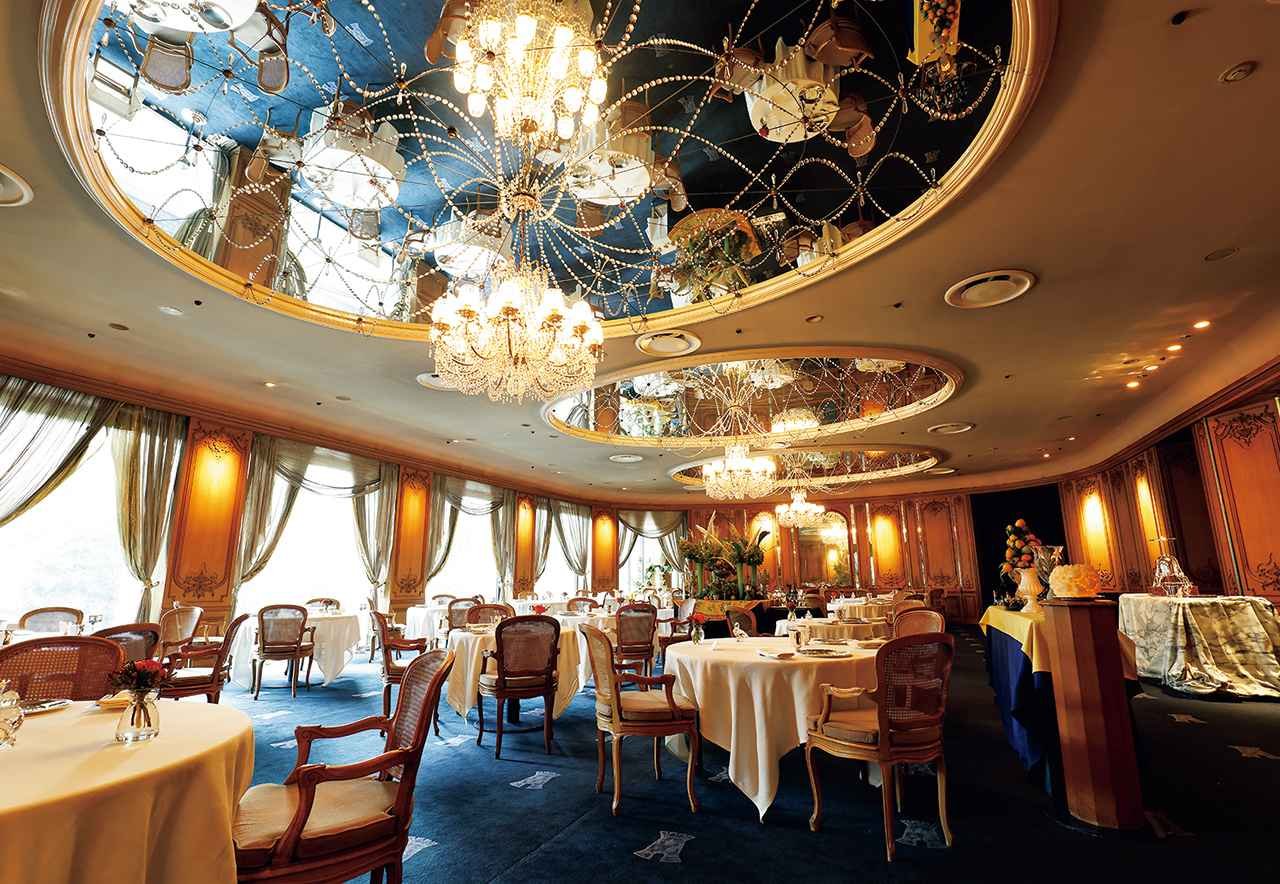
A Parisian Institution Translated, Not Transplanted
The numbered duck certificate system, introduced in the nineteenth century, turned a sourcing ritual into a document of provenance: each Challans duck is registered, pressed tableside, and assigned a sequential number that links the diner to a ledger stretching back generations. By the time the Tokyo branch opened inside the Palace Hotel Tokyo in Kioicho, Chiyoda, that provenance infrastructure came with it.
Tokyo has a longer relationship with classical French cooking than most Western cities acknowledge. The first French restaurants appeared in the capital in the Meiji era, and by the 1980s, Tokyo had absorbed and refined brigade-kitchen technique to the point where it now hosts more Michelin-starred French tables than any city outside France. That context matters when assessing Tour d'Argent Tokyo: it is not arriving as a novelty into an unformed market. It is entering a city where L'Effervescence has built a reputation on foraged and fermented ingredient sourcing, where Sézanne operates with direct supply relationships across Japanese producers, and where Crony represents a younger generation pushing French forms into more interpretive territory.
The Sourcing Architecture Behind the Duck Press
French fine dining has historically rested on a narrower sourcing geography than its Japanese counterpart. The grande cuisine tradition drew its logic from French terroir: Bresse poultry, Périgord truffles, Normandy cream. Tour d'Argent's defining dish codified that logic into theatre: the caneton à la presse requires a specific breed, a specific preparation, and a specific instrument. The duck press itself is not decorative. It extracts blood and marrow from the carcass and combines them with cognac and madeira to produce the sauce. The tool defines the dish, and the dish requires a bird raised to an exacting standard.
In Tokyo, that sourcing challenge becomes more complex. The Paris house has long sourced its ducks from Challans in the Vendée, a region whose flat marshlands and slow-growth farming practices produce birds with a fat distribution suited to pressing. Replicating or substituting that supply chain in Japan involves decisions that sit at the centre of what any French restaurant in Tokyo must resolve: import the ingredient and preserve the original logic, or source locally and accept that the dish becomes a different argument. How Tour d'Argent Tokyo addresses this question is, in practice, what separates it from a licensing exercise.
Tokyo's broader French dining scene has largely moved toward local sourcing as a point of differentiation. Particularly discussed French tables in the city now build menus around Japanese vegetables, domestic wagyu, and regional fish in ways that create a hybrid sourcing logic, French technique applied to Japanese raw material. Tour d'Argent Tokyo occupies a different position in that conversation, one defined by its obligation to a specific canonical dish that carries over a century of sourcing precedent.
Kioicho and the Palace Hotel Context
The Kioicho address places Tour d'Argent Tokyo within one of the city's more formal dining geographies. The Palace Hotel Tokyo complex draws a clientele that skews toward business and diplomatic hospitality rather than the chef-destination seekers who populate counters in Ginza or the natural-wine crowd in Ebisu. That audience brings different expectations: a familiarity with European fine dining protocols, a comfort with prix fixe structures, and an interest in documented provenance over culinary experimentation.
Among Tokyo's highest-commitment French restaurants, the Palace Hotel location puts Tour d'Argent in a different register from street-level independents like L'Effervescence in Nishiazabu, which operates with a research-kitchen sensibility, or Sézanne in Marunouchi, whose chef Daniel Calvert has built a following on French classicism filtered through British and Japanese influences. The hotel-embedded format comes with tradeoffs: a smoother operational envelope and a broader wine cellar infrastructure, offset by the institutional register that attached restaurants often carry.
For diners approaching Tokyo's fine dining scene across the full spectrum, the city rewards mapping by neighbourhood and format as much as by cuisine. The kaiseki tradition at RyuGin in Roppongi and the sushi counter discipline at Harutaka in Ginza occupy a different competitive grammar entirely, but they share with Tour d'Argent Tokyo a commitment to sourcing as a primary argument.
France in Japan, and Japan Beyond Tokyo
The Tour d'Argent name carries weight specifically because it attaches to one of France's most documented culinary histories. That weight functions differently in Japan than in London or New York. Japan's approach to French cuisine has been formalist and technically rigorous since the postwar period, which means Tokyo diners are not awed by French prestige in the way that markets with shallower French dining histories might be. They assess technique, ingredient quality, and consistency with the same forensic attention applied to kaiseki or sushi.
For diners who want to extend their Japan itinerary beyond Tokyo, the country's fine dining range runs deep. HAJIME in Osaka operates at the intersection of French technique and ecological sourcing philosophy. Gion Sasaki in Kyoto represents the kaiseki tradition at its most considered. akordu in Nara applies a European lens to local Yamato ingredients. Goh in Fukuoka works the boundary between regional Japanese produce and contemporary technique. Across regional Japan, tables like 三本木 吉川制 in Nanao, 古代山乃 in Sapporo, 湖西廃墟 in Takashima, 鶴羽屋 in Nishikawa Machi, Birdland in Sakai, and Bistro Ange in Toyohashi each carry distinct regional sourcing arguments. For the Atlantic French tradition at its most technically rigorous, Le Bernardin in New York City remains the reference point, while Atomix in New York City shows what happens when Korean and French fine dining frameworks are brought into close conversation.
Planning a Visit
Tour d'Argent Tokyo operates within the Palace Hotel Tokyo in Kioicho, Chiyoda City. The hotel lobby level positioning means access is direct for hotel guests and clear for outside diners arriving by taxi from central Tokyo.
| Venue | Cuisine | Price Tier | Format | Booking Lead Time |
|---|---|---|---|---|
| Tour d'Argent Tokyo | French (classical) | ¥¥¥¥ | Hotel restaurant, tableside service | Advance reservation essential |
| L'Effervescence | French | ¥¥¥¥ | Independent, prix fixe | Several weeks ahead |
| Sézanne | French | ¥¥¥¥ | Hotel, counter and table | Several weeks ahead |
| Crony | Innovative French | ¥¥¥¥ | Independent, counter format | Several weeks ahead |
| RyuGin | Kaiseki | ¥¥¥¥ | Independent, seasonal menu | One to two months ahead |
Cuisine and Recognition
Comparable venues nearby, for context on price, style, and recognition.
| Venue | Cuisine | Price | Notes |
|---|---|---|---|
| トゥールダルジャン 東京This venue — the venue you are viewing | Classic French Fine Dining | $$$$ | Not listed |
| プレーガ トウキョウ | Modern French Seasonal Cuisine | $$$$ | Chiyoda |
| Four Seasons Hotel Tokyo at Otemachi | Contemporary French with Japanese Terroir | $$$$ | Chiyoda |
| ブノワ | French Bistro with Japanese Influences | $$$$ | Minato |
| ラ・ブランシュ | Old-School French Bistro | $$$$ | Shibuya |
| オルガン | Modern French Bistro | $$$$ | Suginami |












At a Glance
- Elegant
- Sophisticated
- Classic
- Well Known
- Special Occasion
- Date Night
- Business Dinner
- Historic Building
- Hotel Restaurant
- Private Dining
- Extensive Wine List
- Sake Program
- Garden
Current opening hours
- Monday
- Closed
- Tuesday
- Closed
- Wednesday
- 12:30–3:30 PM, 5:30–10:30 PM
- Thursday
- 12–3:30 PM, 5:30–10:30 PM
- Friday
- 12–3:30 PM, 5:30–10:30 PM
- Saturday
- 12:30–3:30 PM, 5:30–10:30 PM
- Sunday
- 12:30–3:30 PM, 5:30–10:30 PM
Hours can change for holidays and private events. Last verified .
Elegant and ornate atmosphere reminiscent of a noble mansion, with silver cloches and gold leaf presentations creating a sense of grandeur and tradition.