ブノワ brings the Paris bistro format to Aoyama's tenth floor, a setting that positions classic French cooking inside one of Tokyo's most concentrated fine-dining neighbourhoods. The address at La Porte Aoyama places it within walking distance of several Michelin-recognised counters, making it a useful reference point for understanding how French traditions translate across the city's price tiers.
Pearl is the En Primeur Club membership app — saves, bookings, and concierge access live there. Same editors, same standards.
- Address
- Japan, 〒150-0001 Tokyo, Shibuya, Jingumae, 5 Chome−51−8 ラ・ポルト青山 10F
- Phone
- +81364194181
- Website
- benoit-tokyo.com
- Directions
- Get directions
 Saves & bookings on Pearl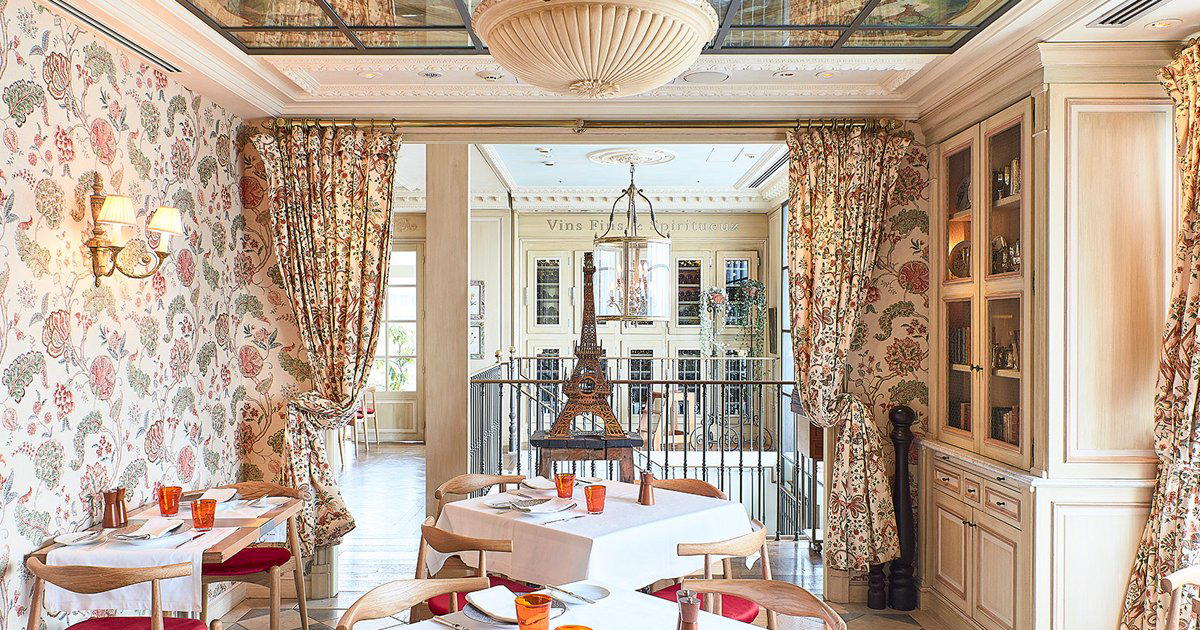
French Bistro Tradition in a Tokyo Fine-Dining Neighbourhood
Aoyama is one of Tokyo's most concentrated French dining districts. That process accelerated after the early 2000s, when a generation of Japanese chefs who had trained in Paris and Lyon began returning home with formal credentials and a specific appetite for importing not just technique but format: the prix-fixe counter, the cave-to-table wine list, the brigade-run open kitchen. ブノワ (Benoît) arrived in this context as a representative of a different but equally serious French tradition, the Parisian bistro, a format defined less by ceremony than by a particular commitment to classical cooking executed with precision.
The Benoît name originates in Paris, where the original address on Rue Saint-Martin operated for over a century. That acquisition gave the format international reach, and Tokyo became one of the cities where the bistro idiom was transplanted, occupying the tenth floor of La Porte Aoyama in Jingumae, Shibuya. That pedigree matters here as a category signal: this is a venue working within a codified tradition.
The Arc of a Meal: Progression Through a Classical Framework
Bistro format, when done well, follows a looser but no less intentional sequence than a multi-course omakase or kaiseki progression. Where Japan's indigenous fine-dining traditions build meals around explicit seasonal logic and a near-theatrical escalation of courses, the French bistro proposes a different architecture: a meal that moves from cold to warm, from lighter to denser, from aperitif logic to digestif logic, with the middle courses carrying most of the weight. In practice, this means starters that establish a flavour register, mains that test the kitchen's relationship with classical technique (the braise, the roast, the sauce), and a dessert sequence that should feel generous rather than austere.
In Tokyo's French restaurant tier, that progression gets complicated by two competing pressures. First, Japanese diners have sophisticated expectations around ingredient sourcing, which pushes French kitchens here to work with domestic producers in ways their Paris counterparts rarely need to consider. Second, the density of high-end French competition in this city, from the refined modernism of L'Effervescence to the technically precise programme at Sézanne and the inventive crossover format at Crony, means that classical bistro cooking must justify its existence against peers who are doing something more obviously contemporary.
The bistro answers that challenge not by competing on innovation but by doubling down on reliability and coherence. A well-executed sole meunière or pot-au-feu in this environment is a deliberate editorial choice, not a conservative default. It is the culinary equivalent of a monograph restaurant holding to its format while others pivot to omakase.
Aoyama's Competitive Map and Where This Format Sits
Understanding ブノワ's position requires a brief account of how Aoyama and the surrounding Minami-Aoyama and Omotesando corridor have developed as a dining zone. The neighbourhood draws a professional and international dining public that is comfortable with French formats and expects a wine programme to have genuine depth. It sits close enough to Roppongi to share some of that district's appetite for Western fine dining, but the demographic here skews less towards corporate entertainment and more towards the kind of dinner that a Paris-literate Tokyo resident chooses for a specific occasion.
Within that context, the bistro occupies a tier below the grand-tasting-menu operations but above the casual brasserie. Peers in terms of format, if not necessarily price, include L'Effervescence at the modern-French end and the broader French presence across the city's Michelin-listed addresses. For the full picture of how French cooking is represented across Tokyo, the competitive set is extensive.
Japan's wider fine-dining scene offers useful comparisons: HAJIME in Osaka and Gion Sasaki in Kyoto illustrate how Kansai approaches the question of Western influence through an entirely different set of aesthetic priorities, while akordu in Nara and Goh in Fukuoka show how regional kitchens are developing French-adjacent vocabularies outside the capital. Tokyo, though, remains the city where the transplanted bistro format has one demanding and well-travelled audience, and where its success or failure reflects not on the format itself but on the discipline of the kitchen executing it.
The Wine Question at a Bistro Counter
One dimension that separates good bistro dining from merely competent bistro dining is the wine programme's relationship to the food sequence. Classical French bistro cooking is designed to work with a specific tier of wine, not necessarily prestigious or aged, but regionally coherent and capable of running alongside multiple courses without overwhelming them. In Tokyo's French restaurants, wine lists have generally extended upward to match the price expectations of a high-spending dining public, and there is a version of that at most serious addresses in Aoyama. The question for any bistro claiming the Paris model is whether the by-glass programme retains enough flexibility to honour the informal, course-by-course pairing logic that defines the format at its leading. This is a harder discipline than it sounds in a city where premium bottles from Burgundy and Bordeaux are in consistent demand.
Location and Setting
La Porte Aoyama sits in Jingumae, Shibuya, a short walk from both Omotesando and Meiji-Jingumae stations. The tenth-floor position places the dining room above the retail and pedestrian energy below. Seasonal timing matters: spring and autumn in Aoyama bring out the strongest produce from domestic suppliers, and kitchens working within a classical French framework tend to reflect that seasonal availability most visibly in the starter and vegetable course segments of the menu.
| Venue | Format | Neighbourhood | Price Tier |
|---|---|---|---|
| ブノワ | French bistro | Aoyama / Jingumae | Not confirmed |
| L'Effervescence | Modern French | Nishi-Azabu | ¥¥¥¥ |
| Sézanne | Contemporary French | Marunouchi | ¥¥¥¥ |
| Crony | Innovative / French | Minami-Aoyama | ¥¥¥¥ |
Harutaka and RyuGin trace the parallel high-end Japanese formats that define this city's dining identity. Le Bernardin and Atomix represent adjacent but distinct points on the fine-dining spectrum. 一本木 奥川製 in Nanao, 夕佳亭 in Sapporo, 湖畔荘 in Takashima, 高羽屋 in Nishikawa Machi, Birdland in Sakai, and Bistro Ange in Toyohashi show how varied Japan's regional restaurant culture is outside the major metropolitan centres.
Nearby-ish Comparables
Comparable venues nearby, for context on price, style, and recognition.
| Venue | Cuisine | Price | Notes |
|---|---|---|---|
| ブノワThis venue — the venue you are viewing | French Bistro with Japanese Influences | $$$$ | Not listed |
| レラン | Modern French Fine Dining | $$$$ | Shibuya |
| エクアトゥール | Innovative French | $$$$ | Minato |
| ジョエル・ロブション | Modern French Fine Dining | $$$$ | Shibuya |
| アルゴリズム | Modern French Fine Dining | $$$$ | Minato |
| ル・マンジュ・トゥー | Modern French | $$$$ | Shinjuku |













At a Glance
- Elegant
- Sophisticated
- Classic
- Date Night
- Business Dinner
- Special Occasion
- Private Dining
- Extensive Wine List
- Sake Program
- Local Sourcing
- Street Scene
Current opening hours
- Monday
- 11:30 AM–2 PM, 5:30–10:30 PM
- Tuesday
- 11:30 AM–2 PM, 5:30–10:30 PM
- Wednesday
- 11:30 AM–2 PM, 5:30–10:30 PM
- Thursday
- 11:30 AM–2 PM, 5:30–10:30 PM
- Friday
- 11:30 AM–2 PM, 5:30–10:30 PM
- Saturday
- 11:30 AM–2 PM, 5:30–10:30 PM
- Sunday
- 11:30 AM–2 PM, 5:30–10:30 PM
Hours can change for holidays and private events. Last verified .
Antique-accented décor with a bright dining room featuring large glass windows and a miniature Eiffel Tower, conveying a distinctly French esprit with attentive service.