
A Roppongi-area yakiniku counter that has tracked steadily up the Opinionated About Dining Japan rankings, from a 2023 recommendation to #425 in 2024 and #491 in 2025, Cossott'e operates evenings only from its second-floor address in Azabu-Juban. The 4.5 Google rating across 147 reviews suggests consistent execution at a format where the grill is the kitchen.
 Discover on Pearl
Pearl is the En Primeur Club membership app — saves, bookings, and concierge access live there. Same editors, same standards.
- Address
- Japan, 〒106-0032 Tokyo, Minato City, Roppongi, 5 Chome−13−11 スペーシア麻布十番1 2F
- Phone
- +81 3-6441-2646
- Website
- tabelog.com
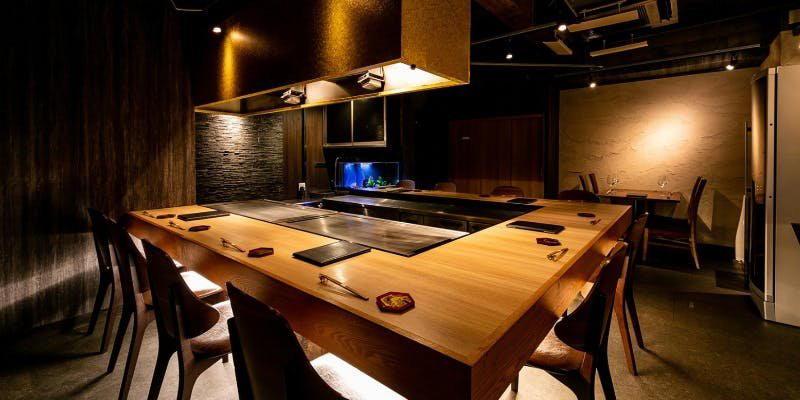
Roppongi's Second Floor and the Logic of the Yakiniku Counter
Cossott’e is a premium A5 Wagyu yakiniku restaurant in Tokyo’s Roppongi and Azabu-Juban area. The area sits at the intersection of two distinct Tokyo registers: the international-facing money of Roppongi Hills and the older, quieter residential commerce of Azabu-Juban's shopping street. Restaurants here are not playing to tourist traffic. They are playing to a local professional clientele that eats out regularly, knows what things cost, and has options. That competitive context matters when reading what Cossott'e has done since it opened: a trajectory from a 2023 Opinionated About Dining recommendation to a ranked position at #425 in 2024, followed by a 2025 ranking of #491, places it inside a small group of yakiniku addresses that serious food critics in Japan are tracking.
The second-floor address in Spacer Azabu-Juban 1 is itself a signal. Ground-floor visibility is expensive in this neighbourhood. Operating upstairs, at 5 Chome-13-11, a short walk from Azabu-Juban station, typically means the room earns its audience through reputation rather than foot traffic. In Tokyo's yakiniku segment, that is not unusual: many of the format's more respected practitioners occupy upper floors, basement spaces, or buildings that require an act of navigation. It filters the clientele toward the intentional.
Yakiniku in Tokyo: What the Format Demands
Yakiniku's premise is direct, premium cuts of beef, grilled tableside over charcoal or gas, eaten in a sequence that moves from lighter to richer, but the ceiling of execution is high. The sourcing conversation in Tokyo yakiniku has become as technical as the one running through the city's sushi counters. Wagyu provenance, cut selection, aging decisions, fat marbling grades, and the grilling advice offered by staff all function as markers of where a room sits within the category hierarchy. At addresses that have earned OAD recognition, that conversation is typically part of the experience: the room expects it and the kitchen is prepared for it.
Tokyo's yakiniku scene has expanded in two directions over the past decade. One direction runs toward accessible, high-volume operations where the value proposition is competent beef at reachable prices. The other runs toward specialist, lower-capacity rooms where sourcing depth, cut variety, and service formality pull the experience toward the same register as kaiseki or high-end sushi. Cossott’e’s OAD ranking places it in the second category. Jumbo Hanare, Kinryuzan, and Kiraku-Tei occupy nearby positions in that specialist tier and represent the comparable set against which Cossott'e competes for attention from food-literate visitors and resident diners alike.
For international reference points, the yakiniku format as practiced at this level of the Tokyo market has few direct equivalents abroad. Venues like Gyu-Kaku Japanese BBQ in Los Angeles and Nikushou in Hong Kong represent the format's international spread, but the sourcing specificity and critic attention concentrated in Tokyo's top-ranked rooms make the city the category's primary reference point globally.
The OAD Signal and What It Means Practically
Opinionated About Dining operates on a survey model drawing from a network of serious eaters rather than an anonymous inspector corps. Its Japan rankings have developed into a meaningful credentialing system for restaurants that do not fit the Michelin frame, and yakiniku, as a format, has historically received less Michelin attention than kaiseki, sushi, or French-influenced fine dining. The fact that Cossott'e has appeared in OAD's Japan rankings across three consecutive years, and moved from an unranked recommendation into a named position, indicates sustained execution at a level that critical repeat visitors are registering. The 4.6 rating across 175 Google reviews corroborates that consistency.
For comparison, the upper bracket of Tokyo dining, venues like Gion Sasaki in Kyoto, HAJIME in Osaka, or Tokyo's own Michelin three-star rooms, operates at a different altitude of recognition. Cossott'e is not in that conversation. What the OAD position does indicate is that among the category of evening-only, specialist Tokyo yakiniku, it is inside the group that engaged food critics are choosing to return to. That is a meaningful distinction. Goh in Fukuoka, akordu in Nara, and 1000 in Yokohama are other Japan properties where OAD recognition has translated into sustained critical interest across multiple cycles, providing useful context for how the ranking system functions as a trust signal over time.
Timing, Access, and the Evening-Only Structure
Cossott'e operates evenings only, opening at 5 pm every day of the week and running until midnight. The midnight closing is a practical signal: this is a room built for long sessions, not a quick dinner-before-theatre format. Yakiniku, when eaten properly, moves slowly. Cuts arrive in stages. Wine or sake is ordered in rounds. The pace of a table at a serious yakiniku address in Tokyo rarely drops below two hours and can extend considerably beyond that. A midnight closing on weeknights suggests the room is accommodating, and expecting, that kind of commitment from its guests.
For planning: the Azabu-Juban area is accessible from two subway lines, making it reachable from central Tokyo without significant travel time. The neighbourhood itself functions well as an end-of-evening destination, there are bars, quieter streets for walking, and less of the Roppongi weekend congestion that can make nearby blocks feel chaotic after 10 pm. Coming specifically to Azabu-Juban for dinner, rather than treating a restaurant here as an extension of a Roppongi evening, tends to produce a more considered experience of both the room and the area.
Planning Comparison: Cossott'e vs. Peer Yakiniku Addresses
| Venue | Area | Format | OAD Status (2025) | Hours |
|---|---|---|---|---|
| Cossott'e | Azabu-Juban / Roppongi | Yakiniku | Ranked #491 | Daily 5 pm–12 am |
| Jumbo Hanare | Tokyo | Yakiniku | See listing | See listing |
| Kinryuzan | Tokyo | Yakiniku | See listing | See listing |
| Nikuyama | Tokyo | Yakiniku | See listing | See listing |
Peers Worth Knowing
Comparable venues nearby, for context on price, style, and recognition.
| Venue | Cuisine | Price | Notes |
|---|---|---|---|
| Cossott’eThis venue — the venue you are viewing | Premium A5 Wagyu Yakiniku | $$$$ | |
| Nishizaki | Omakase Sushi | $$$$ | Setagaya |
| Onarimon Haru | Modern Japanese Omakase | $$$$ | Minato |
| Sushi Suzuki | Orthodox Edomae Omakase | $$$$ | Chūō |
| Niku Kappō JŌ | Modern Niku Kappo Wagyu Kaiseki | $$$$ | Minato |
| Sushi Iwa | Traditional Japanese Omakase Sushi | $$$$ | Chūō |
Continue exploring
More in Tokyo
More from Chef Various
Browse all →
Restaurants in Tokyo
Browse all →


Bars in Tokyo
Browse all →




At a Glance
- Elegant
- Intimate
- Hidden Gem
- Sophisticated
- Date Night
- Special Occasion
- Celebration
- Business Dinner
- Group Dining
- Private Dining
- Open Kitchen
- Chefs Counter
- Sake Program
- Local Sourcing
Luxurious and relaxed with semi-private spaces, stylish decor, and attentive service that creates an intimate dining experience.