

Kinryuzan is a Shirokane yakiniku address with unusually strong local validation: Tabelog Award Bronze in 2026, repeated Tabelog 100 selections, and OAD Japan Recommended recognition. The draw is not chef theatre but a compact, reservation-only grill format where beef sourcing, cut selection, and table rhythm matter more than menu storytelling.
Pearl is the En Primeur Club membership app — saves, bookings, and concierge access live there. Same editors, same standards.
- Address
- 3 Chome-14-1 Shirokane, Minato City, Tokyo 108-0072, Japan
- Phone
- +81 3-3446-8156
- Website
- tabelog.com
- Directions
- Get directions
 Saves & bookings on Pearl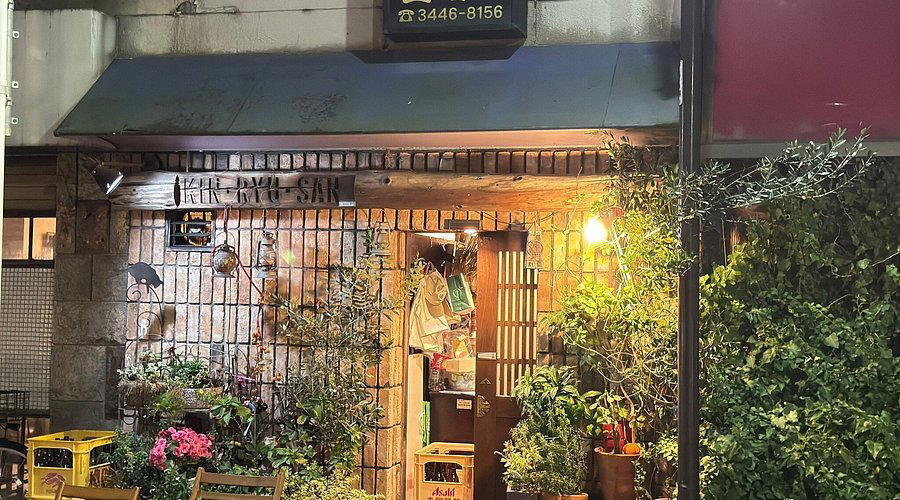
Shirokane does not announce its restaurant culture with neon or late-night spectacle. The neighbourhood is quieter, more residential, and better suited to restaurants that rely on regulars, reputation, and disciplined sourcing rather than street-level performance. That setting matters for yakiniku. At this level, the meal is not a casual grill session; it is a test of beef quality, cut management, heat control, and how much confidence a room has in letting the product carry the evening.
Tokyo’s serious yakiniku scene has split into several lanes. Some houses lean into polished private-room dining, others into counter-led meat kappo, and a few retain the older compact-table format where the grill remains central and service keeps the sequence moving. Kinryuzan belongs to that last group. Its credibility comes from continuity in a category where diners are unforgiving: Tabelog Award Bronze in 2026, a 4.36 Tabelog score, repeated Tabelog 100 Yakiniku Tokyo selections, and OAD Japan Recommended recognition in 2026.
Beef quality is the argument, not the décor
Ingredient sourcing is the spine of high-end yakiniku. The category rewards restaurants that can secure desirable beef, portion it intelligently, and present cuts in a sequence that does not exhaust the palate too early. Tokyo diners understand that marbling alone is a blunt metric. Fat distribution, slice thickness, ageing, seasoning restraint, and grill timing decide whether a table feels luxurious or merely heavy.
That is why older yakiniku rooms with small capacities remain competitive against glossier openings. A compact operation can protect consistency: fewer covers, tighter pacing, and less pressure to broaden the menu into crowd-pleasing distractions. Here, the format points toward product discipline rather than spectacle. The room is listed at 18 seats with tatami-room facilities and no private rooms, a scale that keeps the focus on the grill and the table rather than on lounge-like hospitality.
The comparison set in Tokyo is broad. Cossott’e and Nikusho Horikoshi sit within the same citywide yakiniku conversation but answer different diner needs: one can read as a more contemporary meat address, the other as a sharper special-occasion choice. Jumbo Hanare, Kiraku-Tei, and Nikuyama also help explain the range of Tokyo beef dining, from classic grill culture to meat-focused tasting formats. Kinryuzan’s case is narrower and more old-school: small room, serious recognition, and a sourcing-led proposition without much public-facing theatre.
Shirokane suits a restaurant built on regulars and repetition
Neighbourhood context changes how a yakiniku restaurant is read. In Nishi-Azabu or Ginza, the premium cues can be immediate: architecture, entrance choreography, wine lists, bilingual service, private rooms. Shirokane is less performative. It supports restaurants that feel intentionally local even when the awards trail pulls in diners from across the city. That makes the experience less about ceremony and more about whether the beef program justifies the effort.
The awards history gives a useful signal. Tabelog’s Bronze tier is not a decoration for novelty; it tends to reward sustained diner confidence. Repeated selection for Tabelog 100 Yakiniku Tokyo adds category-specific weight, because the list is narrower than general restaurant recognition. OAD’s Japan recommendation places the restaurant in an international dining conversation, but the stronger evidence remains local: Japanese diners have kept this address in the yakiniku frame year after year.
There is a practical implication for travellers. This is not the Tokyo beef meal to choose for elaborate English-language handholding, expansive private-room dining, or a long beverage-led evening. It is better suited to diners who already understand yakiniku’s grammar: the difference between ordering broadly and ordering well, the importance of pacing rich cuts, and the discipline required to let beef and charcoal do the work. For a wider read on the city’s dining hierarchy, use our full Tokyo restaurants guide, then place this reservation alongside other category-specific rooms rather than general luxury restaurants.
How it fits into a Tokyo dining itinerary
Tokyo rewards specialization. A sushi counter, tempura room, yakitori counter, and yakiniku table are not interchangeable luxury experiences; each has its own sourcing chain, service rhythm, and value logic. Yakiniku is the most participatory of the group, which makes ingredient quality even more exposed. There is no sauce-heavy kitchen finish to hide behind and no theatrical plating to distract from the beef.
That directness is the appeal. Kinryuzan makes sense for a second or third serious meal in Tokyo, after the traveller has moved beyond obvious trophy dining and wants to understand why beef culture occupies such a specific place in the city’s restaurant economy. It also works as a contrast to more controlled chef-counter formats: the table has agency, the grill is part of the experience, and the meal’s success depends on restraint as much as appetite.
For related Tokyo planning, compare the city’s beef addresses with Jumbo Hanare, Kiraku-Tei, and Nikuyama. Travellers building a broader trip can cross-reference our full Tokyo hotels guide, our full Tokyo bars guide, our full Tokyo wineries guide, and our full Tokyo experiences guide. For a wider Japan and yakiniku-adjacent scan, keep -Grilled beef Sukiyaki- KAMAKURA TANUKIAN 鎌倉 たぬき庵 in Kamakura, Gyu-Kaku Japanese BBQ, Yakiniku in Los Angeles, and Keiraku Yakiniku Pome, Yakiniku in Osaka in view, while broader regional research can include.cafe in Osaka.know in Kumamoto, (Shoku) Vietnam in Kawasaki, [Curry Senmon Ten] Maruyama Kyoju. in Sapporo, and [ki:] in Kyoto.
Comparable venues nearby, for context on price, style, and recognition.
| Venue | Cuisine | Price | Awards | Notes |
|---|---|---|---|---|
| KinryuzanThis venue — the venue you are viewing | Traditional Yakiniku with A5 Wagyu | $$$ | Not listed | Not listed |
| Kushiage Ryori Kawata | Modern Kushiage Omakase | $$$ | Michelin Plate | Minato |
| Yugetsu | Modern Japanese Izakaya | $$$ | Michelin Plate | Chūō |
| Sushi Ichigo | Edomae Sushi Omakase | $$$ | Michelin Plate | Setagaya |
| Edomae Shibahama | Edomae-style Japanese | $$$ | Michelin Plate | Minato |
| Chiso Koryu | Seasonal Japanese Kaiseki | $$$ | Michelin Plate | Chūō |
Recognition history
Dated appearances from independent guides and award organizations, with the underlying list record or original source where available.
Opinionated About Dining Top Restaurants in Japan Recommended
Opinionated About Dining
Tabelog Bronze #178
Tabelog
Opinionated About Dining Top Restaurants in Japan Ranked #296
Opinionated About Dining
Tabelog 100 #67 · No. 67
Tabelog · Tabelog 100 - Yakiniku - TOKYO - 2025
Tabelog Bronze
Tabelog
Opinionated About Dining Top Restaurants in Japan Ranked #326
Opinionated About Dining
Opinionated About Dining Top Restaurants in Japan Highly Recommended
Opinionated About Dining
Continue exploring
More in Tokyo
More from Chef Various
Browse all →
Restaurants in Tokyo
Browse all →



Bars in Tokyo
Browse all →







At a Glance
- Intimate
- Elegant
- Special Occasion
- Group Dining
- Open Kitchen
- Sake Program
Current opening hours
- Monday
- Closed
- Tuesday
- 6–10 PM
- Wednesday
- 6–10 PM
- Thursday
- 6–10 PM
- Friday
- 6–10 PM
- Saturday
- 4–10 PM
- Sunday
- 4–10 PM
Hours can change for holidays and private events. Last verified .
Compact, refined environment with warm lighting, clean wooden tables, and tabletop grills fostering an energetic yet focused atmosphere.
Know Before You Go
- Reservations
- Essential
- Dress code
- Smart casual
- Getting there
- 3 Chome-14-1 Shirokane, Minato City, Tokyo 108-0072, Japan