Our verdict
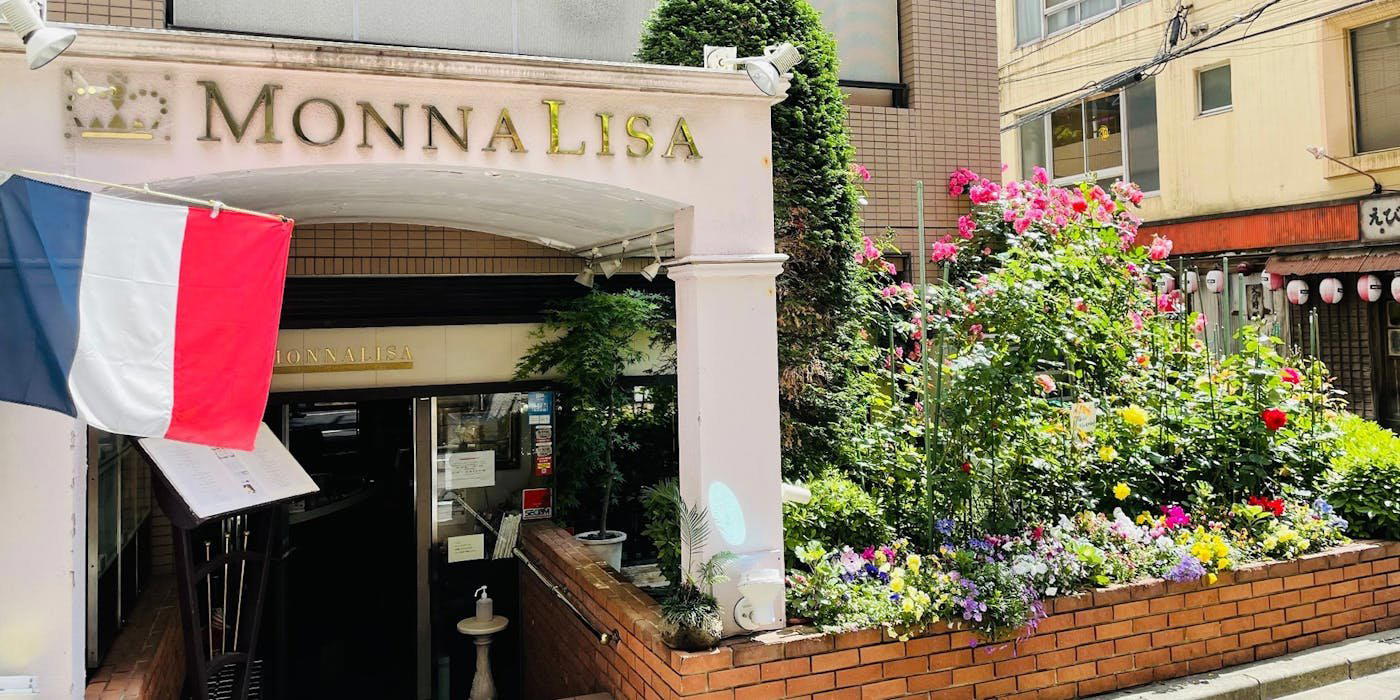
モナリザ 恵比寿店 occupies a distinct position within Ebisu's French-leaning dining circuit, operating from a City Home Ebisu address in Shibuya. The restaurant carries the Mona Lisa name, a Tokyo brand with recognisable longevity in French-influenced dining, and sits within a neighbourhood that has steadily consolidated its reputation for considered, counter- and table-format dining away from the central Ginza or Roppongi clusters.

Pearl is the En Primeur Club membership app — saves, bookings, and concierge access live there. Same editors, same standards.
- Address
- Japan, 〒150-0021 Tokyo, Shibuya, Ebisunishi, 1 Chome−14−4 シティー・ホームズ恵比寿 1F
- Phone
- +81354581887
- Hours
- Mon–Tue 11:30 AM–3:30 PM, 5:30–11 PMWed ClosedThu–Sun 11:30 AM–3:30 PM, 5:30–11 PM
- Website
- monnalisa.co.jp
- Directions
- Get directions
- Booking
- Book on the venue's website
The menu
What to order
- Tomato stuffed with crab and avocado salad
- Shimabuta pork
Ebisu and the French Table: Where Tokyo's Mid-Tier Ambition Lives
Ebisu has occupied a particular role in Tokyo's dining geography for decades. Positioned between the intensity of Shibuya to the west and the polished density of Daikanyama to the north, the neighbourhood attracted a cohort of French-influenced restaurants in the 1990s and early 2000s that found in its residential-commercial mix a clientele willing to commit to longer meals without the occasion pressure of Ginza or the expense-account culture of Roppongi. That legacy still shapes what you find here. The area's French addresses tend to operate at a register slightly below the city's top-tier tasting-menu counters — less theatre, more craft — and that positioning has, over time, become its own credibility. See how Ebisu's broader restaurant circuit compares with the full Tokyo restaurants guide.
モナリザ 恵比寿店 (Mona Lisa Ebisu) sits within that tradition. Housed in City Home Ebisu in the Ebisunishi district of Shibuya, it carries a brand name with established Tokyo recognition in French-influenced dining. The Mona Lisa name has operated across multiple sites in the city, and the Ebisu location functions as a neighbourhood anchor rather than a destination restaurant in the way that a three-Michelin-star counter would. That is not a criticism; it is a description of a category that Tokyo's dining scene depends on and that visitors often overlook in favour of the extremes.
The Team Dynamic and How It Shapes the Room
In French-influenced restaurants operating at this register in Tokyo, the coordination between kitchen, floor, and wine service tends to define the experience more than any single element. At the leading end, venues like L'Effervescence and Sézanne have built reputations precisely on that triangulated discipline, where the sommelier's pacing of the wine sequence and the front-of-house rhythm of plate arrivals create a coherent experience that no individual course could deliver alone. The same structural logic applies at neighbourhood-tier French restaurants, though the expression differs. Here, the relationship between the floor team and the guest is less ceremonial and more conversational. Regulars in Ebisu French rooms often know the service staff, and that familiarity feeds back into the kitchen's output, a dynamic that larger or more formal venues rarely achieve.
For context, the contrast with Tokyo's more technically demanding French addresses is instructive. Crony, which operates an innovative French format at the higher price tier, and L'Effervescence, with its Michelin standing and ingredient-led philosophy, both require teams whose expertise is essentially encyclopaedic. The neighbourhood French model that Mona Lisa Ebisu represents asks something different: consistency, warmth, and the kind of wine guidance that helps a table make good decisions without a formal tasting-menu structure to anchor them.
French Dining in Tokyo: The Neighbourhood Tier Explained
Tokyo's French restaurant scene has stratified considerably since the city first embraced the cuisine seriously in the post-war decades. At one end sit the Michelin-recognised counters and tasting-menu destinations; at the other, the brasserie-style addresses that serve lunch to office workers. Between these extremes is a middle tier of serious neighbourhood restaurants that operate full à la carte or prix-fixe formats, maintain wine lists with genuine depth, and serve a regular clientele that returns for the continuity rather than the novelty. This is where the Mona Lisa brand has historically positioned itself in Tokyo.
Ebisu is a natural home for that tier. Comparable French addresses in the broader Shibuya ward have tended to succeed when they avoid competing directly with the destination restaurants and instead build loyalty through a combination of menu accessibility, service familiarity, and location convenience. The residential population in Ebisunishi supports that model, and City Home Ebisu provides a physical setting that is commercial without being tourist-facing.
For those tracking the French tradition across Japan more broadly, HAJIME in Osaka represents one end of the spectrum, a rigorous, three-Michelin-star French-influenced operation, while venues in cities like Toyohashi show how the neighbourhood French model replicates itself in regional Japan. The Ebisu location sits between those poles: urban, considered, and oriented toward a local rather than a visiting audience.
Within the immediate Ebisu area, the relevant comparison set for Mona Lisa is other mid-to-upper neighbourhood French and European addresses rather than the city's flagship tasting counters. Venues at the ¥¥¥¥ tier in Tokyo, including Harutaka in the sushi category and RyuGin in kaiseki, operate with a different set of expectations around booking lead time, service formality, and menu structure. A French neighbourhood restaurant like Mona Lisa Ebisu competes on different terms: the ability to accommodate a group without a tasting-menu commitment, the accessibility of its booking window compared to counter-only formats, and the range of its à la carte or prix-fixe offering.
That positioning also shapes how the wine list functions. At kaiseki addresses or counter sushi rooms, the beverage programme is typically designed around the sequence of the meal. At a French neighbourhood restaurant, the sommelier's role is more collaborative, working with what the table orders rather than leading a predetermined progression. This places more weight on the individual knowledge and instinct of whoever is managing the floor, and it is often where neighbourhood French restaurants in Tokyo distinguish themselves from peers.
For those extending a Japan itinerary beyond Tokyo, the tradition of serious French and European cooking in regional cities is worth noting. akordu in Nara and Goh in Fukuoka both demonstrate how the French influence has dispersed through Japan's dining culture, as do regional Japanese addresses like 一本杉 川嶋 in Nanao and Gion Sasaki in Kyoto, where European technique meets kaiseki structure. Further afield, Le Bernardin in New York City offers a point of reference for how French formal dining maintains its authority outside France, and Atomix in New York City shows how Korean-inflected fine dining has absorbed French service discipline to different ends. Other notable Japanese addresses worth cross-referencing include 古代山乃 in Sapporo, 湖畔荘 in Takashima, 庭羽屋 in Nishikawa Machi, and Birdland in Sakai.
Planning Your Visit
The venue is located at City Home Ebisu (シティー・ホームズ恵比寿), 1-14-4 Ebisunishi, Shibuya, Tokyo 150-0021, on the 2F of the building. Ebisu Station on the JR Yamanote Line and Tokyo Metro Hibiya Line provides direct access, with the western exit placing most diners within a five-to-ten minute walk. Reservations: Dress: Smart casual is consistent with the neighbourhood French register; formal dress is not required but the room will not accommodate very casual attire. Budget: Timing: Ebisu's French addresses tend to draw local regulars mid-week and fill more fully on Friday and Saturday evenings; weekday lunch often offers a shorter booking window.
Frequently asked questions
What part of town is モナリザ 恵比寿店 in?
モナリザ 恵比寿店 is located at Japan, 〒150-0021 Tokyo, Shibuya, Ebisunishi, 1 Chome−14−4 シティー・ホーã ズ恵比寿 1F, Tokyo.
Is モナリザ 恵比寿店 suitable for a business dinner in Tokyo?
A French restaurant on the 2F of a Shibuya residential-commercial building in Ebisu — rather than a high-visibility tower address — signals a room built for conversation rather than corporate spectacle. That dynamic suits smaller business dinners where discretion and unhurried service matter more than scene. Ebisu is accessible via both the JR and Tokyo Metro Hibiya lines, keeping the logistics manageable from most central Tokyo locations.
What should I order at モナリザ 恵比寿店?
The kitchen operates in a French register, which at Ebisu addresses of this standing typically means structured courses built around classical technique. Specific current dishes are best confirmed directly with the restaurant or via a recent reservation, as menus at this tier shift seasonally. The 2F dining room at City Home Ebisu, Shibuya sets a considered table, so arriving with an appetite for a full course progression makes the most of the format.
How far ahead should I plan for モナリザ 恵比寿店?
For a French address operating at the mid-to-upper neighbourhood tier in Ebisu, booking one to two weeks in advance is a reasonable baseline for weekday dinners, with weekend tables often filling faster. The venue sits at 1-14-4 Ebisunishi, Shibuya, within easy reach of Ebisu Station, which adds to foot-traffic demand on Friday and Saturday evenings. Contacting the restaurant directly for current availability is the most reliable approach given that no online booking data is publicly listed.
What has モナリザ 恵比寿店 built its reputation on?
Ebisu, located between Shibuya's intensity and Daikanyama's quieter polish, has historically supported this kind of sustained mid-tier French ambition. The City Home Ebisu address on Ebisunishi places it within a residential-commercial pocket that rewards regulars over one-time visitors.
Cost and Credentials
Comparable venues nearby, for context on price, style, and recognition.
| Venue | Cuisine | Price | Awards | Notes |
|---|---|---|---|---|
| モナリザ 恵比寿店This venue — the venue you are viewing | Modern French Bistro | $50–100 | Not listed | Not listed |
| 茶禅華 | Classical French Cuisine | Not listed | Not listed | Minato, Classical French Cuisine |
| 野田 | Modern Japanese Omakase with French Influences | $200–300 | Michelin Plate | Shibuya, Contemporary French Fine Dining |
| The French Kitchen (フレンチ キッチン) | Classic French Bistro | $50–100 | Not listed | Roppongi, Classic French Bistro |
| Comptoir Misago | Minato, Cozy French Bistro & Wine Bar | Not listed | Not listed | Not listed |
| Anis | Modern French Bistro | Not listed | Not listed | Hatsudai, Modern French Bistro |












モナリザ 恵比寿店
The wine
- Wine program
- Curated wine list
- Extensive wine list
- Sake program
Details
- Elegant
- Intimate
- Cozy
- Date Night
- Special Occasion
- Business Dinner
- Extensive Wine List
- Sake Program
- Local Sourcing
- A La Carte
- Vegetarian Friendly
Current opening hours
- Monday
- 11:30 AM–3:30 PM, 5:30–11 PM
- Tuesday
- 11:30 AM–3:30 PM, 5:30–11 PM
- Wednesday
- Closed
- Thursday
- 11:30 AM–3:30 PM, 5:30–11 PM
- Friday
- 11:30 AM–3:30 PM, 5:30–11 PM
- Saturday
- 11:30 AM–3:30 PM, 5:30–11 PM
- Sunday
- 11:30 AM–3:30 PM, 5:30–11 PM
Hours can change for holidays and private events. Last verified .
Warm, comfortable low-profile address atmosphere surrounded by greenery, with beautifully plated dishes featuring fresh flowers between plates and a welcoming, hospitable service.