魚男 磨き
魚男 磨き sits in Hashimoto, Sagamihara's most transit-connected quarter, operating in a city where fish-focused dining carries real regional weight. The name, roughly 'Fish Man, Polished', signals an emphasis on sourcing and refinement over spectacle. For visitors exploring Kanagawa's dining options beyond Yokohama, it represents a specific kind of neighbourhood commitment to ingredient quality.
Pearl is the En Primeur Club membership app — saves, bookings, and concierge access live there. Same editors, same standards.
- Address
- 6 Chome-7-10 Hashimoto, Midori Ward, Sagamihara, Kanagawa 252-0143, Japan
- Phone
- +81428108894
- Website
- hitosara.com
- Directions
- Get directions
 Saves & bookings on Pearl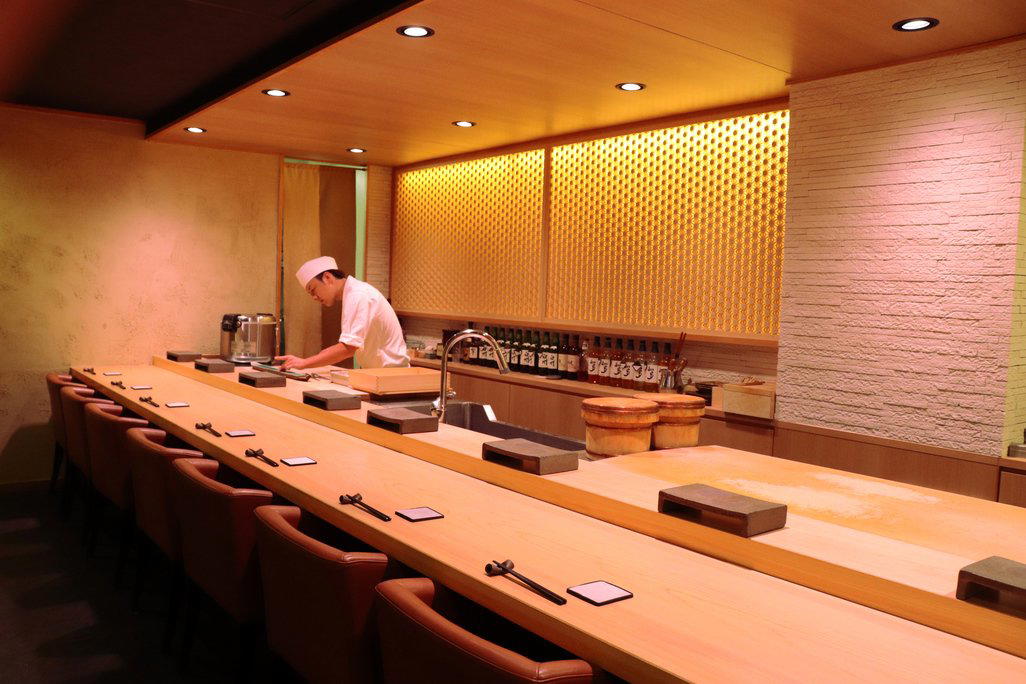
Hashimoto and the Case for Sourcing-First Dining Outside the Major Cities
Kanagawa Prefecture's restaurant conversation tends to collapse into Yokohama, with Sagamihara largely invisible to the dining press that covers Japan's Michelin circuits. That invisibility is partly structural: the prefecture's critical attention follows population density and international tourism routes, not necessarily the quiet concentration of neighbourhood restaurants that serve residents rather than visitors. Hashimoto, where 魚男 磨き operates at 6 Chome-7-10 in Midori Ward, sits at the western edge of Sagamihara, a few minutes from the JR and Keio line interchange that connects it to both central Tokyo and the deeper Kanagawa interior. It is, in other words, accessible and easy to reach once you know where to go.
The name itself is the clearest signal of editorial purpose: 魚男 磨き translates loosely as 'Fish Man, Refined.' In a country where fish procurement is a specialist discipline, where the distance between a fish market relationship and a restaurant's identity can be the entire argument, a name built around refinement rather than abundance is a statement about approach. It suggests a kitchen oriented toward what happens between the source and the plate, not the volume of what arrives.
Where 魚男 磨き Sits in Japan's Fish-Focused Dining Spectrum
Japan's fish-centred restaurants occupy a wide range of formats: from the high-volume sushi chains that move standardised product through rapid turnover, to the counter-seat omakase operations in Tokyo that charge ¥30,000 or more per head and source direct from specific ports on a seasonal basis. Harutaka in Tokyo represents the latter extreme, a four-seat counter with lineage and allocation that places it in a comparable set priced against the highest-tier Ginza operations. Between those poles sits a substantial middle ground: neighbourhood fish restaurants that operate on local supplier relationships, shorter supply chains than their urban counterparts, and a customer base that returns regularly rather than booking months out for a single occasion.
That middle register is where much of Japan's most honest fish cooking actually happens. The prefecture-level fish market systems in Kanagawa, with the Sagami Bay coastline running from Odawara through Zushi and offering yellowtail, sea bream, and seasonal flatfish, create supply conditions that benefit restaurants with the right contacts and the patience to work with what the season produces rather than sourcing to a fixed menu. This is the tradition that a name like 魚男 磨き invokes: fish cooking as a craft of refinement and selection, not theatrical abundance.
For comparison, HAJIME in Osaka and Gion Sasaki in Kyoto represent the upper tier of Japan's ingredient-led cooking where procurement is the foundation of the kitchen's entire argument, dishes exist because the sourcing makes them possible, not the other way around. At that level, supplier relationships are part of the restaurant's public identity. 魚男 磨き, operating in Sagamihara without the infrastructure of a Michelin-tracked city, functions within a different but related logic: the sourcing emphasis is encoded in the name and the neighbourhood context rather than in formal recognition.
The Ingredient Question: Why Sourcing Matters in Kanagawa
Kanagawa Prefecture is not often framed as a fishing region in the way that Hokkaido or the Tohoku coast are, but the Sagami Bay catch has genuine depth. Kamakura and Miura Peninsula fishing operations supply sea bream, shirasu (young whitebait), and seasonal coastal species that appear in Kanagawa restaurants with a regularity that reflects genuine local procurement rather than symbolic regionalism. The prefecture also sits close enough to the Tsukiji successor markets in Toyosu that urban fish supply chains are accessible, meaning a restaurant like 魚男 磨き could theoretically draw from both coastal local sources and the national wholesale network depending on season and availability.
This dual-access position, local Kanagawa coast plus Toyosu proximity, is a genuine structural advantage for restaurants in the Greater Tokyo orbit that operate outside the city proper. They are neither fully regional (isolated to what the local catch provides) nor fully metropolitan (dependent on the same wholesale flows as every Tokyo counter). The refinement implied by 磨き as a character suggests a kitchen that thinks carefully about which supply chain is appropriate for which product and moment. That kind of sourcing discipline tends to produce menus that shift with the season rather than holding a fixed format year-round.
For readers interested in comparable ingredient-led approaches across Japan, akordu in Nara and Goh in Fukuoka both demonstrate how regional ingredient access shapes kitchen identity outside the major recognition circuits. Globally, Le Bernardin in New York City remains the clearest Western reference point for what it looks like when fish sourcing is treated as the central discipline rather than a supporting element.
Setting and Format at Hashimoto
Midori Ward in Sagamihara is a residential and light-commercial zone rather than a dining destination in the promotional sense. The streets around Hashimoto Station carry the character of a transit hub suburb: practical, dense with local services, not oriented toward visitors. Restaurants in this context succeed by serving their immediate community with enough consistency to generate genuine word-of-mouth, which is a different durability than the media-driven attention cycle that governs Tokyo's dining press.
Planning a Visit
Hashimoto Station is served by both the JR Yokohama Line and the Keio Sagamihara Line, making the address direct to reach from central Tokyo (approximately 50 minutes from Shinjuku on the Keio Line) or from Yokohama (approximately 40 minutes on the JR network). The address, 6 Chome-7-10 Hashimoto, Midori Ward, is a short walk from the station's north exit. Current hours, booking method, and pricing should be confirmed directly before visiting. The dress code is smart casual.
For readers exploring fish-focused dining more broadly across Japan's less-covered regions, 一本木 加賀藩制 in Nanao and 湖畔荘屋 in Takashima represent comparable cases of ingredient-driven cooking operating outside the major recognition circuits. Atomix in New York City is a useful international reference for how Korean ingredient philosophy translates into a formal tasting format, a different cultural tradition but a similar sourcing-first discipline. Additional regional comparisons include 夕仙亭山乃 in Sapporo, 羽根屋 in Nishikawa Machi, Birdland in Sakai, Bistro Ange in Toyohashi, Blue Ocean Steak in Nakagami District, bodai in 那智勝浦町, Cafe Naoshima Konichiwa in Naoshima, and Denko Sekka in Hiroshima.
In Context: Similar Options
Comparable venues nearby, for context on price, style, and recognition.
| Venue | Cuisine | Price | Notes |
|---|---|---|---|
| 魚男 磨きThis venue — the venue you are viewing | Fresh Seafood Sushi | $$$ | Not listed |
| Jikaseimen Nichome Ramen | Homemade Noodle Ramen Shop | $$ | Hashimoto |
| Yakiniku Hasegawa | Traditional Yakiniku (Japanese BBQ) | $$ | Minami-ku, Sagamihara |
| Sagamihara Keyaki | Modern Japanese Ramen | $$ | Minami-ku, Sagamihara |
| Nakamura Menzaburo Shoten | Ramen shop | $ | Chuo Ward, Sagamihara |
| Ganso Ichijoryu Ganko Sohonke Bunten | Classic Japanese Ramen Shop | $ | Midori Ward, Sagamihara |
Continue exploring
More in Sagamihara
Restaurants in Sagamihara
Browse all →


Bars in Sagamihara
Browse all →




Hotels in Sagamihara
Browse all →



Wineries in Sagamihara
Browse all →
At a Glance
- Intimate
- Cozy
- Date Night
- Special Occasion
- Open Kitchen
- Sake Program
Current opening hours
- Monday
- 5–11 PM
- Tuesday
- 5–11 PM
- Wednesday
- 5–11 PM
- Thursday
- 5–11 PM
- Friday
- 5–11 PM
- Saturday
- 5–11 PM
- Sunday
- Closed
Hours can change for holidays and private events. Last verified .
Cozy counter and semi-private seating with lively yet intimate atmosphere from energetic staff in colorful shirts.