Bodai sits in Nachikatsuura, a Wakayama coastal town defined by tuna auctions at Katsuura Port and mountain pilgrimage routes running inland to Kumano. The address alone places it at an intersection of sea and sacred forest that few dining destinations in Japan can match. What that means at the table depends on how seriously the kitchen treats its proximity to both.
 Discover on Pearl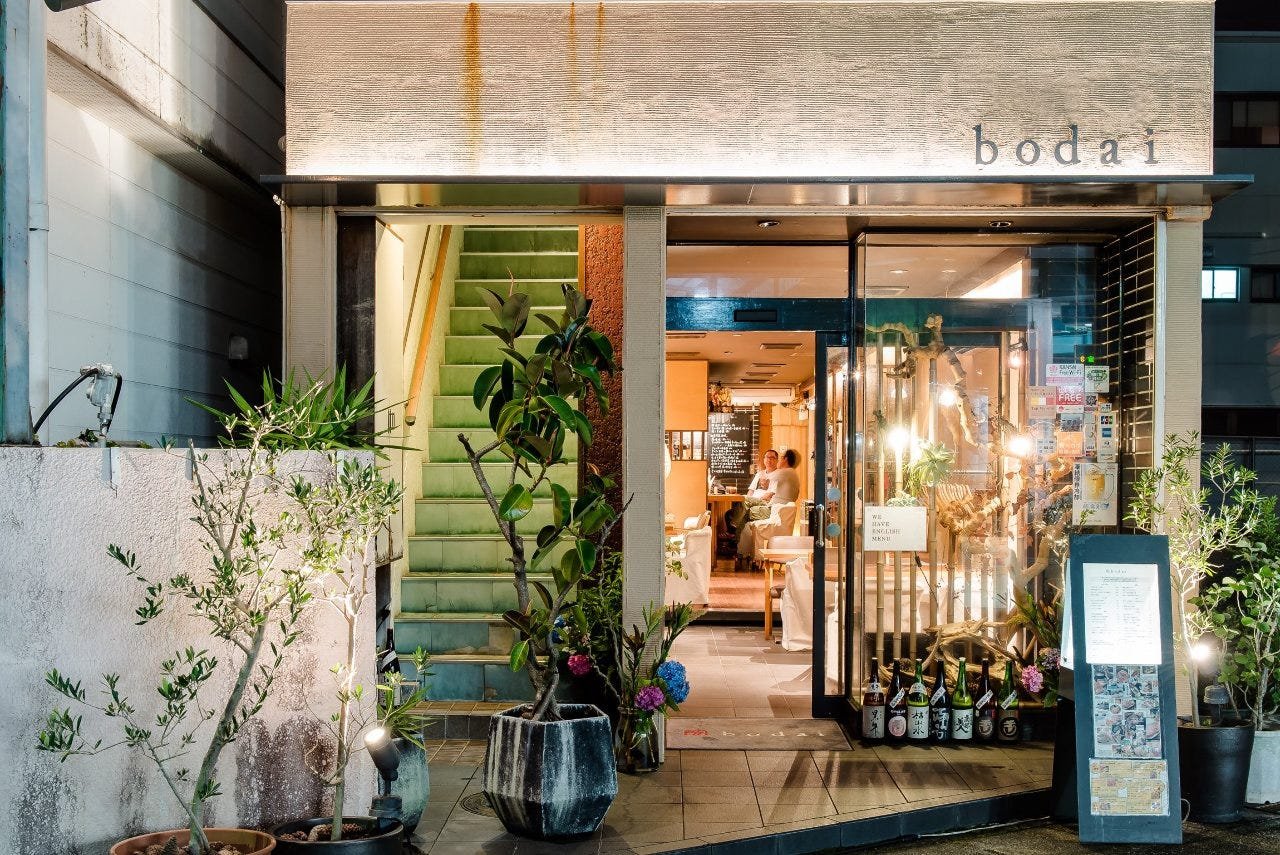
Where the Tuna Fleet Comes Ashore
Nachikatsuura is not a city that eases you in gently. Arriving by the Kisei Line from Osaka or Nagoya, the coastline appears before the station does, and the smell of the port arrives before either. This is one of Japan's most significant bluefin tuna landing points, and on auction mornings at Katsuura Port, the volume of fish moving across the dock floor is a reminder that the ingredient conversation here begins at a scale most urban restaurants cannot access. Bodai, at Tsukiji 5-1-3, occupies a town shaped by that supply chain on one side and by the Kumano Kodo pilgrimage routes on the other, a geography that has historically demanded a cuisine of substance rather than ornament.
In the broader context of regional Japanese dining, Nachikatsuura belongs to a category of source-proximity destinations: places where the distance between the ocean and the plate is measured in minutes rather than supply-chain days. Compare that with, say, the kaiseki tradition in Kyoto, where Gion Sasaki in Kyoto works within a centuries-old framework of seasonal procurement, or the precision sourcing evident at HAJIME in Osaka, where ingredient provenance is part of a formally articulated philosophy. In Nachikatsuura, proximity is structural, not philosophical. The tuna is local because the boats dock here, not because a chef drove three hours to visit a farm.
The shortlist, unlocked.
Hard-to-book tables, cellar releases, and concierge-planned trips.
Get Exclusive Access →The Sourcing Logic of a Coastal Wakayama Kitchen
Wakayama prefecture produces ingredients that rarely travel far enough to appear on the radar of Japan's major dining cities. Kishu ume plums, mikan from the Arida region, and the deeper-water fish pulled from waters off the Kii Peninsula compose a larder that is genuinely regional rather than nationally distributed. Restaurants working within this geography have an argument that urban counterparts, regardless of their Michelin tally or omakase price point, cannot replicate: the ingredient arrived today, from water visible from the dining room.
That argument carries weight when you consider how Japan's premium dining tier is structured. The ¥¥¥¥ counters in Tokyo, including Harutaka in Tokyo, compete on aging technique, knife work, and the biography of their supply relationships. In a place like Nachikatsuura, the supply relationship is almost tautological: the port is the source. The question for any kitchen here is whether it uses that advantage with enough skill to make the proximity legible on the plate rather than simply implicit in the postcode.
For context on how ingredient-led kitchens operate across Japan's regional dining tier, it is worth noting that venues such as akordu in Nara and Goh in Fukuoka have built serious reputations by translating local agricultural identity into a format that reads internationally without losing regional specificity. The pressure on any Nachikatsuura kitchen is similar: the ingredients justify the journey, but the cooking must justify sitting down.
Reading the Room at Bodai
The address at Tsukiji in Nachikatsuura places bodai within the town's commercial core, close enough to the port to be part of its daily rhythm. Japan's coastal dining establishments in this tier tend to divide between the transactional, aimed at the tuna-bowl tourism trade, and the more considered, where the same raw material is given structured time and attention. The name bodai carries a Buddhist resonance, a reference to enlightenment or awakening, which in a town on the Kumano pilgrimage corridor is not incidental context. Whether that extends to the kitchen's approach to its ingredients is a question the room itself answers more quickly than any written description.
Comparable regional establishments across Japan, from Aji Arai in Oita to aki nagao in Sapporo, have shown that prefecture-level sourcing can anchor a dining identity as firmly as any urban credential. The venues that do it well tend to share a common characteristic: restraint in the number of ingredient sources combined with depth in the preparation of each one. A kitchen working with Katsuura tuna, local Wakayama vegetables, and mountain forage from the Kumano interior does not need to cast wide. It needs to go deep.
For those tracing Japan's regional dining geography more broadly, the contrast with internationally oriented kitchens is instructive. Le Bernardin in New York City built its identity on treating seafood with a precision that stripped away distraction. The Nachikatsuura version of that argument is less refined in presentation but more direct in provenance, a different kind of claim, and in some registers a more compelling one.
Planning the Visit
Nachikatsuura is accessible by the JR Kisei Main Line, with limited express services connecting from Osaka in approximately three hours and from Nagoya in a comparable window. The town functions as a base for Kumano Kodo walkers and Nachi Falls visitors, which means accommodation and restaurant capacity are shaped around seasonal pilgrimage and tourism patterns rather than year-round urban dining demand. Tuna season and the summer pilgrimage peak overlap in ways that make early booking sensible for anyone planning around both. The port auctions run on weekday mornings and are occasionally open to visitors, offering a direct view of the supply chain that feeds the town's kitchens. Contact with bodai directly is advised to confirm current hours and format, as venue-specific operational details are not available through this record. For a wider view of the region's dining options, see our full 那智勝浦町 restaurants guide.
Those building a longer Kansai and Kii Peninsula itinerary might pair a Nachikatsuura stop with visits to Abon in Ashiya or Arakawa in Hyogo on the way in, and with less-charted stops such as Amaki in Aichi or anchoa in Kanagawa depending on routing. For those arriving from the north, affetto akita in Akita and Ajidocoro in Yubari District illustrate how Japan's regional ingredient identity plays out across very different climatic and geographic registers. Further afield, Akakichi in Imabari, Amegen in Saga, and Lazy Bear in San Francisco each offer a point of comparison for what it means to build a dining identity around a specific place and its produce rather than an internationally portable format.
Frequently Asked Questions
- Is bodai okay with children?
- Nachikatsuura is a working port town rather than a resort, and its restaurants tend to reflect that. Without confirmed pricing or format data for bodai, the safest approach is to contact the venue directly, though the address and town context suggest a more casual register than the ¥¥¥¥ omakase counters of Tokyo or Osaka.
- What kind of setting is bodai?
- If you are arriving from one of Japan's major dining cities expecting the polish of award-tracked urban restaurants, recalibrate. Nachikatsuura's dining identity is built on ingredient proximity rather than formal accolades; the setting here reflects a coastal fishing town on the Kumano Kodo corridor, which means atmosphere is earned by geography rather than interior design budget. Confirmed award data for bodai is not available in this record.
- What's the must-try dish at bodai?
- Start with whatever the kitchen is doing with Katsuura tuna: the port is one of Japan's principal bluefin landing points, and any kitchen at this address that is not treating that as its primary credential is missing the obvious argument. Specific dish details are not confirmed in this record, so ask on arrival what landed that morning.
- Why visit a restaurant in Nachikatsuura rather than a named destination in Osaka or Kyoto?
- The case for Nachikatsuura is ingredient geography. The town sits at the end of the Kii Peninsula, where the Pacific delivers bluefin tuna to one of Japan's most active auction docks and the Kumano mountains provide a mountain-foraging backstory that urban kitchens pay significant premiums to access remotely. Bodai's address places it inside that supply network rather than downstream from it, which is a structural advantage no Osaka or Kyoto restaurant can replicate regardless of its recognition tier.
Fast Comparison
These are the closest comparables we have in our database for quick context.
| Venue | Cuisine | Price | Awards | Notes |
|---|---|---|---|---|
| bodai | This venue | |||
| HAJIME | French, Innovative | ¥¥¥¥ | Michelin 3 Star | French, Innovative, ¥¥¥¥ |
| Harutaka | Sushi | ¥¥¥¥ | Michelin 3 Star | Sushi, ¥¥¥¥ |
| L'Effervescence | French | ¥¥¥¥ | Michelin 3 Star | French, ¥¥¥¥ |
| RyuGin | Kaiseki, Japanese | ¥¥¥¥ | Michelin 3 Star | Kaiseki, Japanese, ¥¥¥¥ |
| Crony | Innovative, French | ¥¥¥¥ | Michelin 2 Star | Innovative, French, ¥¥¥¥ |
Need a table?
Our members enjoy priority alerts and concierge-led booking support for the world's most difficult tables.
Get Exclusive AccessThe shortlist, unlocked.
Hard-to-book tables, cellar releases, and concierge-planned trips.
Get Exclusive Access →