ペス occupies a basement address in Shibuya's Udagawacho district, a neighbourhood that has quietly become a reference point for independently operated restaurants working outside the mainstream fine-dining circuit. Reservations and word-of-mouth remain the primary entry points.
Pearl is the En Primeur Club membership app — saves, bookings, and concierge access live there. Same editors, same standards.
- Address
- Japan, 〒150-0042 Tokyo, Shibuya, Udagawacho, 37−14 B1F 渋谷
- Phone
- +815031724370
- Website
- tablecheck.com
 Saves & bookings on Pearl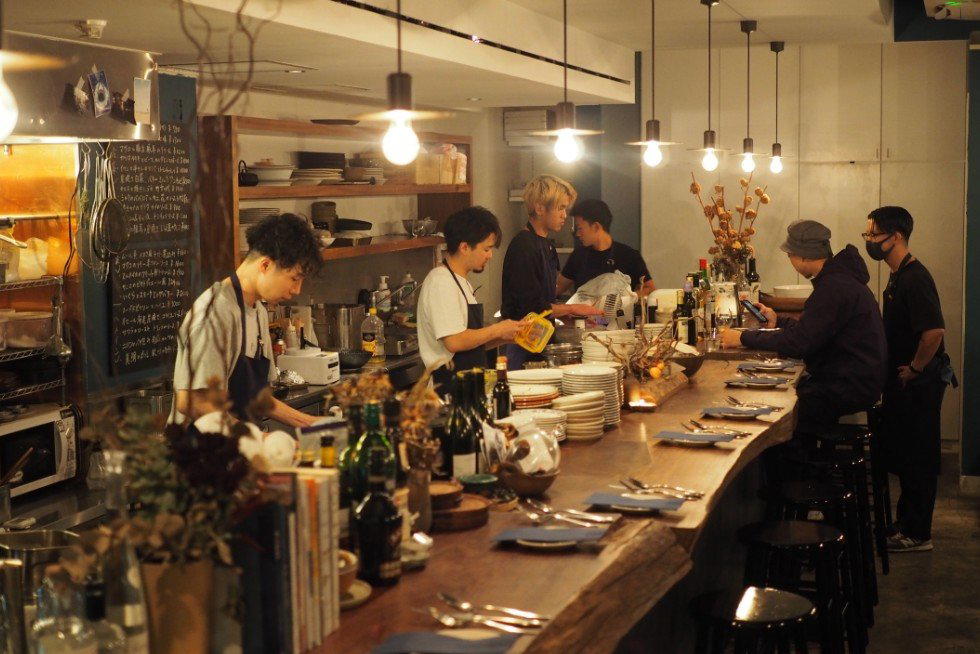
Shibuya's Basement Tier and the Restaurants That Work Below the Radar
Tokyo's dining culture has always maintained two parallel tracks: the internationally legible fine-dining circuit, with its Michelin stars and tasting-menu formats priced for expense accounts, and a quieter layer of neighbourhood-rooted restaurants that local diners return to weekly. Shibuya's Udagawacho district sits at an interesting intersection of these two tracks. The area is better known for streetwear retail and music venues than for serious eating. ペス, a Seafood French Bistro in Udagawacho, Shibuya, is part of that quieter stratum.
Basement restaurants in Tokyo carry their own logic. Lower rent allows more investment in product, and the physical separation from street level creates a sense of deliberate entry that affects the pace of service. Many of the city's more focused small-format operations, across categories from yakitori to French, have historically chosen B1F addresses for this reason. The trade-off is visibility.
Sustainability Positioning in Tokyo's Independent Restaurant Scene
The broader shift toward sourcing transparency and waste-reduction practices has reached Tokyo's independent restaurant tier over the past several years, and it has done so differently than in European markets. Where London or Copenhagen restaurants often foreground sustainability as an explicit brand identity, Tokyo operators more commonly fold ethical sourcing and minimal-waste cooking into a general philosophy of product respect that traces back to washoku principles. The distinction matters: in the Japanese context, using the whole animal or building menus around what is seasonally available from a specific region is not necessarily framed as an environmental gesture; it is simply the disciplined approach that quality demands.
Restaurants operating in Shibuya at the independent level face a particular set of sourcing decisions. The wholesale channels available to a basement restaurant in Udagawacho differ from those accessible to a Ginza counter with the purchasing volume and supplier relationships that come with twelve-plus years of operation. Smaller operations often build direct relationships with producers, farmers, or fishermen partly out of necessity and partly because it gives them access to quantities and varieties that never reach the large-market system. This approach, when sustained, tends to produce tighter seasonal menus with fewer ingredients sourced from outside their natural windows.
For diners who follow this kind of restaurant closely, the sustainability story is less about certification or marketing language and more about what arrives on the plate across different visits. A menu that changes in response to what is actually available, rather than what has been pre-committed to a tasting format, is one of the more reliable signals that a kitchen is working with rather than against seasonal supply chains. Tokyo venues working in this mode include some of the city's more demanding dining rooms, among them L'Effervescence, which has built a sustained reputation for sourcing from small Japanese producers, and Crony, which applies a similar ethic to its French-inflected format.
Placing ペス in the Tokyo Context
What is known is the address: basement level, Udagawacho, Shibuya, Tokyo. That address alone places the restaurant outside the circuits that generate heavy international attention. It is not in the Ginza or Minami-Aoyama belt where Harutaka, RyuGin, and Sézanne operate with full international visibility. That is a meaningful distinction for diners who have already worked through Tokyo's most-documented tier and are looking for smaller, less-trafficked rooms.
Japan's regional dining scene offers useful comparison points for understanding how independent operators at this level tend to position themselves. HAJIME in Osaka and Gion Sasaki in Kyoto represent the documented end of that spectrum, with formal recognition and established booking infrastructure. At the other end sit venues that function almost entirely through local networks, with no digital footprint to speak of. akordu in Nara and Goh in Fukuoka occupy intermediate positions. ペス, based on its address profile and the absence of internationally aggregated data, sits closer to the local-network end.
International diners accustomed to venues with clear online booking, published menus, and price-range transparency will need to approach a restaurant at this level differently. Discovery often begins with a contact at a Tokyo hotel concierge desk or through a Japanese dining community rather than through the standard aggregator platforms. This is not unusual in a city where particularly consistent cooking operates entirely outside the digital review ecosystem. Comparable dynamics, though in different culinary registers, apply to venues like 一本木 菜川製 in Nanao and 夕仙山乃 in Sapporo.
Planning a Visit
The address is confirmed: B1F, 37-14 Udagawacho, Shibuya, Tokyo. Udagawacho is walkable from Shibuya Station's Hachiko exit in under ten minutes, and the neighbourhood is dense with independent retail and food operations that make the surrounding area worth time before or after a meal. Reservations are recommended. Contacting the venue directly before visiting is the practical route.
For diners building a Tokyo itinerary that extends beyond the established fine-dining tier, Shibuya's independent restaurant layer rewards patience. Those travelling beyond Tokyo may also find value in the regional spread across 湖畔庵 in Takashima, 庄羽屋 in Nishikawa Machi, Birdland in Sakai, and Bistro Ange in Toyohashi.
Logistics at a Glance
| Venue | Neighbourhood | Price Tier | Booking Visibility | International Profile |
|---|---|---|---|---|
| ペス | Udagawacho, Shibuya | Not published | Low / local network | Minimal |
| L'Effervescence | Minami-Aoyama | ¥¥¥¥ | Direct / online | High |
| Crony | Minami-Aoyama | ¥¥¥¥ | Direct / online | Growing |
| Harutaka | Ginza | ¥¥¥¥ | Referral / omakase | High |
Recognition Snapshot
Comparable venues nearby, for context on price, style, and recognition.
| Venue | Cuisine | Price | Notes |
|---|---|---|---|
| ペスThis venue — the venue you are viewing | Seafood French Bistro | $$$ | Not listed |
| YOSHIDA HOUSE | French Bistro | $$$ | Shibuya |
| 野田 | Contemporary French Fine Dining | $$$ | Shibuya |
| デュ バリー | Casual French Bistro with Reims Regional Specialties | $$$ | Setagaya |
| The French Kitchen (フレンチ キッチン) | Classic French Bistro | $$$ | Roppongi |
| KINO_ | Innovative French with Hokkaido ingredients | $$$ | Shibuya |














At a Glance
- Modern
- Cozy
- Trendy
- Date Night
- Special Occasion
- Open Kitchen
- Natural Wine
Current opening hours
- Monday
- 5–11:30 PM
- Tuesday
- 5–11:30 PM
- Wednesday
- 5–11:30 PM
- Thursday
- 5–11:30 PM
- Friday
- 5–11:30 PM
- Saturday
- 5–11:30 PM
- Sunday
- Closed
Hours can change for holidays and private events. Last verified .
Stylish and appealing space with a casual yet sophisticated atmosphere for enjoying natural wines and seafood.