A French butchery-focused restaurant occupying a basement space in Yutenji, Meguro, ラ・ブーシェリー・デュ・ブッパ operates within Tokyo's quieter, neighbourhood-anchored French dining tier, distinct from the high-profile Michelin circuit. Its name signals a boucherie tradition: meat-centred, sourcing-led, and rooted in a style of French cooking that prioritises the provenance of the cut over the performance of the plate.
Pearl is the En Primeur Club membership app — saves, bookings, and concierge access live there. Same editors, same standards.
- Address
- Japan, 〒153-0052 Tokyo, Meguro City, Yutenji, 1 Chome−1−1 リベルタ祐天寺 B1F
- Phone
- +81337939090
- Website
- dubuppa.com
- Directions
- Get directions
 Saves & bookings on Pearl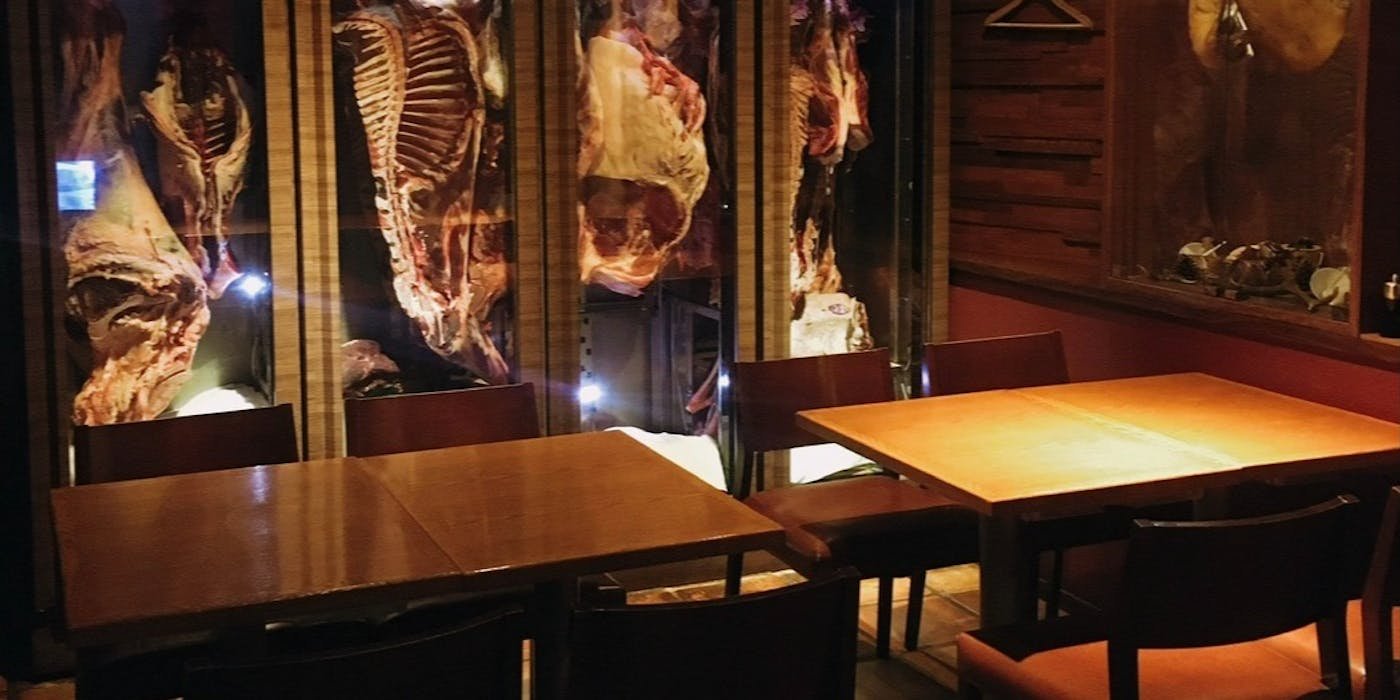
French Butchery in a Basement: Yutenji's Sourcing-Led Approach
Tokyo's French restaurant scene has long been sorted into two visible tiers: the Michelin-decorated rooms in Minami-Aoyama and Azabu, and the quieter neighbourhood bistros that operate outside the awards infrastructure entirely. ラ・ブーシェリー・デュ・ブッパ belongs to the second category in geography but aligns itself philosophically with the boucherie tradition that predates the modern tasting-menu format, a tradition that treats the sourcing and butchery of meat as the central act of the kitchen, not a supporting one. In a city where French cooking is often filtered through Japanese precision and kaiseki-adjacent restraint, a restaurant whose name foregrounds the butcher's counter represents a specific, deliberate positioning.
The address tells part of the story. Yutenji, in Meguro City, sits several train stops from the neighbourhoods that dominate Tokyo's fine dining conversation. That distance is not a disadvantage so much as a signal. Restaurants that open in Yutenji rather than Nishi-Azabu are typically not chasing the same audience as the tasting-menu French rooms clustered around Omotesando. They are, instead, building a local guest base that returns regularly, where the value proposition is consistency and sourcing integrity rather than theatrical progression through a multi-course format.
What the Name Signals: Boucherie as Editorial Statement
The boucherie model, as it has been practised in Lyon, in Paris's 5th arrondissement, and in the bistrot de quartier tradition more broadly, is among the more sourcing-transparent formats in French cooking. The butcher's shop and the restaurant operate in dialogue: what comes in whole is broken down, and the menu reflects what was available, not what was planned months in advance. This is a fundamentally different rhythm from the tasting-menu format that dominates Tokyo's upper French tier, where venues like Sézanne and Crony build extended seasonal sequences around a fixed narrative structure.
In Japan, the sourcing dimension of this model connects to a well-developed infrastructure. Japanese wagyu and regional breeds from prefectures like Kagoshima, Miyazaki, and Iwate have created a domestic meat supply with a level of traceability and grading specificity that French boucherie chefs rarely encounter in their home country. A Tokyo restaurant working within the boucherie framework can access that supply chain while applying the technique vocabulary of French butchery, a combination that does not have a direct equivalent in Paris or Lyon. The same dynamic plays out in Japan's broader restaurant geography: HAJIME in Osaka and Gion Sasaki in Kyoto both demonstrate how French or Franco-Japanese frameworks gain a different character when Japanese ingredient sourcing becomes the operating premise.
Meguro's Neighbourhood French Tier
Meguro City hosts a disproportionate number of independently operated French and European restaurants relative to its profile in international dining guides. The ward's residential density and its population of food-engaged local residents have supported a bistro ecosystem that operates largely below the radar of the Michelin inspectorate, which has historically concentrated its attention on central Tokyo and the high-spend districts to the west and south. This creates a specific type of restaurant: technically accomplished, often sourcing-led, and priced for regular return rather than special occasion spending.
Within that context, a basement location, the B1F address at リベルタ祐天寺, is common shorthand for a certain kind of seriousness. Basement rooms in Tokyo's residential neighbourhoods trade in intimacy rather than spectacle. They tend toward lower seat counts, lower ambient noise, and a format that keeps the focus on what arrives on the plate. The comparison set here is not Harutaka or RyuGin. It is closer to the neighbourhood French dining model that has produced durable, repeat-visit restaurants across Meguro, Nakameguro, and the Yutenji catchment area, a tier that rewards the guest willing to move away from the obvious addresses.
How This Fits Into Japan's Wider French Dining Geography
Tokyo is not the only Japanese city where French technique has been adapted through a local sourcing lens. Akordu in Nara applies a Basque-inflected framework to Nara's agricultural produce. Goh in Fukuoka operates within Kyushu's specific ingredient geography. Further afield, regional destinations including restaurants in Nanao, Sapporo, Takashima, and Nishikawa Machi all demonstrate the degree to which France-influenced cooking has been absorbed and redistributed across Japan's regional food culture. The boucherie format, with its explicit emphasis on where the animal came from and how it was broken down, sits at the more traceable end of that continuum.
For guests whose reference points are international, Le Bernardin in New York City and Atomix represent different models of what French-influenced fine dining looks like when transplanted outside France, the former built around seafood sourcing at the highest price tier, the latter a Korean-accented tasting format. The boucherie model that ラ・ブーシェリー・デュ・ブッパ names itself after is closer to the original bistro infrastructure than to either of those approaches. It also sits at a different point on the sourcing-transparency spectrum from bistro formats in Tokyo's peer cities: Bistro Ange in Toyohashi and Birdland in Sakai each occupy distinct positions within Japan's broader range of meat-focused European-influenced restaurants.
Planning Your Visit
Comparable Options
Comparable venues nearby, for context on price, style, and recognition.
| Venue | Cuisine | Price | Notes |
|---|---|---|---|
| ラ・ブーシェリー・デュ・ブッパThis venue — the venue you are viewing | French Wild Game Brasserie | $$$$ | Not listed |
| アルゴリズム | Modern French Fine Dining | $$$$ | Minato |
| ジランドール | Modern French Brasserie | $$$$ | Shinjuku |
| ラトリエ ドゥ ジョエル・ロブション | Modern French Counter Dining | $$$$ | Minato |
| ギンザ トトキ | Natural French Fine Dining | $$$$ | Chūō |
| トワヴィサージュ | Modern French Fine Dining | $$$$ | Chūō |










At a Glance
- Elegant
- Intimate
- Date Night
- Special Occasion
- Open Kitchen
- Sake Program
Current opening hours
- Monday
- Closed
- Tuesday
- Closed
- Wednesday
- 6–10:30 PM
- Thursday
- 6–10:30 PM
- Friday
- 6–10:30 PM
- Saturday
- 6–10:30 PM
- Sunday
- 6–10:30 PM
Hours can change for holidays and private events. Last verified .
Cozy basement setting with glass-walled aging refrigerators displaying maturing meats, creating an intimate and authentic butcher-brasserie atmosphere.