
リストランテ ダ・ニーノ sits in Minami-Aoyama, one of Tokyo's more considered addresses for Italian dining, a neighbourhood where European-influenced kitchens have long operated alongside Japan's own precision-led traditions. The restaurant occupies the ground floor of Grand Maison Minamiaoyama in Nogizaka, placing it within a residential pocket that rewards guests who seek out quieter, less commercial dining rooms.
Pearl is the En Primeur Club membership app — saves, bookings, and concierge access live there. Same editors, same standards.
- Address
- Japan, 〒107-0062 Tokyo, Minato City, Minamiaoyama, 1 Chome−15−19 グランドメゾン南青山 乃木坂1F
- Phone
- +81334019466
- Website
- ninolentini.jp
- Directions
- Get directions
 Saves & bookings on Pearl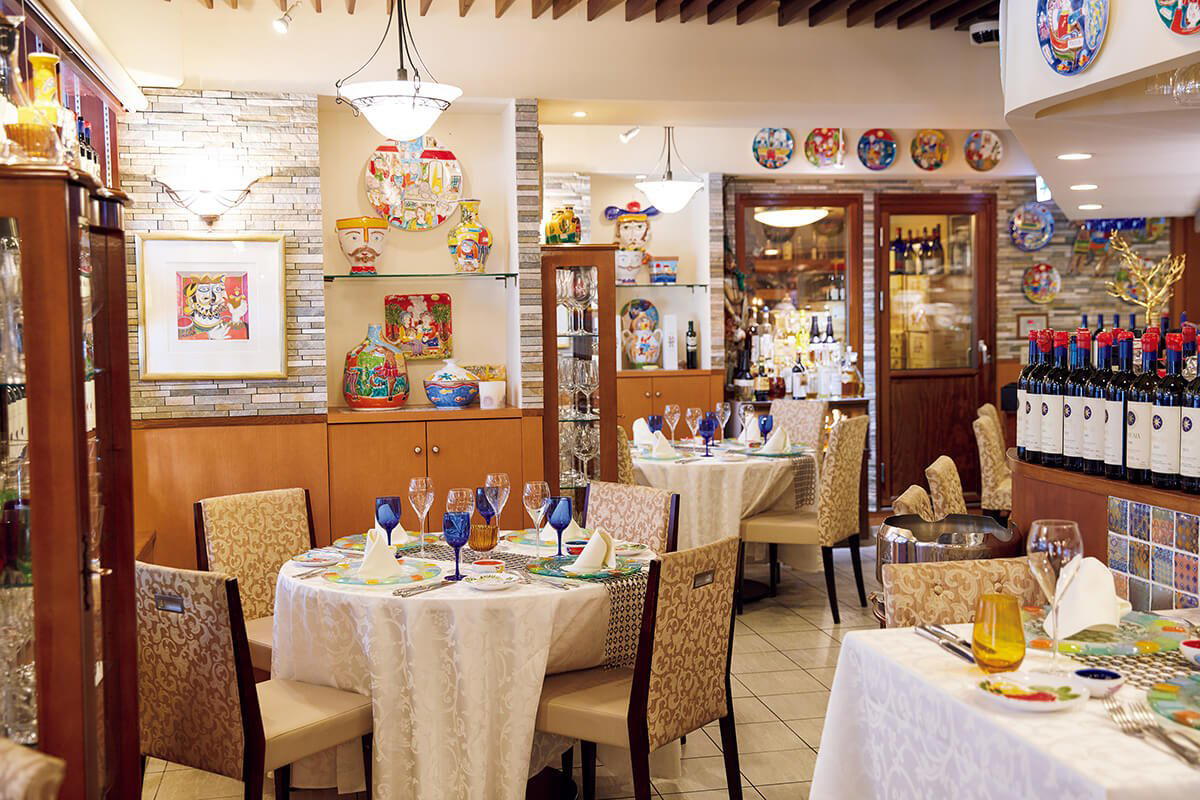
Italian Dining in Minami-Aoyama: Where European Tradition Meets Tokyo Precision
What began as direct imports, pasta and pizza adapted to Japanese palates, has matured into a category where the country's obsession with ingredient quality, sourcing rigour, and craft technique has reshaped what Italian cuisine can mean. Minami-Aoyama sits at the sharper end of that shift. The neighbourhood, which stretches between Nogizaka and Omotesando, has accumulated a concentration of European-influenced restaurants that operate less like transplants and more like local institutions with European vocabularies. L'Effervescence and Sézanne exemplify how French technique has taken root at the highest tier; Italian counterparts occupy a parallel but less loudly awarded space. リストランテ ダ・ニーノ operates within that context, on the ground floor of Grand Maison Minamiaoyama in the Nogizaka pocket of Minato City.
The Address and What It Signals
Location in Tokyo dining rarely functions as mere geography. Nogizaka, directly adjacent to the Nogizaka station on the Chiyoda Line, is a residential-commercial hybrid that attracts restaurants preferring a lower profile than Roppongi or the main Omotesando strip. The area's dining rooms tend toward the intimate rather than the theatrical, a format that suits Italian cuisine at its less performative leading. Grand Maison Minamiaoyama, as a building type, is a mixed-use residential complex rather than a purpose-built dining destination, which places ダ・ニーノ in a category of Tokyo restaurants where the room itself makes no claims on your attention. In a city where some restaurants exist as spectacle first and food second, that restraint carries its own editorial statement. Comparable positioning, European technique in a quieter residential-adjacent address, can be seen in how Crony operates its innovative French program away from the obvious destination corridors.
Sustainability as a Framework for Italian Sourcing in Tokyo
The sustainability story in Tokyo's fine dining sector has developed fastest in kitchens where the chef's training intersects with Japan's existing culture of producer relationships. Italian cuisine, with its foundational emphasis on seasonal, regional ingredients, translates more naturally than most European traditions into Japan's own hyper-local sourcing networks. Kitchens working in this space typically build supplier relationships with farmers across prefectures, Hokkaido dairy, Kyushu vegetables, domestic heritage breed proteins, rather than importing the majority of their larder. This is not a recent trend so much as an accelerating one: Tokyo's Italian restaurants at the serious end of the market have moved steadily away from the assumption that authenticity requires European provenance, and toward a model where authenticity is defined by ingredient integrity regardless of origin.
The broader Japanese restaurant ecosystem has made this shift easier. The same networks that supply kaiseki kitchens with foraged mountain vegetables or carefully raised wagyu are available to Italian chefs willing to adapt their menus to what those networks produce. RyuGin has demonstrated over years how Japanese seasonal produce can carry a tasting menu; Italian kitchens face fewer structural constraints in applying the same logic, since pasta and risotto formats accommodate almost any seasonal ingredient. The result, at the better end of Tokyo's Italian scene, is menus that change more frequently, waste less through nose-to-tail and root-to-leaf approaches, and create a tighter argument for why dining here, in this city, on this particular ingredient matters.
For context on how this sourcing philosophy plays out across Japan's broader fine dining geography, HAJIME in Osaka and akordu in Nara both demonstrate how European-trained chefs working with Japanese produce have developed distinctive regional identities rather than generic fusion. Regional Japanese destinations like Nanao, Takashima, and Nishikawa Machi have also developed restaurant cultures where local producer relationships are foundational rather than incidental.
Peer Context: Where ダ・ニーノ Sits in the Tokyo Italian Bracket
Tokyo's Italian restaurants operate across a wide price and ambition range. At the summit tier, Michelin-starred rooms command tasting menus priced alongside their French counterparts. Below that sits a middle bracket of serious trattorias and ristoranti where the cooking is technically accomplished, the sourcing is considered, and the format is less ceremonial than the starred rooms. ダ・ニーノ's Minami-Aoyama address and residential building context suggest it belongs in the latter category, a room where the transaction is about the food and the atmosphere rather than the award architecture. For reference, Tokyo's most formally recognised Italian rooms tend to occupy dedicated restaurant buildings or hotel spaces; a ground-floor residential address signals a different set of priorities.
This places ダ・ニーノ in a different competitive conversation than, say, Harutaka, which operates at the rarified end of the sushi counter format with corresponding booking pressures, or the French tasting menu rooms that define Tokyo's most-awarded category. The Italian bracket in Minami-Aoyama rewards a different kind of attention: guests who know the cuisine well enough to evaluate the pasta, the sauce balance, and the wine list without needing a Michelin rosette to confirm the decision. For international comparisons on what serious European-rooted cooking looks like when it commits to a specific ingredient and sustainability philosophy, Le Bernardin in New York City and Atomix both offer reference points for how discipline in sourcing and format can define a restaurant's identity independent of spectacle.
Planning Your Visit
Nogizaka station (Chiyoda Line, exit 1) places guests within a short walk of the Grand Maison Minamiaoyama building on Minamiaoyama 1-chome. The neighbourhood is quieter in the evenings than Roppongi or Shibuya, which suits pre-dinner transit and post-dinner movement. Reservations: Essential. Dress: Smart casual. Budget: About $120 per person. Timing: Open Monday through Saturday, 11:30 AM to 3 PM and 5:30 PM to 11 PM; closed Sunday.
For a broader picture of where ダ・ニーノ sits within Tokyo's full dining offer, the EP Club Tokyo restaurants guide maps the city's key rooms across cuisine type and price tier. Those extending their Japan itinerary to Kyoto should note Gion Sasaki as a reference point for how seriously Japan's regional cities now compete with Tokyo on ingredient-led fine dining. Goh in Fukuoka, Sapporo, and Birdland in Sakai extend that argument further. For European-style dining outside major urban centres, Bistro Ange in Toyohashi demonstrates how regional Japanese cities have developed their own serious European-influenced rooms.
Style and Standing
Comparable venues nearby, for context on price, style, and recognition.
| Venue | Cuisine | Price | Notes |
|---|---|---|---|
| リストランテ ダ・ニーノThis venue — the venue you are viewing | Authentic Sicilian | $$$$ | Not listed |
| Argento | Italian Contemporary | $$$$ | Chūō |
| Ristorante Hiro Aoyama | Seasonal Italian Fine Dining | $$$$ | Minato |
| Inbosuko Jingumae | High-end Seasonal Italian Counter | $$$$ | Shibuya |
| Etruschi | Innovative Italian | $$$$ | Minato |
| 神楽坂 ヴェーリ | Modern Italian Fine Dining | $$$$ | Shinjuku |
Recognition history
Dated appearances from independent guides and award organizations, with the underlying list record or original source where available.
Gambero Rosso 2 Forchette
Gambero Rosso













At a Glance
- Elegant
- Sophisticated
- Intimate
- Classic
- Date Night
- Business Dinner
- Special Occasion
- Open Kitchen
- Private Dining
- Standalone
- Extensive Wine List
- Sommelier Led
- Local Sourcing
- Sustainable Seafood
Current opening hours
- Monday
- 11:30 AM–3 PM, 5:30–11 PM
- Tuesday
- 11:30 AM–3 PM, 5:30–11 PM
- Wednesday
- 11:30 AM–3 PM, 5:30–11 PM
- Thursday
- 11:30 AM–3 PM, 5:30–11 PM
- Friday
- 11:30 AM–3 PM, 5:30–11 PM
- Saturday
- 11:30 AM–3 PM, 5:30–11 PM
- Sunday
- Closed
Hours can change for holidays and private events. Last verified .
Pleasantly decorated with lively, whimsical touches including colorful plates and an extensive wine collection displayed prominently; warm and welcoming yet refined atmosphere that balances rustic Sicilian tradition with elegant sophistication.