
Our verdict
3110NZ By LDH Kitchen occupies a particular position in Tokyo's premium dining conversation — a venue operating under the LDH Kitchen umbrella where the interplay between kitchen craft, beverage direction, and front-of-house choreography defines the experience as much as any single dish. Tokyo's appetite for collaborative, team-driven dining formats has grown steadily, and this address sits within that broader shift.

Pearl is the En Primeur Club membership app — saves, bookings, and concierge access live there. Same editors, same standards.
- Address
- Japan, 〒153-0042 Tokyo, Meguro City, Aobadai, 1 Chome−18−7 カスタリア中目黒 1F
- Phone
- +81 3-5422-3351
- Hours
- Mon–Sat 12–2 PM, 6–11 PMSun Closed
- Website
- 3110nz.com/
- Directions
- Get directions
The menu
What to order
- Otoro sushi
- Uni sushi
- Ankimo
- Nodoguro soup
Where the Room Does as Much Work as the Kitchen
Tokyo's premium dining rooms have a way of announcing themselves before the first course arrives. The quality of the silence, the angle of the lighting, the precise distance between tables — these are decisions made long before any guest sits down, and in the city's more considered restaurants, they carry as much intent as the food itself. 3110NZ By LDH Kitchen operates within this tradition, where the physical environment functions as the first course in a sequence that the full team — kitchen, floor, and beverage, is expected to sustain across the entire meal.
The LDH Kitchen name places this restaurant inside a group with cultural visibility in Japan, which brings both an audience and a set of expectations. What matters editorially is how the restaurant performs against the premium Tokyo dining field, a field that includes counter-format sushi houses like Harutaka, French-rooted tasting menus at L'Effervescence and Sézanne, and kaiseki precision at RyuGin. That field sets a high floor. Restaurants that hold a place in it do so through consistent execution across multiple service dimensions, not through any single standout element.
The Team Dynamic at the Centre of the Experience
Across Tokyo's top-tier restaurants, the shift from chef-as-singular-auteur toward a more distributed model of excellence has been one of the defining developments of the past decade. The most discussed dining rooms in the city are increasingly ones where the sommelier's intervention, the front-of-house pacing, and the kitchen's output feel genuinely coordinated rather than hierarchically arranged. Crony, for instance, has built recognition partly on the coherence between its innovative French cooking and the service architecture around it. The principle is the same wherever it applies: the experience is authored collectively, and the seams between departments should be invisible to the guest.
3110NZ By LDH Kitchen positions itself within this model. The name itself, a numeric designation paired with a group identity, signals a certain kind of deliberateness, a venue conceived as a specific address with a defined proposition rather than a chef's name above the door. In practice, that framing shifts attention toward the room as a whole: how the beverage program speaks to the kitchen's direction, how the floor team manages the rhythm between courses, and whether the cumulative effect justifies the investment a guest makes in time and money at this tier of dining.
This approach to team-led fine dining has parallels beyond Tokyo. In New York, Atomix has built an internationally recognised reputation on precisely this kind of coordinated execution, kitchen and floor working as a single authorial voice. Le Bernardin has sustained its position for decades on a similar principle, where service discipline is as closely managed as the cooking. The standard these rooms set is instructive for understanding what the leading team-driven formats in any city are measured against.
Tokyo's Premium Dining Field: Where This Address Sits
Tokyo remains the city with more Michelin stars than any other on the planet, which means competitive positioning here is unusually granular. The premium end of the market, the tier where a dinner represents a significant financial and logistical commitment, is contested across multiple formats and cuisines. Japanese-rooted fine dining, whether kaiseki or sushi omakase, operates with a set of conventions and a critical vocabulary that Western formats have spent years learning to engage with rather than replace.
Restaurants operating in this environment that are not built around a single Japanese culinary tradition tend to define themselves through the coherence of their overall proposition: the beverage program's ambition, the interior's relationship to the food, and the front-of-house's ability to translate the kitchen's intent to the guest. The most successful examples across Japan illustrate this clearly, HAJIME in Osaka, Gion Sasaki in Kyoto, and Goh in Fukuoka each achieve distinction through the integration of multiple service dimensions, not through any single headline element. Smaller regional addresses like akordu in Nara demonstrate that this model works at scale because it depends on consistency of vision, not on geography or size.
Within Tokyo specifically, the dining map rewards those who understand the difference between a restaurant that happens to be expensive and one that has built a coherent case for its price point. Venues like 一本木 名川制 in Nanao, 夕仔屋山乃 in Sapporo, and more casual-format addresses like Bistro Ange in Toyohashi and Birdland in Sakai each occupy clearly defined positions in the broader Japanese dining map, which is a useful reminder that the country's restaurant culture is not monolithic. Tokyo sits at the top of that map in terms of density and competition, and every restaurant operating here is implicitly priced and positioned against that density. For a fuller orientation to the city's dining options, our full Tokyo restaurants guide provides context across categories and price tiers. Further afield, addresses like 湖畔荘 in Takashima and 鳥羽屋 in Nishikawa Machi illustrate how Japan's fine dining ambition extends well beyond its major cities.
What to Expect From a Visit
What can be said with confidence is that restaurants operating under the LDH Kitchen umbrella in Japan carry group-level resources and design investment that typically translate into a certain baseline of environmental quality and service professionalism. The name recognition the group carries in Japan also means the restaurant has an established audience, which has implications for booking lead times, a consideration worth factoring into planning regardless of the specific booking method.
Guests approaching this address should arrive with the same orientation they would bring to any premium Tokyo dining room: punctuality is a baseline expectation, dietary requirements are leading communicated well in advance, and the experience is structured to be received rather than customised on the fly. Those are norms of the category, not restrictions unique to this venue.
Know Before You Go
- Location: Tokyo, Japan
- Group: LDH Kitchen
- Dietary requirements: Communicate at the time of reservation
- Dress code: Smart dress is the default expectation across Tokyo's premium dining rooms
- Nearest context: See our full Tokyo restaurants guide for neighbourhood and logistics orientation
Frequently asked questions
What should I eat at 3110NZ By LDH Kitchen?
As with most premium Tokyo restaurants, including peers like L'Effervescence and RyuGin, the kitchen leads the sequence and guests follow. Arriving with fixed expectations about specific dishes tends to work against the format these rooms are built around.
Is 3110NZ By LDH Kitchen reservation-only?
At the price tier and profile level where LDH Kitchen restaurants operate in Tokyo, reservation-only formats are the norm rather than the exception. Walk-in availability at this category of dining room is rare in any major Japanese city. Confirm the current booking method and availability directly with the venue, as policies at this tier can change seasonally or by service period.
What's the signature at 3110NZ By LDH Kitchen?
Without confirmed menu documentation, attributing a specific signature dish would be speculative. What the venue's position within the LDH Kitchen group and the competitive Tokyo dining field suggests is that the signature is more likely to be experiential, the coordination between kitchen and floor, the beverage pairing logic, than a single dish. For comparison, see how Harutaka defines its identity through format and craft rather than any single item.
Do they accommodate allergies at 3110NZ By LDH Kitchen?
Allergy and dietary accommodation is standard practice across Tokyo's premium dining tier, but the specifics depend on the kitchen's format and advance notice. Tokyo fine dining rooms, as a category, respond better to advance communication than to requests made on arrival.
How does 3110NZ By LDH Kitchen relate to LDH Japan's broader entertainment identity?
LDH Japan is primarily known as an entertainment and talent management company, and LDH Kitchen represents the group's extension into hospitality and dining. 3110NZ By LDH Kitchen sits within that hospitality arm, which means it carries both the group's design resources and its built-in audience. For guests approaching from a pure dining perspective, the relevant question is how the food and service program performs on its own terms, the same standard applied to any premium Tokyo address, from Crony to Sézanne.
Cuisine Context
Comparable venues nearby, for context on price, style, and recognition.
| Venue | Cuisine | Price | Awards | Notes |
|---|---|---|---|---|
| 3110NZ By LDH KitchenThis venue — the venue you are viewing | Modern Omakase Sushi with Art Gallery | $300–500 | Not listed | Not listed |
| The Okura | Luxury Japanese Fine Dining Collection | $200–300 | Not listed | Minato |
| Ginza Kira | Saga Beef Teppanyaki | $150–200 | Tabelog 100 #99 | Chūō |
| 銀座 すきやばし次郎 本店 | Edomae Omakase Sushi | $200–300 | World's 50 Best #16 · La Liste Top Restaurants | Chiyoda |
| 青華こばやし | 割烹・小料理 | $200–300 | Not listed | Shinjuku |
| Ningyocho Imahan (人形町今半) | Traditional Japanese Sukiyaki | $100–150 | Tabelog 100 #33 | Chūō |
Recognition history
Dated appearances from independent guides and award organizations, with the underlying list record or original source where available.
Opinionated About Dining Top Restaurants in Japan Recommended
Opinionated About Dining
Full recognition history (4 entries)
Opinionated About Dining Top Restaurants in Japan Ranked #402
Opinionated About Dining
Opinionated About Dining Top Restaurants in Japan Ranked #283
Opinionated About Dining
Opinionated About Dining Top Restaurants in Japan Highly Recommended
Opinionated About Dining












Details
- Modern
- Elegant
- Trendy
- Intimate
- Sophisticated
- Minimalist
- Date Night
- Special Occasion
- Chefs Counter
- Open Kitchen
- Design Destination
- Sake Program
- Local Sourcing
- Omakase
- Counter Dining
- Sake
Current opening hours
- Monday
- 12–2 PM, 6–11 PM
- Tuesday
- 12–2 PM, 6–11 PM
- Wednesday
- 12–2 PM, 6–11 PM
- Thursday
- 12–2 PM, 6–11 PM
- Friday
- 12–2 PM, 6–11 PM
- Saturday
- 12–2 PM, 6–11 PM
- Sunday
- Closed
Hours can change for holidays and private events. Last verified .
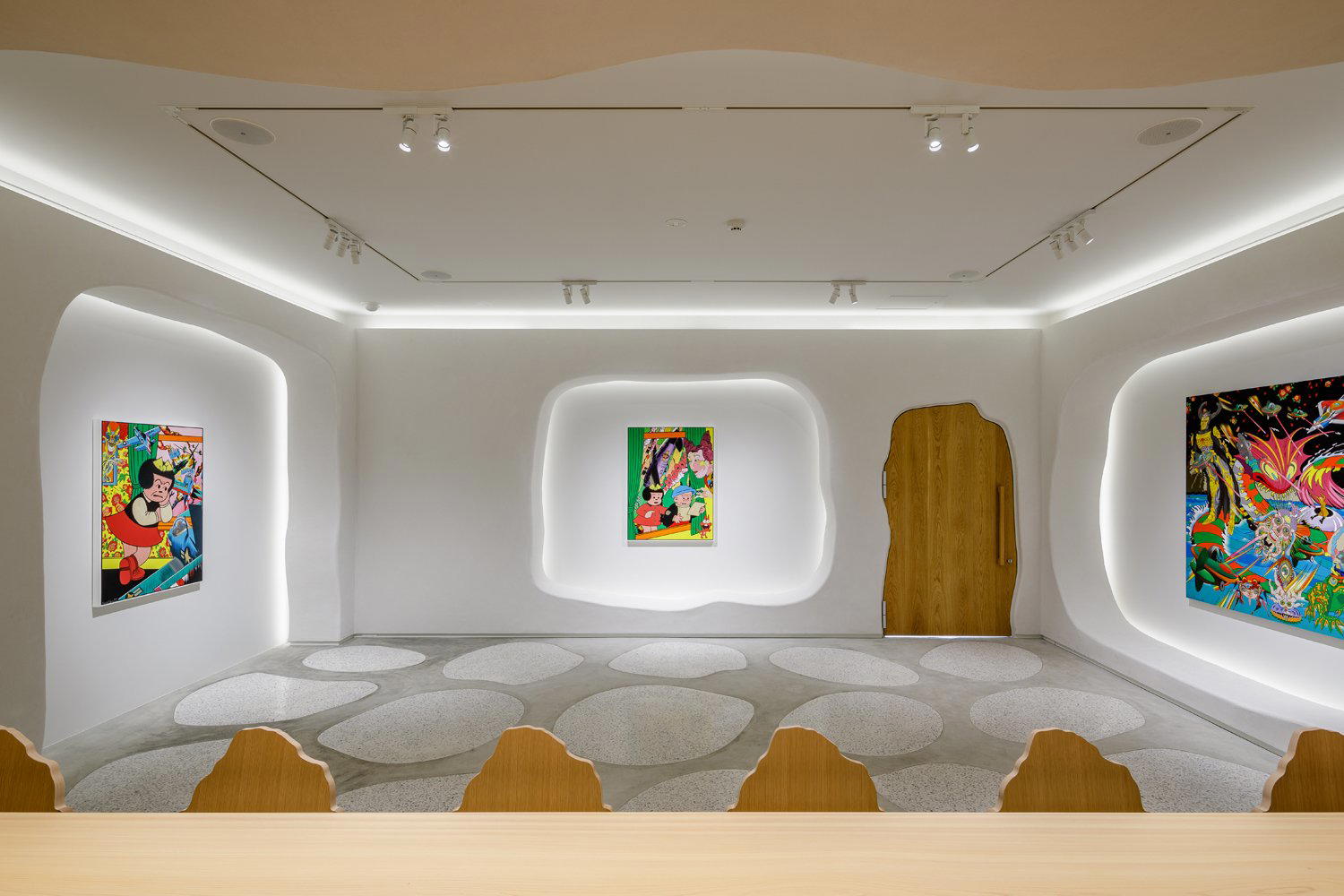
Minimalist and serene interiors with custom oak furniture, illuminated wall displays for rotating art exhibitions, and an avant-garde atmosphere.