立喰 鮨となり sits in Azabu-Juban, one of Tokyo's most residential yet quietly prestigious dining quarters, positioning itself within the city's standing-counter sushi format that has expanded rapidly over the past decade. The tachigui (standing-eat) format keeps the experience immediate and intimate, placing it in a different register from the omakase counters that dominate Tokyo's fine-dining conversation. For a meal that feels deliberate without the ceremony of a seated multi-hour tasting, this address in Minato-ku rewards attention.
Pearl is the En Primeur Club membership app — saves, bookings, and concierge access live there. Same editors, same standards.
- Address
- 麻布十番2-8-7 (M2K HoldingBLD 2F), 港区, 東京都, 106-0045
 Saves & bookings on Pearl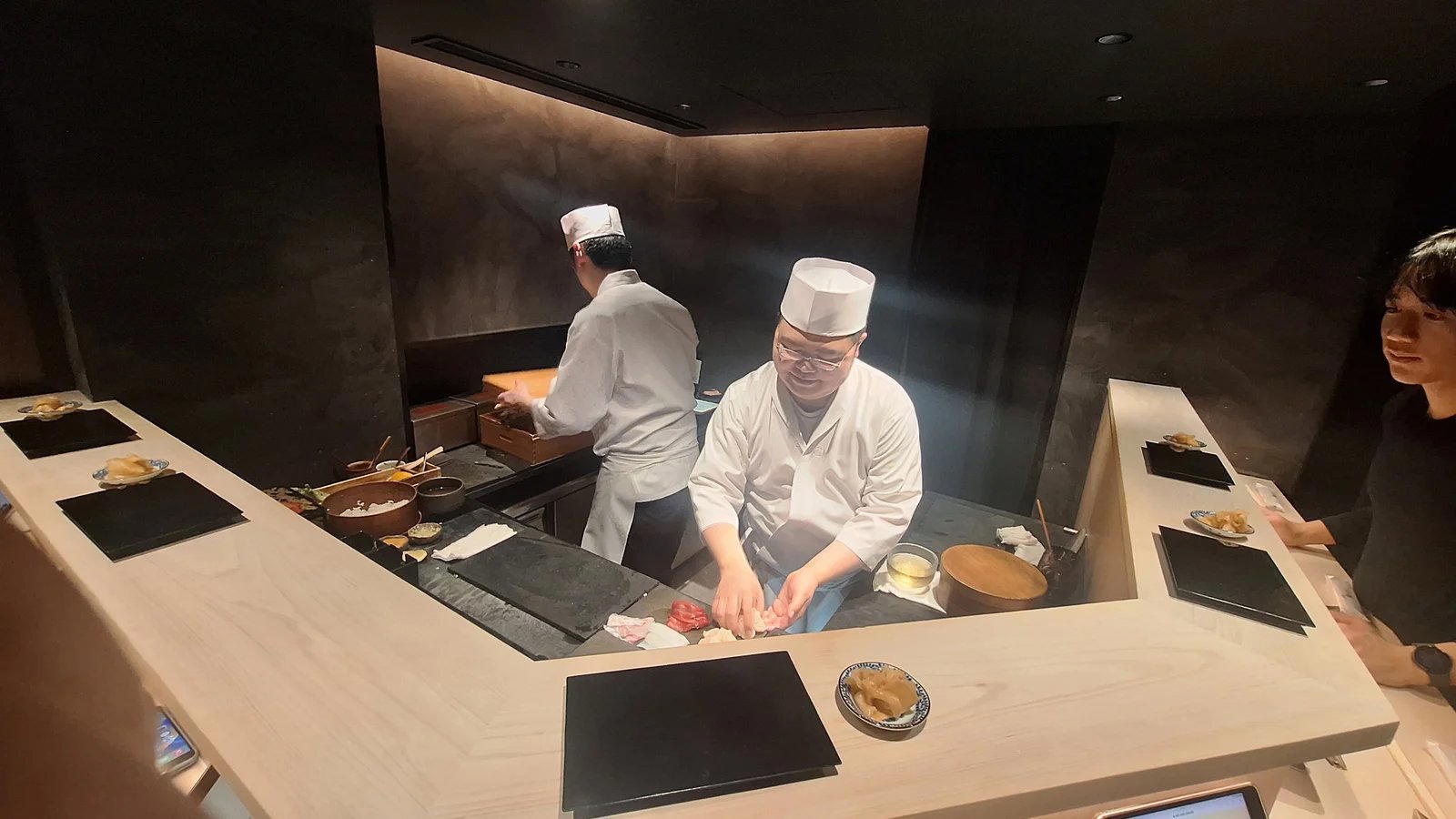
Standing Counter Sushi in Tokyo: What the Format Actually Means
Tokyo's sushi scene has never operated as a single tier. At the upper end, seated omakase counters in Ginza and Minato-ku, places like Harutaka, charge prices that compete with kaiseki or contemporary French in the same postcode. Below that bracket, a different format has grown steadily in presence and seriousness: the tachigui sushi counter, where guests eat standing, the pace is set by the itamae rather than the clock, and the rice-to-neta ratio tends to be more direct. 立喰 鮨となり, located on the second floor of a building in Azabu-Juban, belongs to this standing-counter category.
The tachigui format has older roots than its current fashionable iteration suggests. Standing sushi stalls were common in Edo-period Tokyo, when nigiri was street food sold from outdoor carts. What the contemporary version does is compress that democratising impulse into a proper interior setting, retaining the informality of posture while adding the hygiene, knife work, and sourcing rigour associated with seated establishments. For a diner choosing between an occasion that demands reverence and one that allows a little more movement and conversation, the standing counter occupies a genuinely useful middle position.
Azabu-Juban as a Dining Address
The Azabu-Juban neighbourhood in Minato-ku is worth understanding on its own terms before considering any individual venue. Unlike Ginza, where restaurant density is calculated partly for tourist and business-entertainment traffic, Azabu-Juban functions more as a residential dining district: expat households, long-term Tokyo residents, and a local crowd that eats out regularly rather than ceremonially. Rents support a range of formats, from long-running neighbourhood izakayas to more serious table-service restaurants, without the mandatory-prestige premium of central Ginza.
This context matters for occasion dining. A neighbourhood restaurant in Azabu-Juban can serve as a celebration venue that doesn't perform its own importance. If the occasion is a birthday dinner between close friends, or a quiet anniversary that doesn't require a tasting menu stretched over four hours, the district offers something that Roppongi's more conspicuous dining strip does not: discretion. Tokyo's fine-dining architecture across the city, from RyuGin to L'Effervescence to Sézanne, is extraordinarily well developed for high-ceremony events. What Azabu-Juban does, at its leading, is absorb the quieter ones.
Occasion Dining and the Standing Counter: What Works and What Doesn't
The question of whether a standing-counter sushi bar qualifies as an occasion venue is worth addressing directly. It depends on the occasion. For a milestone birthday requiring tablecloths, elaborate wine service, and a chef's parade of twelve courses, a tachigui format is the wrong choice; the ceremony of the room simply isn't there. But Tokyo's dining culture has always allowed for a broader definition of occasion than Western fine-dining norms. A serious nigiri session with a trusted friend, marked by ordering deliberately and eating attentively, functions as occasion dining even without ceremony.
Standing-counter sushi in particular creates a physical intimacy that seated service rarely matches. The counter height means conversation is direct. The itamae is working a metre away. There are no menus to hide behind, no elaborate plating to wait for, and no service team between the kitchen and the guest. For the right type of celebration, a promotion shared with a colleague, a first serious meal in Tokyo with someone who already knows the city, that directness is the point.
Across Japan, the range of seriously considered dining experiences at non-standard formats continues to expand. In Osaka, HAJIME represents the other extreme of that spectrum: maximalist, Michelin-starred, long. In Kyoto, Gion Sasaki anchors kaiseki within a deeply traditional frame. The point is that Japan's serious dining culture has never required a single format, and Tokyo's standing sushi counters are part of that variety, not a lesser version of it.
What to Know About This Address Specifically
The venue sits on the second floor of the M2K Holding Building at 麻布十番2-8-7, which places it slightly removed from the main Azabu-Juban shopping street. Second-floor locations in Tokyo often correlate with independent, owner-operated formats: the ground-floor premium isn't there, which frequently means lower overhead and more attention directed toward the product itself. That dynamic is well established across the city's restaurant culture, from the counter operations of Crony in its earlier format to neighbourhood Japanese restaurants across Shibuya and Shinjuku.
The name itself is informative. 立喰 (tachigui) means standing-eat. となり means neighbour or next door. The combined name suggests proximity and informality, which aligns with the neighbourhood character of Azabu-Juban more than with the prestige signalling of a Ginza omakase bar. That framing, deliberate or not, sets an expectation about the register of the experience. It is sushi taken seriously, delivered without the weight of its own ceremony.
For comparative reference elsewhere in Japan's serious dining geography, consider what venues like akordu in Nara, Goh in Fukuoka, and smaller regional addresses, 一本杉 川嶋 in Nanao, 夕月山乃 in Sapporo, or 湖雲庵 in Takashima, demonstrate about regional dining seriousness outside major urban centres. The standing sushi counter in central Tokyo operates in a different context entirely: it benefits from the city's procurement infrastructure, its fish market access, and its density of trained practitioners. These are structural advantages that translate to quality regardless of format.
Planning Your Visit
Azabu-Juban Station on the Namboku and Toei Oedo lines puts you within a short walk of the venue. The area is navigable on foot from Roppongi, though that walk is steeper than the subway makes it. For those comparing Tokyo's broader dining options, including international-register tables like Le Bernardin in New York or Atomix for reference on how Korean-influenced tasting menus frame the occasion-dining conversation internationally, the standing counter sushi format is a genuinely different proposition. It asks less of the diner's time and more of their attention per bite.
Regional comparisons across Japan are well covered by our coverage of 羽根屋 in Nishikawa Machi, Birdland in Sakai, and Bistro Ange in Toyohashi.
Quick reference: 立喰 鮨となり, 麻布十番2-8-7 M2K Holding BLD 2F, Minato-ku, Tokyo 106-0045. Dress code: smart casual. Reservations are essential.
Style and Standing
Comparable venues nearby, for context on price, style, and recognition.
| Venue | Cuisine | Price | Notes |
|---|---|---|---|
| 立喰 鮨となりThis venue — the venue you are viewing | Standing Sushi | $$$ | Not listed |
| Toriyaki Sasaya | Traditional Yakitori Course Menu | $$$ | Meguro |
| Toritama | Rare Cut Yakitori | $$$ | Shibuya |
| Akaoni | Sake Specialist Izakaya | $$$ | Setagaya |
| はなぶさ 麻布十番店 | Kansai-Style Charcoal-Grilled Unagi | $$$ | Azabu-Juban |
| Asakusa Juroku | Seasonal Soba-Kappo & Sushi | $$$ | Taitō |











At a Glance
- Intimate
- Elegant
- Modern
- Solo
- Date Night
- After Work
- Chefs Counter
- Sake Program
Stylish, compact counter space with a casual yet sophisticated atmosphere focused on quick, high-quality sushi service.