
Asakusa Juroku places soba in Tokyo’s serious dinner register rather than the quick-lunch category. Its 18-seat format, counter-and-private-room layout, repeated Tabelog 100 Soba selections, and course-led structure make it a useful reference point for how buckwheat noodles can anchor a full Japanese meal in Asakusa.
Pearl is the En Primeur Club membership app — saves, bookings, and concierge access live there. Same editors, same standards.
- Address
- Japan, 〒111-0032 Tokyo, Taito City, Asakusa, 4 Chome−37−8 小田井ビル 1F
- Phone
- +81 3-6240-6328
- Website
- asakusajuroku.main.jp
 Saves & bookings on Pearl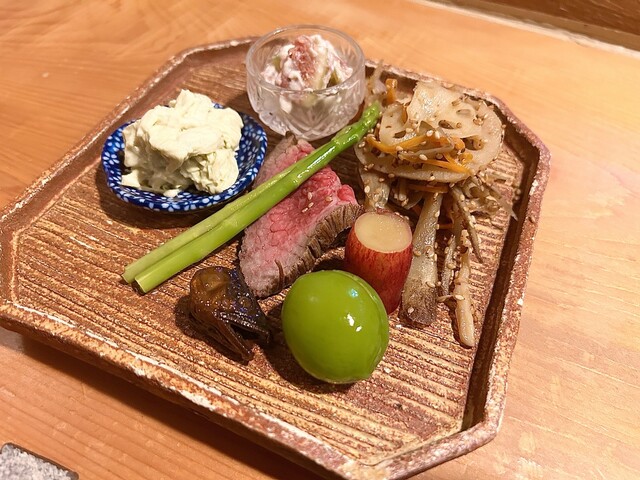
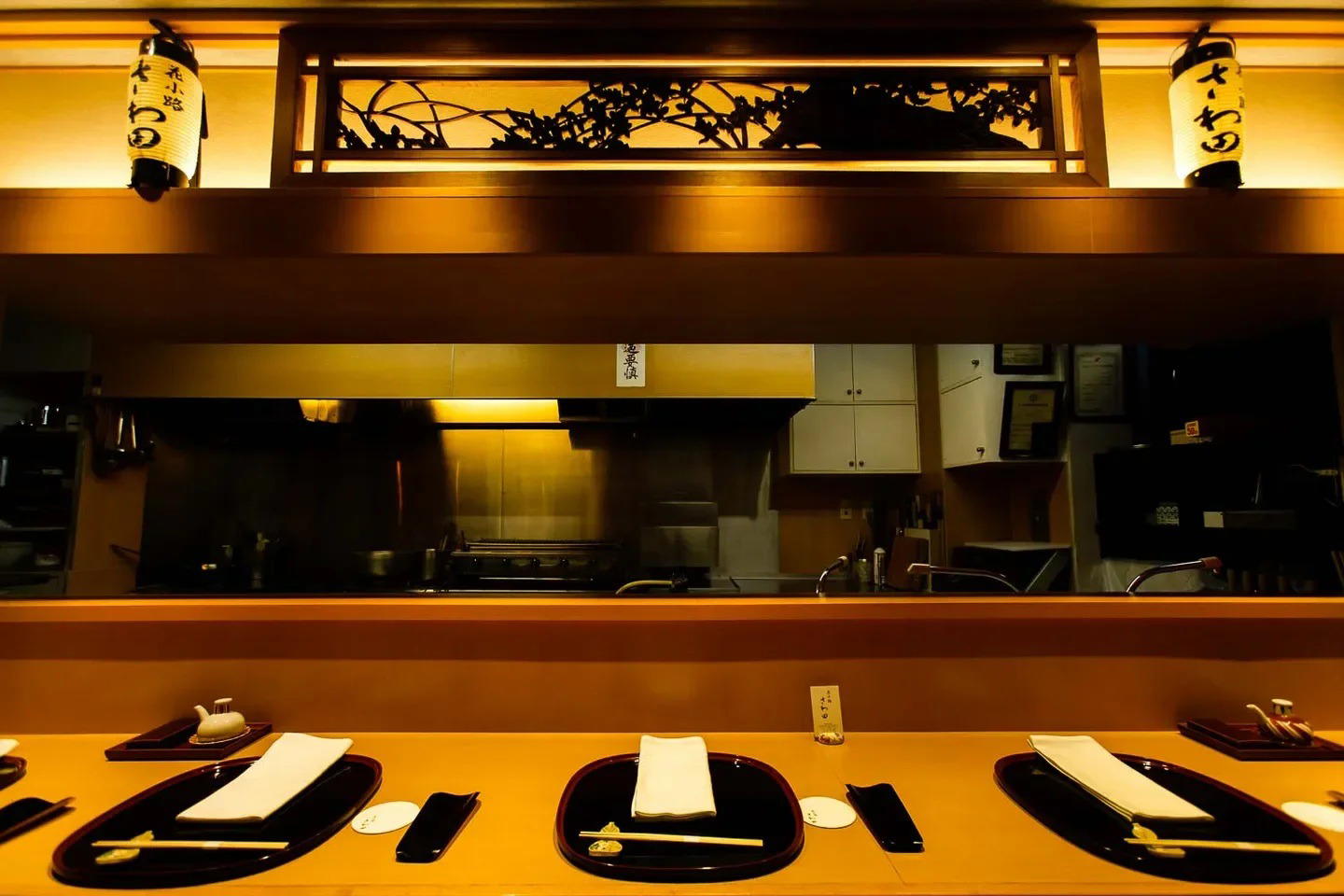
Asakusa after dark changes pace once the temple-side crowds thin. Streets north of the main sightseeing circuit grow quieter, and that shift matters for soba: visitors often reduce it to a fast lunch, but in Tokyo it also belongs to the evening table, where buckwheat noodles can close a sequence of Japanese dishes rather than carry the meal alone. Asakusa Juroku sits in that latter camp, with a compact 18-seat room, including an 8-seat counter and private rooms, and a menu that treats soba as the spine of dinner, not a side note.
That distinction is useful because Tokyo soba spans several worlds: station-adjacent counters for speed, old neighbourhood shops for daily rhythm, and more ambitious rooms where the noodle course functions almost like the final rice dish in kaiseki: a reset, a temperature shift, a study in texture and restraint. The restaurant’s repeated selection for Tabelog 100 Soba, including EAST 2025 and earlier selections in 2024, 2022, 2021, 2019, 2018, and 2017, places it in the latter conversation. The signal is not luxury theatre, but consistency in a category where regular local judgment carries weight.
Course-led soba, not a quick noodle stop
The menu architecture is the point. Dinner is organized around a basic course, with à la carte options possible depending on seating availability. This is not the soba stop to squeeze between temple visits and a train connection; it is closer to a Japanese dinner built toward noodles, supported by fish-focused cooking and a drinks list including sake, shochu, and wine. In Tokyo terms, the room sits between specialist soba shop and small-scale kappo, rather than the casual noodle bracket.
The price band reinforces that format. A dinner range of JPY 10,000 to JPY 14,999 sits well above everyday soba and below the city’s high-ticket sushi and counter kaiseki economy. In this middle-premium tier, craft has to justify itself without spectacle. Value is not portion size or ingredient rarity alone, but whether the sequence gives soba enough context to feel like the meal’s destination. For travellers used to treating noodles as budget food, this is the category correction.
Asakusa also frames the format differently from Ginza or Aoyama. The neighbourhood has a long relationship with old Tokyo dining, sweets, tempura, izakaya, and post-theatre eating, so a serious soba dinner here feels less like a concept than a continuation of local habits. Nearby comparison venues map the range: Asakusa Nagami belongs to the broader Japanese dining register, while HOMMAGE and オマージュ show how the district also supports French and innovative dining. Asakusa’s dining identity is not frozen in nostalgia; it has room for specialist formats grounded in older eating patterns.
The room suits counter focus and small private meals
Capacity shapes the experience as much as cooking. An 18-seat room limits turnover and gives the counter a clear role, while two private rooms for up to 5 people each can be combined for a larger private setting. That split allows two evenings: a counter meal with a close view of pacing, or a quieter dinner where the course structure supports entertaining and family use. In Tokyo, private rooms often signal business meals, celebrations, or multi-generational dining, not only solo regulars.
The restaurant is non-smoking, with counter seating, tatami-room elements, wheelchair access, and power outlets listed among facilities. These prosaic details describe a more flexible room than the tiny soba-shop stereotype. Children are welcome, including babies, preschoolers, and school-age children, and a kids menu is listed; families are asked to arrange by phone rather than online. In a city where small counters can be awkward for children, that distinction matters.
Operational details affect planning. The room opens for evening service, is listed as open year-round, and service may end when sold out. Reservations are available, and foreign guests are listed with a JPY 3,000 per-person service charge for translation support. Cancellations within three days excluding the reservation date are handled by phone, and delays of more than 30 minutes can trigger a service charge. Credit cards are accepted; electronic money and QR code payments are not. Parking is unavailable, though coin parking is nearby.
Where it fits in a Tokyo itinerary
For a Tokyo dining plan, Asakusa Juroku works as a focused evening rather than a catch-all recommendation. The case is strongest when the aim is to understand soba as a full dinner format, not merely eat noodles between larger reservations. It is also a useful counterpoint to sushi-led and yakitori-led itineraries: buckwheat, fish, sake, and shochu make a quieter grammar, but one that says much about Tokyo’s mature specialist dining culture.
Readers building a broader Tokyo map can compare the category with other Japanese formats, from 124. KAGURAZAKA (Yakitori) and 12/10 Shinjuku ten to seafood-leaning meals such as . 鮪と炭火焼き うお炭 秋葉原店. Tokyo’s breadth also leaves space for casual visual cafés like 2D Cafe and curry specialists such as 3 Chome no Curry Ya San, but soba at this level needs a different slot in the schedule.
For wider planning, use Our full Tokyo restaurants guide alongside Our full Tokyo hotels guide, Our full Tokyo bars guide, Our full Tokyo wineries guide, and Our full Tokyo experiences guide. Travellers extending the food thread beyond the capital can compare regional formats through -Grilled beef Sukiyaki- KAMAKURA TANUKIAN 鎌倉 たぬき庵 in Kamakura.cafe in Osaka.know in Kumamoto, (Shoku) Vietnam in Kawasaki, [Curry Senmon Ten] Maruyama Kyoju. in Sapporo, and [ki:] in Kyoto. For Japanese drinking culture abroad, Jōdo Saké Bar in Los Angeles and Onigiri Time in Pasadena show how focused Japanese formats translate outside Japan.
Cuisine and Credentials
Comparable venues at the same tier.
| Venue | Cuisine | Price | Notes |
|---|---|---|---|
| Asakusa JurokuThis venue — the venue you are viewing | Seasonal Soba-Kappo & Sushi | $$$ | Not listed |
| Tori Ki | Yakitori Omakase Counter | $$$ | Sumida |
| Ushiko Honten | Japanese Hotpot | $$$ | Chūō |
| Morita Ya Toukyou marunouchi ten | Traditional Kyoto-style sukiyaki & shabu-shabu | $$$ | Chiyoda |
| Tatsumi Soba Shimahei | Traditional soba kappo (multi-course buckwheat noodles) | $$$ | Shinjuku |
| Seo | Yakitori | $$$ | Minato |
Recognition history
Dated appearances from independent guides and award organizations, with the underlying list record or original source where available.
Tabelog 100 #68 · No. 68
Tabelog · Tabelog 100 - Soba - EAST - 2025






At a Glance
- Cozy
- Intimate
- Classic
- Date Night
- Special Occasion
- After Work
- Solo
- Business Dinner
- Chefs Counter
- Standalone
- Sake Program
- Local Sourcing
- Sustainable Seafood
Current opening hours
- Monday
- 6–11 PM
- Tuesday
- 6–10:30 PM
- Wednesday
- 6–10:30 PM
- Thursday
- 6–10:30 PM
- Friday
- 6–10:30 PM
- Saturday
- 6–10:30 PM
- Sunday
- 6–10:30 PM
Hours can change for holidays and private events. Last verified .
Small, counter-focused Japanese soba house with a calm, classic Asakusa feel, where the focus is on craftsmanship, seasonal ingredients, and a relaxed, grown-up atmosphere suited to quietly enjoying soba, sake, and snacks.