Akaoni occupies Sangenjaya, one of Tokyo's most characterful residential neighbourhoods, sitting well outside the Michelin-heavy circuits of Ginza and Minami-Aoyama. The address alone signals a particular kind of self-confidence — a place that draws its audience rather than positioning itself for foot traffic. For diners willing to cross the Setagaya ward line, the reward is a dining room shaped by neighbourhood rather than prestige geography.
Pearl is the En Primeur Club membership app — saves, bookings, and concierge access live there. Same editors, same standards.
- Address
- Japan, 〒154-0024 Tokyo, Setagaya City, Sangenjaya, 2 Chome−15−3 寺尾ビル
- Phone
- +81334109918
- Website
- akaoni39.com
- Directions
- Get directions
 Saves & bookings on Pearl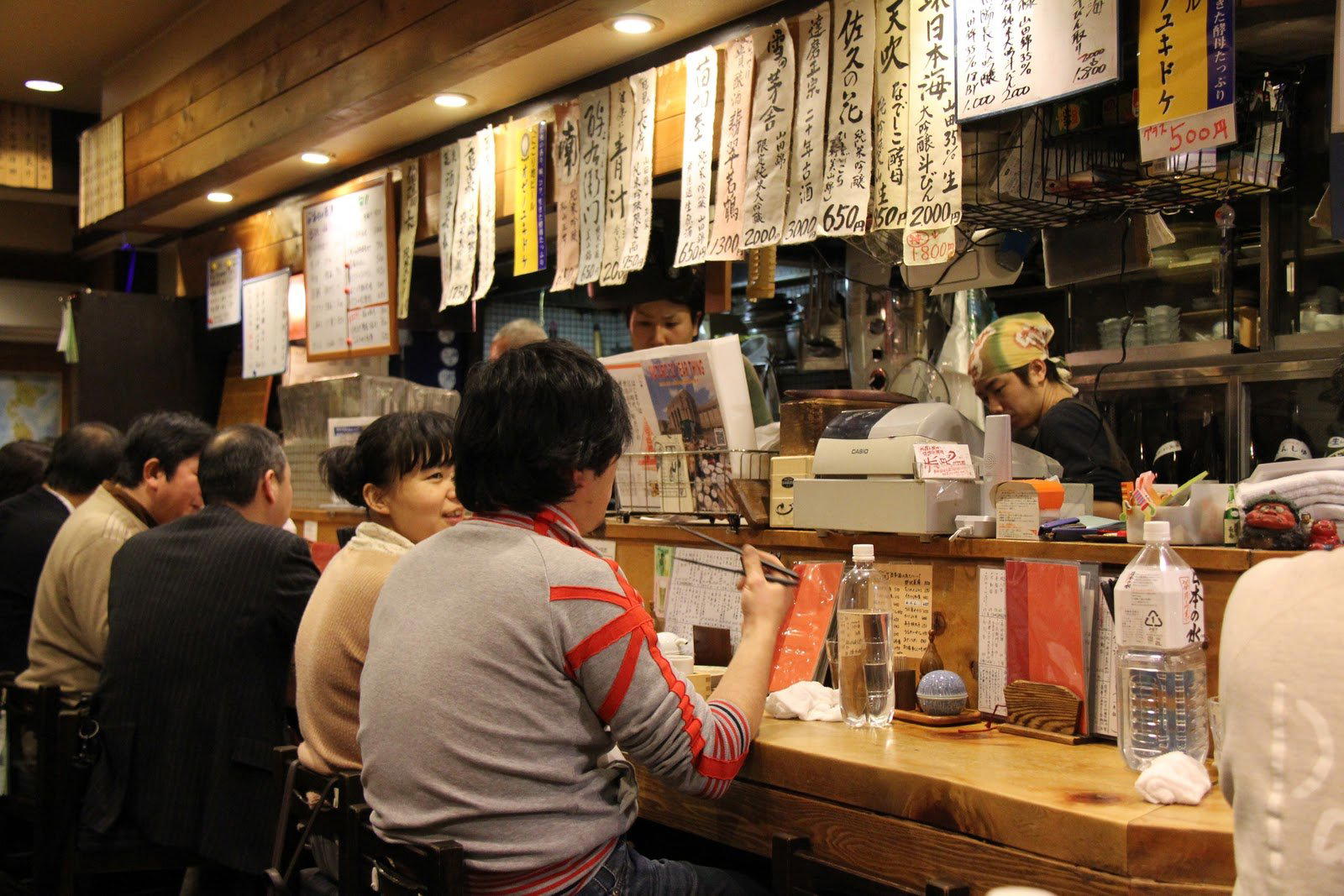
Sangenjaya and the Geography of Tokyo Dining
Tokyo's serious dining scene has a pronounced gravitational pull toward certain postcodes. Ginza concentrates its Michelin ceiling — counters like Harutaka and rooms like Sézanne operate in a district where prestige address and prestige kitchen have long reinforced each other. Minami-Aoyama and Nishi-Azabu carry their own weight, with L'Effervescence and RyuGin anchoring the French and kaiseki registers in neighbourhoods that attract the international food press almost automatically. Sangenjaya sits apart from all of that. The neighbourhood, in Setagaya ward on the Den-en-toshi and Setagaya lines, has a long-established identity as a place where working Tokyo actually lives — izakayas, jazz bars, covered shopping arcades, mid-century apartment blocks. It is not a dining district in the way Ginza or Roppongi are dining districts. Which is precisely why a restaurant here makes a different kind of statement.
Akaoni's address in Sangenjaya 2-chome places it in this context deliberately or incidentally, either way, the effect is the same. The venue draws on neighbourhood character rather than neighbourhood prestige, and that spatial logic shapes everything about the experience before the first dish arrives.
The Physical Container: Space as Editorial Position
In Tokyo, where dining room architecture frequently signals competitive tier as clearly as any award or price point, the decision not to occupy a high-gloss address in a tower lobby or a machiya conversion in a heritage pocket of the city reads as a stance. Sangenjaya's built fabric is low-rise and lived-in, a mix of post-war construction and newer infill that has never been gentrified into smoothness. A restaurant operating in this fabric inherits a rougher, more honest material register, exposed concrete, timber worn to grey, the ambient sound of a neighbourhood that does not quieten for dinner service.
This physical context places Akaoni in a cohort of Tokyo restaurants that draw authority from neighbourhood roots rather than from the architecture of ambition. The comparison is not to the curated intimacy of a Ginza counter, where every surface has been specified to signal a particular grade of experience, but to a different Japanese dining tradition: the specialist local room that earns loyalty through consistency and depth rather than through setting or spectacle. Crony operates in a related register of deliberate neighbourhood positioning, though with a French-innovative kitchen that pitches to a different audience.
Across Japan, this pattern repeats. Gion Sasaki in Kyoto draws from the spatial authority of a historic district without performing that authority through heavy interior design. HAJIME in Osaka operates in a city that has always understood that serious cooking does not require a prestigious postcode. In Nara, akordu makes the case even more directly, that a dining room positioned outside the main circuits can sustain a programme of real ambition. These are not outlier cases. They are evidence of a structural feature of Japanese fine dining: the kitchen's reputation travels faster than the neighbourhood's.
What the Sangenjaya Address Implies for the Visit
Getting to Akaoni means committing to Sangenjaya, and that commitment shapes the experience in ways that matter. The neighbourhood is not difficult to reach, Sangenjaya station sits on the Tokyu Den-en-toshi Line, approximately fifteen minutes from Shibuya, and the Setagaya Line connects there as well. But it is a journey with a clear endpoint, not a district you pass through. Diners arrive because they have decided to arrive, which changes the room's social composition in subtle but real ways. There is no tourist ambient noise, no table of conference attendees filling a block booking. The audience self-selects.
For planning purposes, venues of this type in Tokyo's residential wards tend to operate without the infrastructure of a Ginza counter, no English-language booking portal, no international concierge relationship, sometimes no website. The practical implication is that sourcing a reservation may require a hotel concierge with genuine local contacts or a Japanese-language intermediary. Visitors building a Tokyo itinerary around serious eating should treat the outer-ward specialists alongside the central-district heavy hitters, Goh in Fukuoka and Abon in Ashiya demonstrate how far outside the obvious geography serious Japanese restaurants can operate while sustaining their audience.
Situating Akaoni in the Broader Tokyo Context
Tokyo's restaurant infrastructure spans a wider range of formats and price tiers than any other city. The ¥¥¥¥ counters, Harutaka's sushi, RyuGin's kaiseki, represent one end of a spectrum that extends through neighbourhood specialists, ramen shops with year-long queues, and standing sushi bars charging under ¥3,000. Sangenjaya sits in the mid-register of that geography: not the apex, not the entry point, but the tier where cooking and neighbourhood authenticity tend to intersect most naturally.
For context on Japan's wider regional dining picture, the pattern of serious cooking operating outside prestige postcodes is consistent from affetto akita in Akita to aki nagao in Sapporo, from Aji Arai in Oita to Ajidocoro in Yubari District and Akakichi in Imabari. The comparison also extends beyond Japan: Le Bernardin in New York City and Lazy Bear in San Francisco both demonstrate how a strong kitchen identity can anchor a dining room outside the obvious district. The thread connecting all of them is the same: the audience travels to the kitchen, not the postcode.
For a full orientation to Tokyo's dining geography, including how to sequence neighbourhood specialists alongside the Michelin-rated central rooms, see our full Tokyo restaurants guide.
Planning Your Visit
Sangenjaya is accessible from Shibuya on the Tokyu Den-en-toshi Line, a short and direct journey that makes the neighbourhood practically close even if it feels conceptually distant from central Tokyo's dining circuit. Visitors combining Akaoni with other Setagaya-ward dining or planning a neighbourhood evening in Sangenjaya will find the area's izakayas and bars offer a logical pre- or post-dinner context that the high-gloss districts cannot replicate.
How Akaoni Tokyo compares with similar nearby venues.
| Venue | Price |
|---|---|
| Tokyo Gyoza Ro Sangenjaya ten | JPY 2,000 - JPY 2,999 JPY 1,000 - JPY 1,999 |
| Imagawayaki Kashiwaya | JPY 999 - JPY 999 View spending breakdown |
| CAFE Mame-Hico Sangenjaya honten | JPY 1,000 - JPY 1,999 JPY 1,000 - JPY 1,999 View spending breakdown |
| Yakitori Tokoshima | JPY 8,000 - JPY 9,999 |
| Komugi to Kobo Hamada Ya Sangenjaya honten | JPY 999 - JPY 999 View spending breakdown |










At a Glance
- Intimate
- Cozy
- Sophisticated
- Date Night
- After Work
- Special Occasion
- Sake Program
Current opening hours
- Monday
- 5:30–11:30 PM
- Tuesday
- 5:30–11:30 PM
- Wednesday
- 5:30–11:30 PM
- Thursday
- 5:30–11:30 PM
- Friday
- 5:30–11:30 PM
- Saturday
- 5–11:30 PM
- Sunday
- 5–11 PM
Hours can change for holidays and private events. Last verified .
Small, comfortable establishment tucked in an alley with L-shaped counter seating, tables, and tatami area, fostering an intimate atmosphere for sake enthusiasts.
Know Before You Go
- Getting there
- Japan, 〒154-0024 Tokyo, Setagaya City, Sangenjaya, 2 Chome−15−3 寺尾ビル