
Tabelog 100 #47
Our verdict
小笹 仙伯割烹選 occupies a quieter tier of Shinjuku's dining scene, operating from Kawadacho in a neighbourhood more associated with residential calm than destination restaurants. The address places it at some distance from the high-visibility Michelin clusters of Ginza or Nishiazabu, a positioning that reflects a particular strand of Tokyo dining culture where longevity and local reputation matter more than awards cycles.

Pearl is the En Primeur Club membership app, where members save venues, book tables and use the concierge.
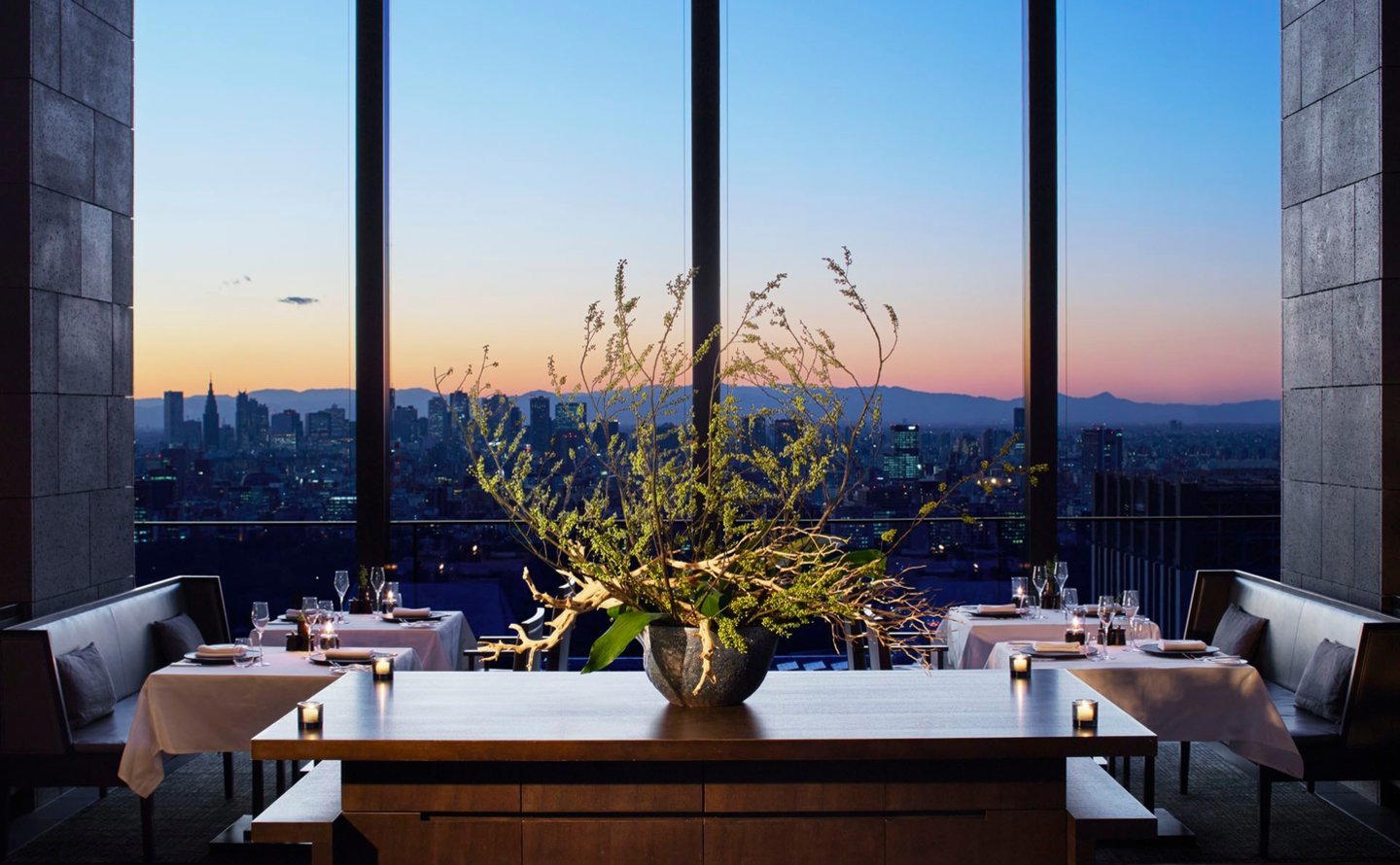
Kawadacho and the Quieter Register of Tokyo Dining
Tokyo's restaurant culture tends to be mapped by its most visible coordinates: the Ginza omakase counters, the Roppongi tasting-menu addresses, the Nishiazabu French rooms that appear reliably in international press. But the city's dining depth runs through neighbourhoods that don't generate that kind of coverage. Kawadacho, in Shinjuku City, is one of those areas. Primarily residential in character, it sits at a remove from the high-footfall corridors where reservation platforms and award committees tend to concentrate their attention. Restaurants that persist here do so through repeat custom and neighbourhood trust rather than tourist conversion or media cycles. 小笹 仙伯割烹選, at 10-10 Kawadacho, operates in that register.
The Structural Shift in Tokyo's Mid-Tier Dining
To understand where a Kawadacho address like this sits in the broader picture, it helps to trace what has happened to Tokyo dining over the past two decades. The city's upper bracket has consolidated around a relatively small number of counters and rooms: sushi addresses like Harutaka, kaiseki progressions like RyuGin, and French-inflected tasting menus at L'Effervescence or Sézanne. These venues price against each other and compete for the same narrow pool of international visitors willing to plan trips around a reservation. Below that tier, a different kind of restaurant has quietly evolved: smaller, less formatted, more dependent on the rhythms of a local clientele. The evolution at addresses like 小笹 仙伯割烹選 reflects that broader structural shift, where survival across years in a competitive city is itself a form of editorial statement.
Reinvention Without Spectacle
The editorial angle that Tokyo's dining scene consistently rewards is not the dramatic pivot or the celebrity-chef relaunch. It is the quieter kind of reinvention: a kitchen that adjusts its sourcing as Japanese regional supply chains shift, or a format that tightens its offering in response to post-pandemic dining patterns. Across Japan, this kind of evolution has been visible at restaurants as different as HAJIME in Osaka, Gion Sasaki in Kyoto, and Goh in Fukuoka. In each case, the restaurant's current direction is legible only against its own history. The same principle applies to neighbourhood addresses in Tokyo that have accumulated years of local presence without accumulating the kind of documentation that feeds into awards databases or media profiles. The current form of 小笹 仙伯割烹選 should be read through that lens: as a venue whose identity has been shaped by the decisions it has made across its operating life, rather than by a single defining moment or concept launch.
How This Address Fits the Tokyo Picture
What can be said is that the Kawadacho location places it outside the geographic clusters where Tokyo's ¥¥¥¥ tier concentrates. The Shinjuku City address suggests a different competitive set than, say, the Ginza corridor occupied by premium sushi, or the Aoyama zone where Crony and comparable French-influenced rooms have established themselves. Restaurants in Kawadacho are more likely to be measured against neighbourhood standards of consistency and value than against peer counters in the international review circuit. That positioning is not a limitation; it is a different kind of ambition. For the full context of how this address relates to Tokyo's broader dining geography, the EP Club Tokyo restaurants guide maps the city's key clusters and price tiers in detail.
Japan's Regional Comparisons
Placing 小笹 仙伯割烹選 in a national context requires acknowledging how much of Japan's serious dining now happens outside Tokyo's central wards. The country's regional restaurant culture has matured considerably: akordu in Nara operates a European-influenced format in a city better known for temple tourism than tasting menus. 一本杉川島割烹 in Nanao and 湖豊庵 in Takashima represent the kind of prefecture-level dining that rarely reaches international coverage but sustains deep local standing. 古仁屋山乃 in Sapporo and 羽根屋 in Nishikawa Machi add further evidence that the country's dining culture distributes unevenly but widely. Closer to Tokyo in category feel, if not geography, Birdland in Sakai and Bistro Ange in Toyohashi show how regional addresses can build genuine reputations outside the main city hierarchies. The point is not that 小笹 仙伯割烹選 belongs to this regional tier; it is a Tokyo address. The point is that the evaluation criteria for neighbourhood restaurants in Japan reward durability and local specificity over scalable brand recognition.
International Reference Points
For international visitors calibrating expectations, the analogy is less about Michelin-starred peers and more about the kind of sustained neighbourhood institution that cities like New York also produce at their leading. Le Bernardin in New York City represents one end of that spectrum: a room with decades of operation and consistent critical standing. Atomix in New York City represents the newer, more formatted tier. Between those poles sits a large category of restaurants that serve their communities across years without fitting neatly into either model. Kawadacho addresses tend to occupy that middle category.
Planning Your Visit
The Kawadacho area is accessible from Shinjuku's broader transit network, and the residential character of the neighbourhood means the visit requires intention rather than passing convenience. For context on how to structure a longer Tokyo dining itinerary around addresses like this one, the EP Club Tokyo guide provides neighbourhood-level orientation and price-tier comparisons across the city's key dining districts.
Frequently asked questions
How do I find å°ç¬ å伯çµé¸?
å°ç¬ å伯çµé¸ is located at î10-10 Kawadacho, Shinjuku City, Tokyo 162-0054, Japan, Tokyo.
What dish is 小笹 仙伯割烹選 famous for?
No specific signature dish has been confirmed in the available public record for this Kawadacho address. The cuisine format is not officially categorised in verified sources, though the name's reference to kappo-style selection (割烹選) points toward a curated, counter-led approach rather than a fixed menu format. Visiting with an open brief rather than a specific dish in mind is the practical approach here.
How far ahead should I plan for å°ç¬ å伯çµé¸?
Reservations are recommended for å°ç¬ å伯çµé¸ in Tokyo. Confirm current policy via the venue's official channels.
Standing Among Peers
Comparable venues nearby, for context on price, style, and recognition.
| Venue | Cuisine | Price | Awards | Notes |
|---|---|---|---|---|
| 小笠原伯爵邸This venue (the venue you are viewing) | Seasonal Kaiseki | $300–500 | Tabelog 100 #47 | Not listed |
| 3110NZ By LDH Kitchen | Modern Omakase Sushi with Art Gallery | $300–500 | Not listed | Naka-Meguro |
| 久丹 | Modern kaiseki "Tokyo washoku" tasting menu | $300–500 | Black Pearl 1 Diamond | Shintomicho, Chuo |
| 重よし | Traditional Japanese Kappo | $200–300 | Not listed | Shibuya |
| Sushi Kinoshita | Seasonal Japanese & Edomae Sushi Omakase | $200–300 | Tabelog 100 #70 | Minato |
| Kiwa | Seasonal Tempura & Japanese Omakase | $150–200 | Tabelog 100 #60 | Shibuya |
Recognition history
Dated appearances from independent guides and award organizations, with the underlying list record or original source where available.
Tabelog 100 #47 · No. 47
Tabelog · Tabelog 100 - Spanish cuisine - 2026
Continue exploring
More in Tokyo
Restaurants in Tokyo
All restaurants in Tokyo →

Bars in Tokyo
All bars in Tokyo →



Details
- Intimate
- Elegant
- Sophisticated
- Special Occasion
- Date Night
- Business Dinner
- Garden
- Private Dining
- Sake Program
- Tasting Menu
- Set Menu
- Sake
- Vegetarian Friendly
Serene and refined with soft lighting, minimalist decor, and a peaceful private garden courtyard evoking timeless Japanese tranquility.