
Black Pearl 1 Diamond
Our verdict
久丹 belongs to Tokyo’s small, high-expectation dining tier where ingredient selection carries as much weight as technique. Its Black Pearl Restaurant Guide 2026 one-diamond recognition gives the restaurant a clear trust signal for travellers sorting serious reservations from casual meals in a city crowded with specialist counters and seasonal kitchens.

Pearl is the En Primeur Club membership app, where members save venues, book tables and use the concierge.
The menu
What to order
- Corn tempura stuffed with shrimp fishcake
- Seasonal bamboo shoot dishes
- Steamed abalone somen
- Chicken wings paired with ROCOCO beer
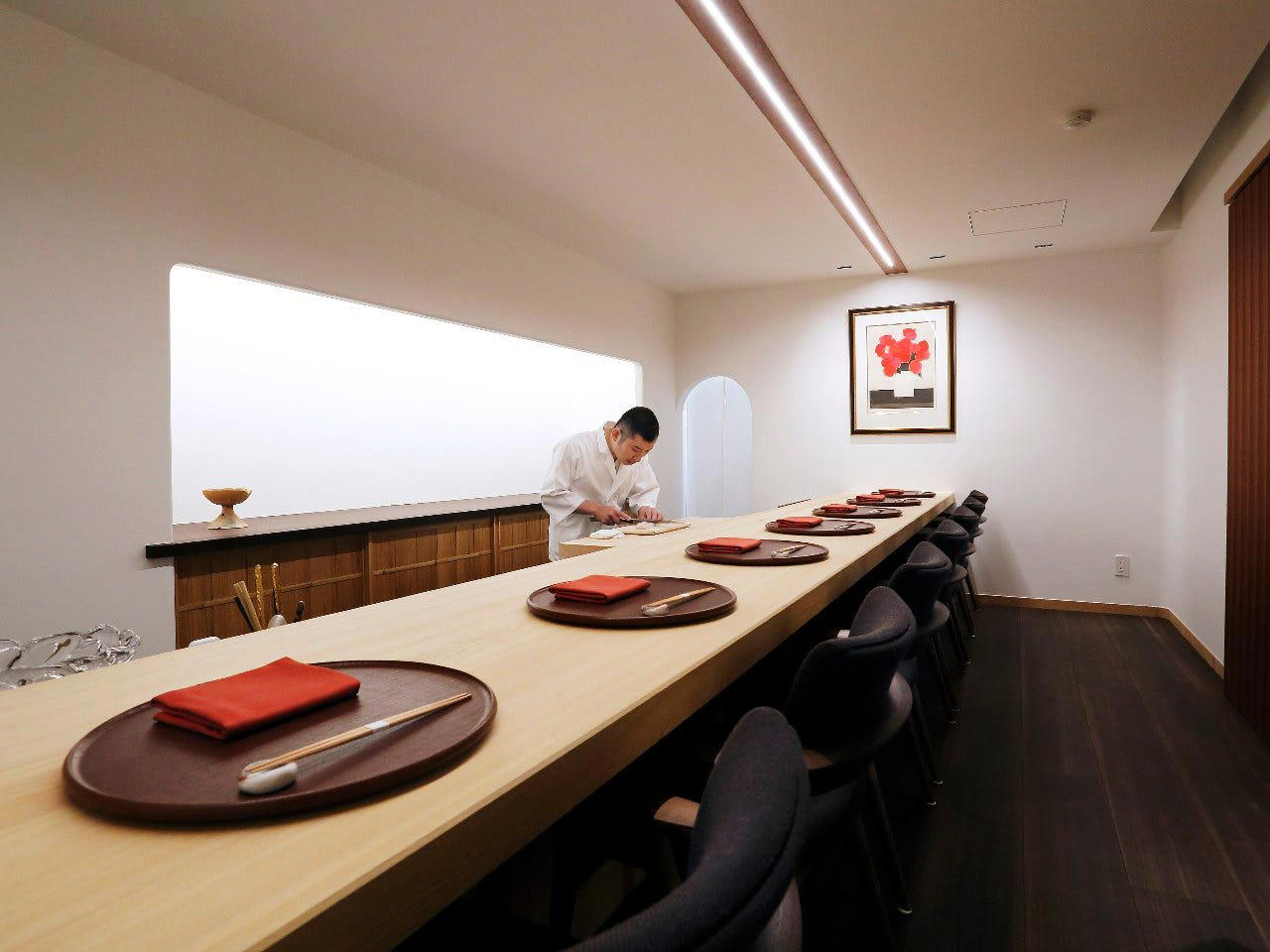
The first read of a serious Tokyo dining room is rarely theatrical. It is usually the hush: the lowered voices, the clean line between street tempo and counter tempo, the sense that the meal will be governed by timing rather than spectacle. 久丹 sits in that Tokyo register, where the room is expected to recede and the ingredients are expected to do the talking.
That matters in a city where luxury dining is not defined only by price or ceremony. Tokyo rewards restaurants that understand sourcing as a discipline: ingredients selected for season and texture, core elements treated as central rather than neutral, and preparations built to clarify rather than smother. The serious diner comes here for that hierarchy. Technique has value when it protects the product.
The restaurant’s Black Pearl 2026 one-diamond recognition places it inside a selective international guide framework, useful for travellers who need an external signal before committing a Tokyo evening to a single table. Black Pearl has become an especially relevant reference for affluent Asian dining circuits, and a one-diamond listing is not a casual footnote. It tells the reader that this is a restaurant to assess against Tokyo’s refined dining culture, not against a neighbourhood drop-in meal.
Tokyo's ingredient culture rewards restraint, not noise
Tokyo’s dining strength is its supply chain as much as its kitchens. The city’s restaurant culture is built on daily procurement, narrow specialisation, and a long-running respect for seasonality. In this environment, sourcing is not a decorative talking point. It shapes portion size, pacing, temperature, and the amount of intervention a kitchen can justify.
That is why many serious meals in the capital feel controlled rather than abundant. The logic is different from cities where luxury means visible excess. In Tokyo, a dining room can signal ambition through a smaller set of choices: the timing of service, the confidence to leave space on the plate, and the refusal to flatten delicate ingredients under too much seasoning. 久丹 reads through that lens. The restaurant is better understood as part of Tokyo’s ingredient-led dining tradition than as a standalone address chasing novelty.
For travellers, the distinction is useful. A guide-recognised restaurant in Tokyo can mean many things: counter dining, seasonal formats, specialist rooms, or a format shaped by the kitchen’s point of view. When cuisine labels are not the point, the safer editorial frame is the city’s shared grammar of season, precision, and procurement. The question becomes less “what is the signature dish?” and more “how tightly does the kitchen connect market quality to the meal’s structure?”
Tokyo also has a high tolerance for quiet seriousness. Rooms do not need to announce their ambition with grand design. Service can be formal without becoming stiff, and the strongest meals often build through incremental decisions rather than a single dramatic course. That cultural context helps explain why awards and guide listings carry weight for visitors: they filter a dense field where many restaurants are small, discreet, and difficult to decode from the street.
How to read a one-diamond Tokyo reservation
A Black Pearl one-diamond listing should be treated as a confidence marker, not as a substitute for fit. The right diner is someone who values discipline, seasonality, and a meal shaped around product quality. The wrong match is a traveller looking for a loud room, a long casual browse, or a flexible drop-in format.
In Tokyo, advance planning is not merely a convenience. The city’s serious restaurants often work with limited availability, procurement rhythms, and service formats that depend on accurate headcounts. Even when a restaurant does not publish every operational detail broadly, the broader Tokyo norm is clear: high-expectation dining rewards early decisions. Travellers should align the reservation with the rest of the evening rather than treat it as an interchangeable dinner slot.
The ingredient-sourcing angle also affects expectations around allergies and dislikes. In restaurants where seasonal product drives the meal, substitutions can be more complicated than they appear. A diner with allergies should communicate clearly before committing, especially in Tokyo, where small kitchens may plan closely around the day’s ingredients. The point is not to discourage booking; it is to respect the structure that makes this category work.
Families should make the same calculation. Tokyo has many restaurants suited to children, from casual dining rooms to relaxed counters, but a guide-recognised serious dining room is usually designed around concentration and pacing. Older children accustomed to quiet, longer meals may fit. Younger diners who need flexibility, movement, or simplified ordering are usually better served elsewhere.
Where it fits in a Tokyo eating itinerary
久丹 works well as the anchor meal of a Tokyo day rather than a stop between errands. The city’s restaurant scene is broad enough that travellers can build contrast around it: relaxed local meals, informal counters, café culture, and other casual Tokyo formats can all sit around a more focused reservation. For another Tokyo dining reference, keep the comparison broad rather than treating any single casual room as a direct peer.
For broader planning, use Our full Tokyo restaurants guide alongside Our full Tokyo hotels guide, Our full Tokyo bars guide, Our full Tokyo wineries guide, and Our full Tokyo experiences guide. Travellers extending the trip through Japan can compare different regional registers through unnamed dining rooms in other cities and prefectures, from coastal meals to urban cafés and specialist counters. Across the Pacific, Japanese drinking and casual formats continue in many international dining scenes, but 久丹 is best judged within Tokyo’s own serious restaurant culture.
The editorial case is clear: this is a Tokyo reservation for diners who care about ingredient logic, guide recognition, and the quiet discipline of a serious room. It is not the place to chase spectacle. It is the place to measure how much a kitchen can say when the sourcing is allowed to lead.
Frequently asked questions
What awards or recognition does 久丹 have?
久丹 has received recognition including: Black Pearl 2026 one-diamond restaurants.
Should I book 久丹 in advance?
Yes. In Tokyo, a Black Pearl 2026 one-diamond restaurant such as 久丹 should be treated as a reservation-led meal rather than a walk-in plan. That applies most on peak evenings and weekends.
What is 久丹 known for?
久丹 is known for its Black Pearl 2026 one-diamond recognition in Tokyo. That places it in a select tier for diners looking for a focused meal rather than a casual drop-in spot.
What if I have allergies at 久丹?
State allergies clearly when arranging a table at 久丹 in Tokyo, and repeat them on arrival. A one-diamond restaurant is the sort of place where advance notice matters, especially when the meal is planned closely around seasonal ingredients.
Is 久丹 a family-friendly restaurant?
It can suit older children who are comfortable with a quieter Tokyo dining room, but it is not the obvious choice for a loose family meal. The Black Pearl one-diamond setting suggests a more structured experience.
How It Compares
Comparable venues nearby, for context on price, style, and recognition.
| Venue | Cuisine | Price | Awards | Notes |
|---|---|---|---|---|
| 久丹This venue (the venue you are viewing) | Modern kaiseki "Tokyo washoku" tasting menu | $300–500 | Black Pearl 1 Diamond | Not listed |
| Shiseido Parlour | Classic Yoshoku | $50–100 | Tabelog 100 #40 | Chūō |
| Ningyocho Imahan Ueno hirokoji ten | Traditional Wagyu Sukiyaki & Shabu-shabu | $100–150 | Tabelog 100 #1 | Taitō |
| Ichiyanagi | Edomae Sushi Omakase | $150–200 | Tabelog 100 #1 | Chūō |
| 日本橋ゆかり | Traditional Kaiseki Kappo | $150–200 | Not listed | Chūō |
| 銀座 すきやばし次郎 本店 | Edomae Omakase Sushi | $200–300 | World's 50 Best #16 · La Liste Top Restaurants | Chiyoda |
Recognition history
Dated appearances from independent guides and award organizations, with the underlying list record or original source where available.
Black Pearl 1 Diamond
Black Pearl
Continue exploring
More in Tokyo
Restaurants in Tokyo
All restaurants in Tokyo →



Bars in Tokyo
All bars in Tokyo →




Details
- Elegant
- Modern
- Intimate
- Quiet
- Sophisticated
- Special Occasion
- Date Night
- Business Dinner
- Celebration
- Solo
- Chefs Counter
- Open Kitchen
- Private Dining
- Design Destination
- Standalone
- Sake Program
- Extensive Wine List
- Corkage Allowed
- Local Sourcing
- Tasting Menu
- Omakase
- Counter Dining
- Set Menu
- Sake
- Wine
- Beer
- Allergy Accommodating
A small, serene white-and-red modern Japanese space with a counter facing the open kitchen and one private room, offering a quietly focused, refined atmosphere that feels like a hidden fine-dining salon.