
Michelin Selected
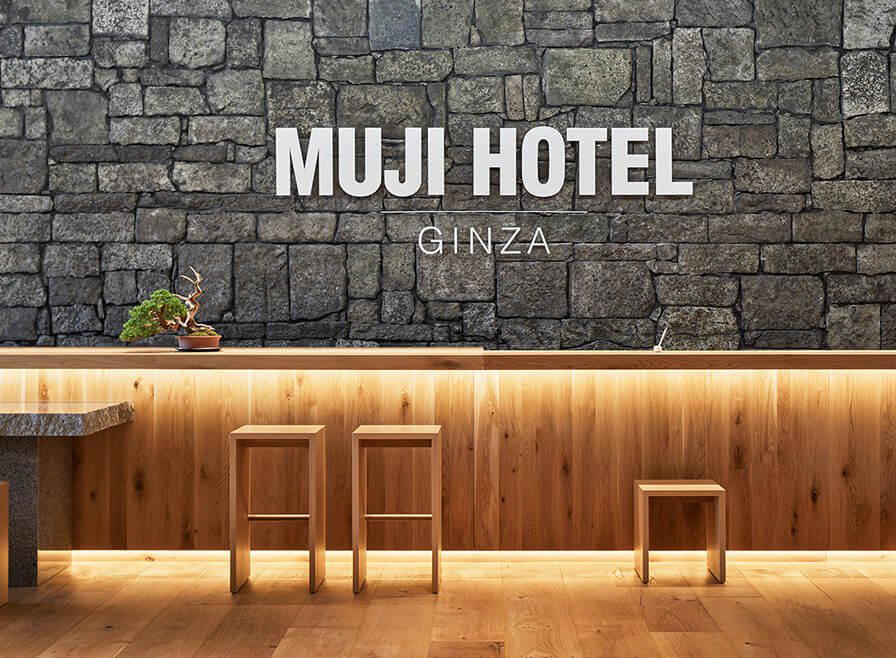
Muji Hotel Ginza occupies floors above the brand's flagship Tokyo store at 3 Chome-3-5 Ginza, Chuo City, positioning it at the intersection of considered design and anti-excess hospitality. The property applies the same material restraint and functional clarity that defines the Muji retail philosophy to accommodation, making it a deliberate counterpoint to the trophy-brand luxury concentrated elsewhere in Ginza.

Pearl is the En Primeur Club membership app — saves, bookings, and concierge access live there. Same editors, same standards.
- Address
- 3 Chome-3-5 Ginza, Chuo City, Tokyo 104-0061, Japan
- Phone
- +81 3 3538 6101
- Website
- hotel.muji.com
- Directions
- Get directions
What Ginza's Hotel Market Looks Like From the Inside
Ginza runs one of the most compressed luxury hotel corridors in Asia. Within a few blocks, you have properties built around international brand cachet, sky-high room counts, and amenity lists that read like competitive benchmarks against each other. Bvlgari Hotel Tokyo, Aman Tokyo, and Four Seasons Hotel Tokyo at Otemachi all draw from a playbook centred on material opulence, high-profile dining partnerships, and a visible architecture of prestige. Muji Hotel Ginza operates from a different premise entirely. Where those properties signal through excess, this one signals through deliberate subtraction — a design philosophy that has found a specific audience in the city and holds a coherent position in the market because of it.
The broader shift in Tokyo hospitality is worth noting here. Alongside the established luxury tier, a smaller cohort of properties has emerged that prioritises philosophical consistency over amenity accumulation. Muji Hotel Ginza belongs to that cohort, and its placement at 3 Chome-3-5 Ginza, directly above the brand's flagship retail and café floors, is not incidental. The vertical integration of retail, dining, and accommodation is part of the proposition: guests are not just sleeping in a building that happens to carry the Muji name, they are staying inside a fully articulated expression of the brand's material and environmental values.
The Case for Material Restraint in a District Built on Display
Ginza's public identity is built on spectacle. The flagship stores of Chanel, Louis Vuitton, and Hermès line Chuo-dori; the neighbourhood is where Japanese luxury consumption becomes most visible. Against that backdrop, the Muji Hotel approach reads as a considered editorial position rather than a budget compromise. The rooms apply the same logic as the brand's product design: natural materials, neutral palettes, functional furniture, and the removal of decorative elements that carry no practical weight. In a district where every competing property is adding layers of brand identity, the decision to subtract is a genuine design act.
This connects directly to the sustainability thread that runs through the Muji model. The brand's founding principles orient around reducing excess production, prioritising longevity over novelty, and using materials that carry lower environmental cost. A hotel built on those principles sits differently from properties that deploy sustainability as a marketing overlay on a fundamentally conventional luxury operation. Here, the restraint is structural, not cosmetic. Properties like ENOWA Yufu in Yufu and Zaborin in Kutchan approach environmental responsibility through deep regional material sourcing and landscape integration; Muji Hotel Ginza approaches it through the urban logic of the brand itself, which is a different but equally coherent answer to the same set of questions.
Where It Sits Relative to the Tokyo Hotel Spectrum
Understanding what Muji Hotel Ginza is requires understanding what it is not trying to be. Palace Hotel Tokyo and The Capitol Hotel Tokyu are properties where the physical grandeur of the building and the accumulated history of the location form much of the offer. Andaz Tokyo and JANU Tokyo sit in the contemporary lifestyle-luxury tier, where F&B; programming and social energy drive the guest experience. Bellustar Tokyo, A Pan Pacific Hotel occupies the upper end of the vertical-view market. Muji Hotel Ginza is competing on none of those axes. Its competitive set is narrower: travellers who want considered design without ceremony, urban convenience without luxury hotel theatre, and a coherent set of values expressed through the physical space they sleep in.
That is a real and growing segment in Tokyo, particularly among design-literate visitors from Europe, North America, and domestic travellers who find the performance of conventional luxury increasingly beside the point. The property's Ginza address means proximity to some of the leading dining in the city and easy access to the broader Tokyo grid, which you can explore further through our full Tokyo restaurants guide.
Japan's Broader Spectrum of Considered Accommodation
For travellers building a wider Japan itinerary, Muji Hotel Ginza sits on one end of a long spectrum of properties that take material and environmental philosophy seriously. At the other end are the deep-immersion ryokan experiences: Gora Kadan in Hakone, Asaba in Izu, and Nishimuraya Honkan in Kinosaki-cho all represent the traditional Japanese accommodation model at its most refined, where the relationship between architecture, landscape, and seasonal rhythm is fundamental to what you are paying for. Benesse House in Naoshima applies a similar depth of conviction through the lens of contemporary art and island ecology. HOTEL THE MITSUI KYOTO in Kyoto and Amanemu in Mie draw on heritage and landscape respectively. Properties like Fufu Kawaguchiko in Fujikawaguchiko, Fufu Nikko in Nikko, Halekulani Okinawa in Okinawa, Jusandi in Ishigaki, and Sekitei in Hatsukaichi-shi each represent a distinct regional variant on the question of how Japanese hospitality relates to place.
Muji Hotel Ginza answers a different version of that question: how does considered hospitality function in a dense urban commercial district? The answer it proposes is through brand coherence, material consistency, and the reduction of friction between shopping, eating, working, and sleeping in one of Tokyo's most commercially intense neighbourhoods.
Planning Your Stay
The hotel sits at 3 Chome-3-5 Ginza, Chuo City, within direct walking distance of Ginza Station and a short transit connection to the rest of the city. Booking is handled through the Muji Hotel platform and, depending on season, through standard third-party channels. Ginza is a high-demand district, so lead time matters, particularly during peak travel windows in spring (cherry blossom season, late March to early April) and autumn (mid-October to mid-November). The retail floors below operate on standard Japanese department store hours, giving guests ground-floor access to the full Muji product range from early morning. For international comparison, the property occupies a similar market niche to design-philosophy hotels in other major cities; travellers who have stayed at properties like The Fifth Avenue Hotel in New York City, Aman New York in New York City, or Aman Venice in Venice will recognise the pattern of a property that has a coherent identity expressed through every physical decision, even when that identity is built on removal rather than addition.
Budget Reality Check
A quick peer list to put this venue’s basics in context.
| Venue | Price | Awards |
|---|---|---|
| Muji Hotel GinzaThis venue — the venue you are viewing | $100–200 | Michelin Selected |
| Bvlgari Hotel Tokyo | Not listed | 3 Michelin Keys · World's 50 Best #24 |
| Aman Tokyo | Not listed | 2 Michelin Keys · World's 50 Best #11 |
| Four Seasons Hotel Tokyo at Otemachi | Not listed | 3 Michelin Keys · La Liste Top Hotels |
| Palace Hotel Tokyo | Not listed | 3 Michelin Keys · World's 50 Best #73 |
| Andaz Tokyo | $300–500 | 1 Michelin Key |
Recognition history
Dated appearances from independent guides and award organizations, with the underlying list record or original source where available.
Michelin Selected
Michelin
Continue exploring
More in Tokyo
Hotels in Tokyo
Browse all →

Bars in Tokyo
Browse all →
Restaurants in Tokyo
Browse all →


Details
- Minimalist
- Modern
- Cozy
- Quiet
- Weekend Escape
- Business Trip
- Design Destination
- Historic Building
- Wi Fi
- Restaurant
- Luggage Storage
- Business Center
- Concierge
- Wheelchair Accessible
- Elevator
- Accessible Restroom
Serene and understated with warm natural materials including oak flooring, tatami mats, and earthen walls; lighting designed to align with natural sleep cycles; spaces feel like small Tokyo apartments rather than traditional hotel rooms.