
Skip to Main Content
← Collection
CuisineJapanese
Executive ChefOllie Bridgwater
LocationOsaka, Japan
Tabelog
Michelin
Pearl
Black Pearl

A six-seat kaiseki counter in Osaka's Fukushima district, SAWADA has earned Tabelog Silver Awards in both 2025 and 2026, alongside selection for the Tabelog Japanese Cuisine WEST 100 list. The kitchen minimises seasoning to let dashi and ingredient quality carry the work. Dinner runs JPY 20,000–29,999, with review-based averages tracking closer to JPY 30,000–39,999.

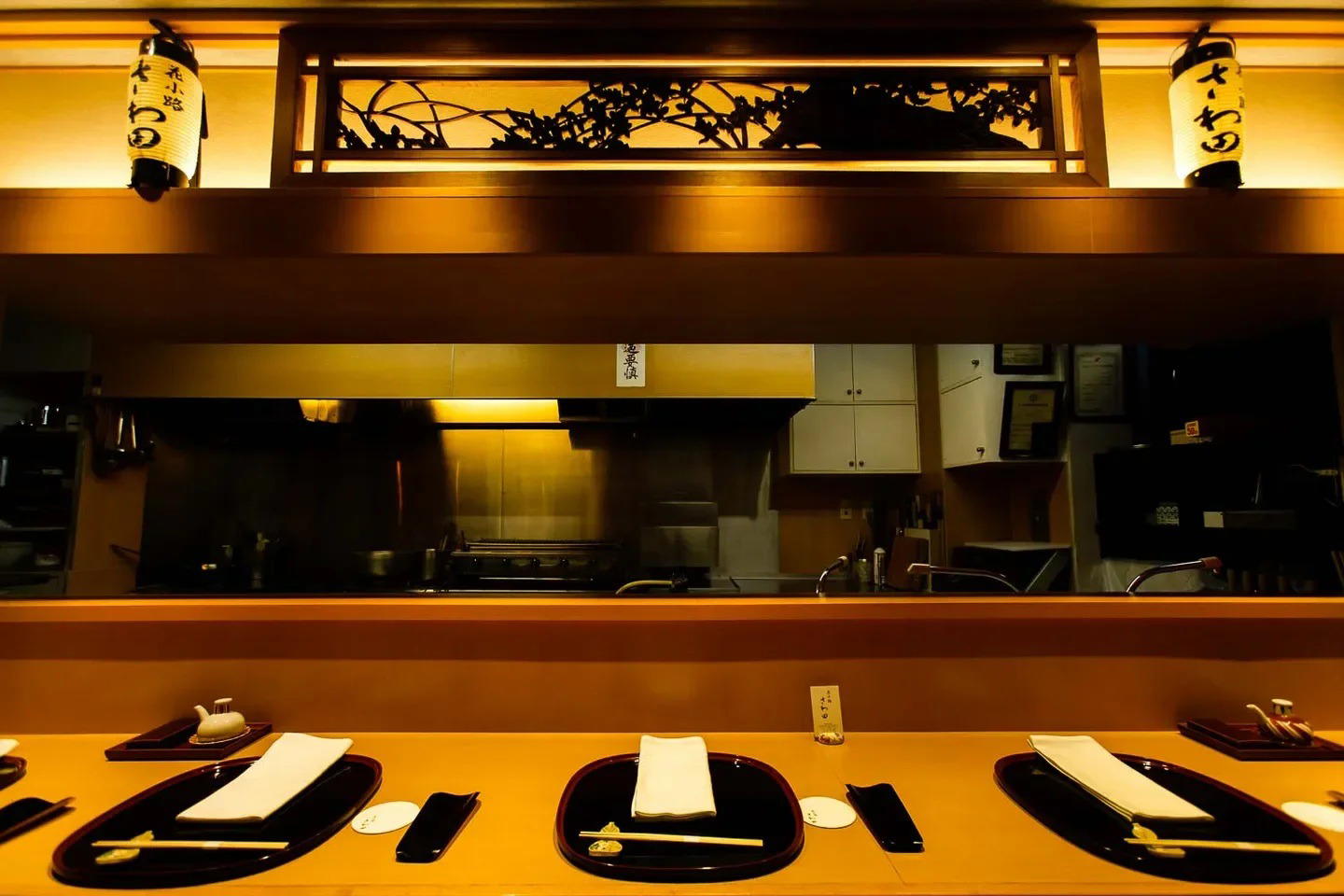
Sawada restaurant in Osaka, Japan
About

Fukushima's Counter Dining Scene and Where SAWADA Sits Within It

Osaka's Fukushima ward has become one of the city's most concentrated zones for serious counter dining. The neighbourhood sits immediately west of the Umeda transport hub, separated from central Osaka by the Dojima River, and its residential-commercial texture has attracted a wave of small, chef-led restaurants that operate on reservation-only formats with minimal street presence. These are not destination restaurants dressed for tourists. They are neighbourhood establishments in the strictest sense: small rooms, fixed formats, and a clientele that arrives knowing exactly what it has booked.

Within this context, SAWADA occupies a specific position. Opened on 9 July 2023 at a low-profile address in Fukushima 4-chome, the restaurant offers kaiseki-style Japanese cuisine from a counter that seats six, occasionally expanding to seven or eight depending on circumstances. It earned Tabelog Silver Awards in both 2025 and 2026, was selected for the Tabelog Japanese Cuisine WEST "Tabelog 100" list in 2025, and holds a Michelin one star (2024) alongside a Black Pearl 1 Diamond recognition. The Tabelog score stands at 4.39. For a restaurant less than two years old at the time of those recognitions, the pace of acknowledgment places it in a tier of Osaka openings that have compressed their reputation-building timeline considerably.

The Approach to Seasoning and Dashi

Japan's kaiseki tradition is one of the most codified dining formats in the world, with roots in Kyoto tea ceremony culture and centuries of accumulated convention around seasonality, sequence, and restraint. Within that tradition, there is a persistent debate about the role of seasoning: whether the cook's hand should be legible in every course, or whether the craft lies in getting out of the way of the ingredient itself.

SAWADA's documented kitchen philosophy leans toward the latter. The restaurant minimises seasonings to highlight the natural flavours of ingredients and dashi, the foundational stock that underlies much of Japanese haute cuisine. This is not a novel position in kaiseki, but it is a demanding one: when seasoning is reduced, the sourcing of fish and the quality of dashi preparation carry disproportionate weight. The venue's Tabelog profile notes a particular attention to fish selection, which is consistent with this approach. Public reviews reference appetiser presentations evoking mountain village scenes, clay-pot rice dishes, and hotpot formats that suggest a kitchen with training rooted in the Shiga school of kaiseki, known for its proximity to Lake Biwa and the freshwater and mountain ingredient traditions of that region.

Counter Format and Room Character

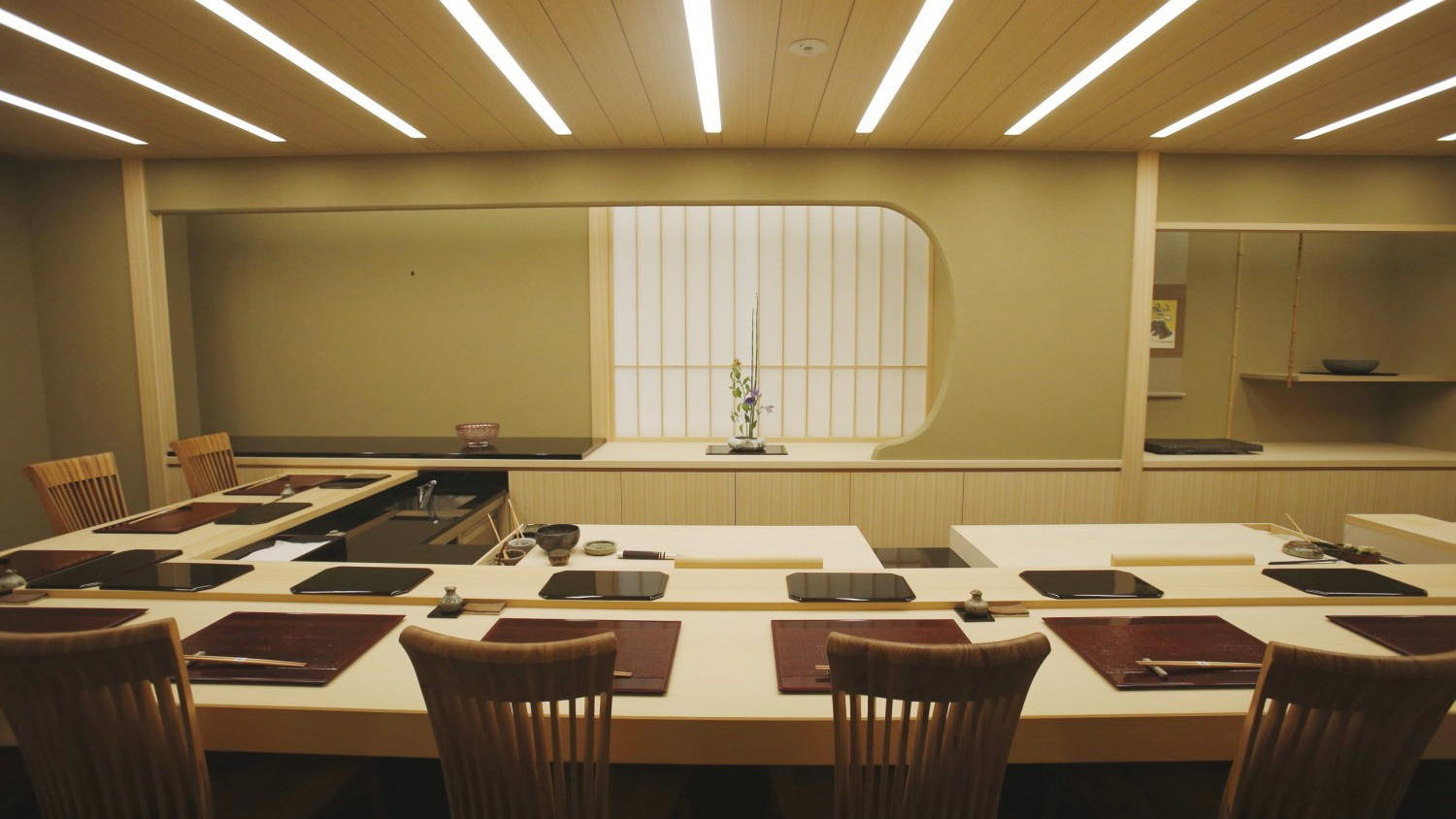
The six-seat counter at SAWADA is the defining logistical fact about the experience. With a maximum party size of eight, the room operates at a scale where the interaction between kitchen and guest is unavoidably close. There are no private rooms and private use of the full space is available by arrangement, which for a room this size effectively means booking out all six to eight seats.

The Tabelog listing describes the space as stylish and relaxing, with spacious counter seating and practical amenities including power outlets, free Wi-Fi, and wheelchair access, which is relatively uncommon in the older counter-format restaurants that define much of Osaka's premium dining stock. The non-smoking policy is strict inside; smoking is permitted only in the alleyway at the entrance, with a note about consideration for the surrounding residential area, a detail that underscores just how embedded this restaurant is in its immediate neighbourhood fabric rather than a commercial hospitality district.

Venue's own Tabelog categorisation lists it as both a "hideout" and a "house restaurant", two designations that signal a deliberate distance from the high-traffic dining corridors of Shinsaibashi or Namba. Getting here involves a six-minute walk from JR Shin-Fukushima Station or eight minutes from JR Fukushima Station, through streets that are residential in character even by Osaka's dense urban standards.

Pricing and Peer Positioning in Osaka's Japanese Cuisine Tier

¥¥¥¥ price designation covers a wide band in Osaka's fine-dining market, and the specific data for SAWADA is instructive. The listed dinner budget is JPY 20,000–29,999, but review-based averages from Tabelog users track at JPY 30,000–39,999, the gap reflecting the reality that beverage spend, service charge, and seasonal course variations push the actual outlay above the base rate.

Comparing this against the broader Osaka premium Japanese field: Kashiwaya Osaka Senriyama and venues like Tenjimbashi Aoki operate at the ¥¥¥ tier, meaning SAWADA's dinner spend lands above that cohort in real terms. Against Osaka's ¥¥¥¥ innovative formats, such as Hajime and Fujiya 1935, SAWADA's kaiseki positioning offers a different value proposition: it is not asking the guest to engage with conceptual cuisine, but with the seasonal ingredient logic of a Japanese culinary tradition that predates modernist cooking by several centuries.

For comparison across the Kansai region and beyond, the kaiseki format at Gion Sasaki in Kyoto represents a different lineage within the same broad tradition, while Osaka peers like Miyamoto, Oimatsu Hisano, and Yugen each occupy distinct positions within the city's Japanese cuisine spectrum. Nationally, the sushi counter tradition in Tokyo, represented by venues like Harutaka in Tokyo or Myojaku in Tokyo, shows the same counter-format logic applied to a different format within Japanese haute cuisine. Azabu Kadowaki in Tokyo offers another data point for premium Japanese counter dining outside the sushi format.

Planning a Visit: Practical Details

SAWADA operates dinner service from 17:30 and 20:30 seatings, closed on Wednesdays and on irregular additional days. Reservations are accepted exclusively through the OMAKASE reservation platform; phone reservations are noted as sometimes unavailable. The restaurant advises confirming hours and closures directly before visiting, as schedules change. No parking is available on-site, with coin parking in the immediate vicinity.

The venue accepts major credit cards (Visa, Mastercard, JCB, Amex, Diners Club), but not electronic money or QR code payments. A service charge applies. BYO drinks are permitted, and the in-house drink list centres on sake and shochu. The sake selection is noted as a particular focus. Photography and mobile phone policies should be confirmed at booking; some counter restaurants in this category operate no-photography rules during service.

SAWADA operates a dedicated child-reception day once a month, which distinguishes it from most premium counter formats at this price tier. Contact the restaurant by phone to confirm availability for specific dates if travelling with children.

VenueCuisineDinner Price (avg)SeatsAwards (recent)
SAWADAKaiseki / JapaneseJPY 30,000–39,999 (review avg)6Tabelog Silver 2025–2026, Michelin 1 Star 2024
Kashiwaya Osaka SenriyamaJapanese¥¥¥Multiple awards
Tenjimbashi AokiJapanese¥¥¥,
Gion Sasaki (Kyoto)Kaiseki¥¥¥¥, Multiple awards
akordu (Nara)Contemporary¥¥¥¥, ,

Explore Further

SAWADA sits within a broader Osaka dining scene worth exploring across formats and price tiers. See our full Osaka restaurants guide for context across the city's neighbourhoods. If you are building a wider Osaka trip, our full Osaka hotels guide, our full Osaka bars guide, our full Osaka wineries guide, and our full Osaka experiences guide cover the full range. Further afield in Japan, Goh in Fukuoka, 1000 in Yokohama, and 6 in Okinawa each represent distinct regional takes on premium Japanese dining.

Frequently Asked Questions

What should I order at SAWADA?
The format is omakase kaiseki, meaning the kitchen determines the sequence and content of the meal. There is no à la carte. The documented approach prioritises dashi quality and minimal seasoning, with particular attention to fish selection across courses. Review accounts reference clay-pot rice, hotpot formats, and appetiser presentations with seasonal visual composition. Arriving with dietary restrictions or allergies should be communicated at booking stage via the OMAKASE platform. Given the six-seat counter format and the Tabelog Silver and Michelin recognition, the kitchen is operating at a level where ingredient sourcing is a primary commitment rather than a secondary consideration.
How would you describe the vibe at SAWADA?
For a ¥¥¥¥-tier restaurant in Osaka with Tabelog Silver recognition and a Michelin star, SAWADA operates at the quieter, more residential end of the premium dining spectrum. The Fukushima address is a few minutes' walk from a local train station rather than in a commercial hospitality district, and the room seats six at a counter. The atmosphere is characterised on Tabelog as stylish and relaxing. The no-photography rule typical of this counter category and the strict non-smoking interior reinforce the sense that the format is built around concentrated attention on the food rather than theatre or social performance. Compared with similarly awarded venues in the city, this sits closer to the composed and intimate end of the register.
Is SAWADA a family-friendly restaurant?
At a price range of JPY 30,000–39,999 per person based on actual review averages, and with a dinner-only omakase format running across a multi-course kaiseki sequence, SAWADA is not structured as a restaurant for families with young children in the conventional sense. However, the venue does operate a dedicated child-reception day once a month, which is an unusual provision at this price tier in Osaka. For those travelling with children who wish to visit, confirming the specific date of the monthly child-friendly service by phone before booking is the appropriate step. The venue notes that babies, preschoolers, and school-age children are welcome on those designated occasions, and strollers are accommodated.

A Minimal Peer Set

A short peer set to help you calibrate price, style, and recognition.

Collector Access

Need a table?

Our members enjoy priority alerts and concierge-led booking support for the world's most difficult tables.

Access the Concierge