


Grand Hyatt Tokyo anchors Roppongi Hills with 387 rooms and suites, ten dining venues, and a continuous awards record running from Forbes Travel Guide to Travel + Leisure's Best Hotels in Tokyo. It draws business travelers and couples marking milestones in equal measure, with direct underground access to Roppongi Hills and a three-minute walk to Roppongi Station connecting it cleanly to Ginza and Shibuya.
 Discover on Pearl
Pearl is the En Primeur Club membership app — saves, bookings, and concierge access live there. Same editors, same standards.
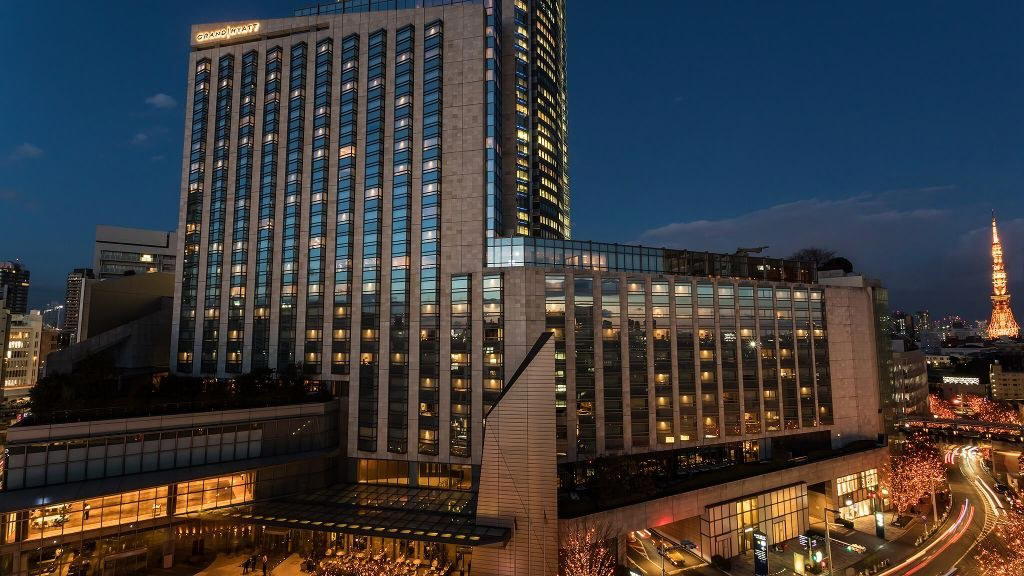
Where Roppongi's Energy Meets a Considered Interior
Arriving at Grand Hyatt Tokyo, the scale of Roppongi Hills registers first. The complex surrounding the hotel houses 200 shops and restaurants, a cinema, the Mori Art Museum, and an observatory, and the hotel sits at its center as both access point and retreat from it. Inside, the lobby shifts register entirely: approximately 200 pieces of art punctuate corridors and common spaces, mahogany furnishings finished in natural woods and fabrics create a warm, residential weight, and high ceilings absorb the noise of a busy international hotel without letting it dissolve into sterility. The design reads as deliberately grounded rather than coolly minimal, with Japanese aesthetic cues woven into the material palette without becoming decorative shorthand.
Roppongi's position in Tokyo's hotel geography is worth stating plainly. It is one of the city's most internationally oriented districts, dense with embassies, galleries, and late-night activity, and it sits within plausible reach of most of Tokyo's significant precincts. Ginza and Shibuya are accessible without extended transit. That convenience, combined with the direct underground connection to Roppongi Hills, makes the neighborhood a sound base for visitors whose itineraries range widely. Among the luxury properties clustered in Tokyo's inner wards, this hotel competes in a set that includes Andaz Tokyo, Four Seasons Hotel Tokyo at Otemachi, and Palace Hotel Tokyo, each anchored in different parts of the city and appealing to different orientations. Grand Hyatt Tokyo's pitch is operational breadth and neighborhood connectivity rather than the hushed seclusion of Aman Tokyo or the fashion-house provenance of Bvlgari Hotel Tokyo.
The Case for Celebrating Here
Tokyo's luxury hotels increasingly serve as the backdrop for milestone meals and private occasions, and Grand Hyatt Tokyo has built infrastructure for exactly that. Ten dining venues under one roof creates meaningful range for multi-day stays or groups with diverging preferences. The French Kitchen runs an all-day dining format with an open kitchen, bar, and terrace, suited to unhurried anniversary breakfasts or pre-theater dinners. The Oak Door operates as a premium steakhouse centered on oak wood-burning ovens, a format that travels well internationally as a celebratory dining register. Roku Roku serves Edo-mae-style sushi and sashimi made from seafood sourced from local markets, placing it in the tradition of Tokyo's counter-service sushi culture at a convenient address. Shunbou handles market-driven Japanese cuisine, Keyakizaka offers teppanyaki with international ingredient combinations, and Chinaroom presents regional Chinese dishes in a contemporary setting.
The Fiorentina Pastry Boutique is where the occasion dining angle becomes most specific: the pastry team holds recognized credentials, and the boutique is an obvious starting or ending point for guests marking birthdays, anniversaries, or private events. Maduro, the bar and jazz lounge, provides nightly live entertainment alongside an extensive cigar and beverage program, functioning as the natural close to a long celebratory dinner rather than a destination in its own right.
For Tokyo properties at this price position, ten in-house dining venues is a number that matters logistically. Guests celebrating across several days do not need to look elsewhere unless they want to. That consolidation has a cost in culinary depth relative to standalone specialist restaurants, but for groups or families managing different preferences over a short stay, the convenience carries real weight. Browse our full Tokyo restaurants guide if you're planning evenings beyond the hotel's own program.
Rooms Built for Stays That Require Substance
The 387 rooms and suites start at 452 square feet, a floor area that reads as generous in a city where premium properties often trade space for address. The material finish runs to limestone soaking bathtubs, Frette linens, rain showers, and cotton yukata robes, with smart toilets as standard in line with Japanese hospitality convention. The workstations and internet infrastructure have earned consistent praise from business travelers, which suggests the rooms function as working environments as well as sleeping ones.
Among the 28 suite categories, the Presidential Suite on the 21st floor is a specific product differentiator: it is the only suite in Tokyo with a private outdoor heated swimming pool, which positions it as a serious option for honeymoons or significant occasion stays where privacy and spectacle matter equally. For guests who want Club Lounge access without committing to a suite, Grand Club rooms provide panoramic views toward Mt. Fuji on clear days, evening cocktails and canapés, and a dedicated concierge and check-in service. The JANU Tokyo and Bellustar Tokyo, A Pan Pacific Hotel occupy adjacent tiers of the Tokyo luxury market with different suite propositions; at Grand Hyatt Tokyo, the breadth of suite types from executive to presidential covers a wider range of occasion types than most single-property competitors.
Spa, Gardens, and Seasonal Anchors
The Nagomi Spa and Fitness sits on the fifth floor, with a swimming pool, Zen-influenced design, and a suite of restorative treatments. In a hotel positioned around Roppongi's energy, the spa functions as deliberate counterweight, and for guests staying multiple nights in a high-stimulus city, that separation matters. Tokyo's density and pace are part of the experience, but recovery infrastructure that works at the same level as the hotel's dining program is not guaranteed across all luxury properties.
The seasonal calendar around Roppongi Hills adds a dimension that the hotel absorbs naturally. Mohri Garden, accessible on foot, offers cherry blossoms in spring, one of Tokyo's higher-profile seasonal events. In winter, a Christmas market and illumination program operate in the surrounding complex. These are not hotel amenities in a strict sense, but they function as framing for occasion travel: cherry blossom season draws guests who build stays specifically around the bloom window, and winter illuminations have become a reliable draw for couples and families marking end-of-year occasions.
Planning a Stay
Hotel is roughly 90 minutes from Narita International Airport by the Airport Limousine bus service, which stops directly at the property, and approximately 40 minutes from Haneda Airport by the same service. The bus is generally faster than a taxi on both routes given Tokyo's traffic patterns, and the direct drop-off avoids the coordination required on arrival. Roppongi Station is a three-minute walk, providing access to the Hibiya and Oedo lines and connecting directly to Ginza and points across the city.
Grand Hyatt Tokyo holds a Forbes Travel Guide Four-Star rating sustained from 2017 through 2025, a Michelin Guide Tokyo hotel selection in 2024, and Travel + Leisure Leading Hotels in Tokyo recognition running from 2018 to 2024. The World's Leading Awards placed it among the 500 Best Hotels in the World for 2025. These are mid-upper-range recognition signals for a Tokyo luxury property: they confirm consistent operational quality across multiple independent review systems without placing the hotel in the rarefied bracket occupied by properties like The Capitol Hotel Tokyu or ryokan properties with deeper cultural specialization.
Travelers extending their Japan itinerary beyond Tokyo will find well-regarded options at considerable range: HOTEL THE MITSUI KYOTO in Kyoto, Gora Kadan in Hakone, Amanemu in Mie, Asaba in Izu, Benesse House in Naoshima, Zaborin in Kutchan, Halekulani Okinawa in Okinawa, Jusandi in Ishigaki, Fufu Kawaguchiko in Fujikawaguchiko, Fufu Nikko in Nikko, Nishimuraya Honkan in Kinosaki-cho, Sekitei in Hatsukaichi-shi, and ENOWA Yufu in Yufu. For international comparisons in the luxury urban hotel category, The Fifth Avenue Hotel in New York City, Aman New York in New York City, and Aman Venice in Venice represent different approaches to the same category across different city contexts.
Awards and Standing
A quick look at comparable venues, using the data we have on file.
| Venue | Awards | Cuisine | Notes |
|---|---|---|---|
| Grand Hyatt Tokyo | This venue | ||
| Bvlgari Hotel Tokyo | Michelin 3 Key | ||
| Aman Tokyo | Michelin 2 Key | ||
| Four Seasons Hotel Tokyo at Otemachi | Michelin 3 Key | ||
| Palace Hotel Tokyo | Michelin 3 Key | ||
| Andaz Tokyo | Michelin 1 Key |
Continue exploring
More in Tokyo
Hotels in Tokyo
Browse all →


Bars in Tokyo
Browse all →


Restaurants in Tokyo
Browse all →

At a Glance
- Elegant
- Sophisticated
- Modern
- Business Trip
- Romantic Getaway
- Panoramic View
- Rooftop Pool
- Wifi
- Pool
- Spa
- Fitness Center
- Room Service
- Concierge
- Business Center
- Valet Parking
- Ev Charging
- Skyline
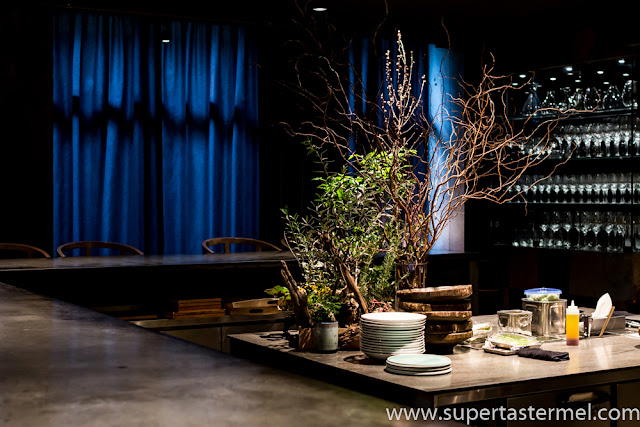
Sophisticated and warm with rich mahogany furnishings, contemporary Japanese aesthetics, and a somewhat dark, elegant atmosphere.