Enrico Toro Distilleria (Centerba Toro)
Centerba Toro is one of Abruzzo's most singular spirits, a high-proof herbal liqueur produced in Tocco da Casauria from a centuries-old recipe drawing on the botanical wealth of the Majella and Gran Sasso foothills. For anyone tracing Italian terroir through distillation rather than wine, this address is difficult to bypass.

Pearl is the En Primeur Club membership app — saves, bookings, and concierge access live there. Same editors, same standards.
- Address
- V. Tiburtina Valeria, Km 192/440, 65028 Tocco da Casauria PE
- Phone
- +39 085 880279
- Website
- liquoritoro.com
- Directions
- Get directions
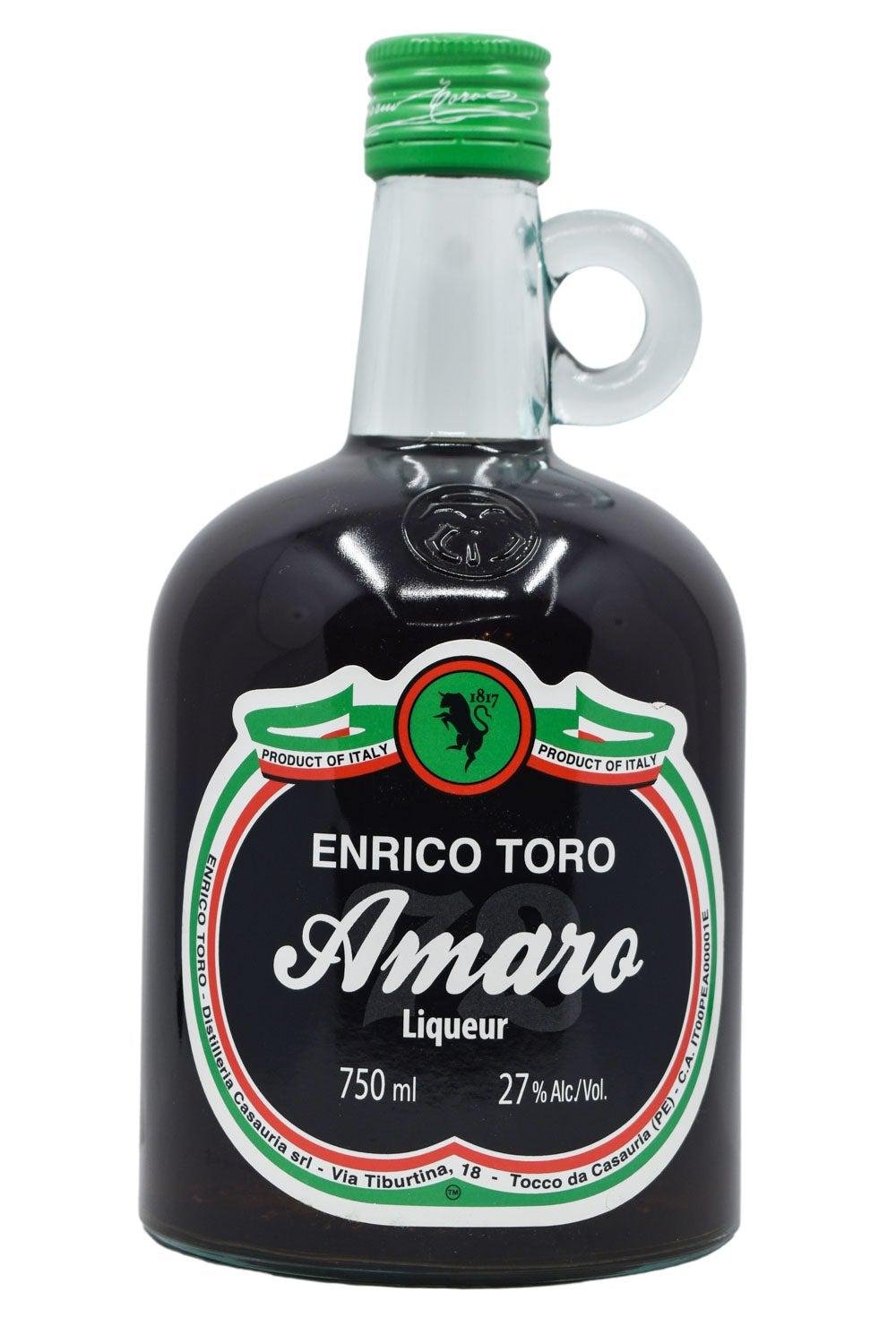
Where Abruzzo's Highlands Meet the Still
The road into Tocco da Casauria follows the Pescara river valley through terrain that explains everything about what gets made here. The Majella massif and the Gran Sasso sit on either flank, their limestone slopes carrying an unusually dense botanical inventory: gentian, saffron, alpine herbs, and dozens of plants that grow at altitude and nowhere else in the Italian peninsula at quite this concentration. Distilleries in the northeast and northwest of Italy, from the grappa houses of Trentino to the establishments of Friuli, tend to work around grape marc as their primary raw material. The Abruzzese tradition runs parallel but distinct, and Centerba Toro is among its clearest expressions. For anyone tracing Italian distillation as a category, Distilleria Marzadro in Nogaredo and Poli Distillerie in Schiavon (Vicenza) represent the northern grappa tradition; Enrico Toro Distilleria sits in a different register entirely, defined by polybotanical maceration rather than varietal pomace.
The distillery operates on the Via Tiburtina Valeria, one of the oldest consular roads in central Italy, a detail that is not incidental. The route linked Rome to the Adriatic and passed through communities that had been trading mountain herbs for centuries before any modern notion of a spirits industry existed. Centerba, whose name derives from the Italian for «a hundred herbs», carries that lineage forward in concentrated form.
The Botanical Case for Terroir
Italian spirits discourse has spent much of the last two decades catching up to where Italian wine discourse arrived in the 1980s: the argument that place, not recipe, is the defining variable. In wine, this produced the terroir conversation that now frames everything from Aldo Conterno in Monforte d'Alba to Castello di Volpaia in Radda in Chianti. In spirits, the equivalent argument is harder to make because alcohol is a more aggressive solvent than fermentation, and regional distinction can be obscured by production choices. Centerba Toro is one of the cases where the argument holds.
The central Apennines produce botanical material under specific conditions: high diurnal temperature variation, thin limestone soils, and seasonal snowmelt that limits water availability and concentrates aromatic compounds. These are not conditions you can replicate in a flatland production facility, and no flatland facility has historically tried to produce Centerba at scale.
Compare this position to what Nonino Distillery in Pavia di Udine achieved by building international recognition for a fundamentally regional product, or what Distilleria Romano Levi in Neive maintained through decades of artisanal production without scaling beyond its locality. The Centerba Toro operation sits closer to the Levi model in geographic terms: a product that derives its identity from a specific place and would become something different if that place changed.
A Spirit in Its Regional Context
Abruzzo as a wine and spirits region has been in the process of external rediscovery for roughly fifteen years. The wine side of that story is better documented: Montepulciano d'Abruzzo built a critical profile, small producers found importers in northern Europe and the United States, and the region earned comparisons to earlier-wave discoveries in southern Italy. The spirits side has moved more slowly, partly because Centerba lacks the global category recognition that grappa or amaro carry, and partly because the producers have not historically pursued export markets with the same intensity.
That context makes the distillery's location on the Via Tiburtina Valeria worth noting practically. Tocco da Casauria sits roughly an hour east of L'Aquila and about the same distance from Pescara on the Adriatic coast, making it accessible from both the regional capital and the main coastal transport hub. Visitors arriving from Rome typically take the A24 autostrada through the Gran Sasso tunnel before dropping south toward the Pescara valley. The town itself sits on refined ground above the valley floor, and the approach from the main road gives a clear view of the agricultural and pastoral land that supplies the broader food culture of the area. For context on what the full range of Tocco da Casauria and its surrounds offers, our full Tocco da Casauria restaurants guide maps the territory in more detail.
Prestige Recognition and Peer Positioning
Within the Italian spirits space, this places Centerba Toro in a conversation with producers such as Campari in Milan on the commercial scale and with craft-focused houses in the mid-tier. The comparison to Campari is instructive for understanding category: both are Italian herbal spirits with long histories, but their production scales, distribution footprints, and terroir claims are entirely different. Centerba Toro's recognition operates at the artisanal end of that spectrum, where place-specificity is a credential rather than a limitation.
Within the broader category of Italian producers earning recognition in 2025, the company of Lungarotti in Torgiano, Ca' del Bosco in Erbusco, and Planeta in Menfi as Pearl-rated estates gives a sense of the peer tier. These are producers with established critical profiles and significant output. That Centerba Toro appears in the same rating framework reflects a broadening of the evaluation criteria to include spirits production alongside wine, which is itself a development worth tracking for anyone following Italian craft production.
Planning a Visit
The physical address at Via Tiburtina Valeria, Km 192/440, 65028 Tocco da Casauria (PE) is confirmed, and the most reliable approach for visitors is to travel to the site directly or to contact local tourism infrastructure in Pescara or L'Aquila for current access details. The region's tourism office in Pescara covers the Majella and Pescara valley area and would have current operating information. Given the production-focused nature of the operation, visits are likely more structured around specific arrangements than walk-in tourism, and advance contact is advisable regardless of what hours are posted.
Visitors combining the distillery with broader Abruzzese itineraries should note that the Pescara valley offers several points of interest within a short drive, and the Majella National Park begins immediately south of Tocco da Casauria, making the area viable as a two-day excursion from either coast or the regional capital rather than a single-stop day trip from Rome. For spirits enthusiasts who follow Italian distillation across multiple regions, Lungarotti in Torgiano in Umbria and producers across the central Apennines form a logical circuit with Centerba Toro as its southern Abruzzese anchor.
Comparable Venues
Comparable venues nearby, for context on price, style, and recognition.
| Venue | Cuisine | Price | Awards | Notes |
|---|---|---|---|---|
| Enrico Toro Distilleria (Centerba Toro)This venue — the venue you are viewing | Abruzzo | Not listed | Not listed | Not listed |
| Lamoreaux Landing Wine Cellars | Winery | $10–20 | Not listed | Lodi |
| Gruppo Campari | Winery | Not listed | Not listed | Milan |
| Cantina Produttori Nebbiolo di Carema | Nebbiolo | Not listed | Falstaff Winery - Listed | Carema |
| Villa Bucci | Verdicchio, Montepulciano | Not listed | Not listed | Ostra Vetere |
| Stock Spirits (Stock 84) | Winery | Not listed | Not listed | Trieste |
Continue exploring
More in Tocco da Casauria
Wineries in Tocco da Casauria
Browse all →

Bars in Tocco da Casauria
Browse all →
Restaurants in Tocco da Casauria
Browse all →
Hotels in Tocco da Casauria
Browse all →
Details
- Rustic
- Historic
- Wine Education
- Historic Building
- Sustainable
- Mountain
- Guided Tasting
- English
- French
- German
- Russian