




2 Michelin Stars · La Liste Top Restaurants · Wine Spectator Best of Award of Excellence
Our verdict
Inside The First Roma Arte hotel near Piazza del Popolo, Acquolina holds two Michelin stars and an 85-point La Liste score for 2026, placing it among Rome's most recognised creative tables. Chef Daniele Lippi runs two tasting menus built around seafood and selective meat courses, backed by a wine list that runs to roughly a thousand labels. This is where serious Roman fine dining meets genuine generosity of portion and spirit.

Pearl is the En Primeur Club membership app, where members save venues, book tables and use the concierge.
The menu
What to order
- Red_tuna_ventricina
- Chickpea_scampi_spaghettone
- Roasted_artichoke
A Room That Sets the Register Before the First Course
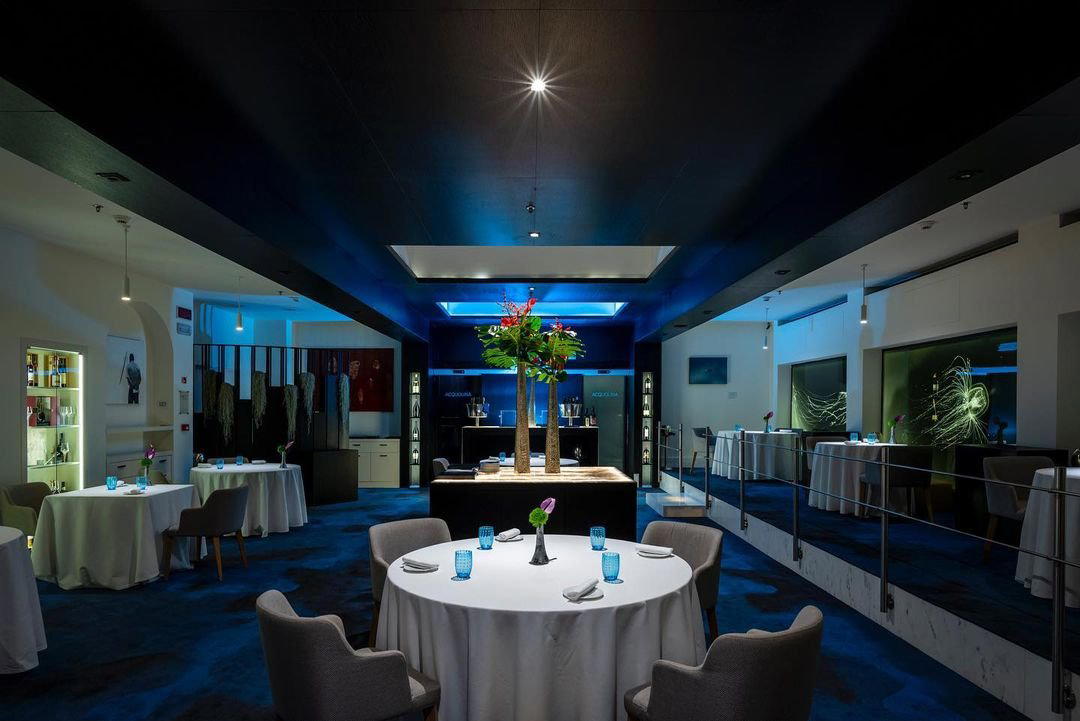
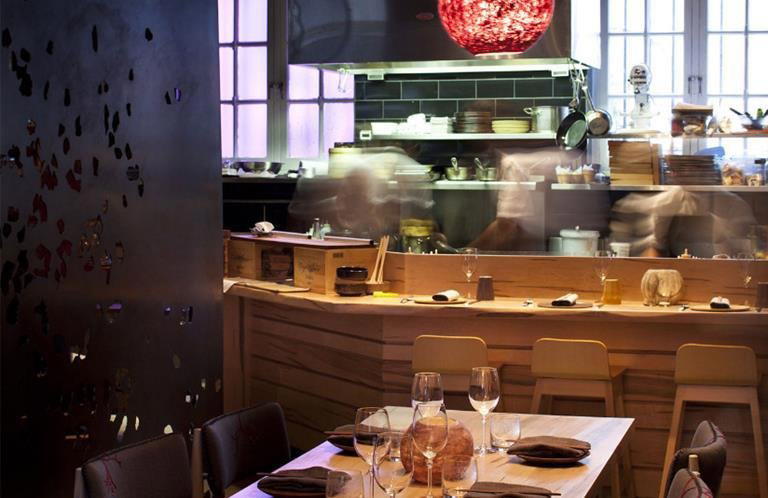
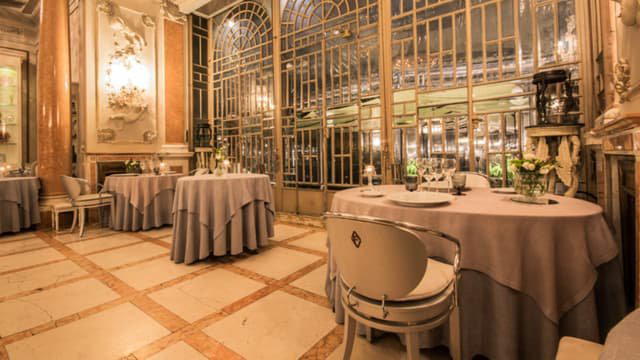
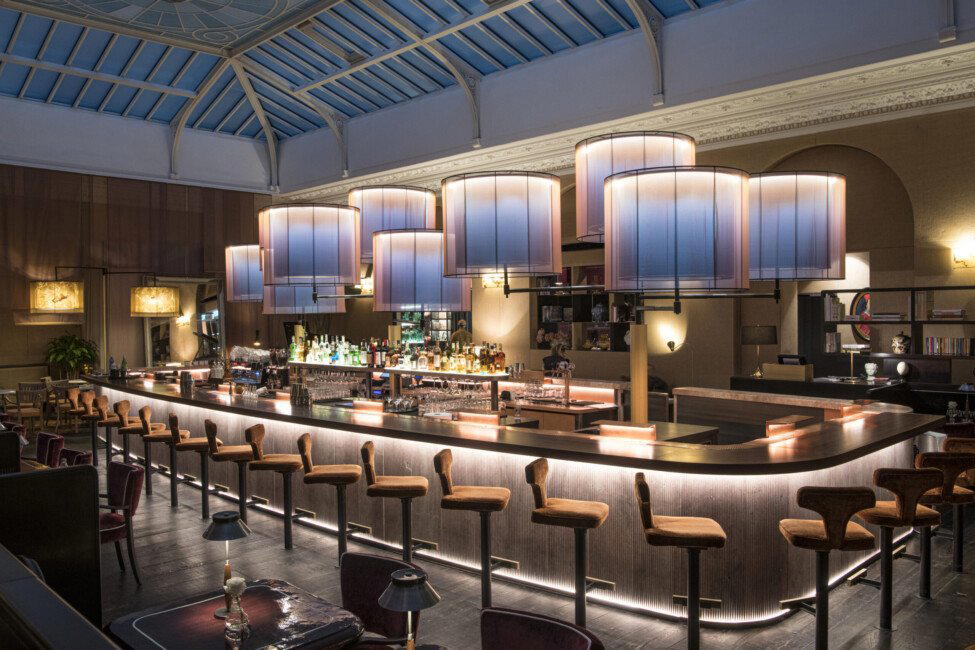
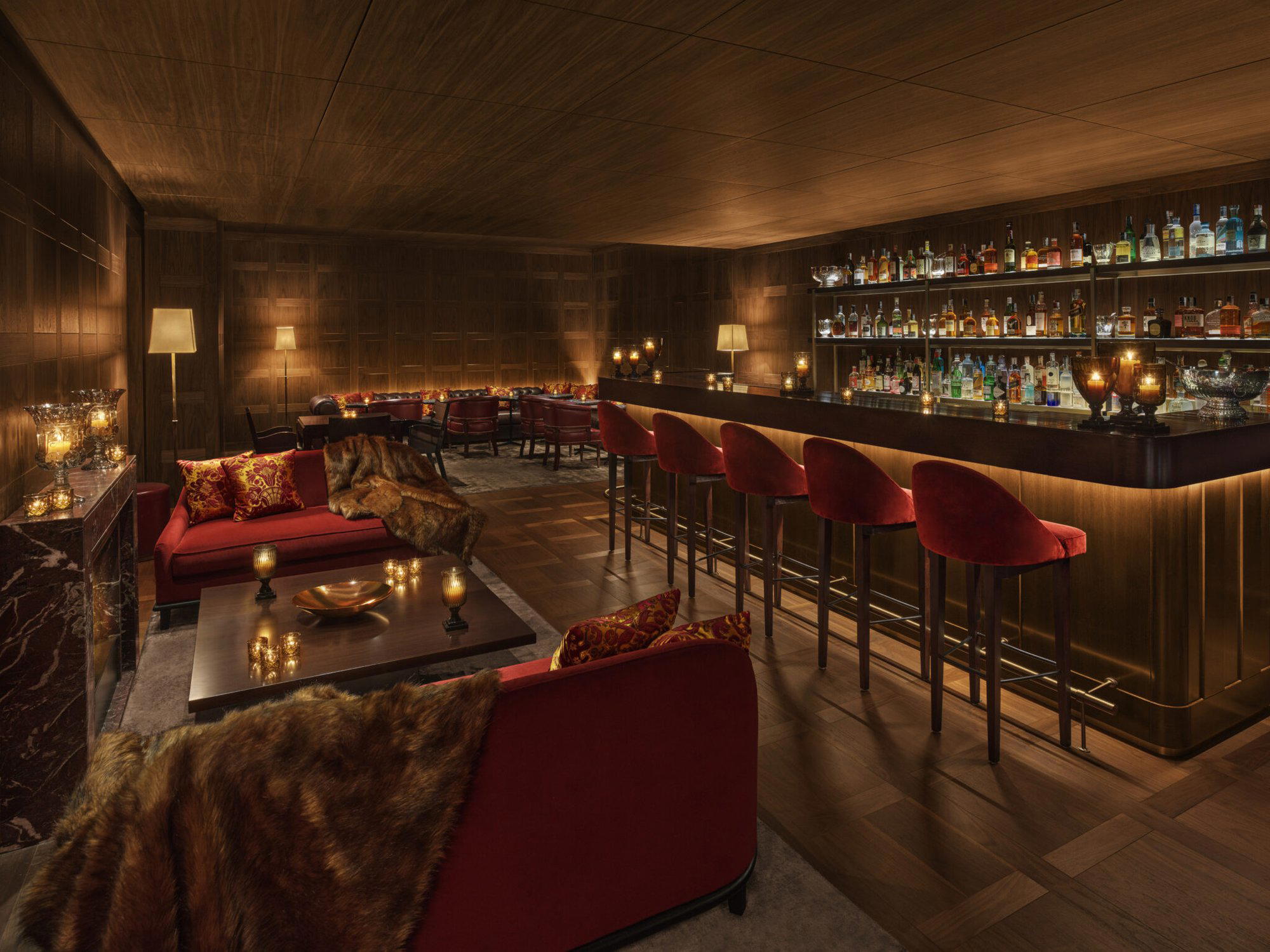
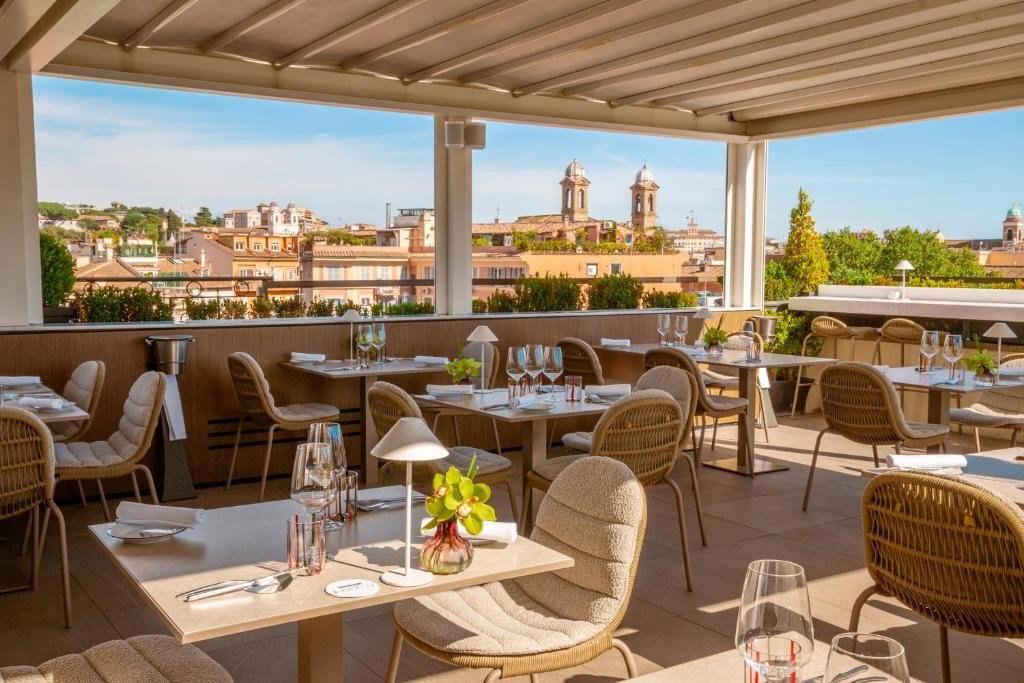
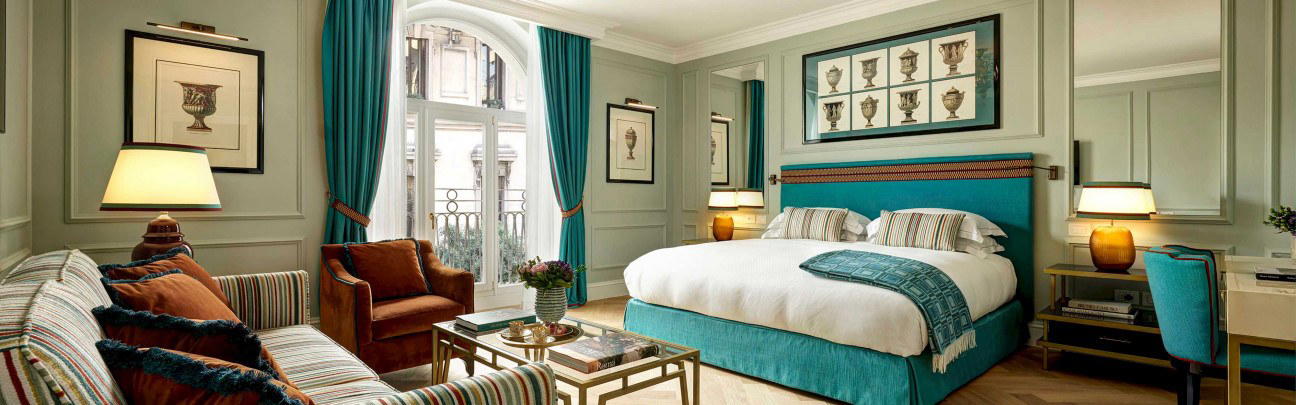
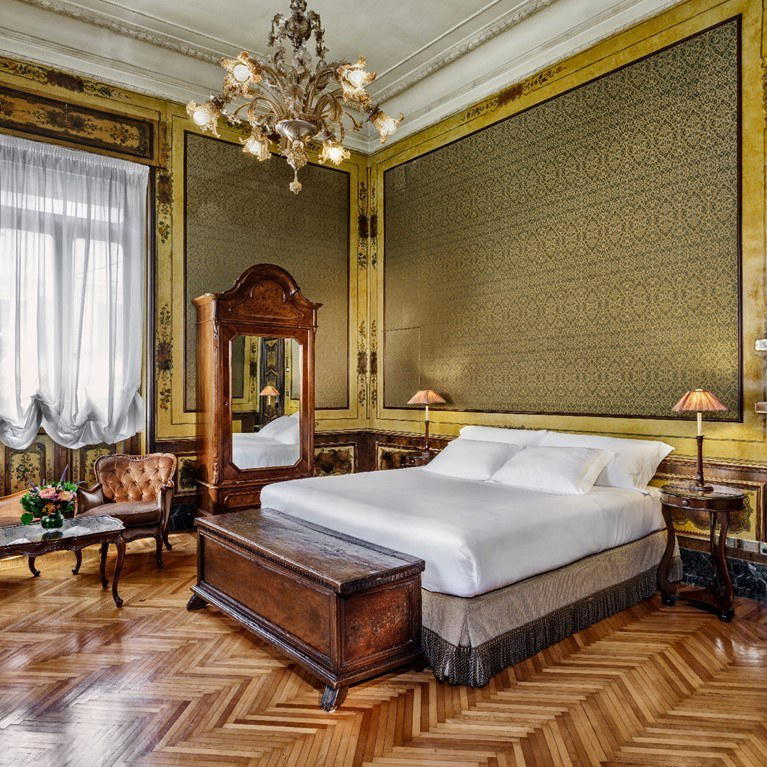
The dining room at Acquolina occupies a considered, softly lit space inside The First Roma Arte hotel on Via del Vantaggio, a short walk from Piazza del Popolo in Rome's northern historic centre. The design runs through graduated shades of blue, a palette that reads as calm rather than cold, and the effect on arrival is one of deliberate quietude. In a city where many fine dining rooms default to frescoed grandeur or studied rusticity, this is a different register: contemporary, controlled, and quietly confident. The room tells you something about what the kitchen is attempting before a dish has been described.
Service here belongs to a cohort of Roman fine dining rooms that have moved away from formal distance without collapsing into informality. The staff are young and technically proficient, attentive in the way that disappears when not needed. The attention, as a result, lands where Acquolina intends it: on the food.
Where Acquolina Sits in Rome's Fine Dining Tier
Rome's two-Michelin-star bracket is a small and competitive set. Enoteca La Torre occupies the same tier with a creative focus; Il Pagliaccio holds two stars in the contemporary Italian and creative space. At the top of the city's hierarchy, La Pergola operates at three stars. Acquolina's position, confirmed across consecutive Michelin cycles in 2024 and 2025, places it in the upper bracket of Rome's creative fine dining, peer-set alongside rooms that demand serious attention and comparable investment from the diner.
The La Liste scores reinforce that positioning with some nuance: 86.5 points in 2025, 85 points in 2026. A minor compression in score across two cycles is not unusual in a list that weighs aggregated international opinion and the shifting attention economy of international food media. What matters is that Acquolina has sustained recognition across multiple independent ranking systems simultaneously, which is a more reliable signal than any single award in isolation. Opinionated About Dining's Classical in Europe list placed the restaurant at #268 in 2024 and #383 in 2025, a movement that reflects the competitive density of the European creative tier rather than any decline in kitchen standards. Across comparable Italian two-star creative tables, including All'Oro and Glass Hostaria elsewhere in the city, Acquolina holds its ground with a point of differentiation the others do not share: a primary commitment to seafood.
Two Menus, One Clear Point of View
Chef Daniele Lippi structures the offer around two tasting menus. The shorter menu focuses on fish and seafood with genuine discipline: this is not a kitchen that gestures toward the sea before pivoting to land-based produce. The longer, more elaborate menu introduces selective meat courses, but the seafood foundation remains central to the kitchen's identity. In a city more associated with cacio e pepe and abbacchio than with marine creative cooking, that focus is a deliberate editorial choice about what kind of restaurant Acquolina intends to be.
The cuisine has been described, in Michelin's own citation, as creative while remaining hearty and generous. That combination is worth pausing on. In the European creative fine dining tier, where minimalism and restraint often signal sophistication, kitchens that produce food with genuine substance and portion generosity are making a different argument: that creativity and satiation are not mutually exclusive. The cuttlefish preparation, which draws on Turkish flavour references alongside the chef's own formal training, has been specifically cited as a reference point. Cross-cultural reference in Italian fine dining is still the minority position; most two-star Italian kitchens work within a tightly regional frame. Lippi's willingness to reach beyond that frame without destabilising the Italian coherence of the menu is one of the things that separates Acquolina from more conservative peers.
For further context on how creative Italian two-star cooking is evolving across the country, the work at Le Calandre in Rubano, Enrico Bartolini in Milan, and Osteria Francescana in Modena provides useful comparative reference. At the level of European creative cooking more broadly, the structural ambitions of rooms like Alléno Paris au Pavillon Ledoyen and Arpège in Paris map a similar tension between classical grounding and inventive reach.
The Value Proposition at This Price Point
Acquolina prices at €€€€, the ceiling bracket for Rome restaurant spend, and that prompts a legitimate question about what the diner receives for that commitment. The answer has several components. First, the room itself is hotel-adjacent without carrying the impersonal scale that larger hotel dining operations sometimes produce. The space is intimate enough that the service model can function as described: attentive and discreet, without the choreographed formality that adds cost but subtracts warmth.
Second, the wine list. A list described as running to approximately a thousand labels at a two-Michelin-star creative table is not a standard offer. At comparable Italian fine dining addresses, such as Enoteca Pinchiorri in Florence or Dal Pescatore in Runate, deep cellars are part of the value architecture. Acquolina's list at that breadth signals serious investment in wine infrastructure and, crucially, gives the sommelier team the range to make pairing recommendations that actually serve the food rather than defaulting to predictable choices. For wine-focused diners, a list of this depth at a two-star seafood-led creative table is the kind of offer that justifies the price tier on its own terms.
Third, and perhaps most important for readers calibrating spend: the food is described across multiple independent sources as generous in substance. The creative fine dining tier in Europe has a documented tendency toward precision over satiation. Acquolina's cited orientation toward heartiness alongside creativity means the diner is not leaving with an intellectually stimulating but physically incomplete experience. That distinction matters at this price point. Rooms like Marco Martini Chef and Achilli al Parlamento serve Rome's serious dining audience at different price and format points; Acquolina sits above both in formal recognition and in the specific promise of two sustained tasting menu formats rather than à la carte flexibility.
Location and Practical Considerations
Via del Vantaggio 14 places Acquolina in the Flaminio-adjacent northern edge of the historic centre, within easy reach of Piazza del Popolo and the surrounding cultural quarter. The hotel context means the entrance and approach are calm rather than street-level busy, which suits the room's register. Diners staying at The First Roma Arte or nearby properties along the Via Veneto corridor or in Prati have a short transfer; those coming from Trastevere or Testaccio should allow for a cross-city journey of twenty to thirty minutes depending on traffic and transport choice.
Reservation lead times at two-Michelin-star creative tables in Rome are meaningful: Acquolina is not a room where same-week availability should be assumed, particularly for dinner service in the spring and autumn seasons when Rome's international visitor numbers are at their heaviest. Planning two to four weeks ahead is a reasonable minimum; further for high-demand dates in April, May, September, and October.
For a broader map of what Rome's restaurants, bars, and hotels offer at comparable quality levels, our full Rome restaurants guide, Rome hotels guide, Rome bars guide, Rome wineries guide, and Rome experiences guide cover the full range. For readers interested in how Acquolina's ambitions connect to the broader Italian fine dining conversation, Atelier Moessmer Norbert Niederkofler in Brunico represents a useful reference point on the northern Italian creative end of the same spectrum.
Frequently asked questions
Who runs the kitchen at Acquolina?
The chef associated with Acquolina is Colin Wyatt.
What's the must-try dish at Acquolina?
The cuttlefish dish on the shorter fish-focused tasting menu has drawn specific attention in Michelin's own documentation of the restaurant: the preparation draws on Turkish culinary influences filtered through chef Daniele Lippi's personal approach, and it represents the clearest single expression of what a 2-Michelin-star kitchen is doing here. If your priority is seafood, the shorter menu is the sharper choice; the longer menu adds meat options but the fish courses remain the kitchen's strongest argument.
How much does it cost to eat at Acquolina?
Pricing at Acquolina is listed as €€€€.
Same-City Peers
Comparable options at a glance, pulled from our tracked venues.
| Venue | Cuisine | Price | Awards | Notes |
|---|---|---|---|---|
| AcquolinaThis venue (the venue you are viewing) | Modern Mediterranean Seafood Fine Dining | $200–300 | 2 Michelin Stars · La Liste Top Restaurants | Not listed |
| La Pergola | Modern Italian Fine Dining | $500+ | 3 Michelin Stars · La Liste Top Restaurants | Italian, Mediterranean Cuisine |
| Enoteca La Torre | Modern Italian Fine Dining | $200–300 | 2 Michelin Stars · La Liste Top Restaurants | Creative |
| Il Pagliaccio | Modern Italian-Japanese Fusion Fine Dining | $150–200 | 2 Michelin Stars · La Liste Top Restaurants | Contemporary Italian, Creative |
| Aroma | Modern Roman Fine Dining | $200–300 | 1 Michelin Star · Falstaff Restaurant - 93 Falstaff Points | Modern Cuisine |
| Idylio by Apreda | Modern Mediterranean-Asian Fusion | $150–200 | 1 Michelin Star · La Liste Top Restaurants | Modern Italian, Italian Contemporary |
Recognition history
Dated appearances from independent guides and award organizations, with the underlying list record or original source where available.
Michelin 2 Stars
Michelin
La Liste Top Restaurants
La Liste
Falstaff Restaurant - 97 Falstaff Points
Falstaff
Opinionated About Dining Classical in Europe Ranked #117
Opinionated About Dining
Wine Spectator Best of Award of Excellence
Wine Spectator
Full recognition history (10 entries)
La Liste Top Restaurants
La Liste
Michelin 2 Stars
Michelin
Opinionated About Dining Classical in Europe Ranked #383
Opinionated About Dining
Michelin 2 Stars
Michelin
Opinionated About Dining Classical in Europe Ranked #268
Opinionated About Dining
Continue exploring
More in Rome
Restaurants in Rome
All restaurants in Rome →
Bars in Rome
All bars in Rome →

Acquolina
The wine
Acquolina holds the Wine Spectator Best of Award of Excellence, which Wine Spectator gives to lists of usually 350 or more selections.
- Wine program
- Deep wine list
- Wine Spectator
- Wine Spectator Best of Award of Excellence
- Extensive wine list
- Sommelier-led
Details
- Elegant
- Intimate
- Sophisticated
- Date Night
- Special Occasion
- Hotel Restaurant
- Open Kitchen
- Extensive Wine List
- Sommelier Led
Current opening hours
- Monday
- Closed
- Tuesday
- 7–9 PM
- Wednesday
- 7–9 PM
- Thursday
- 7–9 PM
- Friday
- 7–9 PM
- Saturday
- 7–9 PM
- Sunday
- Closed
Hours can change for holidays and private events. Hours as of .
Refined and comfortable atmosphere with intimate, quiet lighting and elegant, modern design in an artsy hotel setting.