
World's 50 Best #1
Antinori nel Chianti Classico sits in the hills above Bargino, where six centuries of winemaking history meet architecture designed to vanish into the Tuscan hillside. Under winemaker Renzo Cotarella, the Antinori portfolio reads as a sustained argument for Sangiovese's range across elevation and soil.

Pearl is the En Primeur Club membership app, where members save venues, book tables and use the concierge.
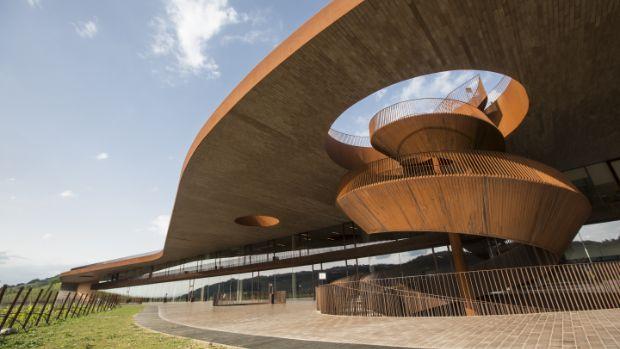
A Hillside Built to Disappear
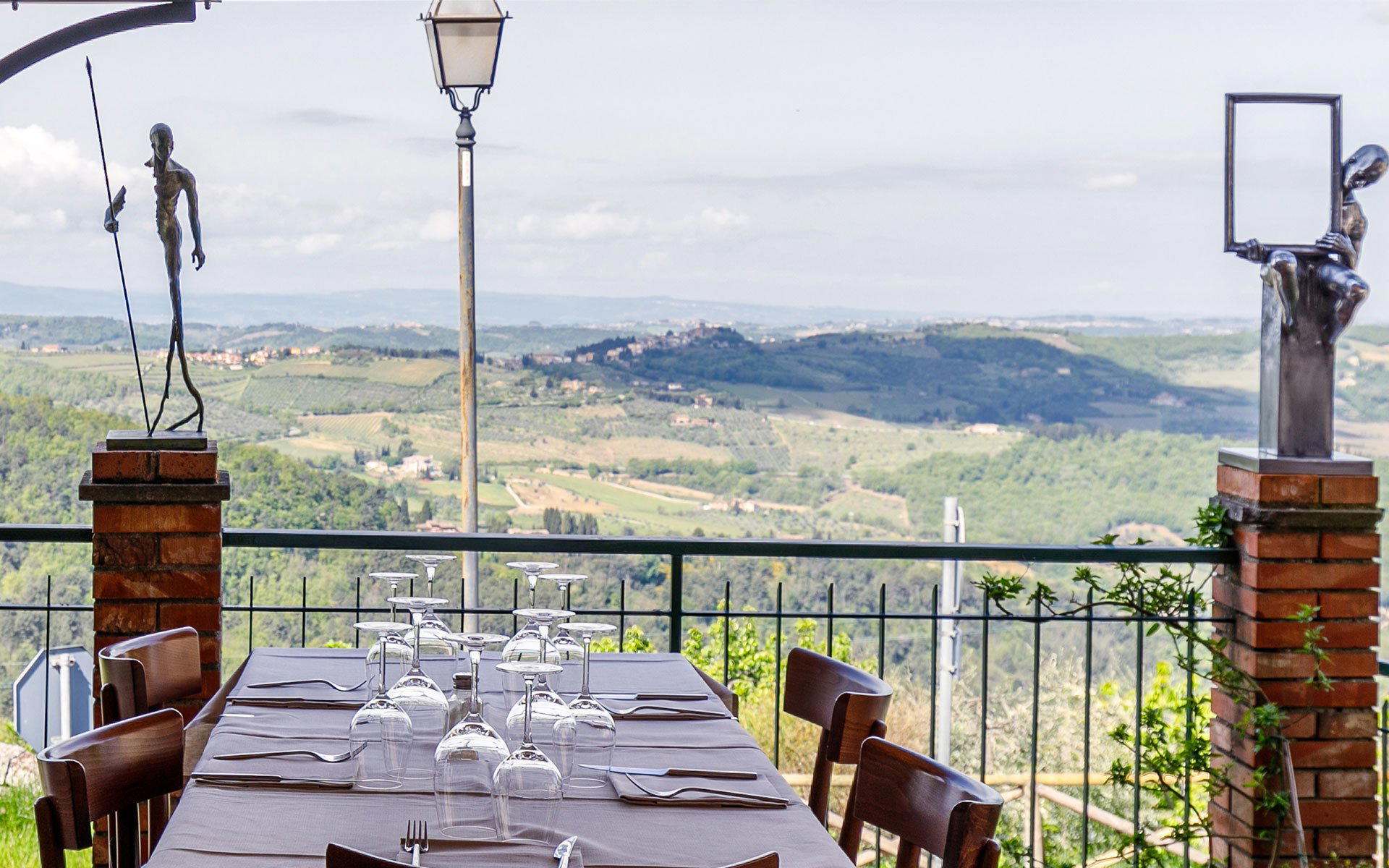
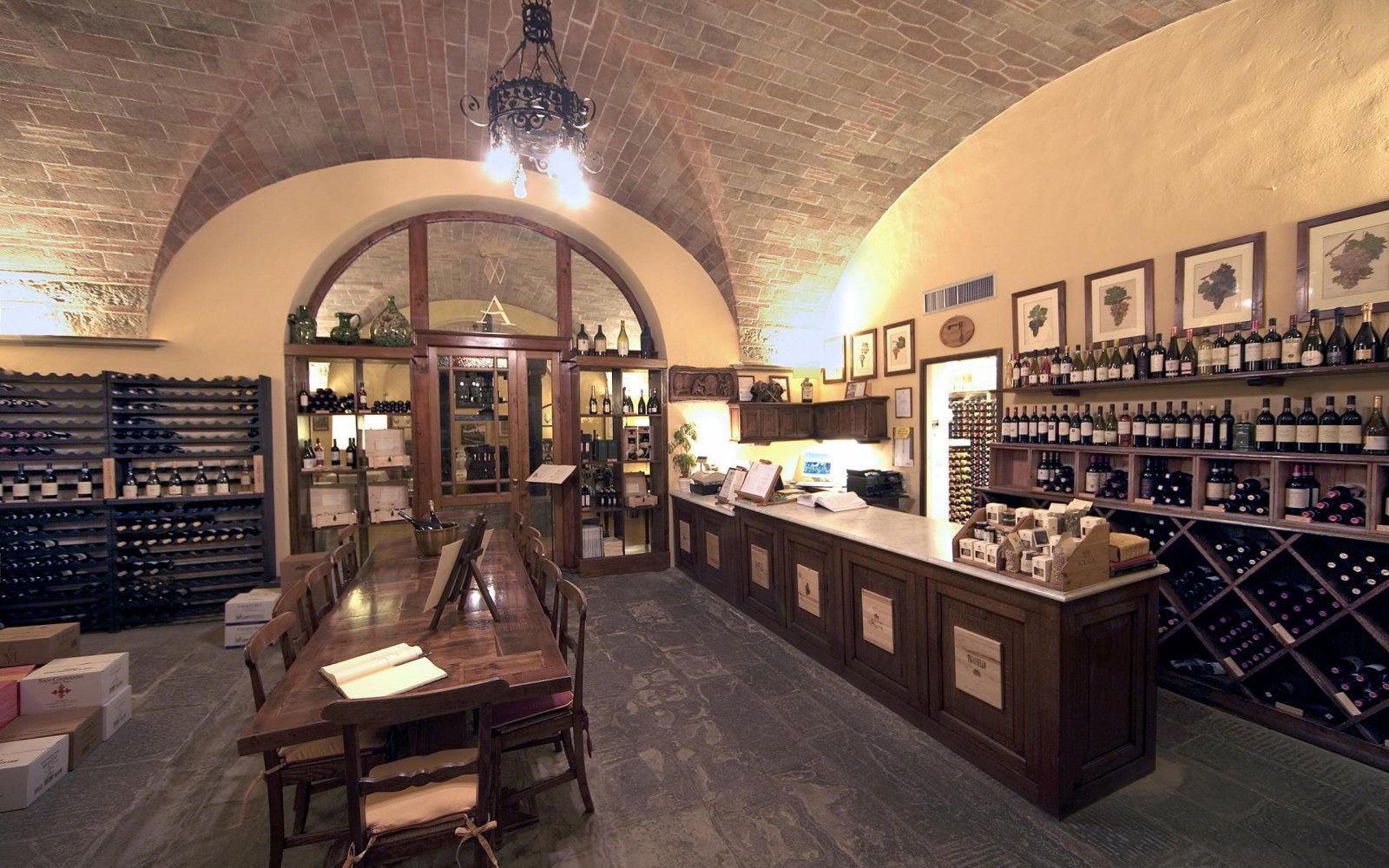
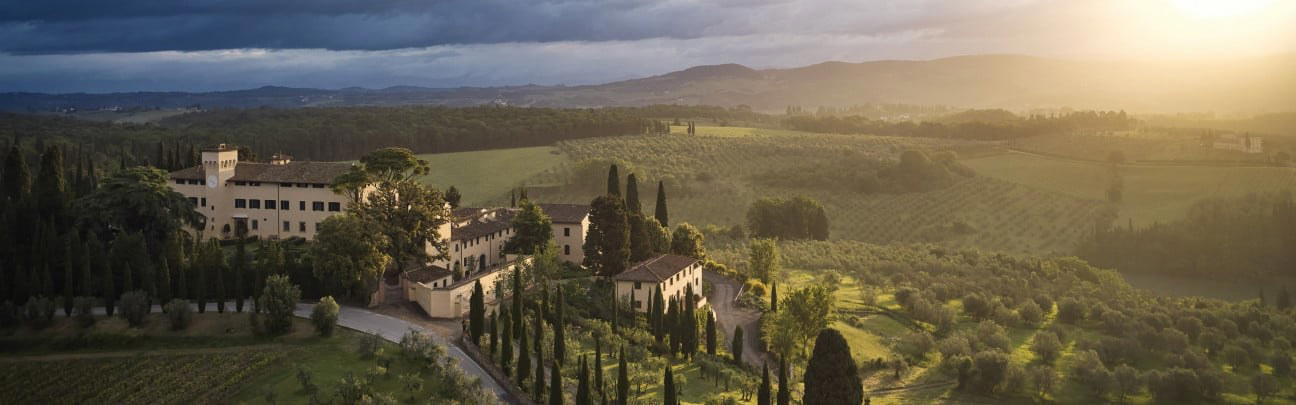
The relationship between Tuscan wine estates and the land they occupy has shifted over the past two decades. Where older cantinas announced themselves with grand gates and formal drives, a newer generation of destination wineries has taken the opposite approach: designing structures that defer to topography rather than compete with it. Antinori nel Chianti Classico at Bargino, the family's modern headquarters along the Via Cassia per Siena, belongs firmly to this second tendency. The building does not sit on the hill so much as it sits inside it, its horizontal tiers of glass and stone reading from a distance as little more than a terraced extension of the landscape itself. Arriving, the visitor realises the drama is entirely inverted: the views are from within, looking out across the Chianti Classico zone, not from outside looking in.
That architectural restraint is deliberate positioning, and it mirrors the broader argument Antinori has been making with its wines for decades: the land matters more than the producer's signature. For context within the Chianti Classico zone, compare the experience at Castello di Volpaia in Radda in Chianti, where the estate occupies a medieval village and the sense of history is architectural and ambient. Antinori's approach is more controlled: the history is curated inside gallery spaces, and the landscape is framed through glass rather than stumbled upon through cobblestone streets. Both approaches work, but they deliver very different encounters with Chianti Classico.
Six Hundred Years of Sangiovese
The Antinori family's first recorded vintage dates to 1385. That kind of continuity carries weight in Chianti Classico, a denomination that has spent the last forty years arguing its case as a serious wine region rather than a supplier of cheap table wine to foreign supermarkets. The DOCG's Gran Selezione category, introduced in 2014 to create a single-vineyard and reserve tier, is partly the product of pressure from estates with exactly this sort of long-term credibility. Antinori, with winemaker Renzo Cotarella overseeing a portfolio that spans multiple Tuscan appellations, has both the scale and the technical depth to operate across that tier structure.
Sangiovese across the Chianti Classico zone varies significantly by altitude, aspect, and soil composition. The galestro soils common in the higher elevations of the zone (Panzano, Radda, Gaiole) tend to produce wines with finer tannin and higher natural acidity than the heavier alberese clay dominant at lower sites. Bargino, in the western part of the zone near the Florence boundary, sits at a transitional elevation. The wines from this part of Chianti Classico have historically had more weight and forward fruit than those from the cooler eastern reaches, though vintage variation and viticultural decisions modulate that generalisation considerably. This is the terroir argument Antinori's estate is positioned to make in physical form: the winery is embedded in the specific geography it is trying to explain.
For a comparison point further south in Tuscany, L'Enoteca Banfi in Montalcino operates with similar scale and similar ambitions around terroir communication, though its focus is Brunello and the volcanic soils of the southern slopes of Montalcino rather than Sangiovese in the Classico zone. The two estates make an instructive pairing for anyone trying to understand how dramatically Sangiovese changes character across Tuscany's appellations.
The Art and Architecture as Argument
The estate's reputation rests not only on the wines but on a deliberate integration of visual art, architecture, and hospitality into a single coherent argument. Tuscan cultural identity has always been expressed through a layering of agricultural, architectural, and artistic production, and the Antinori headquarters takes that layering seriously. The award citation specifically notes Tuscan art of every kind as a defining feature of the estate, from the architecture's relationship with the hillside to the cultural programming within. This is not ornamental: in a region where wine tourism has become a competitive category in its own right, the ability to offer a substantive cultural encounter alongside the tasting keeps the estate in a different competitive bracket from estates that offer only cellar tours and a wine shop.
The comparison is not with other Chianti Classico producers alone but with any destination that uses architecture and art to deepen the visitor's understanding of what they are tasting. For broader Italian wine context, Ca' del Bosco in Erbusco takes a similarly art-integrated approach in Franciacorta, and the contrast between the two estates illustrates how different regional identities shape the way Italian producers translate cultural ambition into physical space.
Planning Your Visit
The estate sits at Via Cassia per Siena, 133, Bargino, approximately 20 kilometres south of Florence city centre. The Via Cassia is one of the primary routes into Chianti Classico from the north, making Bargino a natural first stop on any itinerary moving south toward Siena. Booking ahead is advisable: at the prestige level the estate now occupies, walk-in availability cannot be assumed, and the more structured tasting and tour formats fill in advance. Phone and online booking details are available through direct contact with the estate. The address is direct to locate by GPS, and the architectural signature of the building makes it recognisable on approach even for first-time visitors.
Those constructing a longer Tuscan itinerary around wine should consider pairing the estate with properties in the Montalcino zone, where Poggio Antico in Monte San Vito represents another serious producer with its own distinctive approach to the territory. Further reading on the broader regional context is available in our full Tuscany restaurants and wine guide, which maps the major production zones and the hospitality formats attached to them.
For those building a wider Italian wine itinerary extending beyond Tuscany, the country's range is considerable: Aldo Conterno in Monforte d'Alba anchors the Barolo side of the comparison, while Lungarotti in Torgiano covers Umbria's most documented estate. Distillery visits provide a different register entirely: Nonino Distillery in Pavia di Udine, Distilleria Marzadro in Nogaredo, Distilleria Romano Levi in Neive, and Poli Distillerie in Schiavon all sit within the grappa tradition that runs parallel to Italy's fine wine story. Beyond Italy, the conversation extends: Planeta in Menfi maps Sicily's premium wine emergence, and for those whose itineraries cross to Scotland or California, Aberlour and Accendo Cellars in St. Helena represent the premium visitor experience in their respective categories. Campari in Milan rounds out any itinerary focused on Italian drinks culture more broadly.
Comparable Venues
Comparable venues nearby, for context on price, style, and recognition.
| Venue | Cuisine | Price | Awards | Notes |
|---|---|---|---|---|
| Antinori nel Chianti ClassicoThis venue (the venue you are viewing) | Sangiovese, Cabernet Sauvignon | Not listed | World's 50 Best #1 | Not listed |
| Castello Banfi | Sangiovese, Cabernet Sauvignon | $500+ | World's 50 Best #61 · Relais Chateaux Award | Montalcino |
| Tenuta Cavalier Pepe | Aglianico, Fiano di Avellino | $30–50 | World's 50 Best #81 · Falstaff Winery - Listed | Irpinia |
| Tenuta Castelbuono (Tenute Lunelli) | Sagrantino, Sangiovese | $20–30 | World's 50 Best #25 · Falstaff Winery - 3 Stars | Bevagna |
| Ferrari | Chardonnay, Pinot Noir | $30–50 | World's 50 Best #11 · Falstaff Winery - 5 Stars | Trento |
| Ceretto | Nebbiolo, Arneis | $50–100 | World's 50 Best #19 · Falstaff Winery - 5 Stars | Langhe |
Recognition history
Dated appearances from independent guides and award organizations, with the underlying list record or original source where available.
World's 50 Best Vineyards #1
World's 50 Best
Full recognition history (4 entries)
World's 50 Best Vineyards #6
World's 50 Best
World's 50 Best Vineyards #9
World's 50 Best
World's 50 Best Vineyards #18
World's 50 Best
Antinori nel Chianti Classico
Featured Guides
Continue exploring
More in Tuscany
Wineries in Tuscany
All wineries in Tuscany →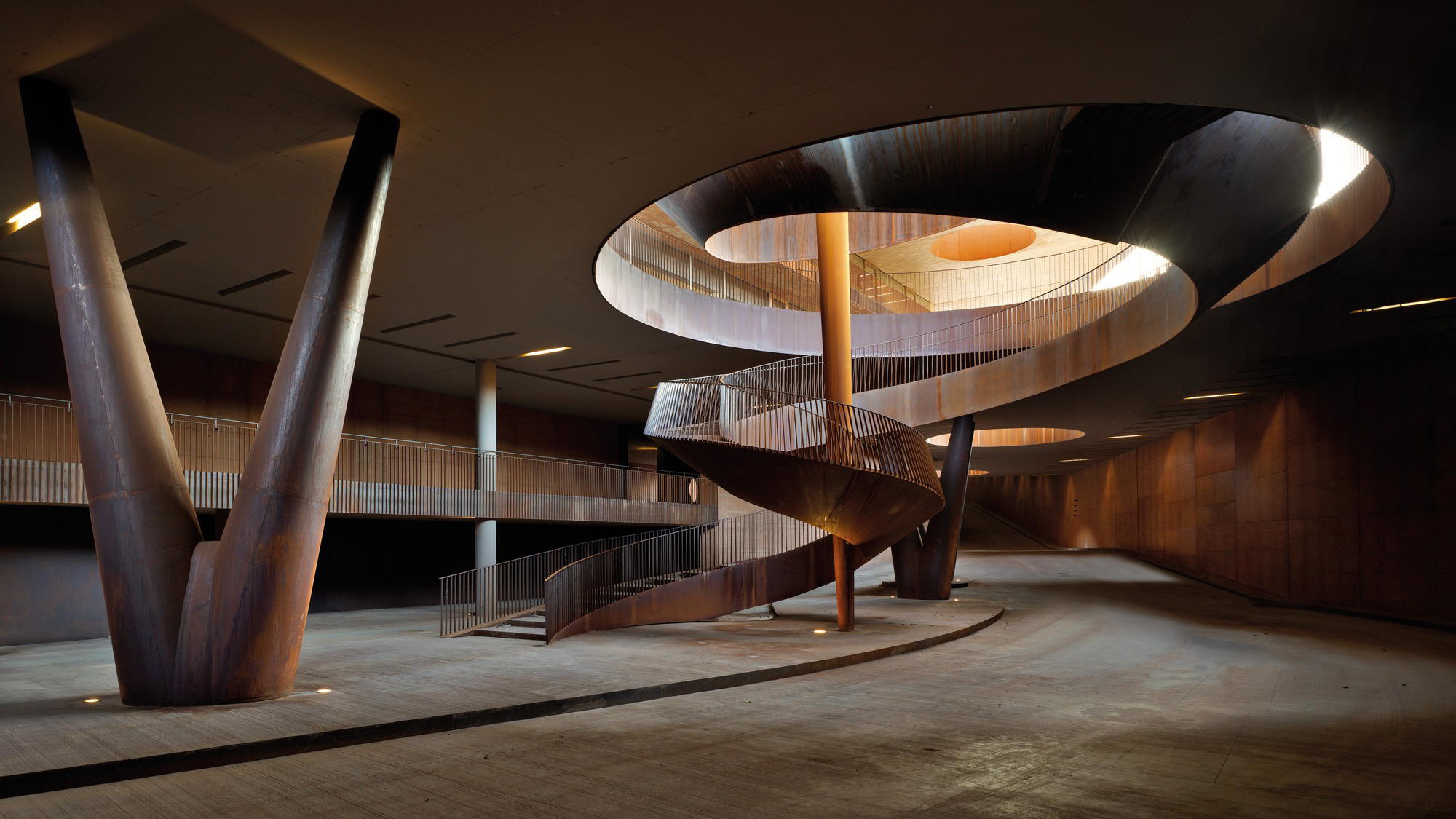
Bars in Tuscany
Browse all →
Details
- Classic
- Elegant
- Rustic
- Scenic
- Sophisticated
- Wine Education
- Special Occasion
- Vineyard Tour
- Estate Grounds
- Panoramic View
- Historic Building
- Vineyard
- Sangiovese
- Cabernet Sauvignon
- Merlot
- Cabernet Franc
- Canaiolo
- Ciliegiolo
- Colorino
- Malvasia Nera
- Mammolo
- Still Red
- Estate Tasting
- English
- Italian
Sacred place of silence described as a temple to ancient winemaking rituals, set into Tuscan hillside with natural elements ensuring ideal conditions, overlooking countryside terraces surrounded by vineyards.