For anyone building a serious itinerary through central Italy's lesser-documented producers, it earns considered attention.
Where the Aterno Valley Meets the Bottle
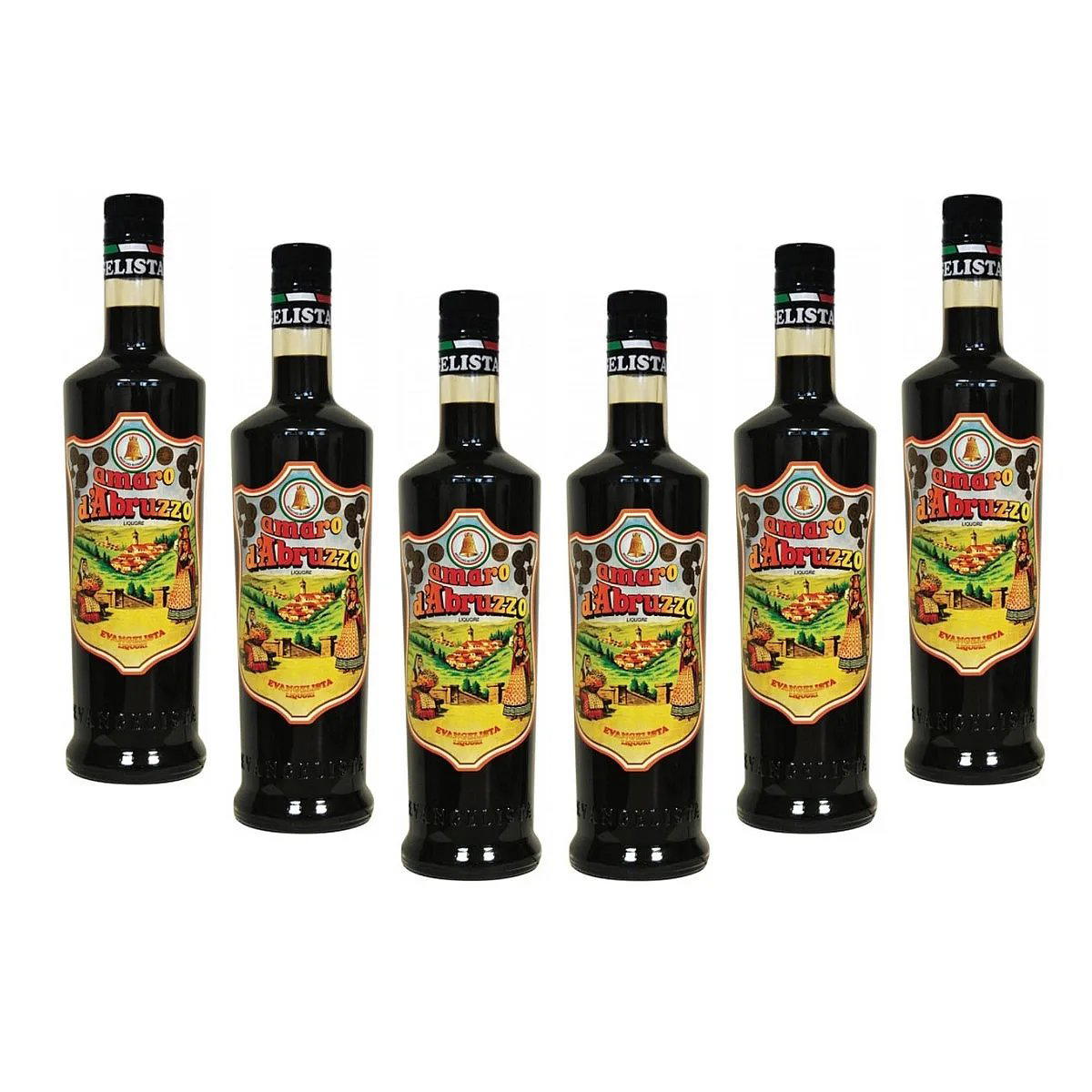
Abruzzo's interior rarely appears on the itineraries that cluster around Montepulciano vineyards or Pescara's Adriatic strip. That pattern is worth reconsidering. The Aterno river valley, which cuts through this stretch of central Abruzzo, has long supplied the conditions for a particular kind of artisanal production: moderate elevation, a continental climate buffered by the Apennine ridgeline, and agricultural traditions that predate the region's modern wine reputation. It is in this context that Evangelista Liquori, on Via Aterno, operates, a producer whose address signals exactly the kind of territorial rootedness that drives its identity.
Awards at this level function as calibration tools for the informed visitor: they confirm that what you are encountering has passed scrutiny applied to producers across a national field. Abruzzo's broader drinks reputation has been building steadily, with the region's wine output from Montepulciano d'Abruzzo and Trebbiano gaining international traction, but the artisanal liquor producers that work alongside and below that headline narrative remain comparatively underexposed. Evangelista Liquori's recognition signals it belongs in the serious conversation about central Italian production, not as a curiosity but as a credentialled participant.
Terroir and Tradition in the Glass
The question of terroir in liquor production is more complex than in wine, but it is no less present. Abruzzo's microclimate geography, altitudes that rise sharply from the Adriatic coast toward Gran Sasso, temperature differentials that concentrate aromatics in raw materials, and soil profiles that shift from coastal clay to mountain limestone within short distances, creates conditions that producers in this zone have drawn on for generations. The Aterno valley itself, running roughly parallel to the Apennine spine, channels cool air from the mountains across agricultural land that supplies herbs, botanicals, and fruit used in traditional central Italian liquor production.
This is a production tradition with national parallels worth mapping. Italy's artisanal distillery and liquor sector is geographically dispersed, from the grappa houses of the Veneto, such as Poli Distillerie in Schiavon, to the Alpine operations like Distilleria Marzadro in Nogaredo and the Friulian work of Nonino Distillery in Pavia di Udine. Further south and east, the tradition thins, which is precisely what makes an awarded producer in Chieti province notable.
The romantic shorthand producers in Piemonte or Toscana use freely, invoking centuries of unbroken lineage, famous mentors, named hillsides, is less available in Abruzzo's artisanal drinks sector. What replaces it is a more direct relationship between local raw materials and what ends up in the bottle. When the ingredients are sourced from a valley you can see from the production site, the terroir argument is less about marketing and more about logistics.
Positioning in the Italian Specialist Drinks Field
Comparing across categories is instructive. The large branded houses, like Campari in Milan, operate at scale that makes artisanal comparison meaningless.
Abruzzo's wine producers have already established proof of concept for this positioning. The region's Montepulciano bottlings now appear regularly in serious Italian wine lists alongside Barolo from houses like Aldo Conterno in Monforte d'Alba and Brunello operations such as L'Enoteca Banfi in Montalcino. The artisanal distillery and liquor sector in the region is following a comparable trajectory, and Evangelista Liquori's recognition positions it as a data point in that trend rather than an outlier.
For visitors building itineraries around Italian specialist production, the pattern worth noting is that awarded producers in secondary regions frequently offer access that is impossible in more established zones. The Chianti Classico corridor, anchored by producers like Castello di Volpaia in Radda in Chianti, operates with queue dynamics and commercial tourism pressure that changes the quality of the visit. Abruzzo's interior does not yet have that problem. Via Aterno runs close to the river, through a working stretch of the valley where production and retail often occupy the same modest buildings. The atmosphere at this kind of address is not designed for tourism: it is shaped by function. Shelves are organised for the regular customer who knows what they want, not for the visitor who needs guidance through a curated experience. That directness, characteristic of specialist producers in provincial Italian towns, is part of what the visit offers. Those arriving from further afield as part of a wider Abruzzo itinerary, perhaps combining the wine production around Lanciano or the Chieti province cooperatives with a stop here, will find the address direct to incorporate. No booking platform or phone contact is publicly listed for Evangelista Liquori, which is consistent with the operational style of Italian specialist producers at this scale. Visiting during standard Italian commercial hours on weekdays reduces the likelihood of finding the address unstaffed. See our full Cepagatti restaurants guide for broader context on what the area offers.
How It Fits a Central Italy Drinks Itinerary
Serious Italian drinks itineraries have become more geographically ambitious over the past decade. The Piemonte-Toscana axis remains the dominant framework, with producers like Lungarotti in Torgiano in Umbria and Planeta in Menfi in Sicily pulling serious visitors further down the peninsula. Abruzzo's location, accessible from Rome in under two hours and from the Adriatic coast immediately, makes it a logical addition to an itinerary that is already moving through central or southern Italy.
For those whose interest extends to grappa and distillate traditions specifically, the contrast between Abruzzo's production context and the established northern houses is itself worth experiencing. The Veneto lineage running through Distilleria Romano Levi in Neive and the Franciacorta wine culture that surrounds Ca' del Bosco in Erbusco represent one pole of Italian artisanal production. Visitors with an interest in how Italian production traditions translate across regional climates and agricultural systems will find the comparison between northern and central producers more instructive than any single destination visit. No reservations platform or advance booking mechanism is publicly confirmed, which suggests visits operate on a direct-access basis during trading hours. Travellers building a broader Abruzzo itinerary can pair the stop with the province's wine producers and the Pescara valley's wider agricultural offer. For American visitors with an interest in allocation-model producers and small-production specialists, a comparable frame of reference might be Accendo Cellars in St. Helena in Napa, where limited output and direct access define the visit.
Frequently asked questions
What should I expect atmosphere-wise at Evangelista Liquori?
Evangelista Liquori operates from Via Aterno, 56/58 in Sambuceto, a working agricultural zone in Chieti province rather than a tourist corridor. The setting reflects the character of a production-focused operation in provincial Abruzzo: functional, rooted in the local landscape, without the curated hospitality infrastructure you find at destination wineries on the Adriatic strip.
What's Evangelista Liquori's location?
Evangelista Liquori is located at Via Aterno, 56/58 Loc, 66020 Sambuceto CH, Cepagatti.
What wine is Evangelista Liquori famous for?
The name signals spirits rather than wine: 'liquori' refers to liqueur and distillate production, placing Evangelista in the specialist drinks category rather than the Montepulciano d'Abruzzo wine circuit.
Why do people go to Evangelista Liquori?
For drinks-focused travellers building a central Italy itinerary that runs beyond Piemonte and Toscana, Sambuceto in Chieti province represents a credentialled stop in a region still under the radar for international visitors. The address at Via Aterno places it conveniently near the A25 corridor.
Should I book Evangelista Liquori in advance?
Given that the producer operates in a working provincial setting rather than as a retail destination, confirming opening arrangements ahead of time is advisable, particularly for travellers making the drive from Pescara or Chieti.
Side-by-Side Snapshot
Comparable venues nearby, for context on price, style, and recognition.
| Venue | Cuisine | Price | Awards | Notes |
|---|---|---|---|---|
| Evangelista LiquoriThis venue (the venue you are viewing) | Abruzzo | Not listed | Not listed | Not listed |
| Famiglia Cotarella (Falesco) | Merlot, Roscetto | $20–30 | Falstaff Winery - 4 Stars | Montefiascone |
| Emidio Pepe | Winery | Not listed | Not listed | Montepulciano |
| Gruppo Campari | Winery | Not listed | Not listed | Milan |
| Enrico Toro Distilleria (Centerba Toro) | Abruzzo | Not listed | Not listed | Tocco da Casauria |
| Liquoreria Sarandrea | Winery | Not listed | Not listed | Collepardo |
Request a visit to Evangelista Liquori
Tell us when you would like to go and how many people, and we put the request to the estate and reply to you by email.
Continue exploring
More in Cepagatti
Wineries in Cepagatti
All wineries in Cepagatti →

Bars in Cepagatti
Browse all →
Restaurants in Cepagatti
Browse all →

Hotels in Cepagatti
Browse all →
Details
- Wine Education
- Historic Building
- Organic
- Liqueur Tasting
- Italian
rustic and traditional atmosphere rooted in family heritage and craftsmanship.