A neighbourhood bar and caffetteria on Via Attilio Benigni in Rome's Montesacro district, Bar Caffetteria operates in the tradition of the Roman all-day bar: espresso in the morning, aperitivo in the late afternoon, and a counter that anchors the rhythms of the surrounding streets. It sits outside the tourist circuit, which is precisely the point.

Pearl is the En Primeur Club membership app — saves, bookings, and concierge access live there. Same editors, same standards.
- Address
- Via Attilio Benigni, 00156 Roma RM, Italy
- Phone
- +39 392 325 9921
- Hours
- Mon–Tue 6 AM–7 PMWed–Fri 7 AM–8:30 PMSat–Sun Closed
- Directions
- Get directions
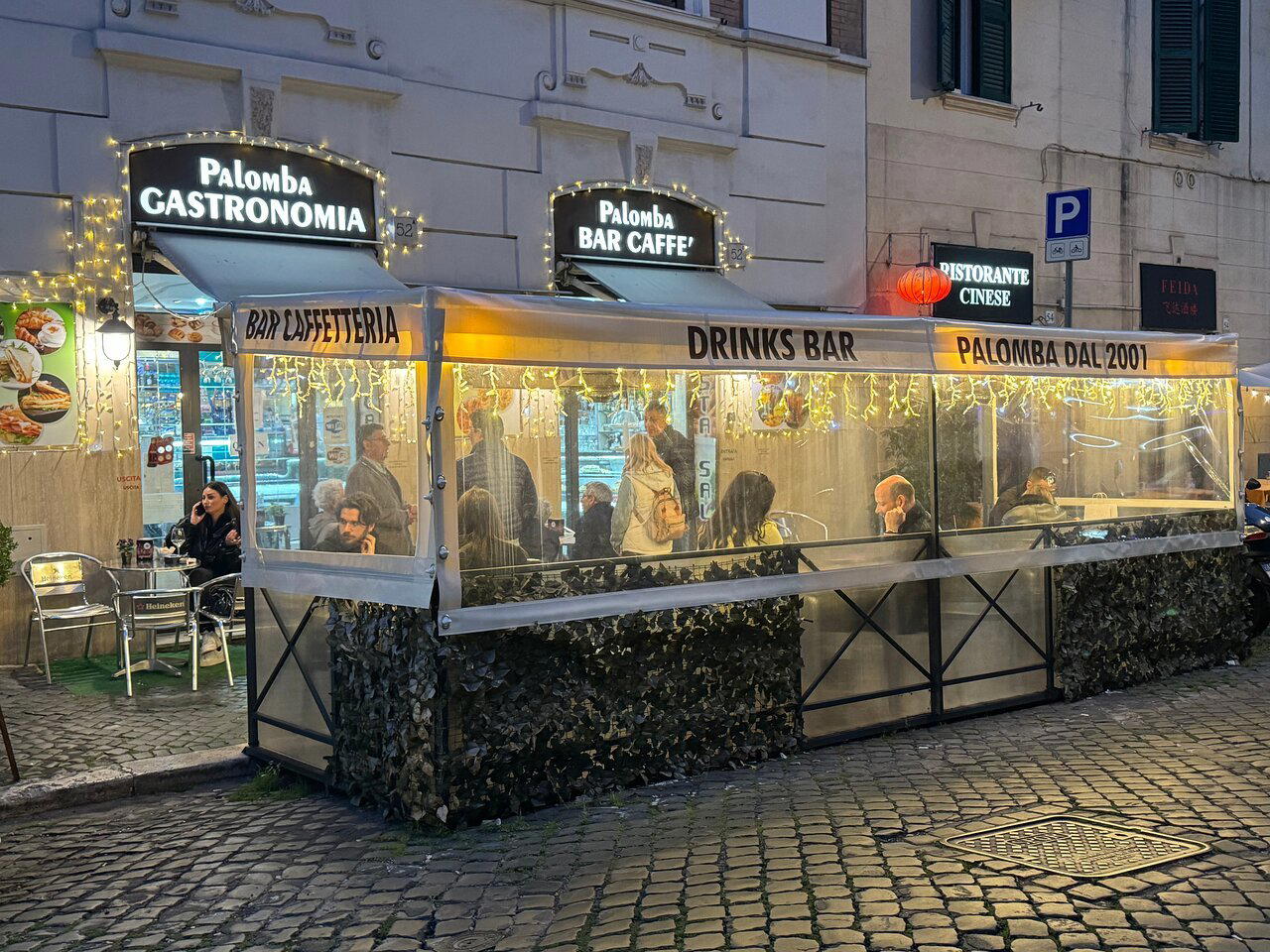
The Roman Bar as Daily Architecture
Rome's bar culture is not primarily about cocktails. It is about structure: the morning espresso taken standing at the counter, the midday pause, the early-evening aperitivo that bridges work and dinner. The bar, in the Roman sense, is less a drinking establishment than a fixture in daily life, as essential to the neighbourhood as a pharmacy or a post office. Bar Caffetteria, located on Via Attilio Benigni in the Montesacro area of northern Rome, operates inside this tradition. The address alone positions it clearly: this is a quartiere bar, not a destination bar in the sense that Drink Kong or Jerry Thomas Speakeasy are destination bars. Its frame of reference is the street outside, not a curated cocktail programme designed for out-of-towners.
That distinction matters when mapping Rome's drinking geography. The city has two largely separate bar ecosystems. One is concentrated in the centro storico and Trastevere, where venues like Freni e Frizioni and Boeme have built reputations on aperitivo spreads, natural wine lists, and the kind of sustained evening energy that draws visitors alongside locals. The other ecosystem is the one that most Romans actually inhabit: the neighbourhood bar, replicated across dozens of districts, where the clientele walks from nearby apartment buildings and the offer is calibrated to local habit rather than external expectation.
Approaching the Counter
The approach to a place like Bar Caffetteria follows a familiar Roman grammar. The bar counter is the central object: a surface for brief transactions and slightly longer conversations, not a destination for extended seating. Espresso arrives in small ceramic cups, often already sugared unless specified otherwise. Cornetti, the slightly sweeter Roman cousin of the croissant, sit under glass near the register in the morning hours. The physical environment is functional rather than designed, which is not a criticism. In Rome's quartieri, the bar that has tried too hard to look like a bar often loses the plot entirely. The authenticity of these spaces comes precisely from the absence of intervention.
By late afternoon, the register of the place shifts. Aperitivo in the Roman tradition is lower-key than the Milanese model: less about elaborate snack spreads, more about a Campari soda or a glass of house white taken while standing or sitting briefly before heading home. This is the rhythm that shapes a neighbourhood caffetteria, and it is a rhythm worth understanding before arriving with expectations calibrated to the more theatrical aperitivo formats you might encounter at Gucci Giardino in Florence or L'Antiquario in Naples.
The Progression Through a Roman Bar Day
If the editorial angle here is tasting progression, then the Roman neighbourhood bar offers its own version of that arc. The morning sequence is the most codified: espresso or cappuccino (cappuccino strictly before noon by local convention), paired with a cornetto or nothing at all. It is a quick ritual, conducted standing, lasting perhaps three minutes. This is not an extended breakfast format. The counter is cleared and the next person steps up.
The midday pause is less formalised, a coffee or a tramezzino, the triangular crustless sandwiches that appear in bars across the city, sometimes supplemented by a small beer. Early afternoon belongs to coffee again. Then the day's second arc begins around 18:00, when the aperitivo hour opens and the pace slows slightly. A spritz or a light pour becomes the transition between day and evening. The bar does not try to become a restaurant at this point; it performs its own function and leaves dinner to the trattorie nearby.
This sequencing is worth tracing because it explains why neighbourhood bars like this one exist in a different competitive register from the cocktail bars that Rome's international coverage tends to favour. The comparison that makes sense is not 1930 in Milan or Bar Leather Apron in Honolulu, venues built around a precise technical cocktail identity. The correct comparator is the network of Roman quartiere bars that sustain local life across the city's outer districts.
Montesacro and the Outer Quartieri
Montesacro, the neighbourhood in which Bar Caffetteria operates, sits in the northeastern quadrant of Rome, well beyond the UNESCO-protected centre. Developed largely during the Fascist-era building programmes of the 1920s and 1930s, it has a coherent architectural character: rationalist residential blocks, wide straight streets, a neighbourhood density that is different in texture from the chaotic historic centre. It is an area where Romans live and work rather than one they visit for tourism, which shapes the offer of every bar, trattoria, and alimentari on the main streets.
For a visitor willing to operate outside the centro storico circuit, the outer quartieri offer a different register of Roman experience. The trade-off is direct: fewer celebrated venues, less curated atmosphere, but also the actual daily life of a city that extends far beyond its monuments. A neighbourhood bar in Montesacro is not a replacement for the great wine bars documented in cities like Venice or Bologna, and it is not trying to be. It occupies a different position entirely: local institution rather than destination, operational rhythm rather than curated experience.
Getting There and What to Expect
Bar Caffetteria's address on Via Attilio Benigni places it in a residential part of Rome that requires deliberate navigation rather than proximity to the major transit hubs. Visitors staying in the centre should factor in travel time; the quartiere is accessible by bus and the city's metro system connects to the broader northeastern zone, though the specific street is a walk from any major interchange. This is not a drop-in venue for tourists making a day of the Colosseum. It is a venue for those building an itinerary around Rome's actual residential texture rather than its monuments.
Arrival expectations should match the format: a bar counter, a short menu of coffee and light food, and an evening aperitivo offer calibrated to local taste rather than international cocktail trends. The specific hours, booking policy, and current offer are best confirmed directly, as the sparse public record for this address does not yield reliable operational detail. For a broader map of where to drink in Rome across different categories and price points, the full Rome restaurants and bars guide provides the relevant context and peer comparisons. For those specifically interested in how Rome's neighbourhood bars and specialist wine bars sit relative to each other, the contrast with a venue like Lost and Found in Nicosia illustrates how the neighbourhood bar format plays out differently across Mediterranean cities with otherwise similar daily drinking cultures.
Awards and Standing
Comparable venues nearby, for context on price, style, and recognition.
| Venue | Cuisine | Price | Notes |
|---|---|---|---|
| Bar CaffetteriaThis venue — the venue you are viewing | pub | Not listed | Not listed |
| Regoli Pasticceria | Bar | Not listed | Esquilino |
| Ciampini Roma | Bar | $20–30 | Campo Marzio |
| Ma Che Siete Venuti A Fà | beer_bar | $10–20 | Trastevere |
| Antico Caffè Candia | Bar | $10–20 | Trionfale |
| Music Inn | cocktail_bar | Not listed | Ponte |
Continue exploring
More in Rome
Bars in Rome
Browse all →
Restaurants in Rome
Browse all →
Hotels in Rome
Browse all →

Details
- Casual Hangout
- Standalone
- Seated Bar
Current opening hours
- Monday
- 6 AM–7 PM
- Tuesday
- 6 AM–7 PM
- Wednesday
- 7 AM–8:30 PM
- Thursday
- 7 AM–8:30 PM
- Friday
- 7 AM–8:30 PM
- Saturday
- Closed
- Sunday
- Closed
Hours can change for holidays and private events. Last verified .