
Tabelog 100 #4
Our verdict
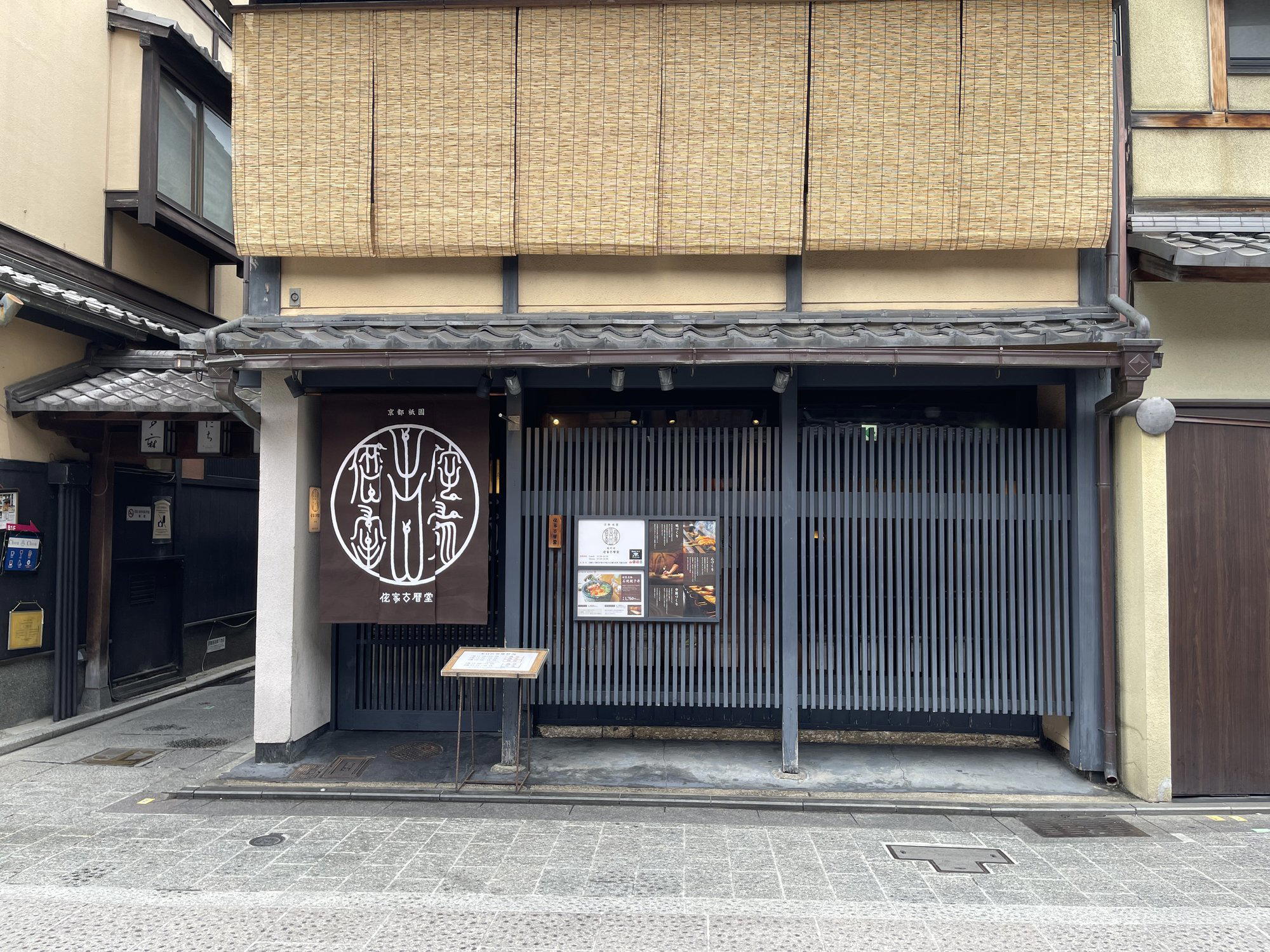
Set in Gion's Minamigawa strip, just north of the Gion Kobu Kaburenjo theatre, Wabiya Korekido occupies one of Kyoto's most charged addresses. The surrounding neighbourhood has shaped the expectations of regulars who return not for novelty but for the discipline of a room that knows exactly what it is. For visitors to the Higashiyama Ward, it represents an encounter with Gion dining on its own terms.

Pearl is the En Primeur Club membership app, where members save venues, book tables and use the concierge.
The menu
What to order
- Ishiyaki Oyakodon
- Yakitori skewers
- Stone-grilled Carbonara Oyakodon
The approach along Gionmachi Minamigawa sets a particular register before you reach any door. Stone-paved, lantern-lit, flanked by ochaya that have been trading introductions and discretion for centuries, this strip of Higashiyama Ward is one of the most compositionally legible streets in Japan. Venues here do not announce themselves. They are found, or they are not. Wabiya Korekido sits just north of the Gion Kobu Kaburenjo theatre, in a pocket of the ward where the address itself carries weight, where the neighbourhood's long-established culture of precision and restraint is not a marketing position but an inherited condition.
What the Regulars Know
In Gion, loyalty is not built through loyalty programmes. It is built through repetition, the gradual accumulation of visits that teach a guest what a room offers and, equally, what it expects. The regulars who anchor places like Wabiya Korekido along this corridor tend to share a specific disposition: they are not looking for a debut experience, they are looking for the version of a meal they already trust, rendered again with the same care. That orientation shapes everything from pacing to the unspoken rhythms of service.
This is a mode of dining that has its own parallel in the kaiseki tradition Kyoto has refined over several centuries. The repeat visitor to a Gion establishment is not reading the room for the first time; they are confirming it. They know which corner of the space settles into quiet earlier in the evening, which courses reward patience, and how far the kitchen will extend toward a request made with the right degree of courtesy. The address on Minamigawa positions Wabiya Korekido within that tradition of earned familiarity.
For a comparative sense of the Gion dining register, Gion Sasaki in Kyoto represents the kaiseki tier where seasonal produce and counter discipline converge at a level the neighbourhood's most serious regulars track closely. The broader Higashiyama corridor, covered in our full Kyoto Shi restaurants guide, shows how the ward has diversified without abandoning the underlying grammar of restraint.
The Neighbourhood as Context
Gionmachi Minamigawa operates within a narrow band of cultural expectation. The Gion Kobu district, which this address adjoins, is the most formalised of Kyoto's five hanamachi, the geisha districts that have defined the city's premium hospitality culture since the Edo period. That proximity is not incidental. Establishments in this zone absorb the standards of their neighbours, where seasonal sensitivity, material quality, and comportment are baseline assumptions rather than differentiators.
The comparison with Kyoto's broader mid-ward dining strip is instructive. Hyōto Shijō Karasuma operates several blocks west, closer to the commercial spine of the city, where the dining register shifts toward accessibility. Along Minamigawa, the pull runs in the other direction: toward formality, seasonality, and the kind of guest who has done the reading before arriving.
Further afield, the Kansai region offers useful points of reference for understanding where precision-led Japanese dining sits across different cities. HAJIME in Osaka represents the three-Michelin-star tier of the Kansai scene, a benchmark against which Gion establishments are often implicitly measured by the region's most travelled diners. akordu in Nara offers a different inflection entirely, European technique applied to Yamato produce, which illustrates how the Kansai corridor now encompasses multiple interpretive traditions within a short radius of each other.
Seasonal Eating on Minamigawa
The kaiseki framework, which most serious Gion kitchens work within or against, is organised around the agricultural and meteorological calendar in a way that few Western tasting-menu formats replicate. The shift from hamo (pike conger) in summer to matsutake in early autumn, and from yudofu-friendly winter tofu to the lighter preparations of spring, is not a marketing narrative, it is the structural logic of the cuisine. Restaurants along this corridor are evaluated, by regulars and critics alike, on how faithfully they track that calendar and how inventively they interpret it.
For a sense of how Kyoto's tofu and temple food traditions intersect with this seasonal framework, Junsei and Kanga-an Temple represent two distinct approaches, one rooted in yudofu service, the other in shojin ryori, that regulars on the Higashiyama circuit often include in a broader Kyoto itinerary.
Planning a Visit
The Minamigawa strip is most coherently approached on foot from Gion-Shijo station, a walk of roughly five to eight minutes south and east through the main Shijo corridor and into the hanamachi proper. The street itself narrows as you move north of the theatre, and venues here do not signpost aggressively. Evenings, particularly Friday and Saturday, see the neighbourhood at its most populated, which affects both the atmosphere of the approach and the availability of nearby contingency options.
This is not an obstacle unique to Wabiya Korekido; it reflects a wider pattern among Minamigawa venues whose primary clientele arrives through established channels rather than open online booking. Visitors who have navigated similar access questions at Kiharu or Kiharu Brasserie will recognise the dynamic.
For those building a wider Japan itinerary around serious eating, the regional spread is considerable. Harutaka in Tokyo anchors the capital's sushi counter tradition at a level that Kyoto-focused visitors often build a side trip around. Further afield, Goh in Fukuoka, Abon in Ashiya, affetto akita in Akita, Aji Arai in Oita, Ajidocoro in Yubari District, and Akakichi in Imabari collectively map a Japan far beyond the standard Kyoto-Tokyo axis. Internationally, Le Bernardin in New York City and Lazy Bear in San Francisco represent Western analogues for the kind of precision-led, repeat-clientele dining that Gion venues like Wabiya Korekido represent in their own register.
Frequently asked questions
Where is Wabiya Korekido in Kyoto Shi?
Wabiya Korekido is located at Japan, 〒605-0074 Kyoto, Higashiyama Ward, Gionmachi Minamigawa, 歌舞練 場北側, Kyoto Shi.
Where exactly is Wabiya Korekido located in Kyoto, and how do I get there?
Wabiya Korekido is on Gionmachi Minamigawa in Higashiyama Ward, Kyoto Shi, on the north side of the Gion Kaburenjo theatre. From Gion-Shijo Station on the Keihan Main Line, the address is a walk of roughly five to eight minutes southeast through the preserved machiya streetscape. The Minamigawa strip runs parallel to the Shirakawa canal, making the approach on foot the most coherent way to arrive.
What should I order at Wabiya Korekido?
Wabiya Korekido sits on Gionmachi Minamigawa inside the Gion Kobu district, where kitchens typically work within or against the kaiseki framework. That format is organised around seasonal produce, so what is available changes with the agricultural calendar, arriving in late autumn or spring gives you the widest range of ingredients at their peak. Without a current menu on public record, the most reliable approach is to accept whatever the kitchen offers rather than requesting specific dishes.
Do I need a reservation for Wabiya Korekido?
On Gionmachi Minamigawa, where the density of serious Gion addresses is high and seating tends to be intimate, walk-in availability is rarely guaranteed. Phone and website details for Wabiya Korekido are not on public record, which means the most direct route is through a concierge at your Kyoto accommodation or a specialist booking agent with local contacts. Reservations in this district are generally advisable several weeks in advance, particularly during cherry blossom and autumn foliage seasons.
What is Wabiya Korekido known for?
Wabiya Korekido occupies an address immediately north of the Gion Kaburenjo theatre on Gionmachi Minamigawa, one of Kyoto's most formalised dining corridors within the Gion Kobu district. Kitchens along this strip are shaped by the cultural expectations of their neighbourhood, which historically aligns with kaiseki-era seasonality and a guest culture built on repeat visits rather than first-time tourism.
Can Wabiya Korekido accommodate dietary restrictions?
Traditional kaiseki kitchens in Gion are built around fixed seasonal progressions, which can make significant substitutions structurally difficult. Dietary requirements are best communicated at the time of booking rather than on arrival. Given that no direct contact details for Wabiya Korekido are on public record, routing this information through a booking intermediary or Kyoto-based concierge service is the practical approach.
Where It Fits
Comparable venues nearby, for context on price, style, and recognition.
| Venue | Cuisine | Price | Awards | Notes |
|---|---|---|---|---|
| Wabiya KorekidoThis venue (the venue you are viewing) | Traditional Yakitori & Oyakodon | $30–50 | Tabelog 100 #4 | Not listed |
| Kanga-an Temple | Vegan Shojin Ryori Fucha Cuisine | $100–150 | Not listed | Kita-ku |
| Kyoto Handicraft Center | Seasonal Japanese Kaiseki | Not listed | Not listed | Takano |
| Junsei | Kyoto Kaiseki Yudofu | $50–100 | Not listed | Sakyo-ku |
| Kyoto Modern Terrace | Modern Japanese-Western Fusion | Not listed | Not listed | Okazaki |
| Menbaka Fire Ramen | Fire Ramen | $10–20 | Not listed | Kamigyo Ward |
Recognition history
Dated appearances from independent guides and award organizations, with the underlying list record or original source where available.
Tabelog 100 #4 · No. 4
Tabelog · Tabelog 100 - Yakitori - WEST - 2025
Continue exploring
More in Kyoto
Restaurants in Kyoto
All restaurants in Kyoto →
Bars in Kyoto
All bars in Kyoto →
Hotels in Kyoto
All hotels in Kyoto →
Wineries in Kyoto
Browse all →
Details
- Elegant
- Intimate
- Classic
- Quiet
- Date Night
- Special Occasion
- Solo
- Open Kitchen
- Chefs Counter
- Historic Building
- Sake Program
- Sommelier Led
- Local Sourcing
- Counter Dining
- A La Carte
- Sake
- Wine
- Shochu
Current opening hours
- Monday
- 11:30 AM–2:30 PM, 5:30–9:30 PM
- Tuesday
- 11:30 AM–2:30 PM, 5:30–9:30 PM
- Wednesday
- 11:30 AM–2:30 PM, 5:30–9:30 PM
- Thursday
- 11:30 AM–2:30 PM, 5:30–9:30 PM
- Friday
- 11:30 AM–2:30 PM, 5:30–9:30 PM
- Saturday
- 11:30 AM–2:30 PM, 5:30–9:30 PM
- Sunday
- Closed
Hours can change for holidays and private events. Hours as of .
Modern and calm interior within a traditional stone-paved Kyoto townhouse; intimate counter seating around an open charcoal grill allows diners to watch skilled preparation firsthand.