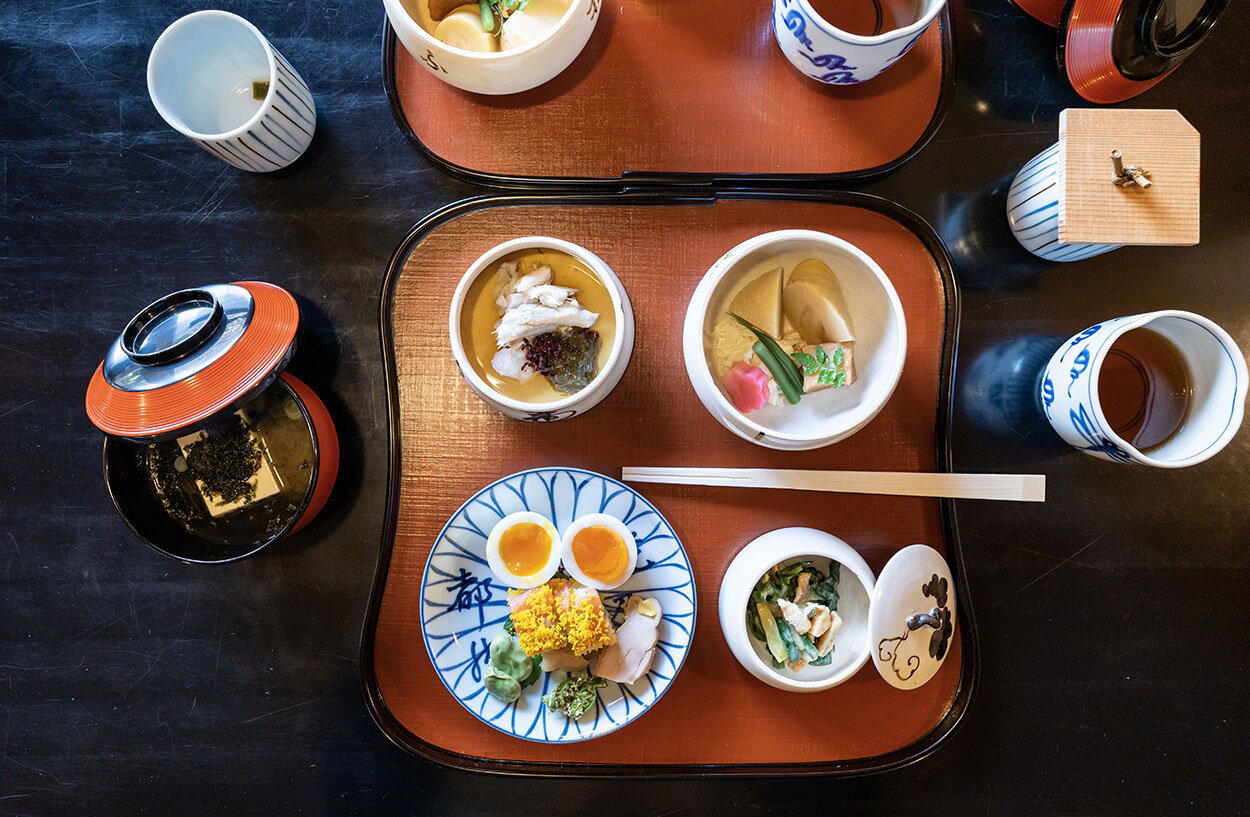
"One might expect a formal feeling from a restaurant inside a temple,and Kanga-an takes that ambience to the next level with various private dining rooms hidden away behind shoji screenedsliding doors. The restaurant specializes in shojin-ryori cuisine,a style introduced to Japan from China by the monk Dogen, founder of Zen Buddhism. The cuisineeschews meat, dairy, and strong flavors such asonion and garlic. While it’s admittedly not for everyone, each small bite of food is an ornate work of art. Don’t miss the serene bar in the adjacent building, where you can sip sparkling sake while gazing onto a candlelit Zen garden."
Pearl is the En Primeur Club membership app — saves, bookings, and concierge access live there. Same editors, same standards.
- Address
- 278 Shingoryoguchicho, Kita Ward, Kyoto, 603-8146, Japan
- Phone
- +81 75 256 2480
- Website
- kangaan.jp
- Directions
- Get directions
 Saves & bookings on Pearl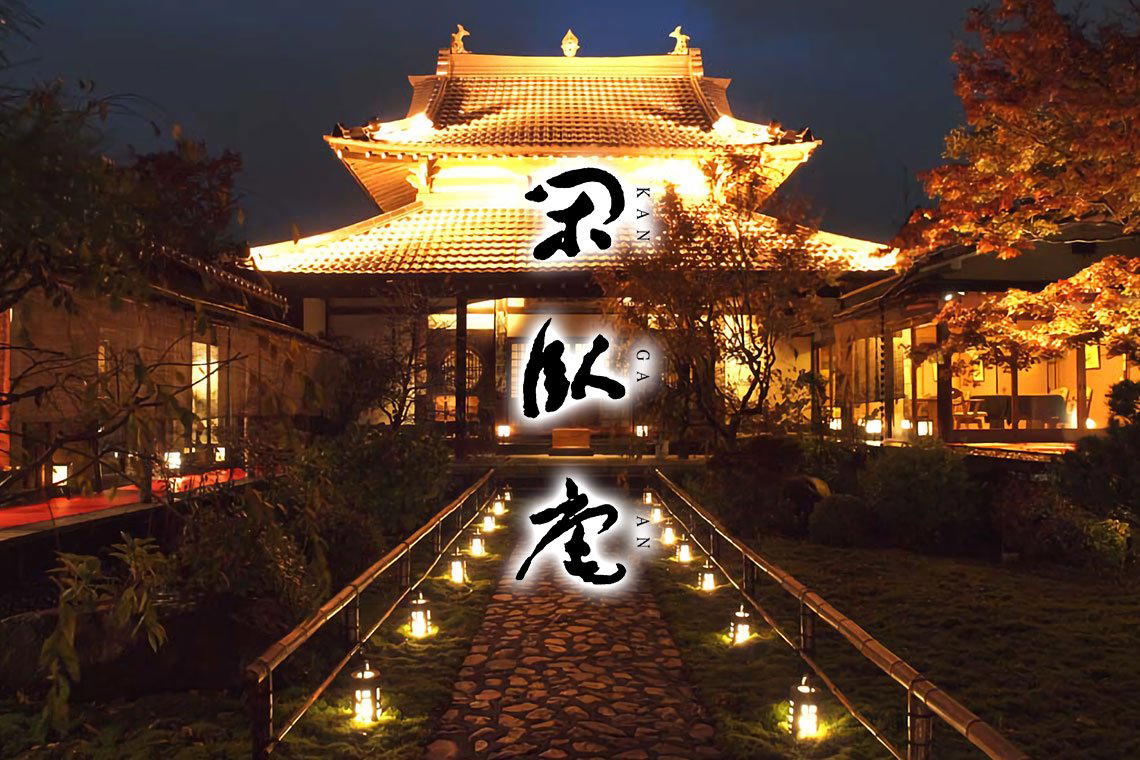
Where Kita Ward Quiets the City
Kanga-an Temple is a restaurant in Kyoto, serving Vegan Shojin Ryori Fucha Cuisine at about $100 per person. The northern wards slow down here. Stone paths, moss that retains its green through the cooler months, and the absence of crowds that characterize the city's southern precincts all signal that this part of Kyoto operates on older rhythms.
Temple Dining and the Shojin Tradition
Kanga-an is associated with the shojin ryori tradition, the Buddhist-derived temple cuisine that has shaped Japanese vegetable cookery for centuries. Shojin ryori is not a recent wellness trend repackaged for modern audiences. It is a discipline with documented roots in the Zen temples of Kyoto and Kamakura, where dietary restriction driven by Buddhist precepts produced a cooking vocabulary of extraordinary depth: dashis built from kombu and dried shiitake rather than fish or meat, vegetables prepared in ways that amplify rather than mask their natural character, and a seasonal calendar that is not aspirational but structural. The cuisine cannot exist without what is available at that moment in the growing year.
That sourcing constraint is, in practice, the architecture of the food. Across the shojin tradition, ingredients arrive through temple gardens, local agricultural networks, and foragers whose schedules track the same calendar the kitchen follows. The absence of protein from animal sources compels a precision with plant material that most contemporary kitchens, even ambitious ones, rarely require. A turnip in shojin ryori is not a side note; it is a main argument. This is the culinary logic that Kanga-an Temple operates within, and it positions the experience at some distance from both kaiseki restaurants and Western-influenced fine dining.
For context on how Kyoto's broader dining scene handles sourcing: venues like Junsei and Kiharu each approach local ingredient logic from different angles, as does kiln, which brings a different format to the same Kyoto sourcing conversation. Temple dining operates in a separate category from all of them, defined less by chef personality or menu format and more by doctrinal discipline around what the land offers.
The Garden and the Setting
Kanga-an's grounds are the frame for the meal. Temple dining in Kyoto has historically used the architectural and garden setting as part of the experience, the veranda, the raked gravel, the seasonal plantings, in ways that urban restaurant rooms cannot replicate. The meal arrives in a space that has been in active use for centuries, and that continuity of place is not decorative; it informs the pace at which the food is meant to be received. Visitors who arrive expecting the efficient service rhythms of a kaiseki counter or a city restaurant may need to adjust their expectations. The tempo here is set by the temple, not the diner.
Seasonality in temple settings is also visible rather than just described on a menu. The garden outside a dining veranda in November looks nothing like the same garden in April, and that visible transition is part of the information the experience transmits. Shojin ryori's sourcing philosophy is made legible by the setting in ways that are difficult to replicate in a standalone restaurant.
Placing Kanga-an in Kyoto's Wider Dining Context
Kyoto's restaurant culture spans a wide range of registers. At one end sit the densely booked kaiseki rooms of central Kyoto, places like Gion Sasaki and Hyōto Shijō Karasuma, which compete in a tier defined by Michelin recognition and reservation scarcity. At the other end sit neighbourhood restaurants and casual lunch spots that serve the city's residents rather than its visitors. Temple dining occupies a different position: it is neither casual nor conventional fine dining, and it answers to a different set of criteria. Peer comparisons are more usefully drawn to other shojin venues across Japan than to Kyoto's kaiseki establishments.
The broader Kansai and Japanese fine dining conversation includes venues like HAJIME in Osaka and, further afield, Harutaka in Tokyo and akordu in Nara, each of which engages with sourcing and seasonality from distinct frameworks. Temple dining's relationship with those conversations is oblique: it predates modern fine dining's sourcing rhetoric by several centuries and does not require validation from within it.
Visitors building a broader itinerary beyond Kyoto can compare sourcing-led dining across Japan, including regional counterparts like Goh in Fukuoka.
Planning a Visit
Kanga-an Temple is located at 278 Shingoryoguchicho, Kita Ward, Kyoto, 603-8146. The Kita Ward location places it north of the central city, accessible by bus from major Kyoto transit hubs. Reservations are essential, and the temple is open daily from 12 to 1 PM and 5 to 7 PM. Seasonal timing matters here more than at most restaurants: spring and autumn bring the garden into its most legible states, though the winter months carry their own austere character that suits the cuisine's register. The dress code is smart casual.
Comparison Snapshot
Comparable venues nearby, for context on price, style, and recognition.
| Venue | Cuisine | Price | Notes |
|---|---|---|---|
| Kanga-an TempleThis venue — the venue you are viewing | Vegan Shojin Ryori Fucha Cuisine | $$$ | Not listed |
| Kyoto Modern Terrace | Modern Japanese-Western Fusion | $$$ | Okazaki |
| Wabiya Korekido | Traditional Yakitori & Oyakodon | $$$ | Gion |
| Kiharu Brasserie | Western Brasserie with Kyoto Influences | $$$ | Nakagyo-Ku |
| Junsei | Kyoto Kaiseki Yudofu | $$$ | Sakyo-ku |
| Aoiya Yakimochi Sohonpo | Japanese Sweets | $ | Toyama |
Continue exploring
More in Kyoto Shi
Restaurants in Kyoto Shi
Browse all →
Bars in Kyoto Shi
Browse all →
Hotels in Kyoto Shi
Browse all →
Wineries in Kyoto Shi
Browse all →
At a Glance
- Quiet
- Elegant
- Scenic
- Intimate
- Special Occasion
- Historic Building
- Garden
- Sake Program
- Garden
Current opening hours
- Monday
- 12–1 PM, 5–7 PM
- Tuesday
- 12–1 PM, 5–7 PM
- Wednesday
- 12–1 PM, 5–7 PM
- Thursday
- 12–1 PM, 5–7 PM
- Friday
- 12–1 PM, 5–7 PM
- Saturday
- 12–1 PM, 5–7 PM
- Sunday
- 12–1 PM, 5–7 PM
Hours can change for holidays and private events. Last verified .
Peaceful temple atmosphere with elegant traditional decor, beautifully lit garden views, and seasonal scenery.