In Kamigyo Ward, Menbaka Fire Ramen has built a reputation around a theatrical tableside ritual that sets it apart from Kyoto's quieter dining traditions. The kitchen sends out bowls of scallion ramen before a server ignites the toppings in a column of flame that briefly fills the room. It is a deliberate spectacle in a city that usually prizes restraint.
Pearl is the En Primeur Club membership app — saves, bookings, and concierge access live there. Same editors, same standards.
- Address
- 757-2 Minamiiseyacho, Kamigyo Ward, Kyoto, 602-8153, Japan
- Phone
- +81 50 1722 4118
- Website
- fireramen.com
- Directions
- Get directions
 Saves & bookings on Pearl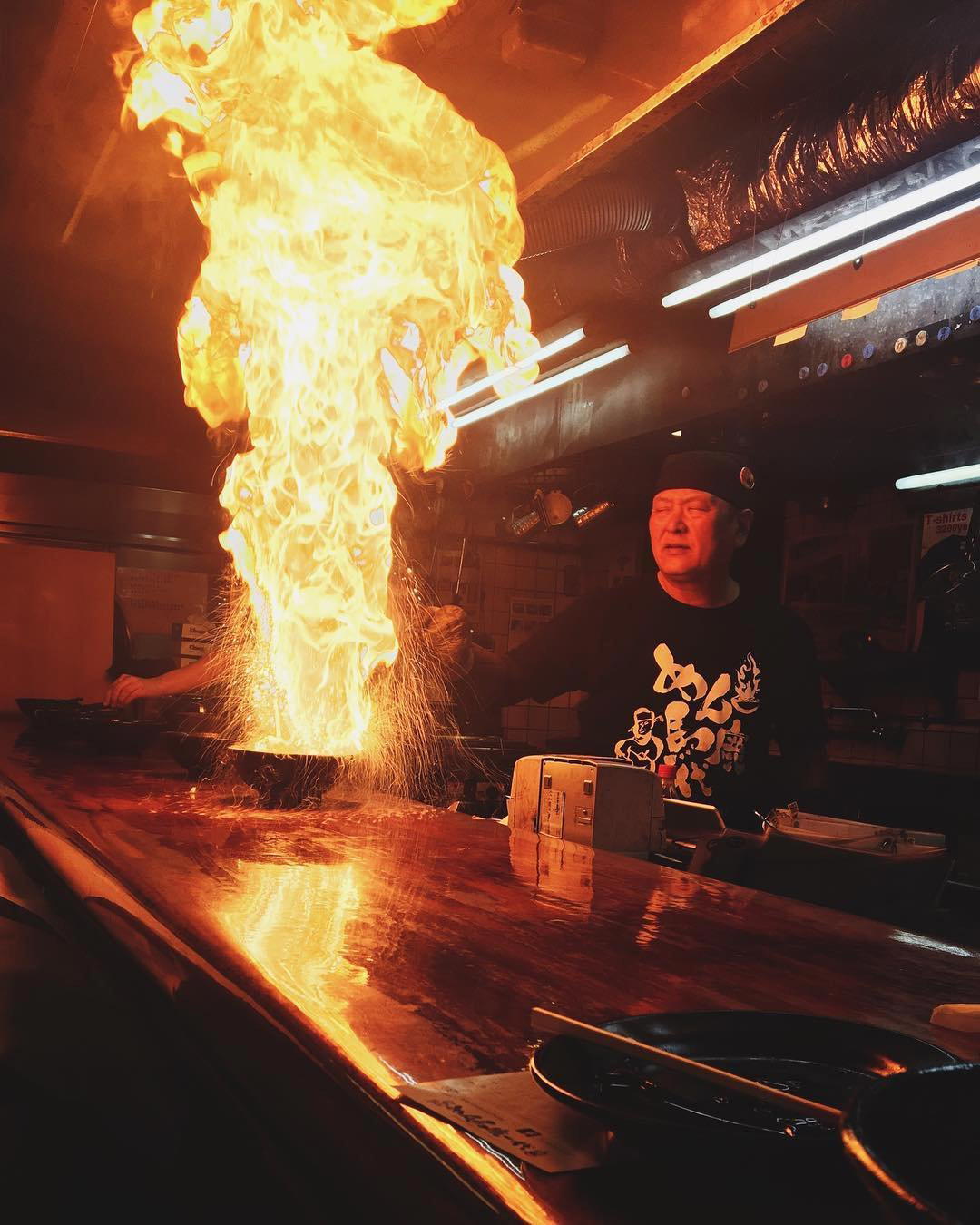
Fire Over the Bowl: Kyoto's Most Theatrical Ramen Counter
Menbaka Fire Ramen is a casual ramen restaurant in Kyoto, Japan, known for its tableside fire pour and priced around $13 per person. Kyoto's dining identity is anchored in restraint. The city's most celebrated tables, from the kappo counters of Gion to the tofu kaiseki served at Junsei, operate on a logic of subtraction: fewer ingredients, quieter rooms, food that invites contemplation rather than reaction. Menbaka Fire Ramen sits at the opposite end of that register. Located at 757-2 Minamiiseyacho in Kamigyo Ward, the shop has built its reputation on a single theatrical gesture that draws a sharp line between itself and every other ramen-ya in the city.
The room is small and spare in the way that most serious ramen shops are: counter seating, minimal decoration, staff moving efficiently through a tight space. Then a server arrives with a ladle and a lighter, and for a moment the corner of Kamigyo Ward becomes something closer to a kitchen stage. The scallion oil on each bowl is ignited at the table, producing a column of flame that travels across the garnish before settling back into the broth. The effect is brief, controlled, and entirely deliberate. This is the format the shop is built around, and it has remained consistent enough that it now functions as a reference point in conversations about Kyoto's more unconventional food offerings.
Planning Around the Format, Not Just the Food
Menbaka operates inside that same tradition, and the practical calculus of visiting it shapes the experience as much as the dish itself.
Kamigyo Ward sits in the northern part of central Kyoto, less trafficked by casual tourists than the Gion or Higashiyama corridors. That geography means the queue is composed more of deliberate visitors than passing foot traffic, which changes the character of the wait. Arriving early in the service is the standard approach for walk-in visitors; the shop does not operate on a reservation model in the way that, say, Kiharu or Kiharu Brasserie does. Walk-ins are possible but carry real risk during peak travel periods, particularly the spring sakura window and autumn foliage season, when Kyoto's visitor volume compresses into a few concentrated weeks.
Hyōto Shijō Karasuma, making it viable as a lunch stop before an afternoon spent further north or east. Visitors building itineraries that also include Kanga-an Temple will find the distances manageable within a single afternoon.
Where This Fits in Japan's Ramen Spectrum
Japan's ramen culture has always accommodated spectacle alongside craft. The category is broad enough to contain the quietly technical (Michelin-noted broth work, aged tare programs) and the explicitly performative (tableside finishes, open-flame garnishes, timed pours). Menbaka belongs to the latter register without apology. That positioning distinguishes it sharply from the kaiseki and kappo counters that define Kyoto's upper dining tier, including Gion Sasaki in Kyoto, and equally from high-technique operations further afield such as HAJIME in Osaka or Harutaka in Tokyo.
The comparison that matters for Menbaka is not against fine dining but against the broader ramen-ya category, where differentiation is achieved through broth style, noodle gauge, tare intensity, or regional identity. At Menbaka, the differentiating variable is the fire ritual, and that choice has consequences for how the shop is perceived and how it attracts visitors. It functions as a single-format experience in a category that otherwise rewards obsessive refinement across multiple variables. That is not a weakness; it is a deliberate editorial decision about what kind of ramen shop to be.
For visitors whose Japan itineraries extend beyond Kyoto, the contrast is instructive. A meal at Goh in Fukuoka or the regional focus of akordu in Nara operates on entirely different terms. Even within casual dining across Japan, from Ajidocoro in Yubari District to Akakichi in Imabari, the range of approaches to informal eating in this country is wide enough that Menbaka reads as a legitimate edge case rather than an outlier trying to be something it is not.
What to Know Before You Go
The address is 757-2 Minamiiseyacho, Kamigyo Ward, Kyoto 602-8153, and the shop is accessible from central Kyoto by bus or a short taxi from Kyoto Station.
The fire ritual is the central draw, and it is experienced at the table by every diner. There is no separate seating tier or premium option to access it. The format is uniform, which is both its appeal and its constraint: you come for the spectacle and the scallion broth, and that is what you receive. Visitors who approach it as a single-dish, single-experience stop rather than a meal with multiple decision points will calibrate their expectations correctly.
Those building broader Japan itineraries may also find useful reference points in Abon in Ashiya, affetto akita in Akita, and Aji Arai in Oita for regional contrast. Further afield, the format discipline at places like Lazy Bear in San Francisco and the long-standing technical reputation of Le Bernardin in New York City illustrate how different cities use theatrical or disciplined formats to anchor a dining identity. Menbaka does the same thing at ramen-counter scale, and in Kyoto's context, that contrast is precisely the point.
Side-by-Side Snapshot
Comparable venues nearby, for context on price, style, and recognition.
| Venue | Cuisine | Price | Notes |
|---|---|---|---|
| Menbaka Fire RamenThis venue — the venue you are viewing | Fire Ramen | $$ | Not listed |
| Kanga-an Temple | Vegan Shojin Ryori Fucha Cuisine | $$$ | Kita-ku |
| Wabiya Korekido | Traditional Yakitori & Oyakodon | $$$ | Gion |
| Hyōto Shijō Karasuma | Kyoto Dashi Shabu-Shabu Kaiseki | $$$ | Shijō Karasuma |
| Kiharu | Modern Western Brasserie with Kyoto Influences | $$ | Nakagyo-ku |
| Kyoto Handicraft Center | Seasonal Japanese Kaiseki | $$ | Takano |
Continue exploring
More in Kyoto Shi
Restaurants in Kyoto Shi
Browse all →
Bars in Kyoto Shi
Browse all →
Hotels in Kyoto Shi
Browse all →
Wineries in Kyoto Shi
Browse all →
At a Glance
- Lively
- Energetic
- Trendy
- Casual Hangout
- Family
- Celebration
- Open Kitchen
- Sake Program
Current opening hours
- Monday
- 11 AM–10 PM
- Tuesday
- 11 AM–10 PM
- Wednesday
- 11 AM–10 PM
- Thursday
- 11 AM–10 PM
- Friday
- 11 AM–10 PM
- Saturday
- 11 AM–10 PM
- Sunday
- 11 AM–10 PM
Hours can change for holidays and private events. Last verified .
Energetic and theatrical atmosphere with dramatic fire shows at the counter, creating excitement amid the aroma of sizzling ramen.