Kyoto Modern Terrace: Modern Japanese-Western Fusion with terrace seating and a sake program, set up for leisurely lunch, brunch, or dinner with garden views.
Pearl is the En Primeur Club membership app — saves, bookings, and concierge access live there. Same editors, same standards.
- Address
- Japan, 〒606-8342 Kyoto, Sakyo Ward, Okazaki Saishojicho, 13 2F パークプラザ
- Phone
- +81 75 754 0234
- Website
- store.tsite.jp
- Directions
- Get directions
 Saves & bookings on Pearl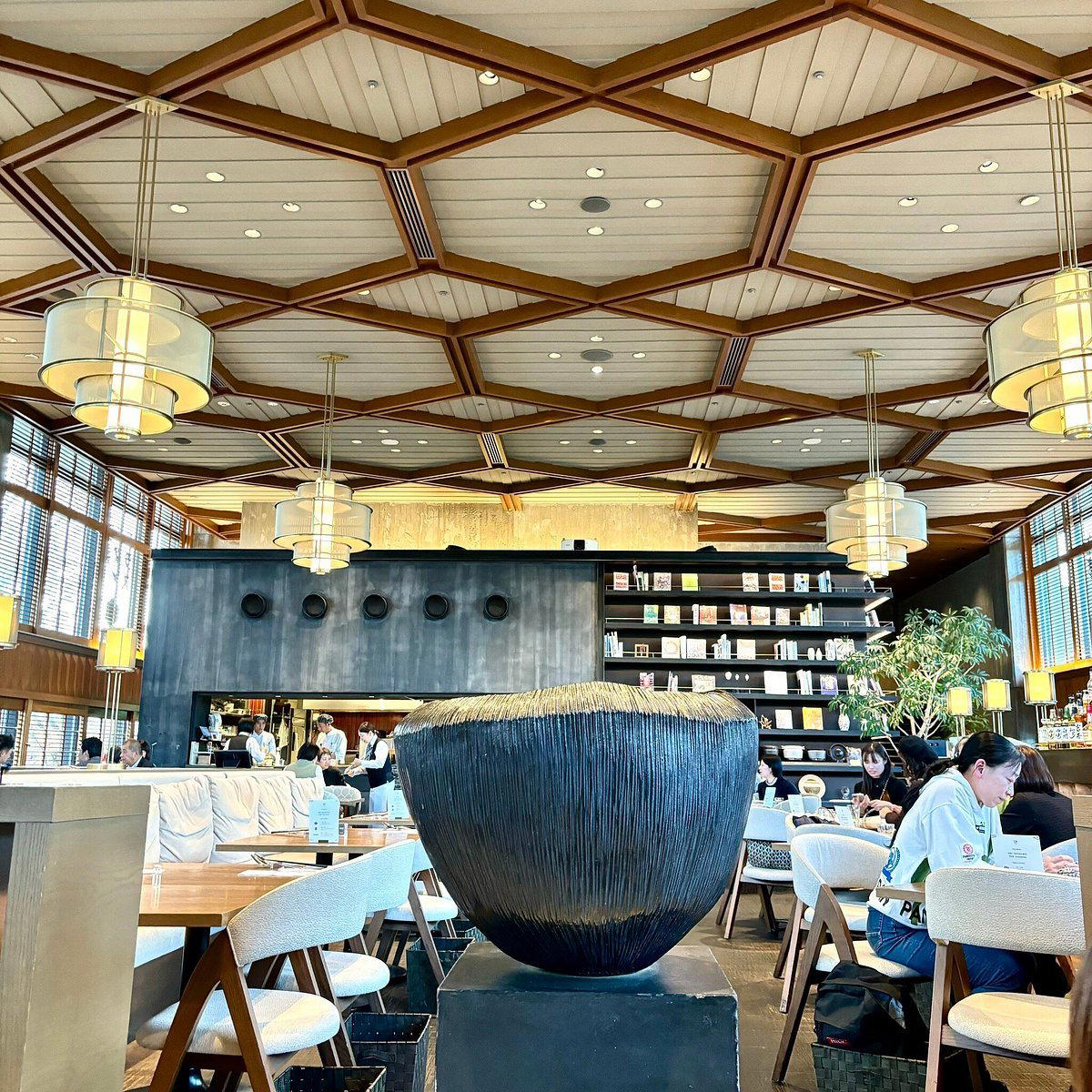
Okazaki, Between the Museum Quarter and the Canal
The northeastern fringe of Kyoto's Okazaki district has a particular quality in the late afternoon: the canal that runs parallel to Heian Shrine's outer approach catches low light, and the streets thin out as museum crowds dissolve toward the Keage subway stop. It is in this transitional zone, on the second floor of Park Plaza at Saishojicho 13, that Kyoto Modern Terrace positions itself, physically and conceptually, between the city's older cultural infrastructure and something more contemporary in register.
What the Terrace Format Means in This City
Kyoto's dining culture has historically resolved around two dominant formats: the long-established kaiseki tradition, where seasonal ingredients are expressed through a disciplined, multi-course Japanese framework, and a growing cohort of cross-cultural restaurants that apply European technique to local produce without fully committing to either tradition. The terrace format adds a third variable: the physical environment becomes part of the proposition. In a city where most memorable dining rooms face private gardens, inner courtyards, or sliding-screen interiors, a venue that leans on an refined outdoor prospect is making a different kind of argument about what Kyoto dining can look and feel like.
A second-floor terrace in this precinct frames a different visual reference than the temple-garden views that anchor kaiseki rooms in Higashiyama or Nanzenji. It is a civic, rather than a contemplative, setting, and that distinction shapes the sensory register a visitor should expect.
Placing the Venue in Kyoto's Broader Dining Tier
Kyoto's restaurant scene has matured considerably over the past decade, and Okazaki now occupies a middle tier that is neither the rarefied kaiseki rooms of the city's traditional high end nor the casual lunch spots that serve the museum day-tripper trade. For context, particularly formally decorated tables in Kyoto draw comparisons to recognized Japanese fine-dining elsewhere in the country, from the three-Michelin-star precision of HAJIME in Osaka to the omakase rigor of Harutaka in Tokyo. Kyoto Modern Terrace sits in a more accessible bracket, one where atmosphere and setting carry significant weight alongside the food itself.
Within Kyoto specifically, the city's dining options across varying formats include tofu-specialist houses such as Junsei, which represents a different kind of experience rooted in centuries-old preparation traditions, and more intimate operations like Kiharu and its adjacent Kiharu Brasserie, which occupy a Franco-Japanese register. The temple-dining format available at Kanga-an Temple occupies yet another niche. Kyoto Modern Terrace's name signals an intention to occupy a recognizably modern position in a city that has historically prized the classical. The tension between those two poles, modern and traditional, civic and contemplative, terrace and interior, is the operative characteristic here.
The Seasonal Logic of an Open-Air Setting
For anyone planning a visit, the calendar matters more than it does for an enclosed dining room. Kyoto's climate divides into clear seasons, each with a distinct character. The spring period, roughly late March through early May, brings cherry blossom concentration to Maruyama Park and the Philosopher's Path, both accessible from the Okazaki area, and the combination of that natural backdrop with a terrace-format lunch or dinner is a genuinely different proposition than a midwinter visit. The city's famous summer heat, which runs through July and August, pushes temperatures into the mid-thirties Celsius, making a terrace less comfortable without appropriate shading or cooling. Autumn, from October through November, is generally considered the leading functional window for outdoor dining in Kyoto, when the maple foliage around Nanzenji and Eikan-do creates a strong visual context and temperatures settle into an agreeable range. These seasonal considerations should anchor any booking decision.
How Okazaki Compares to the City's Other Dining Corridors
The Okazaki corridor offers a different tempo than the restaurant clusters around Shijo-Karasuma, where Hyōto Shijō Karasuma operates in a denser urban context, or the tourist-facing lanes of Gion. It is less transited, which generally means lower ambient noise and a calmer approach. For visitors staying in or near the Heian Shrine area, the restaurant is accessible without the commute that downtown Kyoto's concentrated restaurant district often requires.
For those interested in comparing Kyoto's contemporary dining position to analogous scenes elsewhere in Japan, a range of reference points exist: akordu in Nara demonstrates how a small, design-conscious room can function just outside a major historic city; Goh in Fukuoka shows the regional ambition that has emerged outside the traditional Tokyo-Osaka-Kyoto triangle; and places like Abon in Ashiya, affetto akita in Akita, Aji Arai in Oita, Ajidocoro in Yubari District, and Akakichi in Imabari collectively illustrate how Japan's dining ambition has distributed well beyond its major metropolitan cores. The international frame extends further: the precise technical programs of Le Bernardin in New York City and the community-dining format of Lazy Bear in San Francisco show how different registers of dining seriousness manifest globally.
Planning a Visit
The restaurant is located at Saishojicho 13, second floor of Park Plaza, Sakyo Ward, Kyoto. The nearest access point for visitors using public transit is the Okazaki-Koen or Heian-Jingu bus stops, which place the venue within comfortable walking distance of the main museum cluster. The Okazaki precinct as a whole rewards a visit concentrated around the late afternoon, when the canal light and reduced foot traffic create one favorable conditions for a meal that uses the setting as part of its offer.
Comparable Venues
Comparable venues nearby, for context on price, style, and recognition.
| Venue | Cuisine | Price | Notes |
|---|---|---|---|
| Kyoto Modern TerraceThis venue — the venue you are viewing | Modern Japanese-Western Fusion | $$$ | Not listed |
| Junsei | Kyoto Kaiseki Yudofu | $$$ | Sakyo-ku |
| Kiharu | Modern Western Brasserie with Kyoto Influences | $$ | Nakagyo-ku |
| Kanga-an Temple | Vegan Shojin Ryori Fucha Cuisine | $$$ | Kita-ku |
| Aoiya Yakimochi Sohonpo | Japanese Sweets | $ | Toyama |
| Menbaka Fire Ramen | Fire Ramen | $$ | Kamigyo Ward |
Continue exploring
More in Kyoto Shi
Restaurants in Kyoto Shi
Browse all →
Bars in Kyoto Shi
Browse all →

Hotels in Kyoto Shi
Browse all →
Wineries in Kyoto Shi
Browse all →
At a Glance
- Modern
- Elegant
- Trendy
- Scenic
- Date Night
- Casual Hangout
- Brunch
- Terrace
- Sake Program
- Garden
Current opening hours
- Monday
- 11 AM–10 PM
- Tuesday
- 11 AM–10 PM
- Wednesday
- 11 AM–10 PM
- Thursday
- 11 AM–10 PM
- Friday
- 11 AM–10 PM
- Saturday
- 11 AM–10 PM
- Sunday
- 11 AM–10 PM
Hours can change for holidays and private events. Last verified .
Spacious and bright with soaring ceilings, contemporary interiors, chic and cozy atmosphere, and gentle sunlight.