

Tabelog 100 #7
Our verdict
A basement-level Chinese restaurant in Roppongi's 4-chome, Tousenkaku sits within Tokyo's compact but serious Chinese dining circuit. The roasting traditions of southern China find a considered home here, several floors below street level.

Pearl is the En Primeur Club membership app, where members save venues, book tables and use the concierge.
The menu
What to order
- Peking Duck
- Shanghai Crab
- Mapo Tofu
Chinese Roasting in Tokyo: The Basement Standard
The art of Chinese roasting, lacquered Peking duck, crimson char siu, whole suckling pig with skin that shatters on contact, is among the most technically demanding traditions in any cuisine. The margin between a properly rested, correctly vented bird and a steamed disappointment is narrow, and the gap is visible immediately. Tokyo's Chinese restaurant circuit has absorbed this discipline seriously. The city hosts a tier of Chinese kitchens whose work sits alongside the kaiseki houses and sushi counters in terms of craft, if not always in terms of press attention. Tousenkaku, operating out of a basement level on Roppongi's 4-chome strip, belongs to that tier.
Roppongi occupies an interesting position in Tokyo's dining geography. It carries a reputation built partly on late-night entertainment, but the neighbourhood's restaurant density runs deep and the address list includes serious kitchens across multiple cuisines. A basement location on a quiet section of 4-chome removes Tousenkaku from the louder face of the neighbourhood and puts it in company with the kind of room you find because someone told you to find it, not because you walked past a sign.
Where Tousenkaku Sits in the Chinese Restaurant Field
Tokyo's Chinese dining scene has stratified considerably over the past two decades. At one end, large-format Cantonese and Shanghainese rooms serve dim sum and banquet menus to groups. At the other, a smaller set of chef-led Chinese kitchens operate on tighter formats with more precise sourcing, sometimes blending Chinese technique with Japanese ingredient sensibility. This second group, to which Tousenkaku belongs, is the more interesting for anyone paying close attention.
The 2025 Opinionated About Dining ranking places Tousenkaku at position 553 among Japanese restaurants assessed by the guide, which works on a crowd-sourced critical model weighted toward repeat, experienced diners. Sitting inside the OAD Japan list at all signals that the kitchen is producing food worth tracking. For Chinese restaurants in Tokyo specifically, that kind of recognition is less common than for Japanese-cuisine formats, which makes the placement more meaningful in context. Comparable Chinese-focused rooms in Tokyo include Chugoku Hanten Fureika and Chugoku Hanten Kohakukyu (Amber Palace), both of which operate at the upper end of the city's Chinese dining circuit. Ippei Hanten and Koshikiryori Koki represent adjacent Chinese-influenced and classical Chinese tracks worth knowing.
The Logic of Chinese Roasting
To understand what distinguishes a serious Chinese roasting kitchen from a competent one, it helps to understand what the tradition actually requires. Char siu, the honey-and-five-spice-glazed pork cuts hung in a roasting oven, needs precise heat management to caramelise the exterior without drying the interior. The leading versions carry char at the edges and remain yielding at the centre, with a glaze that reads sweet, savoury, and faintly fermented in the same mouthful. Peking duck operates on a different timeline: the bird is typically air-dried for a minimum of 24 hours after blanching and coating, then roasted in a purpose-built oven at high heat to blister and lacquer the skin. The carving ritual is inseparable from the eating, and duck where the skin has softened by the time it reaches the table is a different, lesser dish.
What makes Tokyo an interesting city for these traditions is the local ingredient base. Japanese pork, sourced from producers whose standards are high by any comparative measure, produces char siu with a different fat structure than pork sourced in Guangdong. That difference is not better or worse, but it is distinct, and a kitchen that understands it can work with the ingredient rather than against it. Chef Ryoji Hayashi's kitchen at Tousenkaku operates within this Tokyo-Chinese framework, where the technique is mainland but the raw materials are local.
Roppongi as a Dining Address
Roppongi's dining scene rewards specificity. The area around 4-chome and 5-chome contains a higher density of serious non-Japanese cuisine rooms than most Tokyo neighbourhoods, partly because the international residential population in the area has historically supported foreign-cuisine kitchens. For Chinese food in particular, the Minato ward, which encompasses Roppongi, has a concentration of mid-to-high-end Chinese rooms that mirrors the cuisine's status in Tokyo's broader restaurant hierarchy.
Tousenkaku at 4-chome-8-7 in the Shimada Building basement is a short walk from Roppongi Station on the Hibiya and Oedo lines. The basement address is standard for many of Tokyo's better restaurants, where street-level rents are prohibitive and the density of good food underground is a known local reality. For visitors navigating the area, itsuka is nearby and worth cross-referencing if you are building a Roppongi-area dining itinerary.
How Tousenkaku Compares Beyond Tokyo
Outside Japan, Restaurant Tim Raue in Berlin represents the European model of high-technique Chinese-influenced cooking, while Mister Jiu's in San Francisco operates within the American Chinese tradition with serious Michelin-level ambition. Tousenkaku sits in a different position: it is not fusion-oriented or Western-market facing, but rather a Tokyo interpretation of mainland Chinese roasting technique aimed at a local audience that knows the reference points. That specificity is part of its value.
For broader Japanese dining context across the country, HAJIME in Osaka, Gion Sasaki in Kyoto, akordu in Nara, Goh in Fukuoka, 1000 in Yokohama, and 6 in Okinawa represent the range of serious dining across different Japanese cities, each operating within local culinary traditions quite distinct from Tokyo's Chinese-influenced basement rooms.
Our full guides to Tokyo restaurants, Tokyo hotels, Tokyo bars, Tokyo wineries, and Tokyo experiences provide a broader planning framework for the city.
Know Before You Go
- Address: 六本木嶋田ビル B1F, 4-8-7 Roppongi, Minato City, Tokyo 106-0032
- Cuisine: Chinese, with a focus on roasting traditions
- Chef: Ryoji Hayashi
- Recognition:
- Getting There: Roppongi Station (Tokyo Metro Hibiya Line / Toei Oedo Line), short walk to 4-chome
- Booking: Contact details not published; walk-in availability unconfirmed, advance enquiry recommended
- Hours: Not published, confirm before visiting
What Should I Order at Tousenkaku?
Given the editorial angle and the kitchen's positioning within Tokyo's Chinese roasting tradition, roasted preparations, char siu, duck-based dishes, and pork-centric items, represent the most logical entry point for a first visit. Chinese roasting kitchens in this tier typically anchor the menu around these core preparations, with supporting dishes that frame and balance the richer roasted proteins.
Frequently asked questions
Has Tousenkaku won any awards?
Tousenkaku has received recognition including: Opinionated About Dining Top Restaurants in Japan Ranked #553 (2025).
What should I order at Tousenkaku?
The kitchen's reputation within Tokyo's Chinese dining field is built on roasting technique, so roasted preparations are the logical starting point: char siu and duck-based dishes are the editorial anchor of what chef Ryoji Hayashi's kitchen does. Tousenkaku earned an OAD ranking of #553 in Japan for 2025, placing it among assessed restaurants where the kitchen has a defined point of view rather than a broad menu spread. Order according to what's listed on the day rather than a fixed expectation, roasting kitchens at this level tend to work with what's market-ready.
Who is the chef at Tousenkaku?
The chef associated with Tousenkaku is Ryoji Hayashi.
Standing Among Peers
Comparable venues nearby, for context on price, style, and recognition.
| Venue | Cuisine | Price | Awards | Notes |
|---|---|---|---|---|
| TousenkakuThis venue (the venue you are viewing) | Modern Chinese Fine Dining | $100–150 | Tabelog 100 #7 | Not listed |
| Akasaka Sichuan Restaurant | Authentic Sichuan Chinese | $100–150 | Black Pearl 2 Diamond · Tabelog 100 #69 | Chiyoda |
| Choyo | Authentic Sichuan Chinese | $50–100 | Not listed | Chūō |
| Cantonese en | Modern Cantonese for Beauty and Health | $50–100 | Tabelog 100 #4 | Chiyoda |
| 桃仙閣 東京 | Modern Chinese Fine Dining | $100–150 | Tabelog 100 #7 | Roppongi |
| Matsushima | Modern regional Chinese (Yunnan-influenced) | $100–150 | Tabelog 100 #1 | Shibuya |
Recognition history
Dated appearances from independent guides and award organizations, with the underlying list record or original source where available.
Opinionated About Dining Top Restaurants in Japan Recommended
Opinionated About Dining
Tabelog 100 #7 · No. 7
Tabelog · Tabelog 100 - Chinese cuisine - TOKYO - 2026
Full recognition history (3 entries)
Opinionated About Dining Top Restaurants in Japan Ranked #553
Opinionated About Dining
Continue exploring
More in Tokyo
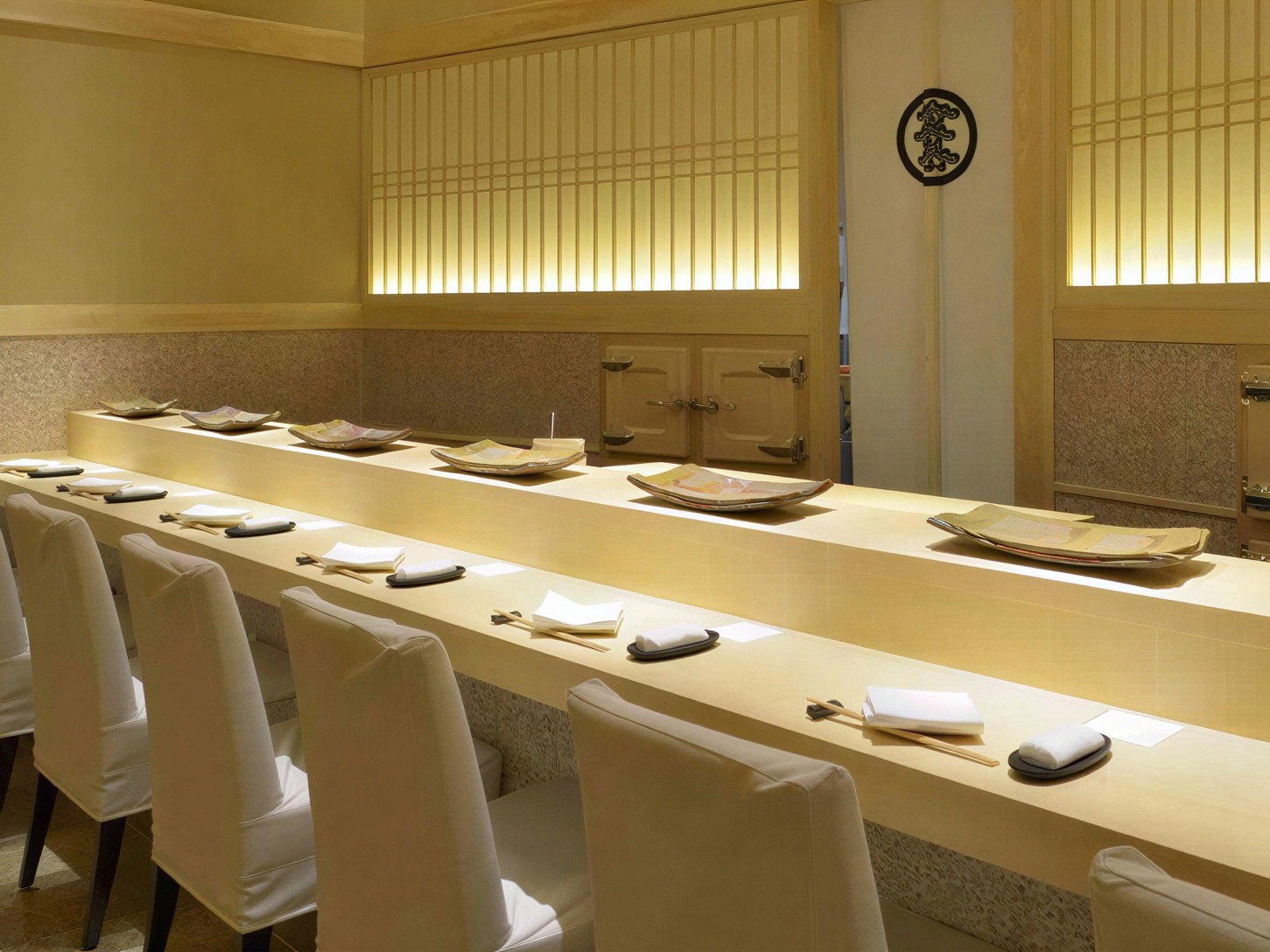
Restaurants in Tokyo
All restaurants in Tokyo →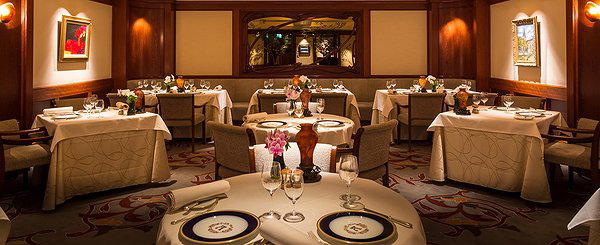



Bars in Tokyo
All bars in Tokyo →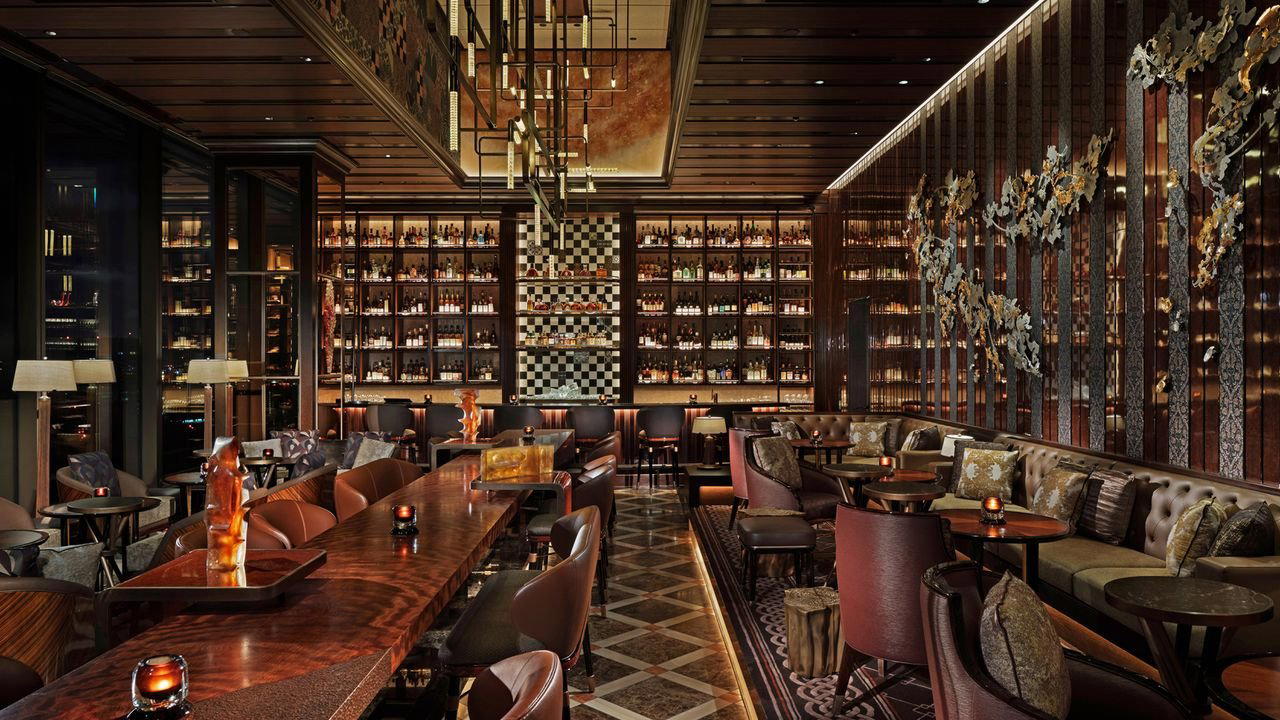







Details
- Elegant
- Sophisticated
- Intimate
- Business Dinner
- Date Night
- Special Occasion
- Private Dining
- Extensive Wine List
- Sake Program
- A La Carte
- Prix Fixe
- Wine
- Sake
Current opening hours
- Monday
- 5 PM–1 AM
- Tuesday
- 5 PM–1 AM
- Wednesday
- 5 PM–1 AM
- Thursday
- 5 PM–1 AM
- Friday
- 5 PM–1 AM
- Saturday
- 5 PM–1 AM
- Sunday
- 5 PM–1 AM
Hours can change for holidays and private events. Hours as of .
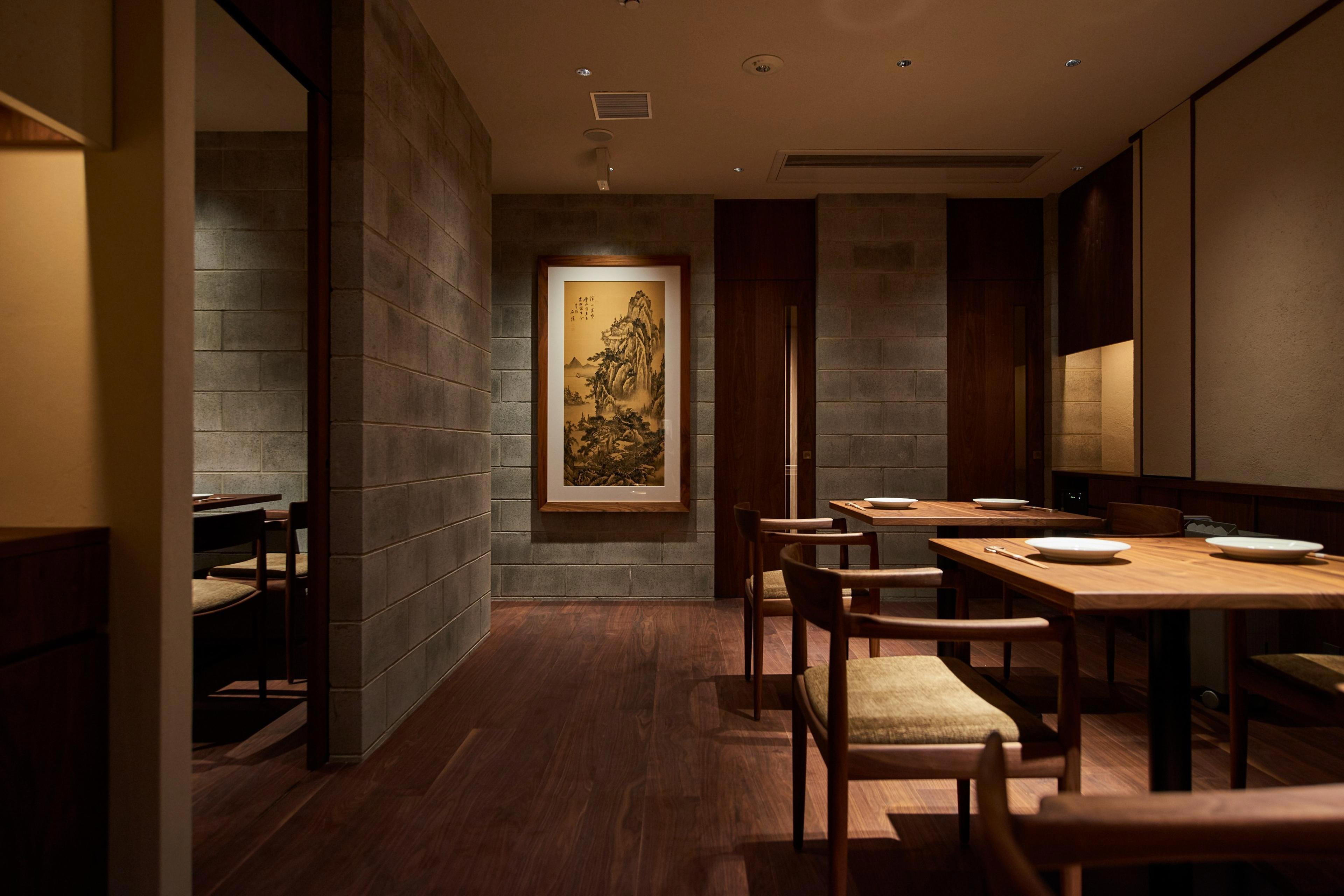
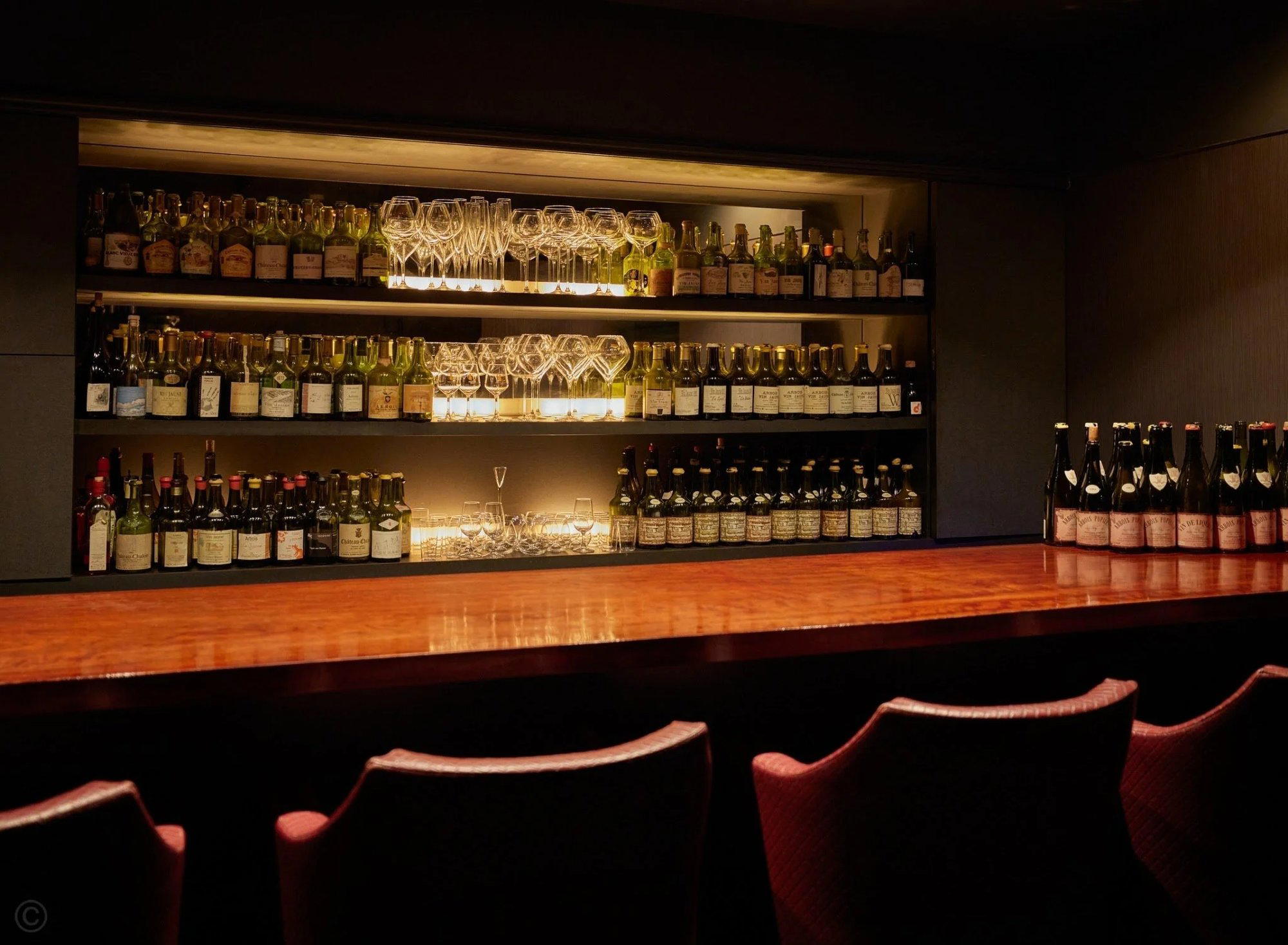
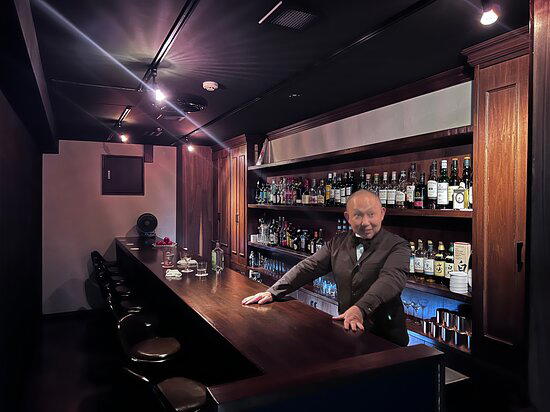
Moody, dimly lit interior with a maze-like feel, dark wood panels, gray stone walls, and private dining rooms creating a nostalgic and subtle elegant atmosphere.