
Black Pearl 2 Diamond · Tabelog 100 #69
Our verdict
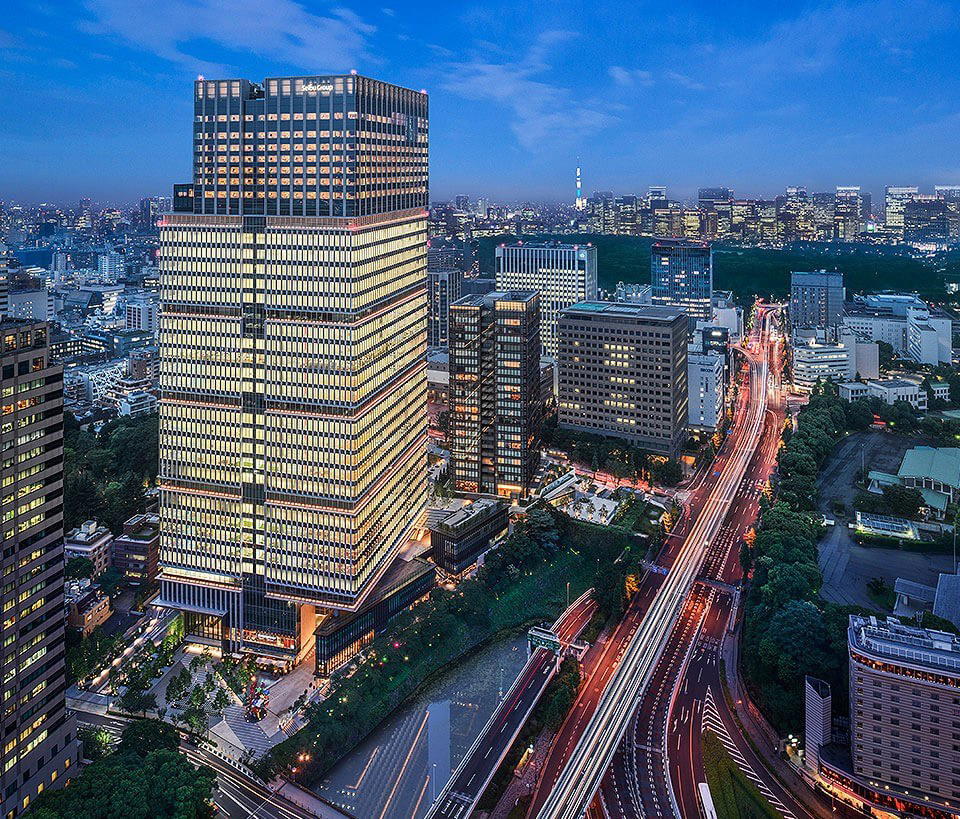
Akasaka Sichuan Restaurant occupies the fifth and sixth floors of the Zenkoku Ryokan Kaikan building in Chiyoda, bringing the layered heat and complexity of Sichuan cooking to one of Tokyo's more composed political and business districts. The restaurant earned a Black Pearl 2 Diamond recognition in 2025, placing it among a small cohort of Chinese cuisine addresses that Tokyo's critical establishment takes seriously.

Pearl is the En Primeur Club membership app, where members save venues, book tables and use the concierge.
Sichuan Cooking in a Tokyo Business District
The fifth floor of a trade association building in Hirakawachō is not where most diners expect to find cooking that earns serious critical recognition. Yet Tokyo's premium Chinese restaurant tier has long operated this way: tucked into office corridors, department store upper floors, and quiet Akasaka side streets, far from the visible gloss of the city's hotel dining rooms. Akasaka Sichuan Restaurant fits that pattern precisely. The Zenkoku Ryokan Kaikan building in Chiyoda City, a mid-rise block that primarily houses hospitality industry offices, delivers its dining room on floors five and six, where the distance from street level creates a deliberate remove from the neighbourhood's foot traffic.
Chiyoda is a district shaped by government ministries, embassies, and the business infrastructure that clusters around the Imperial Palace. Its restaurant scene skews toward private dining rooms, kaiseki addresses, and formal corporate entertaining, rather than the louder culinary energy of Shibuya or Shinjuku. Chinese cuisine at this end of Tokyo tends to be precise and composed rather than casual, a reflection of the clientele, which runs to diplomats, executives, and those who treat a meal in this neighbourhood as an extension of professional life. Akasaka Sichuan sits in that context: its address suggests formality, and its 2025 Black Pearl 2 Diamond recognition confirms it is operating at the tier where that formality is matched by kitchen performance.
The Sichuan Tradition and What It Demands
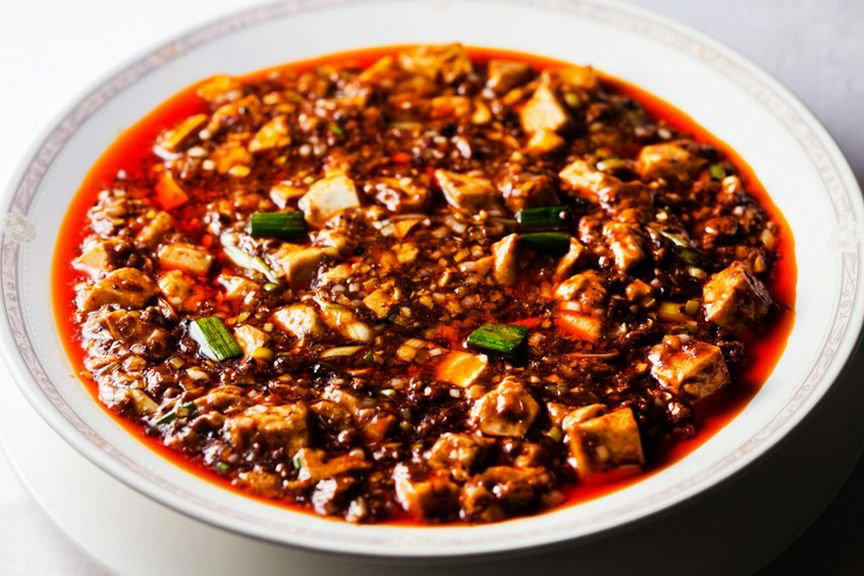
Sichuan cooking places specific demands on any kitchen that takes it seriously. The cuisine's complexity is not merely a matter of heat. The canonical flavour profiles, mala (the numbing-spicy combination of Sichuan peppercorn and dried chilli), yuxiang (the sweet-sour-savoury profile built on pickled chillies and ginger), and the deeper doubanjiang-forward braises, each require ingredients that are either sourced with care or approximated into something flatter. In Japan, that sourcing question is particularly pointed. Sichuan peppercorns (huajiao) carry a distinct citrus-floral character that diminishes in stale stock; doubanjiang, the fermented broad bean and chilli paste that underpins much of the cuisine's savoury depth, varies dramatically in quality and aging. Restaurants in Tokyo that earn serious recognition for Sichuan cooking are generally those that have resolved the sourcing question in one direction or another, either through direct import relationships with Sichuan producers or through long-standing supplier chains that prioritise ingredient integrity.
This matters because Tokyo has no shortage of Sichuan-labelled restaurants, and the gap between the category's floor and ceiling is considerable. At the lower end, the cuisine's flavour intensity makes it easy to approximate; at the upper end, the same intensity makes every compromise visible. A Black Pearl 2 Diamond designation in 2025 positions Akasaka Sichuan within the tier where that gap has been addressed. The Black Pearl Guide, which focuses specifically on Chinese restaurant excellence across Asia, applies a framework attuned to the cuisine's own standards rather than mapping it against a European fine-dining template. Two Diamonds within that system signals a kitchen operating at meaningful depth.
Where This Restaurant Sits in Tokyo's Chinese Dining Tier
Tokyo's Chinese dining scene has a small but serious upper bracket. It sits largely outside the visibility of the city's dominant critical frameworks, Michelin's Tokyo guide has historically been thinner on Chinese cuisine recognition than its Hong Kong or Macau counterparts, which means the Black Pearl Guide carries particular weight for diners trying to identify where genuine quality lives. Akasaka Sichuan's 2 Diamond rating in 2025 places it alongside, rather than beneath, the addresses that Tokyo's most engaged diners treat as reference points for Chinese cooking in the city.
The broader Tokyo fine dining environment that surrounds this neighbourhood is dense with high-achieving addresses in other cuisines. Harutaka and RyuGin represent the Michelin-heavy sushi and kaiseki tier that defines Tokyo's global reputation. L'Effervescence and Sézanne anchor the city's French fine dining cohort at three stars, while Crony represents the innovative French tier at two. Akasaka Sichuan operates in a different competitive register, one defined by the Black Pearl framework rather than Michelin, but it shares with those addresses the characteristic that distinguishes Tokyo dining broadly: a commitment to craft that exceeds what the format or setting might initially suggest.
For diners with broader Japan itineraries, the concentration of critically recognised restaurants across the country is worth noting. HAJIME in Osaka, Gion Sasaki in Kyoto, akordu in Nara, Goh in Fukuoka, 1000 in Yokohama, and 6 in Okinawa each represent the regional depth that makes Japan a multi-city dining destination rather than a single-capital one. Tokyo itself rewards extended exploration: the full Tokyo restaurants guide covers the range from omakase counters to precise Western cooking, alongside the Tokyo hotels guide, bars guide, wineries guide, and experiences guide.
For international reference points, the premium Chinese restaurant tier in Tokyo occupies a position comparable to what Korean fine dining has established in New York: a cuisine tradition that serious critical frameworks are beginning to assess on its own terms. Atomix in New York represents that shift for Korean cooking, just as addresses like Akasaka Sichuan represent it for Sichuan cuisine in Tokyo. Le Bernardin in New York offers a different but useful comparison point: a restaurant whose sustained recognition across decades reflects a kitchen culture of ingredient rigour that Sichuan cooking, at its most serious, shares.
Planning a Visit
Akasaka Sichuan Restaurant is located at 2 Chome-5-5 Hirakawachō, Chiyoda City, Tokyo, on the fifth and sixth floors of the Zenkoku Ryokan Kaikan building. The Akasaka-Mitsuke and Kojimachi subway stations provide the most direct access. Given the building's primary function as an industry association office block, the entrance requires some awareness: the dining floors are accessed by elevator, and first-time visitors may want to confirm floor navigation in advance. The 2025 Black Pearl 2 Diamond recognition suggests demand at a level where advance booking is a practical consideration rather than an optional one.
Frequently asked questions
How do I find Akasaka Sichuan Restaurant?
Akasaka Sichuan Restaurant is located at Japan, 〒102-0093 Tokyo, Chiyoda City, Hirakawachō, 2 Chome−5−5 全国旅館会館 5F•6F, Tokyo.
Is Akasaka Sichuan Restaurant award-winning?
Akasaka Sichuan Restaurant has received recognition including: Black Pearl 2 Diamond (2025).
What do people recommend at Akasaka Sichuan Restaurant?
The kitchen's reputation, underscored by its Black Pearl 2 Diamond recognition in 2025, is built on adherence to canonical Sichuan technique rather than adaptation for local palates. Diners consistently point to the depth and layering of the cooking as the reason to return.
How hard is it to get a table at Akasaka Sichuan Restaurant?
The restaurant occupies the fifth and sixth floors of a trade association building in Hirakawachō, Chiyoda City, a location that keeps walk-in traffic low and the dining room largely reservation-driven. A Black Pearl 2 Diamond rating in 2025 has raised its profile within Tokyo's Chinese dining tier, which typically means forward planning is advisable.
What do critics highlight about Akasaka Sichuan Restaurant?
The Black Pearl 2 Diamond award in 2025 is the clearest signal of where critics place this kitchen: inside a small upper bracket of Chinese restaurants in Tokyo that receive serious formal recognition. The address in Hirakawachō, a business district building rather than a high-visibility dining strip, is itself a recurring point of note, as the cooking earns its standing without the location doing any of the work.
Comparable Spots, Quickly
A quick peer list to put this venue’s basics in context.
| Venue | Cuisine | Price | Awards | Notes |
|---|---|---|---|---|
| Akasaka Sichuan RestaurantThis venue (the venue you are viewing) | Authentic Sichuan Chinese | $100–150 | Black Pearl 2 Diamond · Tabelog 100 #69 | Not listed |
| Harutaka | Edo-Style Omakase Sushi | $200–300 | 3 Michelin Stars · World's 50 Best #76 | Sushi |
| RyuGin | Modern Kaiseki | $500+ | 3 Michelin Stars · World's 50 Best #41 | Kaiseki, Japanese |
| L'Effervescence | Modern French with Japanese Influences | $200–300 | 3 Michelin Stars · World's 50 Best #69 | French |
| HOMMAGE | Modern French with Japanese Influences | $150–200 | 2 Michelin Stars · World's 50 Best #78 | Innovtive French, French |
| MAZ | Innovative Peruvian-Japanese Fusion | $150–200 | 2 Michelin Stars · World's 50 Best #28 | Innovative |
Recognition history
Dated appearances from independent guides and award organizations, with the underlying list record or original source where available.
Black Pearl 2 Diamond
Black Pearl
Tabelog 100 #69 · No. 69
Tabelog · Tabelog 100 - Chinese cuisine - TOKYO - 2026
Full recognition history (3 entries)
Black Pearl 2 Diamond
Black Pearl