

Tabelog 100 #86
Our verdict
tonkatsu.jp表参道 sits in Minami-Aoyama's dining corridor, representing the specialist end of Tokyo's tonkatsu category: a format where pork provenance and breading discipline matter as much as technique. Compared to the ¥¥¥¥ multi-course counters nearby — Harutaka, RyuGin, Sézanne — this is a focused, single-subject address in a neighbourhood that rewards exactly that kind of precision.

Pearl is the En Primeur Club membership app — saves, bookings, and concierge access live there. Same editors, same standards.
- Address
- 北青山3-9-9 (FNビル 1F), 港区, 東京都, 107-0061
- Phone
- +81364274910
- Website
- tonkatsu.jp
- Directions
- Get directions
- Booking
- Book on TableCheck
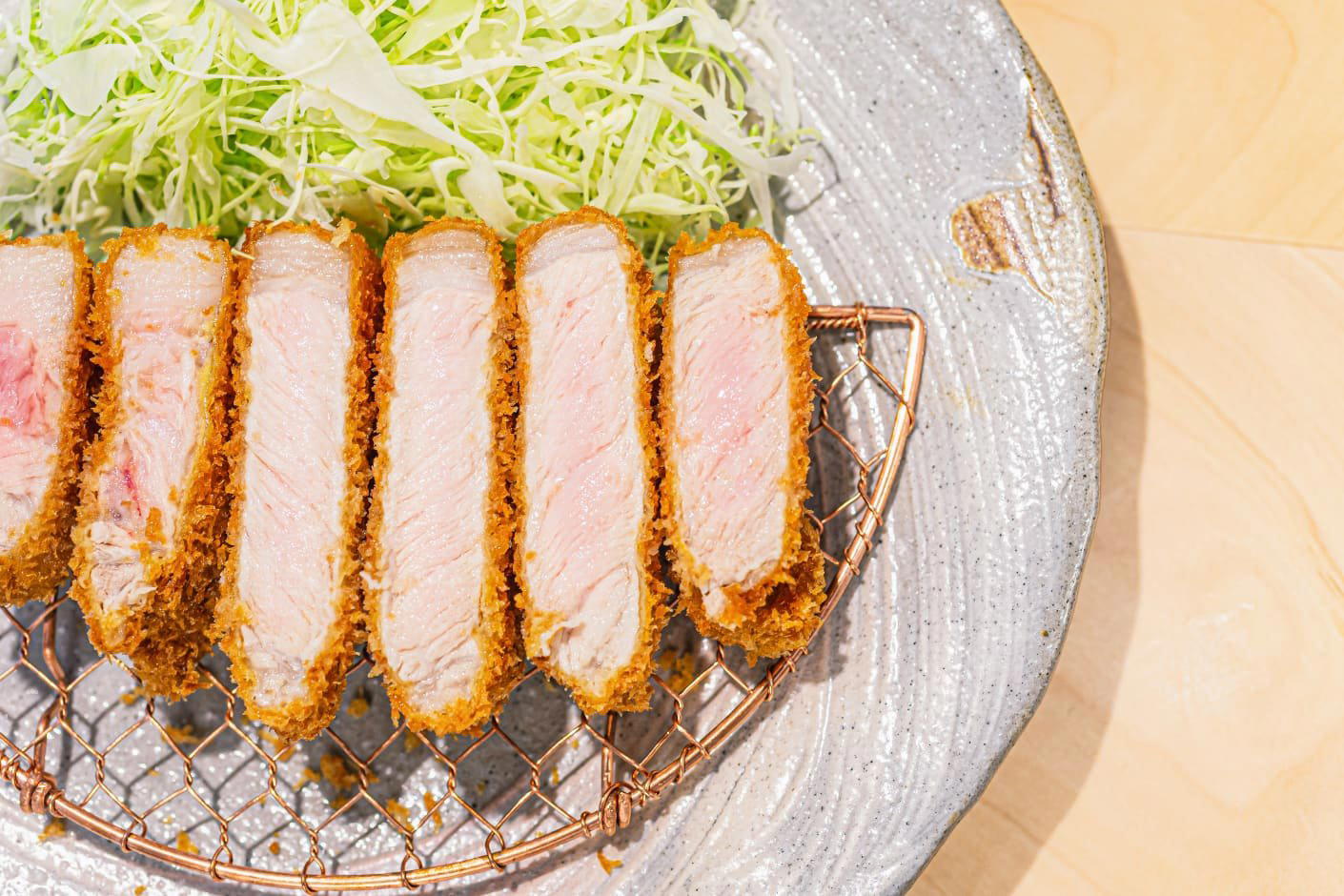
Tokyo's Tonkatsu Tier: Where Ingredient Logic Meets Single-Subject Discipline
Japan's tonkatsu tradition is older than most people assume. The dish entered the Tokyo dining vocabulary in the Meiji era, initially as a Western-influenced pork cutlet adapted for Japanese taste, and it spent the better part of a century as canteen food before a smaller cohort of specialist houses began treating it as a serious culinary category. That shift — from volume operation to provenance-led, ingredient-forward format — is what defines the upper end of the tonkatsu scene today, and it is the context in which tonkatsu.jp表参道, located in Kita-Aoyama, Minato-ku, belongs.
The Omotesando and Minami-Aoyama corridor hosts one of the more concentrated premium dining pockets in the city. Within a few minutes' walk, you can find multi-course French addresses and omakase counters competing at the ¥¥¥¥ level: Harutaka for sushi, L'Effervescence and Sézanne for French technique at its most considered, RyuGin for kaiseki. That is a demanding neighbourhood for a single-subject restaurant to hold a position in. It does so through the logic that defines specialist dining in Tokyo: depth over breadth, sourcing over volume, one thing done with obsessive attention to the variables that most operations ignore.
The Ingredient Argument: What Tonkatsu Quality Actually Depends On
In the premium segment of Japan's tonkatsu category, the competitive differentiation happens almost entirely before the pork reaches the oil. Breed matters. Feed matters. Age and fat distribution matter. Japan's high-end tonkatsu houses have, over the past two decades, developed direct sourcing relationships with specific regional producers, farms raising heritage-adjacent breeds like Kagoshima Kurobuta (Berkshire cross), Iberico imports processed domestically, or prefectural pork with defined feed programmes. The result is loin and fillet cuts with a fat structure that reads entirely differently under panko than commodity pork does: it stays juicy through the fry cycle rather than tightening and drying.
Panko itself is a sourcing decision. The coarseness of the crumb, its moisture content, and how recently it was produced all affect the crust's texture, whether it shatters cleanly or compresses. The oil temperature curve and the resting period after frying determine whether the interior reaches the right temperature without overcooking the outer layers. These are the variables a serious tonkatsu operation controls. The neighbourhood address at Kita-Aoyama 3-9-9 (FNビル 1F) positions tonkatsu.jp表参道 squarely within a dining area where guests arrive expecting that level of control, not a casual execution.
For broader comparison across Japan's specialist dining scene, it is worth noting how the sourcing-first argument has played out in other regional formats. HAJIME in Osaka treats vegetable provenance as the structural logic of its entire menu. Gion Sasaki in Kyoto anchors its kaiseki to seasonal ingredient discipline. akordu in Nara builds its tasting format around local Yamato produce. The through-line is the same: when the format narrows, the sourcing becomes the editorial statement.
Minami-Aoyama as a Dining Address
The Omotesando area operates as a kind of self-selecting dining filter. Rents are high, foot traffic is fashion-retail-oriented rather than tourist-mass, and the surrounding residential and gallery district attracts a clientele that tends to know what it is looking for. This is not Shinjuku's density or Ginza's formality. It sits between the two: serious dining without the ceremonial weight of the most traditional Ginza addresses. For a single-subject restaurant, that positioning is useful. Guests are not walking in expecting a twelve-course progression; they are coming for the specific thing, and the neighbourhood supports that transactional clarity.
The Minato-ku address also places tonkatsu.jp表参道 within easy reach of Tokyo's broader premium dining circuit. Those planning a multi-day itinerary around Tokyo's restaurant scene will find the location logical as a more relaxed complement to the heavier multi-course commitments elsewhere, a format built for lunch pace as much as dinner, depending on operational hours.
Where Tonkatsu.jp Sits in Tokyo's Single-Subject Dining Category
Tokyo's restaurant culture has long supported extreme specialisation. There are houses that do nothing but tamago kake gohan, counters dedicated to one fish species through the full season, ramen operations that have spent thirty years on a single style of tare. Tonkatsu as a specialist category follows that same logic: the format strips away menu complexity so that the provenance and technique of one thing can be evaluated with full attention.
Within that category, the Omotesando address implies a certain price-to-quality expectation. This is not the neighbourhood for ¥800 lunch sets. Crony, operating nearby in the innovative French register, represents the same neighbourhood tendency toward format discipline and sourcing credibility at a premium price point.
For those exploring Japan's broader specialist dining culture beyond Tokyo, Goh in Fukuoka applies a similar rigour to its format, and regional addresses like 一本木 石川製 in Nanao and 夕付山乃 in Sapporo reflect how ingredient-sourcing logic has diffused across Japan's provincial dining scene, not just its metropolitan tier. Addresses like 湖畔荘 in Takashima, 庄羽屋 in Nishikawa Machi, Birdland in Sakai, and Bistro Ange in Toyohashi each demonstrate how Japan's regional specialist format has developed its own credibility outside the major city circuits. The international comparison points, Le Bernardin in New York for single-subject seafood discipline, Atomix for Korean tasting-format rigour, confirm that the specialist-depth model is not uniquely Japanese, but Japan has refined it further than most markets.
Planning Your Visit
tonkatsu.jp表参道 is located at 北青山3-9-9, FNビル 1F, Minato-ku, Tokyo 107-0061. The Omotesando station (Tokyo Metro Ginza, Chiyoda, and Hanzomon lines) puts the address within a short walk through the Aoyama shopping district.
Frequently asked questions
Where do I go for tonkatsu.jp表参道?
tonkatsu.jp表参道 is located at 北青山3-9-9 (FNビル 1F), 港区, 東京都, 107-0061, Tokyo.
How does the Omotesando location affect the tonkatsu.jp表参道 dining experience compared to Tokyo's traditional tonkatsu neighbourhoods?
Most of Tokyo's reference-point tonkatsu houses historically anchored in mid-city or residential neighbourhoods — Maisen's original Aoyama location being the closest geographic comparison. Omotesando draws a clientele oriented toward considered consumption rather than casual lunch, which shapes both the room's pace and the expectation around ingredient transparency. The FNビル 1F address at 北青山3-9-9 places tonkatsu.jp表参道 squarely in that self-selecting dining filter.
What should I eat at tonkatsu.jp表参道?
The menu centres on tonkatsu in its two principal forms: rosu (loin), which carries more fat and a fuller pork flavour, and hire (fillet), which is leaner and finer in texture. In Tokyo's specialist tier, the decision between the two is as deliberate as any wine pairing choice, and the kitchen's focus on pork provenance means that distinction is worth taking seriously. The Omotesando address places this decision in a dining context where ingredient sourcing tends to be the primary editorial statement.
Is tonkatsu.jp表参道 reservation-only?
Reservation policy has not been confirmed through available data for this address. That said, tonkatsu specialists at this price tier in Tokyo's Omotesando area commonly operate on a walk-in or limited-seat basis rather than the multi-month advance booking seen at omakase counters.
What's tonkatsu.jp表参道 best at?
The address operates as a single-subject specialist, which means the kitchen's attention is undivided: every decision, from breed selection and fat distribution to breading consistency and frying temperature, applies only to tonkatsu. Within Tokyo's tonkatsu category, that degree of focus is a differentiator in itself. The Minami-Aoyama location, where rents filter out low-margin operators, reinforces the positioning.
A Tight Comparison
| Venue | Cuisine | Price | Awards | Notes |
|---|---|---|---|---|
| tonkatsu.jp表参道This venue — the venue you are viewing | Premium Tonkatsu Specialist | $20–30 | Tabelog 100 #86 | Not listed |
| Harutaka | Edo-Style Omakase Sushi | $200–300 | 3 Michelin Stars · World's 50 Best #76 | Sushi |
| L'Effervescence | Modern French with Japanese Influences | $200–300 | 3 Michelin Stars · World's 50 Best #69 | French |
| RyuGin | Modern Kaiseki | $500+ | 3 Michelin Stars · World's 50 Best #41 | Kaiseki, Japanese |
| Crony | Modern French with Japanese Influences | $150–200 | 2 Michelin Stars · World's 50 Best #34 | Innovative, French |
| Florilège | Modern French-Japanese Plant-Based Fine Dining | $50–100 | 2 Michelin Stars · World's 50 Best #31 | French |
Recognition history
Dated appearances from independent guides and award organizations, with the underlying list record or original source where available.
Opinionated About Dining Casual in Japan Ranked #144
Opinionated About Dining
Tabelog 100 #86 · No. 86
Tabelog · Tabelog 100 - Tonkatsu - 2026












Details
- Modern
- Cozy
- Trendy
- Solo
- Casual Hangout
- Open Kitchen
- Sake Program
- Local Sourcing
- Street Scene
- A La Carte
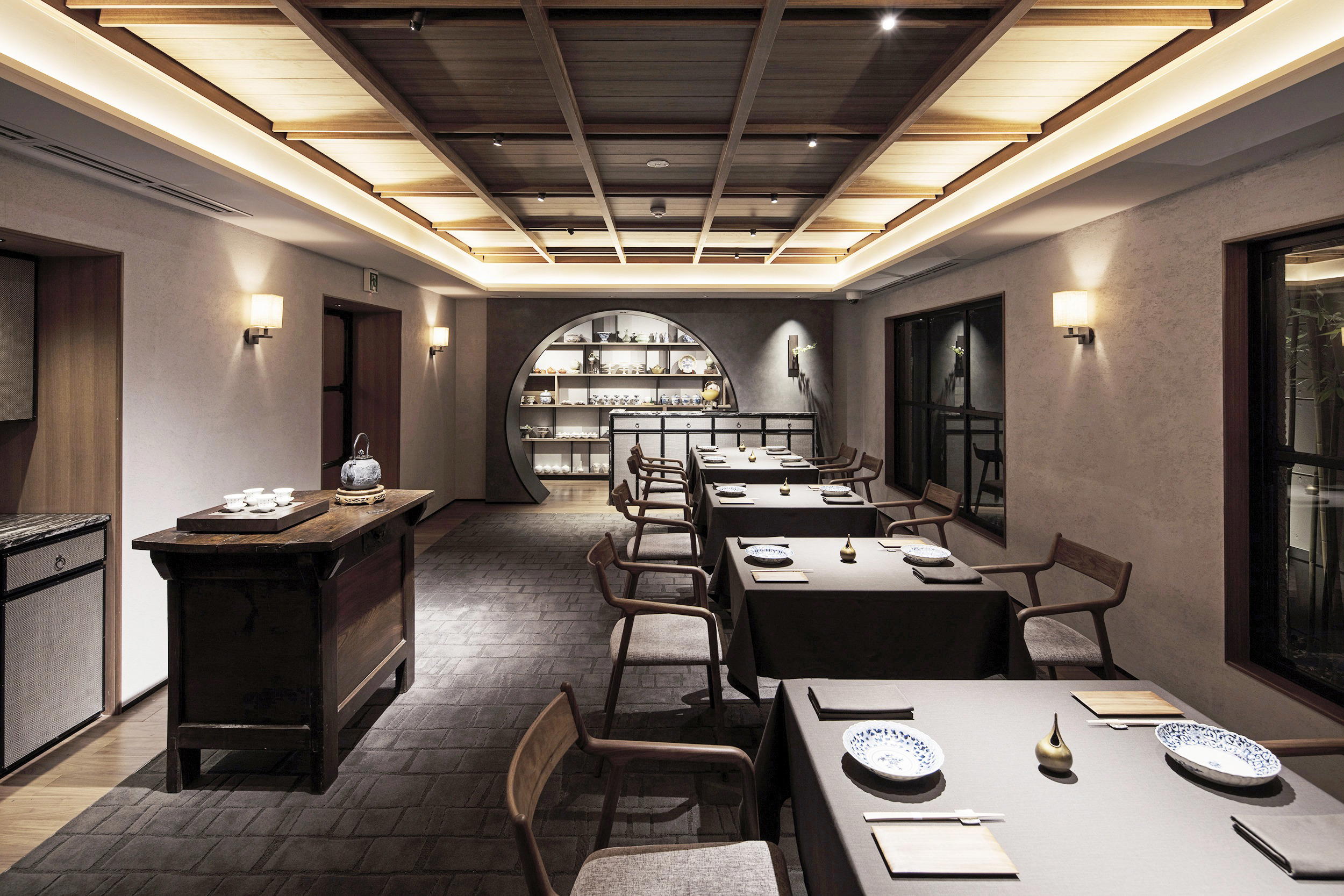
Osharé (stylish) space with calm atmosphere, natural materials, counter seating, and open terrace.