
Tokyo yakitori has moved far beyond casual after-work skewers, and Yakitori Ogawa sits in the serious counter-led tier: small room, charcoal discipline, sake and wine in play, and repeat selection in Tabelog’s Yakitori 100. In Arakicho, it belongs to a neighbourhood where compact dining rooms reward diners who value pacing, heat control, and service choreography over spectacle.
Pearl is the En Primeur Club membership app — saves, bookings, and concierge access live there. Same editors, same standards.
- Address
- Japan, 〒160-0007 Tokyo, Shinjuku City, Arakicho, 9−1 Wind Arakicho, 1-R
- Phone
- +81 3-5315-4630
- Website
- arakicho.com
 Saves & bookings on Pearl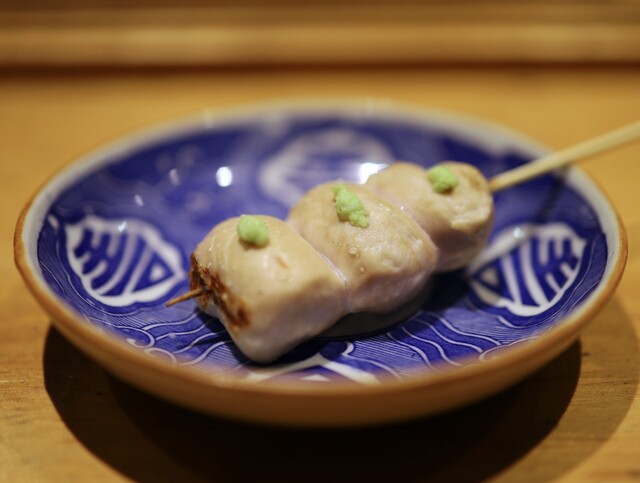
Arakicho changes scale quickly after dark: streets narrow, room counts drop, and dinner becomes less about grand entrances than disciplined small counters. Here, yakitori is not its casual izakaya cousin; the grill is the organising principle. Yakitori Ogawa belongs to Tokyo’s tighter category, where timing, smoke management, drink pacing, and front-of-house restraint matter as much as the chicken.
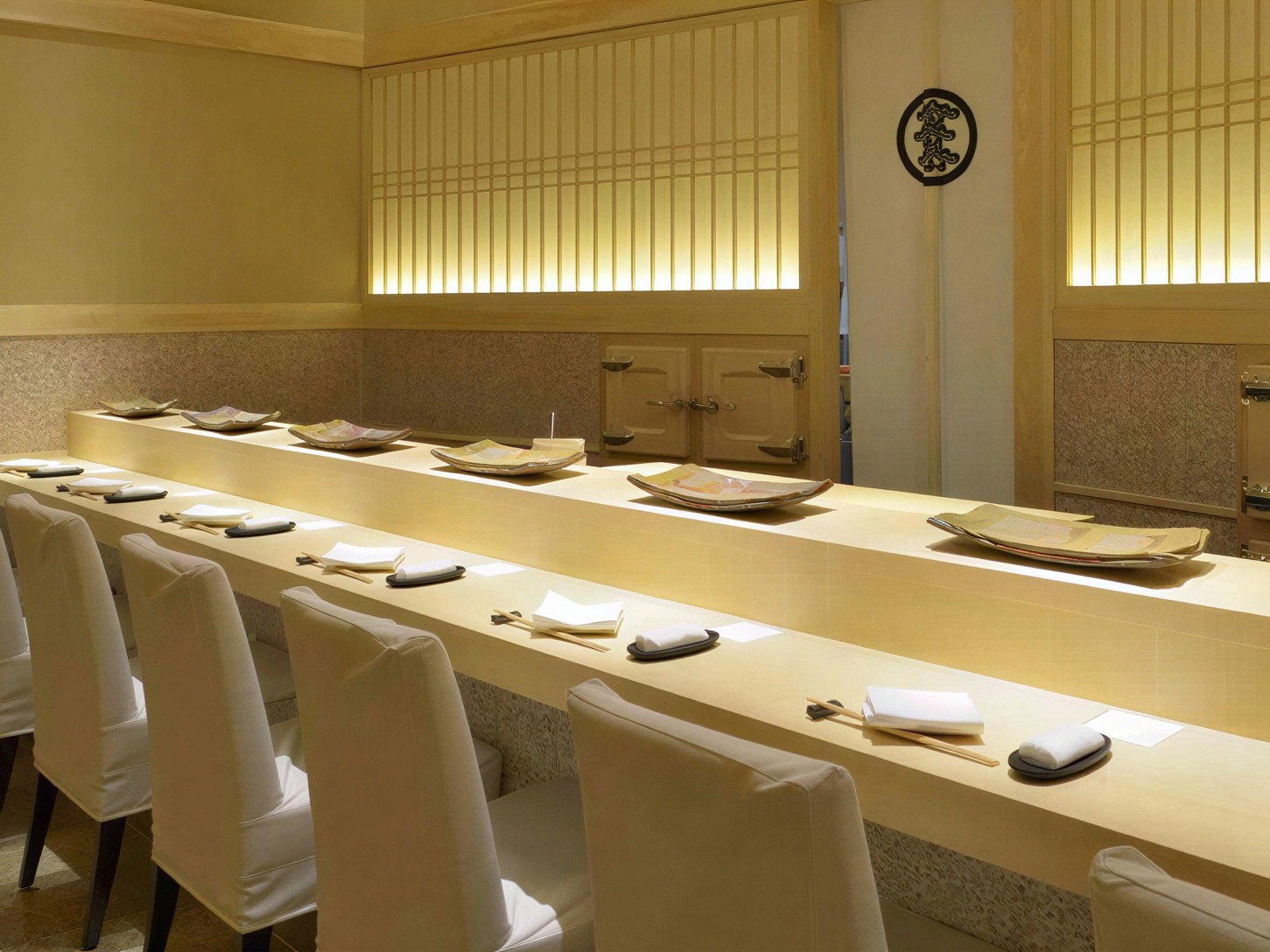
The useful comparison is with counters that turn a limited format into a full evening. Around Yotsuya and Arakicho, Arakicho Tatsuya, の弥七, Yotsuya Minemura, Kan Coffee Fujifuji, and Gekko show how compressed dining rooms can carry serious intent without Ginza sushi ceremony or a full kaiseki progression. Yakitori Ogawa sits on the charcoal side of that conversation, with a 15-seat counter-only format and selection in Tabelog’s Yakitori 100 for 2018, 2019, 2021, 2022, 2023, 2024, and 2025.
Charcoal, counter timing, and the small-room hierarchy of Tokyo yakitori
Serious Tokyo yakitori depends on sequence. A skewer counter cannot hide behind abundance; the meal rises or falls on how heat, fat, salt, smoke, and rest follow one another. A 15-seat counter also puts cook, drinks, and service in the same field of attention, making coordination visible even when quiet. That team dynamic separates destination yakitori from a drink-led chicken shop: the grill sets tempo, the drinks program extends the meal, and the floor prevents the evening becoming a queue of skewers.
Yakitori Ogawa’s drinks matter because modern Tokyo yakitori increasingly competes with tasting-menu restaurants for the same diners. Sake is a natural fit, shochu keeps the category rooted in Japanese drinking culture, and wine broadens the table language. That range is not fusion; it reflects how serious yakitori has become more flexible. The question is no longer whether charcoal chicken can support a full night out, but how tightly the counter can control rhythm without rigidity.
Recognition gives context without overstatement. Tabelog’s Yakitori 100 is category-specific, and repeated selection across multiple years places the restaurant among a stable group of East Japan yakitori addresses, not a single-season curiosity. For diners comparing Tokyo counters, that matters more than vague acclaim: it means the restaurant is judged within its craft category, where heat control, sourcing discipline, service pace, and repeat diner confidence carry weight.
Arakicho rewards restraint over theatre
Arakicho suits this style of eating. Its appeal is density rather than display: small bars, Japanese counters, and restaurants built for regulars and planned evenings. It is a short mental distance from Shinjuku, but a different dining register from the station-area rush. Where premium meals often announce themselves through architecture or ritual, Arakicho’s strength is compression: modest rooms, deliberate decisions, and attention kept close to the counter.
That explains why the restaurant works as a specialist address rather than a general-purpose dinner recommendation. It is for diners who want a focused yakitori meal, not a sprawling Tokyo menu tour. The counter-only setup suits pairs and small groups comfortable with a paced evening, where service keeps the grill’s cadence aligned with conversation and drinks. Private rooms are not part of the appeal; proximity to the cooking, staff, and sequence is the point.
The price tier places the meal in a serious yakitori bracket. Tokyo still offers excellent casual skewers for far less, but premium counters ask diners to pay for curation, consistency, and a narrower margin for error. Against broader Japanese dining nearby, Yotsuya Minemura occupies a higher-spend Japanese bracket, while Gekko sits in a nearby but slightly lower published dinner range. These comparisons show how Arakicho supports intimate dining across Japanese counters and izakaya formats without forcing them into one category.
How to read the evening before committing
For planning, the key signals are format and intent. The restaurant is counter-only, reservations are available, and the setting is non-smoking, with an ashtray at the entrance. Credit cards are accepted; electronic money and QR code payments are not. Parking is unavailable, normal for this central Tokyo address and consistent with the neighbourhood’s train-first logic.
Opened in 2013, the restaurant has more than a decade of operating history in a category where consistency is hard to fake. It is close to Yotsuya-Sanchome and Akebonobashi, within easy reach of Shinjuku without joining Shinjuku’s high-volume dining stream. For travellers, that distinction matters: this is not for a last-minute, high-energy group dinner after shopping, but for a planned yakitori evening where counter, grill, drinks, and service team form the experience.
For broader Tokyo planning, place it within city-specific research rather than treating it as an isolated booking. EP Club’s Our full Tokyo restaurants guide gives the wider dining frame, while Our full Tokyo hotels guide, Our full Tokyo bars guide, Our full Tokyo wineries guide, and Our full Tokyo experiences guide help build the rest of the trip around the meal. Nearby or category-adjacent research can also run through 124. KAGURAZAKA (Yakitori), 12/10 Shinjuku ten. 鮪と炭火焼き うお炭 秋葉原店, 2D Cafe, and 3 Chome no Curry Ya San.
Travellers extending the food itinerary beyond Tokyo can compare how focused formats change by city: -Grilled beef Sukiyaki- KAMAKURA TANUKIAN 鎌倉 たぬき庵 in Kamakura.cafe in Osaka.know in Kumamoto, (Shoku) Vietnam in Kawasaki, [Curry Senmon Ten] Maruyama Kyoju. in Sapporo, [ki:] in Kyoto, Jōdo Saké Bar in Los Angeles, and Onigiri Time in Pasadena. The through-line is not cuisine similarity, but the value of choosing venues by format, scale, and service logic rather than broad genre labels.
At a Glance
Comparable venues by cuisine and price in the same metro.
| Venue | Cuisine | Price | Notes |
|---|---|---|---|
| Yakitori OgawaThis venue — the venue you are viewing | Shinjuku, Yakitori | $$ | Not listed |
| Muromachi Sunaba (室町砂場) | Not listed | $$ | Nihonbashi Muromachi, Traditional Edo-style Soba |
| Nonokura | Kameari, Chuutakansuimen Ramen | $$ | Not listed |
| Mendokoro Honda | Akihabara, Shoyu Ramen Specialist | $$ | Not listed |
| Nihon Saisei Sakaba | Not listed | $$ | Shinjuku, Traditional Japanese Grilled Offal Izakaya |
| 波濤 | Shinjuku, Ichiran Tonkotsu Ramen | Not listed | Not listed |
Recognition history
Dated appearances from independent guides and award organizations, with the underlying list record or original source where available.
Tabelog 100 #41 · No. 41
Tabelog · Tabelog 100 - Yakitori - EAST - 2025











At a Glance
- Cozy
- Intimate
- Classic
- Date Night
- Solo
- Special Occasion
- Casual Hangout
- Chefs Counter
- Standalone
- Sake Program
- Beer Program
- Local Sourcing
- Street Scene
Current opening hours
- Monday
- Closed
- Tuesday
- 5–11 PM
- Wednesday
- 5–11 PM
- Thursday
- 5–11 PM
- Friday
- 5–11 PM
- Saturday
- 5–11 PM
- Sunday
- 5–10:30 PM
Hours can change for holidays and private events. Last verified .
A quiet, tucked-away counter restaurant with an intimate backstreet feel and the live energy of skewers being grilled in front of guests.