Maidreamin in Shibuya's Udagawacho district sits at the more theatrical end of Tokyo's themed dining scene, where costume-wearing staff, choreographed performances, and interactive table rituals define the format rather than the food alone. For visitors marking a birthday, anniversary, or first trip to Japan, it occupies a distinct niche in a city where occasion dining ranges from austere omakase to full participatory spectacle.
Pearl is the En Primeur Club membership app — saves, bookings, and concierge access live there. Same editors, same standards.
- Address
- Japan, 〒150-0042 Tokyo, Shibuya, Udagawacho, 30−1 蓬莱屋ビル B1
- Phone
- +81367446726
- Website
- maidreamin.com
- Directions
- Get directions
 Saves & bookings on Pearl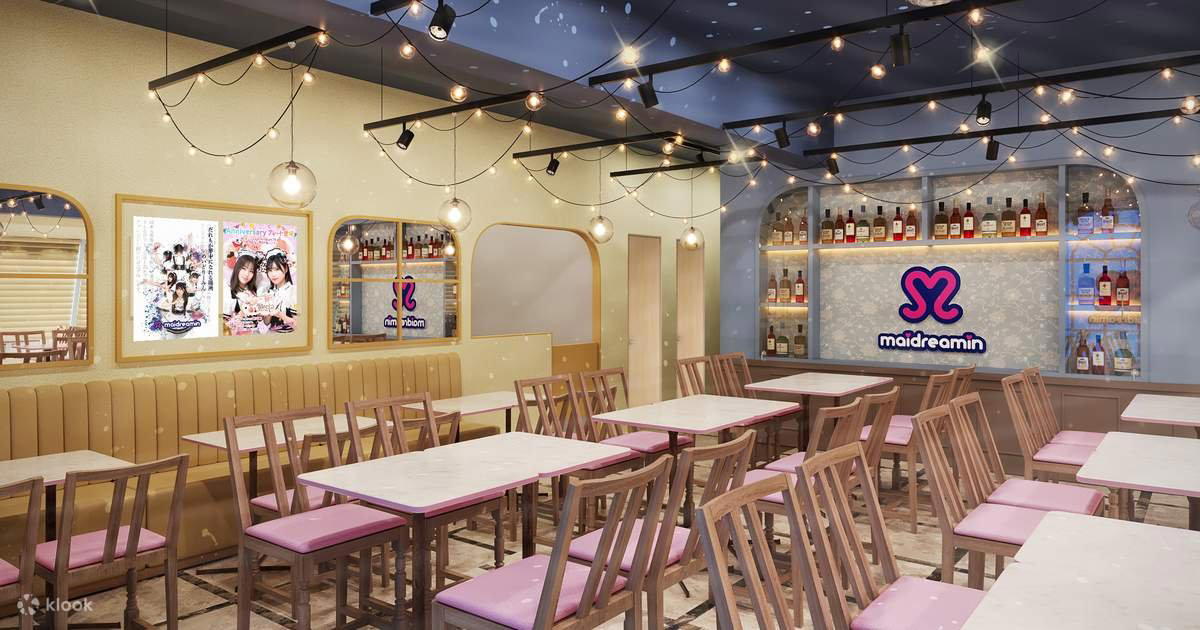
Where Tokyo's Theatrical Dining Tradition Meets the Special-Occasion Meal
Tokyo has among the more stratified dining cultures on earth. At one end sit the austere eight-seat omakase counters of Ginza and Minami-Aoyama, where restraint is the performance: think Harutaka or the French-Japanese precision of Sézanne. At the other end sits a format that is almost entirely absent from the city's critical conversation but draws consistent crowds seven days a week: the maid café. Maidreamin Shibuya Store, a Japanese maid café in Tokyo's Udagawacho district, represents that second tradition at its most organised and commercially mature.
The format is worth understanding before you arrive. Maid cafés emerged from Akihabara's electronics and anime subculture in the early 2000s and have since expanded into a recognisable entertainment category across Tokyo's younger-skewing neighbourhoods. The premise is consistent across operators: staff dressed in French maid costumes perform table rituals, lead group cheers, and in many cases sing or dance, turning a meal or a drink into something closer to a live interactive show. Maidreamin, as one of the larger chains in this space, has built its format around repeatability and accessibility for visitors unfamiliar with the conventions.
Occasion Dining on Its Own Terms
Maidreamin operates in an entirely different register of celebration, one defined not by refinement but by participation.
For a certain kind of occasion, particularly a first visit to Japan, a birthday among friends, or an introduction to Tokyo's pop-culture side, the maid café format delivers something the city's Michelin-tracked restaurants cannot: theatrical interactivity designed for shared enjoyment rather than contemplative solo appreciation. The Shibuya location sits in the basement of a building in Udagawacho, a section of the neighbourhood already dense with music shops, vintage stores, and youth-culture retail. The physical approach, descending from street level into a pastel-lit room, signals immediately that this is a departure from the city's default dining register.
The Format as the Attraction
In themed dining formats globally, the food frequently plays a secondary role to the environment, and maid cafés are transparent about this hierarchy. The menu at a venue like Maidreamin typically includes omurice, parfaits, and soft drinks, items that lend themselves to tableside decoration rituals where staff draw characters or symbols in ketchup or sauce. The food is a prop as much as it is a meal, and understanding that before you sit down changes the experience considerably. Visitors who arrive understanding the format as participatory entertainment with food as a component tend to find it genuinely engaging.
This places Maidreamin in a similar structural category to dinner-theatre formats found in other cities, where the occasion logic is communal and performative rather than gastronomic. The comparison is instructive: just as you would not evaluate a supper club primarily on its menu, evaluating a maid café visit through a food-critic lens misses the point of the format. What you are paying for is participation in a ritual that has its own conventions, its own vocabulary of hand gestures and group incantations, and its own rhythms of staff performance and audience response.
Shibuya in Context
The Udagawacho address places this venue in one of Shibuya's more interesting pockets. The neighbourhood around Shibuya station is large and internally varied: the area near the scramble and Hikarie tilts commercial and corporate, while Udagawacho and the streets toward Daikanyama carry more subculture density. Tower Records Japan, a building that has outlasted its parent company's global collapse, anchors the block. The basement placement of Maidreamin fits the area's general tendency toward businesses that occupy secondary floors, basements, and narrow stairwells rather than ground-level shopfronts.
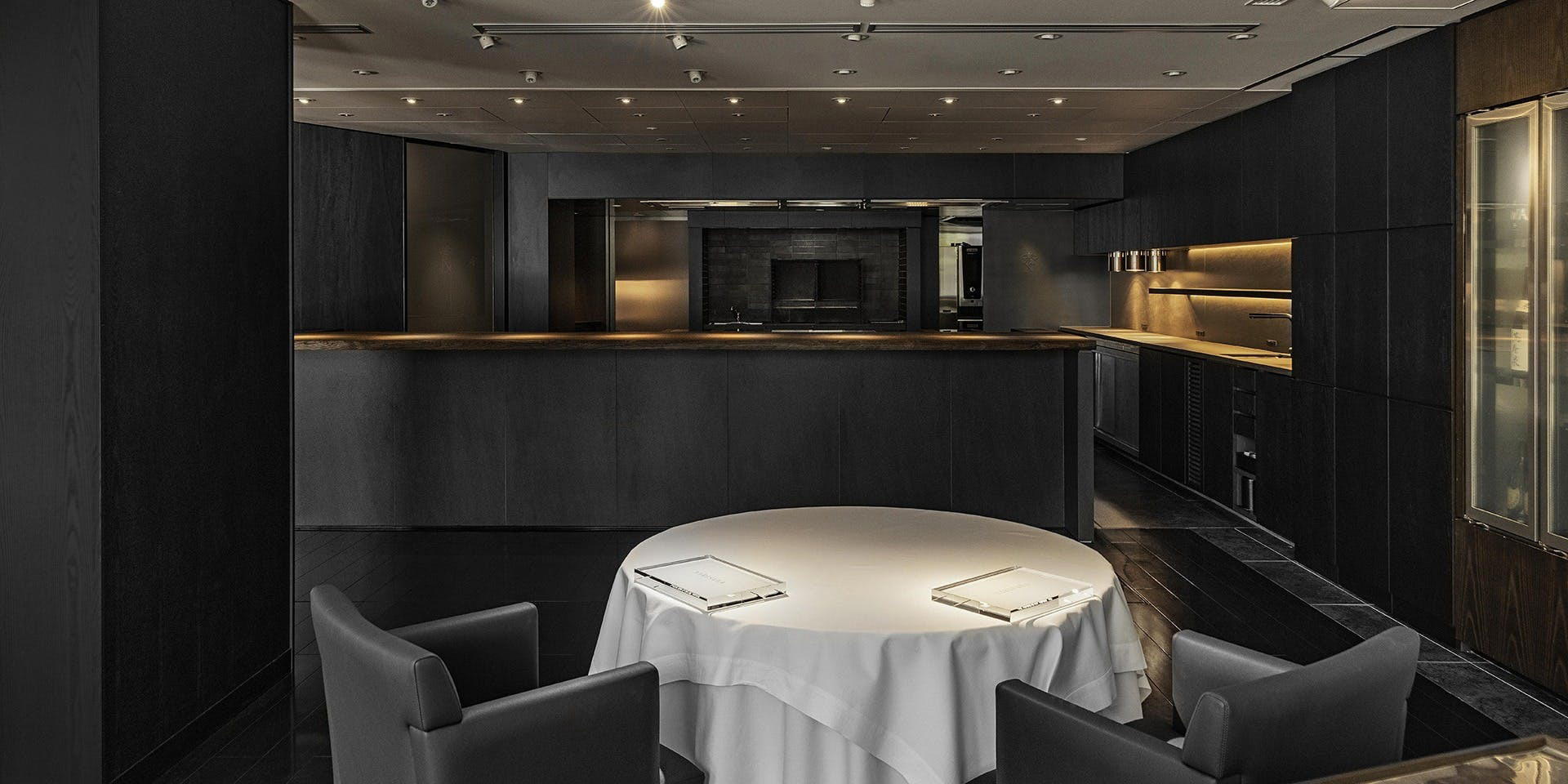
For visitors building a Tokyo itinerary that moves between registers, placing a maid café visit in Shibuya and then crossing to a kaiseki counter captures something true about the city's range. Tokyo does not resolve into a single dining identity; it runs serious fine dining and elaborate pop-culture theatrics in parallel, often within walking distance of each other. The same city that supports Harutaka's meditative counter also sustains a category of experience built entirely around collective performance and costumed staff. Both are authentically Tokyo.
Across Japan more broadly, occasion dining takes equally varied forms. In Osaka, HAJIME represents the fine-dining end of the celebration spectrum. In Kyoto, Gion Sasaki offers a kaiseki framework rooted in seasonal discipline. Further afield, akordu in Nara and Goh in Fukuoka demonstrate how seriously Japan's regional cities take the architecture of a special meal. Maidreamin sits at the opposite end of this seriousness spectrum, which is precisely its function.
Know Before You Go
Address: Udagawacho 30-1, Shibuya, Tokyo 150-0042 (basement level)
Getting There: Shibuya Station is the nearest hub, served by JR, Tokyo Metro, and Tokyu lines. Udagawacho is a short walk from the Hachiko or Mark City exits, heading northwest past Tower Records.
Booking: Walk-ins are generally accommodated, though weekend evenings and holiday periods see higher demand. Checking the venue's current reservation process before visiting is advisable, particularly for group bookings tied to a birthday or other date-specific occasion.
Dress Code: Casual. The environment is designed to be accessible and relaxed.
Price Range: Around $15 per person.
Compact Comparison
Comparable venues nearby, for context on price, style, and recognition.
| Venue | Cuisine | Price | Notes |
|---|---|---|---|
| Maidreamin Shibuya StoreThis venue — the venue you are viewing | Shibuya, Japanese Maid Cafe | $$ | Not listed |
| Tengoku | Asakusa, Retro Japanese Cafe | $$ | Not listed |
| いこま寿司 | Not listed | $$ | Setagaya (Umegaoka), Traditional Edomae Sushi |
| Honda Tokyo Noodle Works (麺処 ほん田) | Akihabara, Shoyu Ramen & Tsukemen | $$ | Not listed |
| 鮨・四季創作 心陽 (こはる) | Not listed | $$ | Harajuku / Kita-Sando, Fresh Sushi & Seafood Bowls |
| 慈華 | Minato, japanese | Not listed | Not listed |











At a Glance
- Whimsical
- Lively
- Trendy
- Energetic
- Casual Hangout
- Celebration
- Group Dining
- Design Destination
- Sake Program
Current opening hours
- Monday
- 11:30 AM–11 PM
- Tuesday
- 11:30 AM–11 PM
- Wednesday
- 11:30 AM–11 PM
- Thursday
- 11:30 AM–11 PM
- Friday
- 11:30 AM–11 PM
- Saturday
- 11:30 AM–11 PM
- Sunday
- 11:30 AM–11 PM
Hours can change for holidays and private events. Last verified .
Lively and whimsical atmosphere filled with laughter, joy, and fantasy elements created by charming decor and maid performances.