Located in Kyoto's Higashiyama Ward at Motoyoshicho 73, Tomikyu sits within one of the city's most historically layered districts, where stone-paved lanes and preserved machiya townhouses set the register before any meal begins. The address places it firmly in the upper tier of Kyoto's dining geography, a neighbourhood that concentrates some of Japan's most serious traditional restaurants within a few minutes' walk.
Pearl is the En Primeur Club membership app — saves, bookings, and concierge access live there. Same editors, same standards.
- Address
- Japan, 〒605-0087 Kyoto, Higashiyama Ward, Motoyoshicho, 73
- Phone
- +81755610984
- Website
- tomikyu.net
- Directions
- Get directions
 Saves & bookings on Pearl
Higashiyama's Dining Register
Approaching Higashiyama Ward on foot, the sensory shift is abrupt. The noise of central Kyoto drops away; stone-paved lanes narrow to the width of two people walking abreast; the smell of cedar and old timber takes over from traffic and convenience-store coffee. Motoyoshicho, where Tomikyu sits at number 73, is a few streets inside that quieter zone, the kind of address that signals deliberate positioning rather than accident. In Kyoto's dining geography, Higashiyama carries weight. The neighbourhood concentrates temple approaches, preserved machiya townhouses, and a dining scene that skews toward precision and tradition over novelty.
That geography matters because it shapes expectation before a single dish arrives. Kyoto's premium restaurant tier has long operated differently from Tokyo's or Osaka's: the room, the approach, the light through shoji screens are considered part of the meal rather than its backdrop. Venues in this part of the city tend to treat atmosphere as a structural element, not decoration. Tomikyu occupies that same Higashiyama address tradition, placing it in a district where the physical environment does real editorial work.
Where Tomikyu Sits in Kyoto's Scene
Kyoto's upper dining tier is anchored by kaiseki, the multi-course Japanese format that sequences ingredients, temperature, and vessel as carefully as a composed tasting menu in any European capital. The city holds more Michelin-starred restaurants per capita than almost anywhere in the world, and the competition within the kaiseki bracket is correspondingly serious. Houses like Gion Sasaki, Hyotei, Kikunoi Honten, and Mizai define one end of that spectrum, with multi-starred recognition and booking windows that run months ahead. Isshisoden Nakamura represents the historic end, a family operation with documented lineage stretching back centuries.
Within that context, the Higashiyama address places Tomikyu inside a neighbourhood where serious dining intent is the baseline assumption. Visitors arriving in this part of the ward are not browsing; they have made a decision. The surrounding streets reinforce that: proximity to Yasaka Shrine, Chion-in, and the Ninenzaka and Sannenzaka stone-paved slopes means the area absorbs a particular kind of traveller, one oriented toward depth rather than throughput.
Across the wider Kansai region, the same seriousness of intent shows up in different formats. HAJIME in Osaka operates at the intersection of French technique and Japanese seasonality, holding three Michelin stars in a city that prizes directness. akordu in Nara takes a European-Japanese hybrid approach in a city even quieter than Kyoto. The range demonstrates that Kansai's premium dining is not monolithic; geography and neighbourhood character push individual venues toward distinct registers.
The Sensory Logic of Higashiyama
In this part of Kyoto, the answer is: considerable. The approach to Motoyoshicho from the main Higashiyama-dori involves a drop in ambient noise measurable without instruments. Temple bells carry further here than traffic. The late-afternoon light on stone walls reads differently from the fluorescent wash of Kawaramachi's restaurant corridor.
Japanese dining culture has long held that the setting conditions the palate, a principle that kaiseki formalises but that extends to any serious restaurant operating in a heritage neighbourhood. The choice of ceramics, the sound dampening of a timber room, the view onto a small garden or lane: these are not amenities but arguments about what eating well means. Higashiyama makes those arguments with unusual consistency across its built environment. A restaurant at Motoyoshicho 73 inherits that argument by address alone.
For comparison, consider how Tokyo's serious dining operates differently: counters in Ginza or Nihonbashi are typically embedded in modern high-rises, where the building contributes little and the kitchen must carry all the sensory weight. Venues like Harutaka in Tokyo operate in that register, where the room is deliberately spare and the fish does the speaking. Kyoto's approach, particularly in Higashiyama, distributes that burden across room, season, and kitchen together.
Kyoto's Seasonal Dining Calendar
Timing a Kyoto visit around dining carries specific logic. Spring cherry blossom season (late March to mid-April) and autumn foliage season (mid-November) compress demand into the city's most competitive booking periods. Higashiyama, as one of Kyoto's principal sightseeing corridors, sees this compression acutely. Restaurants in the ward fill faster than those in less trafficked areas, and the neighbourhood's walkability means spontaneous visits compete with pre-booked tables from visitors who planned months in advance.
The broader Japan dining circuit rewards pre-planning regardless of season. Goh in Fukuoka, operating at the southern end of Kyushu, and venues in less-visited cities like 一本杉川島 in Nanao or 湖畔荘 in Takashima demonstrate that serious Japanese dining extends well beyond the three-city circuit of Tokyo, Kyoto, and Osaka. For travellers building an itinerary around food, the regional depth is considerable. Venues like 庄羽屋 in Nishikawa Machi and 古仁屋山乃 in Sapporo sit at the edges of that circuit, rewarding itineraries that extend beyond the obvious.
Beyond Japan: Parallel Dining Formats
The precision-driven, atmosphere-conscious format that defines Higashiyama's dining has recognisable parallels in other culinary cities. Le Bernardin in New York City operates in a similarly uncompromising register: the room is formal, the fish is the argument, and the experience resists casual interpretation. Atomix, also in New York, takes Korean fine dining into territory that shares kaiseki's interest in sequence, narrative, and material culture. Both demonstrate that the underlying logic of serious, course-based dining translates across cultural contexts, even as the specific ingredients and rituals differ.
For diners moving between Japan and other markets, these parallels are useful orientation points rather than equivalences. The kaiseki format carries specific historical weight in Kyoto that no New York analogue replicates, but the reader fluent in one will find the other legible.
Pricing, Compared
Comparable venues nearby, for context on price, style, and recognition.
| Venue | Cuisine | Price | Notes |
|---|---|---|---|
| TomikyuThis venue — the venue you are viewing | Not listed | $$$ | Not listed |
| Kara Semi Tei (空蝉亭) | Not listed | $$$ | Kamigyo-ku, Specialty Tonkatsu with Aged Pork |
| Sakaba Ikura Mokuzai | Kamigyō, Japanese stand-up izakaya bar | $$$ | Not listed |
| Agotsuyu Shabushabu Yamafuku | Nakagyō, Kyoto-Style Shabu-Shabu | $$$ | Not listed |
| KYOTO BISTRO | Not listed | $$$ | Higashiyama, Modern Japanese-International Bistro |
| Tori Kago | Nakagyō, Modern Yakitori Omakase | $$$ | Not listed |
Continue exploring
More in Kyoto
Restaurants in Kyoto
Browse all →

Bars in Kyoto
Browse all →


Hotels in Kyoto
Browse all →
Wineries in Kyoto
Browse all →
At a Glance
- Classic
- Elegant
- Intimate
- Special Occasion
- Date Night
- Private Dining
- Historic Building
- Open Kitchen
- Sake Program
- Local Sourcing
Current opening hours
- Monday
- 12:30–3 PM, 5–9 PM
- Tuesday
- 12:30–3 PM, 5–9 PM
- Wednesday
- 12:30–3 PM, 5–9 PM
- Thursday
- 12:30–3 PM, 5–9 PM
- Friday
- 12:30–3 PM, 5–9 PM
- Saturday
- 12:30–3 PM, 5–9 PM
- Sunday
- Closed
Hours can change for holidays and private events. Last verified .
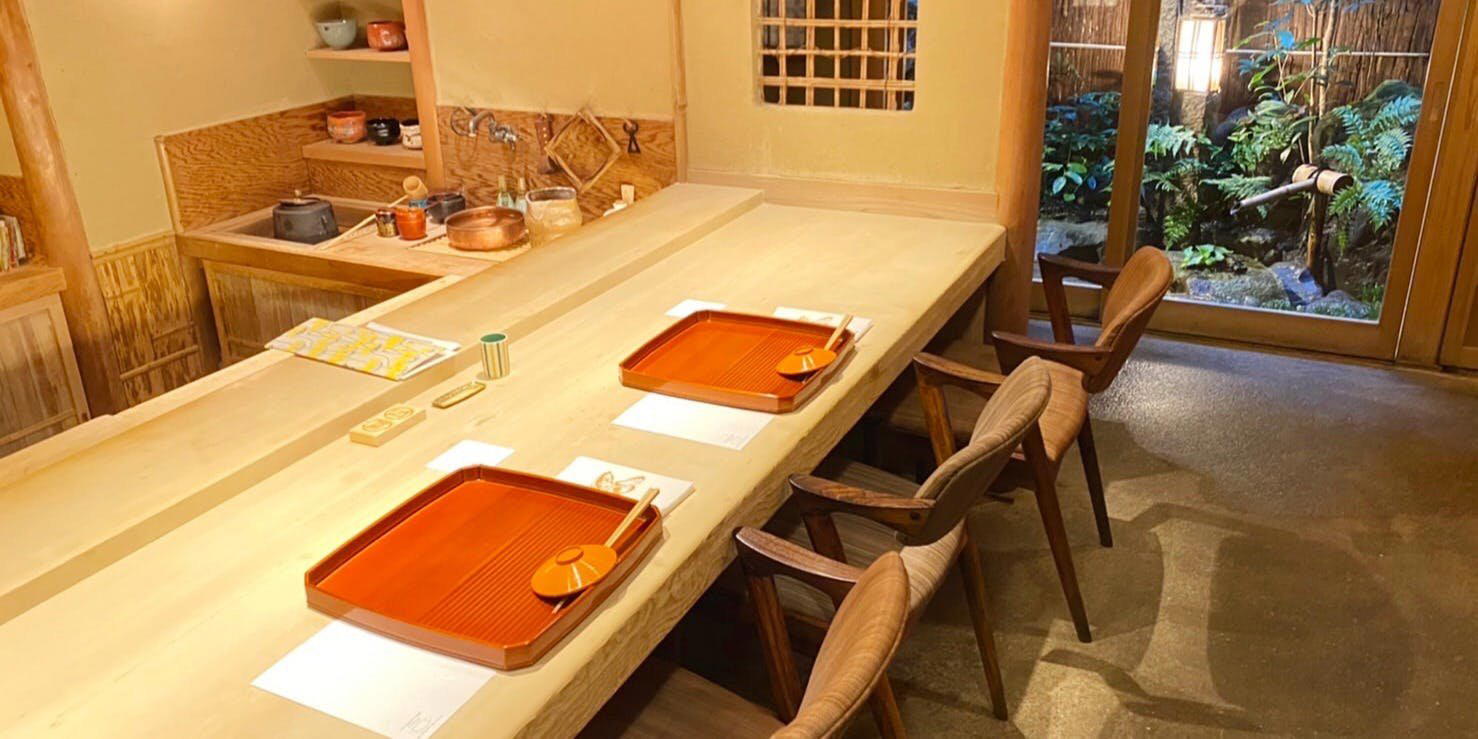
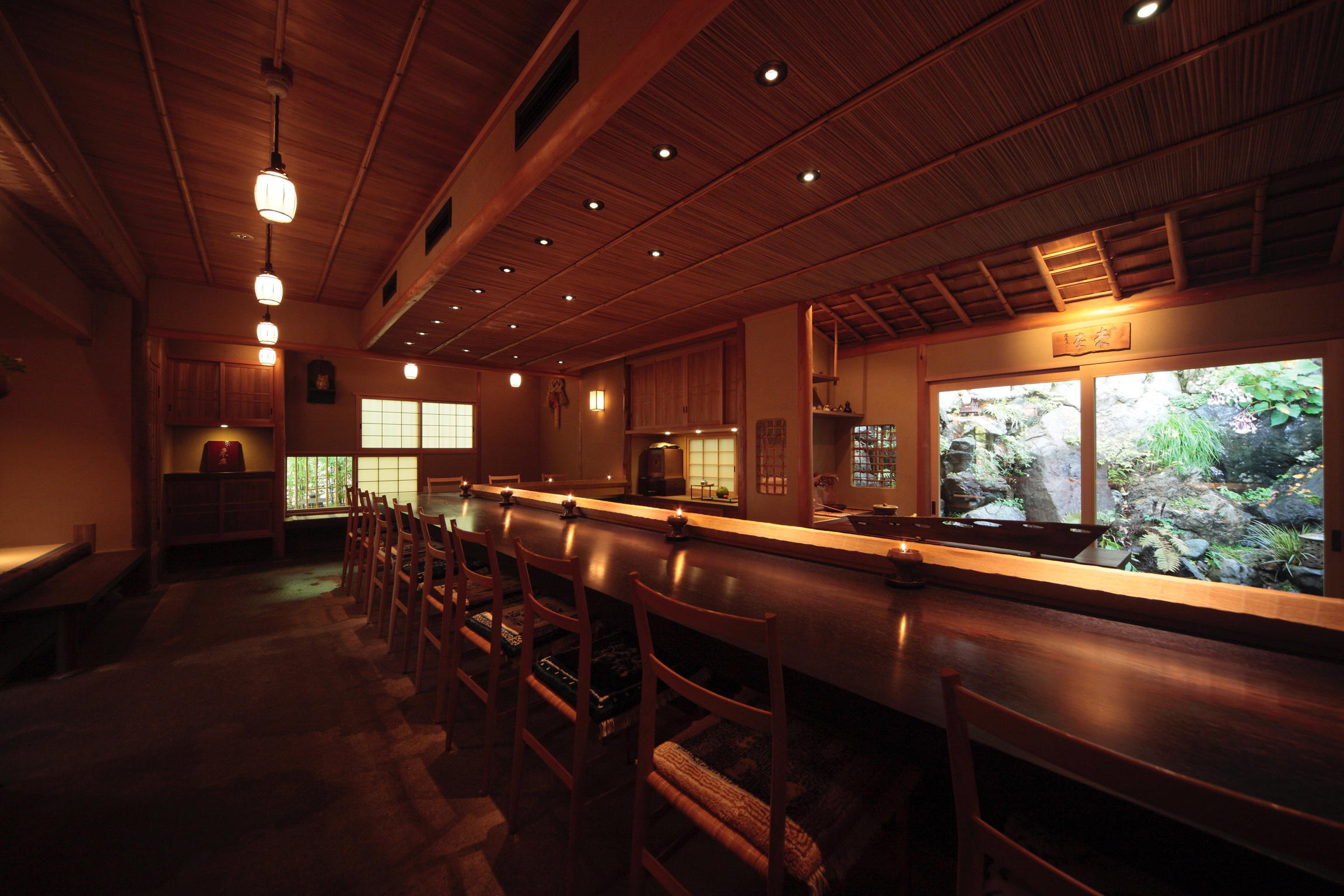
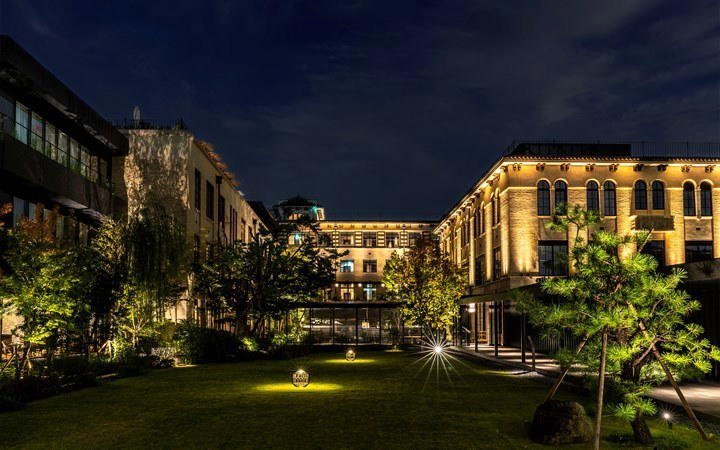
Traditional Japanese atmosphere reflecting the historical heritage of Gion, with a relaxing and refined dining space.