Our verdict
Located within the Park Hyatt Kyoto in Higashiyama Ward, Kyoto Bistro occupies a position at the intersection of Western bistro format and Kyoto's deeply ritualized dining culture. The restaurant sits inside one of the city's most considered hotel properties, placing it in a different competitive tier from the kaiseki counters that define the neighbourhood's reputation. Advance reservations are strongly advised.

Pearl is the En Primeur Club membership app — saves, bookings, and concierge access live there. Same editors, same standards.
- Address
- Park Hyatt Kyoto, 1階, 360 Masuyacho, Higashiyama Ward, Kyoto, 605-0826, Japan
- Phone
- +81 75-531-1234
- Hours
- Daily 7–10:30 AM, 11:30 AM–3:30 PM, 5–9 PM
- Website
- hyatt.com
- Directions
- Get directions
The menu
What to order
- Kyoto Hiyoshi Pork Cutlet Sandwich
- Wagyu Beef Curry Rice
- Salmon Poke Bowl
Where Higashiyama's Pace Sets the Table
Higashiyama Ward moves differently from the rest of Kyoto. The stone-paved lanes that approach Yasaka Shrine and Kiyomizudera have a specific rhythm — deliberate, unhurried — and the dining culture embedded in this neighbourhood reflects that. Restaurants here do not rush their guests. The meal is understood as a sequence with its own internal logic, and that logic applies whether the kitchen is serving kaiseki or something closer to a European bistro register. Kyoto Bistro, operating out of the Park Hyatt Kyoto at 360 Masuyacho, sits within this context and inherits its pacing expectations whether it intends to or not.
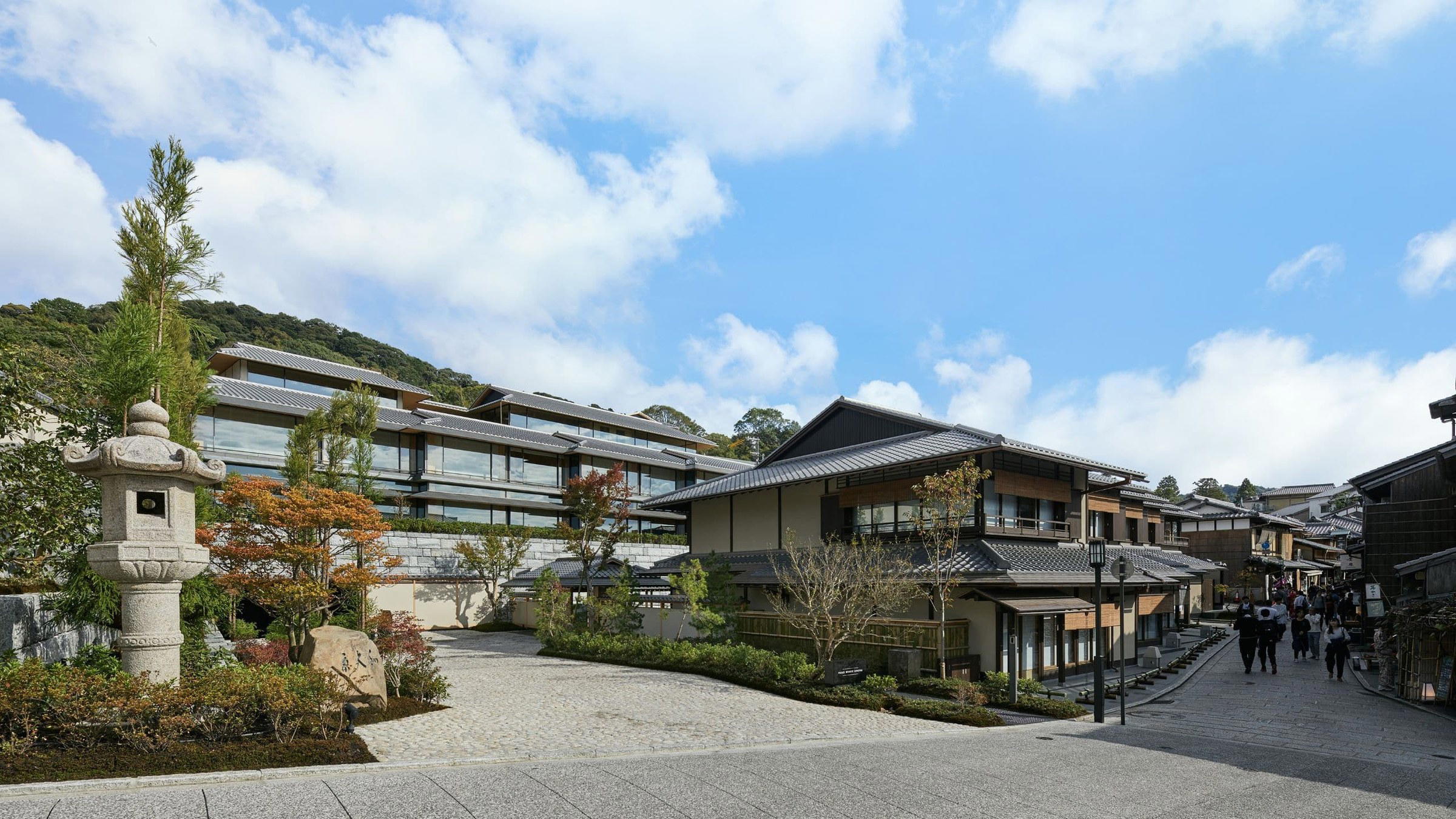
The Park Hyatt Kyoto is one of the more architecturally restrained luxury hotels to open in Japan in recent years, built into the hillside below Kodaiji Temple with a material sensibility that draws from the neighbourhood rather than overwriting it. That positioning matters for a restaurant operating on the ground floor: the guest arriving at Kyoto Bistro has almost certainly walked through or near some of the most formally structured dining traditions in the world. The kaiseki houses of Higashiyama, places like Gion Sasaki and Mizai, set the ambient standard for how a meal should unfold in this part of the city.
The Ritual Logic of a Kyoto Meal
To understand what a bistro format means in this specific geography, it helps to know what surrounds it. Kyoto's dining identity is built on kaiseki, a multi-course tradition that evolved from the tea ceremony and organizes each dish around season, ingredient provenance, and the deliberate management of a guest's attention over time. Restaurants like Kikunoi Honten and Hyotei have formalized this approach across generations, building meal structures where the sequence itself carries meaning. Even Isshisoden Nakamura, one of the city's older establishments, operates within this framework of paced intention.
A bistro format imports a different set of rituals. In its European register, the bistro is democratic and convivial, a place where the meal can be compressed or extended depending on appetite and conversation, where ordering is modular rather than sequential, and where the kitchen's job is to produce satisfying, technically honest food without demanding the guest's full interpretive attention. When that format lands in Kyoto, particularly inside a hotel that has made considerable effort to belong to its neighbourhood, the question is how much of the local ritual logic carries over. Do guests eat slowly here because the city's pace encourages it, or does the bistro format permit the kind of efficient dining that Kyoto's traditional houses explicitly resist?
That productive tension, between Western bistro informality and Kyoto's deeply embedded sense of how a meal should proceed, is what makes Kyoto Bistro an interesting object of attention beyond its hotel context. Similar dynamics play out elsewhere in Japan's secondary and tertiary cities where European formats have taken root: Bistro Ange in Toyohashi and akordu in Nara both move through the question of how a European dining idiom absorbs or resists the ritual expectations of its Japanese surroundings.
Positioning Within Kyoto's Dining Tiers
Kyoto's restaurant scene has a pronounced upper tier dominated by kaiseki, the ¥¥¥¥ bracket where Gion Sasaki, Kikunoi Honten, and comparable houses operate with Michelin recognition and booking windows measured in months. Below that, a mid-tier has developed around non-kaiseki formats, Italian restaurants like cenci at the ¥¥¥ level, Chinese houses like Kyo Seika, and hotel dining rooms that pitch to international visitors who may not want a full kaiseki commitment on every evening.
Kyoto Bistro occupies the hotel dining category within this structure. Its Park Hyatt address places it inside a property that draws a significant proportion of international guests, travellers whose reference points for a good meal may be closer to Le Bernardin in New York City than to Hyotei around the corner. That is not a criticism, hotel dining rooms that understand their guest profile and execute accordingly serve a genuine function, and the Park Hyatt brand has demonstrated in Tokyo and elsewhere that it is capable of sustaining serious food programs within its properties.
For context on what high-end non-kaiseki dining looks like elsewhere in the Kansai and broader Japan circuit: HAJIME in Osaka operates at a Michelin three-star level in a contemporary format that rejects kaiseki's specific structure while retaining Japanese ingredient discipline. Goh in Fukuoka works in a comparable register further south. These are the reference points against which ambitious hotel bistro programs in Japanese cities are increasingly measured by well-travelled guests.
The Case for Eating Here
The value of a hotel bistro in a city like Kyoto is specific: it provides a known-quantity experience on evenings when the guest does not want the full commitment of a multi-hour kaiseki sequence, cannot secure a reservation at one of the city's tightly booked traditional houses, or is arriving late from Osaka or Tokyo and wants something reliable within walking distance of their room. On those terms, proximity and convenience carry genuine weight. The Park Hyatt's location in Higashiyama means dinner at Kyoto Bistro is compatible with an afternoon walk through the Ninenzaka and Sannenzaka lanes, a natural pairing that the hotel's position on the hillside makes easy.
For guests building a broader Japan itinerary around serious dining, Kyoto Bistro functions as part of a longer sequence. Those covering the country's dining geography might move from Harutaka in Tokyo through Kyoto's kaiseki circuit before continuing to regional stops like Nanao or Sapporo. Within that itinerary, a well-run bistro on the night of arrival or departure serves a structural purpose, it is the meal that does not demand anything of you beyond showing up.
Reservations through the Park Hyatt Kyoto are the reliable access point; walk-in availability depends on occupancy patterns that shift significantly between Kyoto's peak autumn foliage season (mid-November) and its quieter winter months. Our full Kyoto restaurants guide covers the broader dining picture across the city's neighbourhoods and price tiers.
Frequently asked questions
How do I find KYOTO BISTRO?
KYOTO BISTRO is located at Park Hyatt Kyoto, 1階, 360 Masuyacho, Higashiyama Ward, Kyoto, 605-0826, Japan, Kyoto.
How does Kyoto Bistro at Park Hyatt Kyoto compare to dining in Higashiyama's surrounding streets?
Kyoto Bistro sits on the ground floor of Park Hyatt Kyoto at 360 Masuyacho, placing it within walking distance of Yasaka Shrine and Kiyomizudera, an area dense with independent restaurants and traditional Kyoto cooking. The hotel setting provides a degree of consistency and English-language accessibility that many of the surrounding independent venues, which often operate in Japanese only and require advance bookings through local intermediaries, do not. For travelers based at or near the Park Hyatt, it functions as a reliable alternative to the logistical demands of securing seats at Higashiyama's more formal houses.
What do regulars order at KYOTO BISTRO?
Given its bistro format and location within Higashiyama Ward, the kitchen likely draws on Kyoto's seasonal produce traditions. Contact the Park Hyatt Kyoto directly at their Masuyacho property for the current menu.
Can I walk in to KYOTO BISTRO?
Walk-in availability at Kyoto Bistro depends on the season and occupancy at Park Hyatt Kyoto, one of Higashiyama's most-booked hotels. Higashiyama Ward draws significant visitor traffic year-round, particularly during cherry blossom and autumn foliage periods, when hotel dining rooms fill quickly. Securing a reservation in advance through the Park Hyatt Kyoto at 360 Masuyacho is the more reliable approach.
What's the defining dish or idea at KYOTO BISTRO?
The defining idea is format contrast: a bistro positioned inside one of Kyoto's most prominent luxury hotels, within a ward where kaiseki sets the local dining standard. Where neighboring restaurants in Higashiyama operate on the formal multi-course logic of Gion Sasaki or Kikunoi Honten, Kyoto Bistro offers a lower-commitment entry point with hotel-backed consistency.
Is KYOTO BISTRO good for vegetarians?
Kyoto's culinary traditions lean heavily on tofu, seasonal vegetables, and dashi-based cooking, which gives hotel kitchens in the city a natural foundation for vegetarian options. The Park Hyatt group generally accommodates dietary requirements when notified in advance, so contacting the property at 360 Masuyacho, Higashiyama Ward is the practical step.
Pricing, Compared
| Venue | Cuisine | Price | Awards | Notes |
|---|---|---|---|---|
| KYOTO BISTROThis venue — the venue you are viewing | Modern Japanese-International Bistro | $30–50 | Not listed | Not listed |
| Gion Sasaki | Modern Kaiseki | $300–500 | 3 Michelin Stars · La Liste Top Restaurants | Kaiseki, Japanese |
| cenci | Innovative Italian-Japanese Fusion | $100–150 | 1 Michelin Star · World's 50 Best #76 | Italian |
| Ifuki | Sumibi Kappo Kaiseki | $200–300 | 2 Michelin Stars · La Liste Top Restaurants | Kaiseki |
| Kyokaiseki Kichisen | Kyoto Kaiseki | $200–300 | 2 Michelin Stars · La Liste Top Restaurants | Japanese |
| Kyo Seika | Modern Chinese Fine Dining | $150–200 | 1 Michelin Star · Tabelog Bronze #216 | Chinese |