Teppanyaki Icho occupies a floor of a building in Kanazawa's Honmachi district, where the cooking happens directly in front of guests on an iron griddle. The format places the chef's technique at the center of the meal, with Ishikawa Prefecture's seasonal produce and seafood shaping what appears on the plate. For visitors planning a night in the city away from the kaiseki circuit, it represents a more direct, heat-forward approach to premium Japanese dining.
Pearl is the En Primeur Club membership app — saves, bookings, and concierge access live there. Same editors, same standards.
- Address
- Japan, 〒920-0853 Ishikawa, Kanazawa, Honmachi, 2 Chome−15−1 ホテル日航金沢 29階
- Phone
- +81762345431
- Website
- hnkanazawa.jp
- Directions
- Get directions
 Saves & bookings on Pearl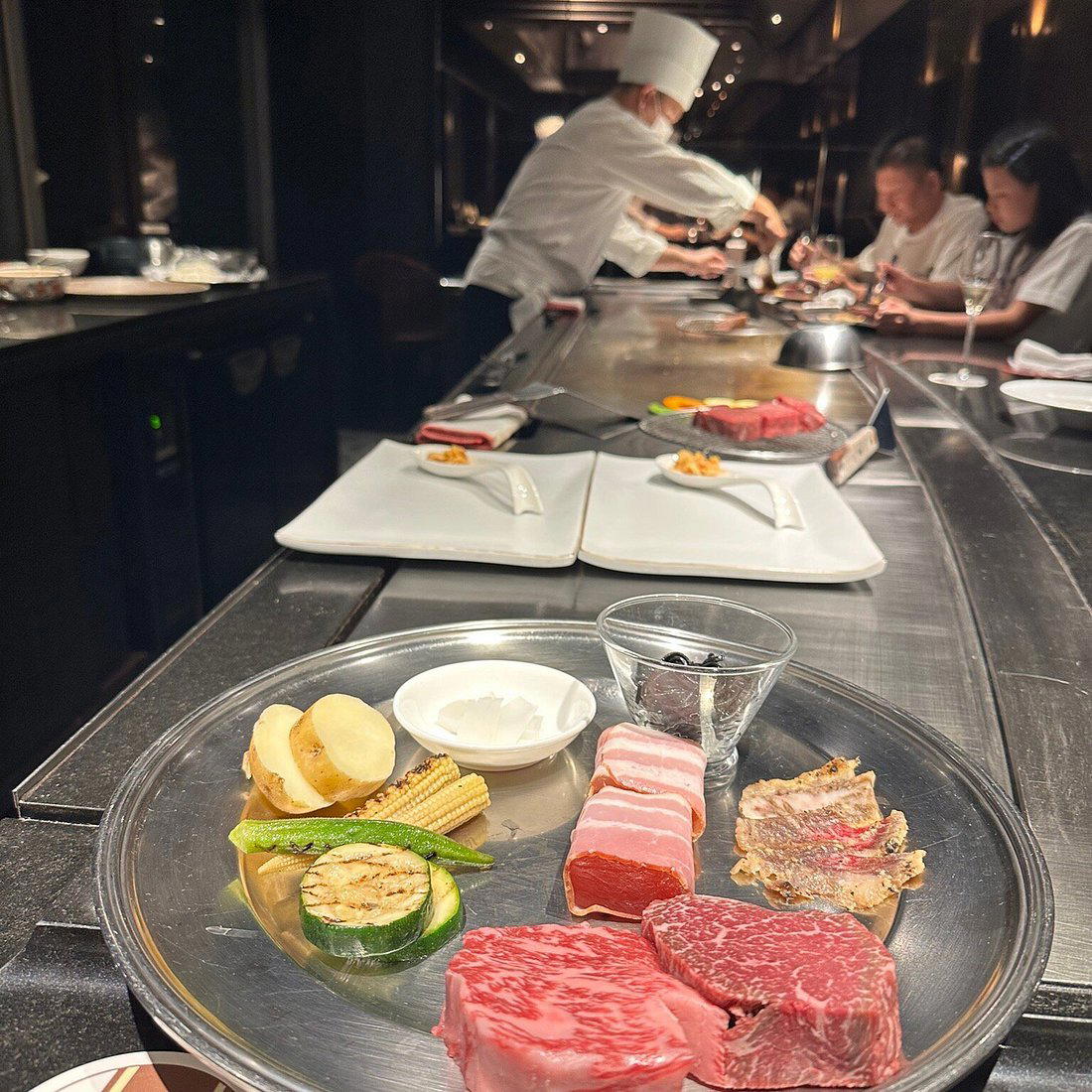
Kanazawa's dining reputation is built on restraint: the slow-cooked broths, the precision-cut raw fish, the kaiseki progression that asks guests to sit quietly as season and technique unfold across a dozen courses. Venues like Dokkan and Amanatto Kawamura represent that quieter tradition. Teppanyaki, by contrast, is theatre conducted at high heat: the flat iron griddle, the smoke, the sear audible across the room. Teppanyaki Icho, located on the upper floors of a building in Honmachi, Kanazawa's central commercial corridor, operates inside that louder, more immediate register.
The Format and What It Means for the Evening
Teppanyaki as a dining structure places the cooking apparatus between chef and guest, making technique visible in a way that kaiseki or sushi counters rarely do. The griddle acts as both kitchen and stage. Guests watch cuts of meat and seafood move across zones of heat, monitoring the Maillard reaction in real time rather than inferring it from the finished plate. This format has particular relevance in a city like Kanazawa, where the Noto Peninsula and the Sea of Japan supply seafood of considerable quality: the same crabs, clams, and fish that appear in the city's kaiseki rooms also appear on the teppan, but subjected to radically different thermal logic.
The Honmachi address places Icho in a mixed-use urban block rather than in one of Kanazawa's more picturesque quarters. That positioning is typical of teppanyaki restaurants across Japan, which tend to occupy commercial buildings rather than converted machiya townhouses. The format doesn't require historical architecture; it requires a properly ventilated room and proximity to a guest base that wants something other than twelve courses of restrained elegance. For more on how Kanazawa's dining scene distributes across neighbourhoods and formats, see our full Kanazawa restaurants guide.
Planning the Visit: What the Booking Process Signals
The editorial angle that makes most sense for Teppanyaki Icho is a practical one, because the planning logistics around teppanyaki in Japan carry information that menus alone don't provide. At the serious end of the format — venues that source premium Wagyu cuts and seasonal seafood from named regional suppliers — bookings typically run one to four weeks ahead for walk-in reservation windows, and longer during peak seasons. Kanazawa's tourist calendar has two pronounced peaks: spring cherry blossom season (late March into April) and autumn leaf season (October into November). Anyone planning a visit during those windows should treat the booking timeline as a constraint to address early, not as an afterthought once flights are confirmed.
Japan's teppanyaki scene, unlike sushi omakase, rarely operates on the multi-month waitlists associated with counters like Harutaka in Tokyo. But the better teppanyaki rooms do fill, particularly on Friday and Saturday evenings and on the nights surrounding national holidays. The practical approach, for a venue with no English-language website confirmed in the available record, is to book through the hotel concierge if staying at a property with a Japanese-language liaison, or through one of the specialist reservation services that operate in Japan's secondary dining cities. Direct phone contact in Japanese remains the most reliable channel at restaurants in this tier.
The Honmachi 2-chome address is reachable on foot from Kanazawa Station in roughly fifteen to twenty minutes, or by the Kanazawa Loop Bus that connects the station to the central shopping and dining districts. The 29th floor designation in the building address suggests an refined room with city views, which would place the visual experience of the meal in a different register from street-level teppanyaki in Tokyo or Osaka venues like HAJIME.
Seasonal Timing and the Teppanyaki Calendar
Kanazawa's seasonal produce calendar shapes what appears across all of the city's restaurant formats, and teppanyaki is no exception. Winter brings kani (snow crab) from the Sea of Japan, which peaks between November and March and represents one of the more compelling reasons to visit Ishikawa Prefecture outside the tourist peaks. Spring introduces takenoko (bamboo shoots) and the first of the year's vegetable harvest from the Kaga plain. The teppan's high-heat approach interacts differently with these ingredients than a kaiseki preparation would: crab claws may be griddled rather than steamed, bamboo charred at the edges rather than simmered in dashi.
For a broader picture of how seasonal cooking logic plays out across Japan's regional cities, the kaiseki tradition at Gion Sasaki in Kyoto or the innovative approach at Goh in Fukuoka offer instructive contrasts to what the teppan format prioritises. Within Kanazawa's own competitive set, yakitori at Budoonomori Les Tonnelles represents another heat-forward alternative to the kaiseki default, while the approachable end of the city's dining spectrum includes Go! Go! Curry for those calibrating an evening itinerary across price points. See also Hakuichi for Kanazawa's gold-leaf craft tradition, which often intersects with premium dining presentations across the city.
Where Teppanyaki Sits in the City's Dining Hierarchy
Kanazawa's dining identity is kaiseki-forward, and the critical and tourist attention directed at venues in the Higashi Chaya district and the Kenrokuenmae area reinforces that framing. Teppanyaki occupies a different position: less internationally profiled, more local in its regular clientele, and structured around a different kind of occasion. Japanese business dining has long used teppanyaki rooms as a setting where conversation can flow against the backdrop of performance cooking, without the enforced quietude of a formal kaiseki progression.
That social function is worth noting for visitors who find kaiseki's pacing and silence more meditative than comfortable. Teppanyaki Icho's placement on an upper floor of a Honmachi building fits the business-occasion template that defines much of the format's Japanese clientele. Similar dynamics shape premium teppanyaki rooms in other regional cities, from Nanao on the Noto Peninsula to venues further afield like Sapporo and Takashima. For regional comparisons beyond Japan, akordu in Nara shows how international training feeds back into Japanese regional dining, while Atomix in New York City and Le Bernardin illustrate the broader premium dining tier against which Japan's counter formats are increasingly assessed internationally. Further reading on heat-forward Japanese cooking outside the major cities: Nishikawa Machi and Birdland in Sakai both work within the direct-fire tradition.
Practical Notes
Teppanyaki Icho is located at 2-chome 15-1 Honmachi, Kanazawa, Ishikawa Prefecture 920-0853, on the 29th floor of its building. No English-language website is confirmed in the current record; booking via a Japanese-speaking concierge or specialist reservation platform is the advised route for non-Japanese-speaking visitors. Plan the visit around Kanazawa's seasonal calendar: snow crab season (November through March) represents the highest-value window for the Sea of Japan seafood that defines the city's premium dining tier across all formats.
How Teppanyaki 「Icho」 Kanazawa compares with similar nearby venues.
| Venue | Cuisine | Price |
|---|---|---|
| Komatsu Yasuke | Sushi | Not listed |
| Suzume Kanazawa hyakubangai ten | Not listed | JPY 999 |
| Sushi-ya Kozakura | Not listed | JPY 20,000 - JPY 29,999 JPY 10,000 - JPY 14,999 |
Continue exploring
More in Kanazawa
Restaurants in Kanazawa
Browse all →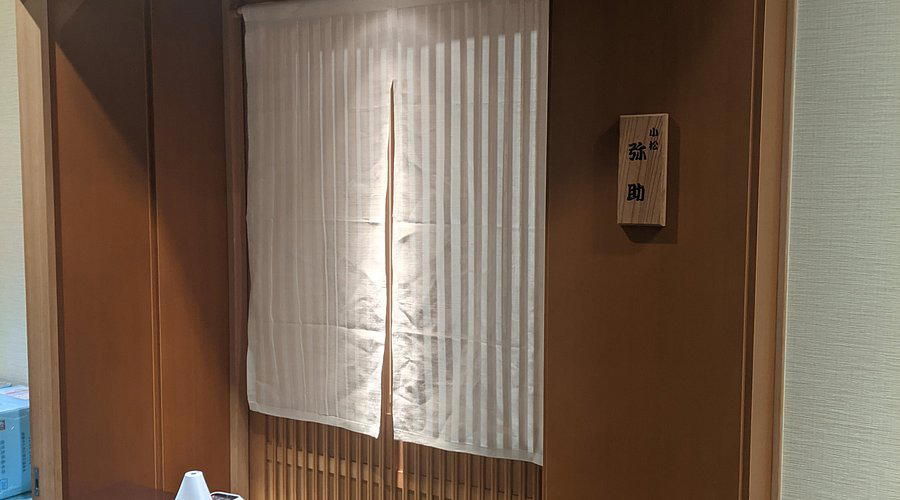
Bars in Kanazawa
Browse all →
Hotels in Kanazawa
Browse all →
Wineries in Kanazawa
Browse all →
At a Glance
- Elegant
- Sophisticated
- Scenic
- Special Occasion
- Business Dinner
- Date Night
- Chefs Counter
- Hotel Restaurant
- Panoramic View
- Sake Program
- Local Sourcing
- Skyline
- Street Scene
Current opening hours
- Monday
- 11:30 AM–2 PM, 5:30–9 PM
- Tuesday
- 11:30 AM–2 PM, 5:30–9 PM
- Wednesday
- 11:30 AM–2 PM, 5:30–9 PM
- Thursday
- 11:30 AM–2 PM, 5:30–9 PM
- Friday
- 11:30 AM–2 PM, 5:30–9 PM
- Saturday
- 11:30 AM–2 PM, 5:30–9 PM
- Sunday
- 11:30 AM–2 PM, 5:30–9 PM
Hours can change for holidays and private events. Last verified .
Sophisticated hotel atmosphere with dramatic night views of Kanazawa Castle and Kenrokuen Garden, illuminated by the glow of the teppanyaki grill.
Know Before You Go
- Getting there
- Japan, 〒920-0853 Ishikawa, Kanazawa, Honmachi, 2 Chome−15−1 ホテル日航金沢 29階