Go! Go! Curry occupies a counter in Kanazawa's Hyakubangai Anto station complex, making it the city's most accessible entry point to Kanazawa-style curry. The chain originated in Kanazawa before expanding nationally, and this location keeps the format direct: thick, dark curry sauce ladled over rice, eaten fast, eaten standing or perched. It is the anti-kaiseki, and that is precisely its appeal.
Pearl is the En Primeur Club membership app — saves, bookings, and concierge access live there. Same editors, same standards.
- Address
- 木ノ新保町1-1 (金沢百番街あんと), 金沢市, 石川県, 920-0858
- Directions
- Get directions
 Saves & bookings on Pearl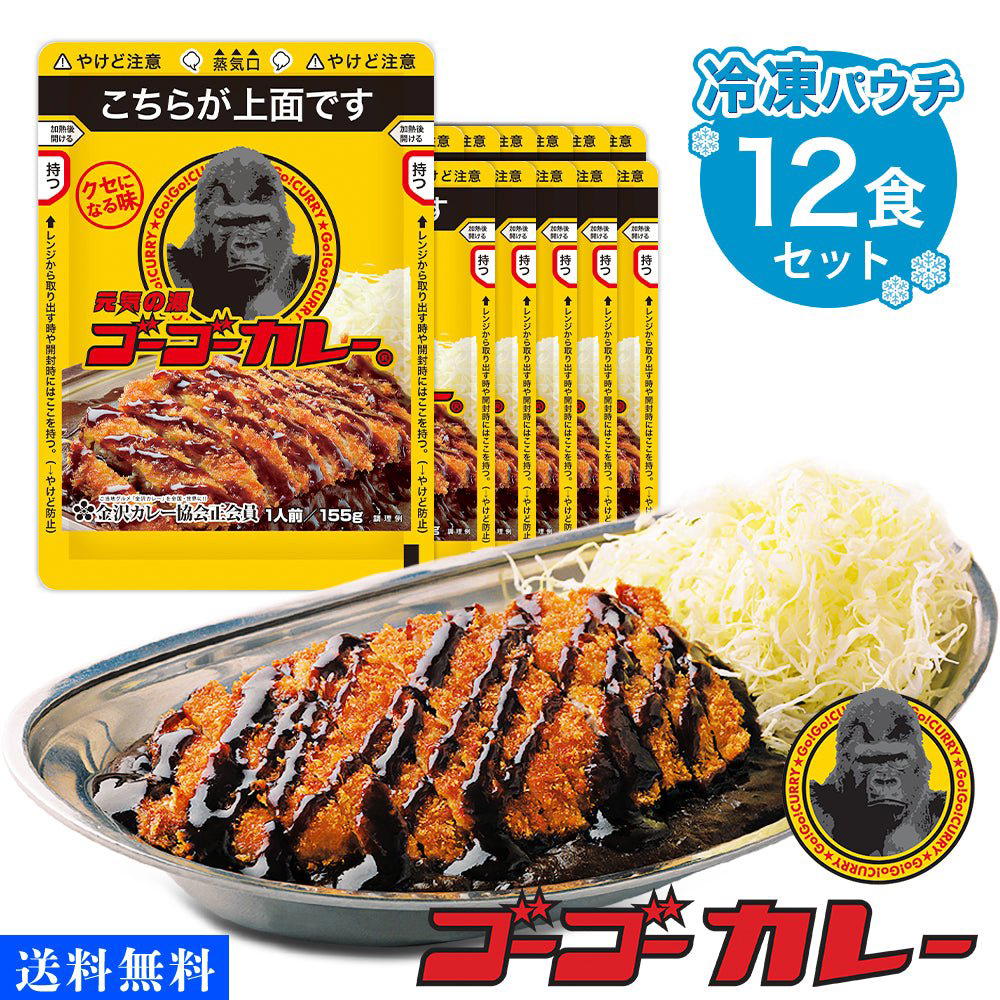
Station Food as Cultural Shorthand
Kanazawa has built a considerable reputation on restraint and refinement. Its kaiseki counters, like those at Zeniya and Kataori, draw visitors who plan meals months in advance. Its yakitori specialists require local knowledge to find. Against that backdrop, the curry stall inside the Hyakubangai Anto shopping complex beneath Kanazawa Station operates as a useful corrective: no reservations, no ceremony, no tasting notes. The appeal of Go! Go! Curry is precisely this compression of expectation. You are eating a regional chain's home-city product in its native transit context, and that context tells you something real about how Kanazawa residents actually eat.
Japanese curry culture splits broadly into two camps: the thin, mild family-style preparation found in home kitchens and school canteens, and the denser, slower-cooked house styles that regional chains have built followings around. Go! Go! Curry belongs firmly to the second category. The Kanazawa curry style it represents is darker and thicker than Tokyo or Osaka equivalents, with a longer reduction and a more pronounced, slightly bitter edge. The chain was founded in Kanazawa before expanding to other Japanese cities and, notably, to locations in New York, which placed it in a different competitive conversation entirely — closer in ambition to what Le Bernardin represents for French technique than to a casual ramen shop, though the price point and format are nothing alike. The point is that regional Japanese food finds international audiences when its character is specific enough. Kanazawa curry is specific.
What the Format Communicates
The Anto location sits in the station's food hall wing, which is designed for transit eating: fast turnover, clear sight lines, no ambiguity about what is being served. This is deliberate. Go! Go! Curry's model depends on immediacy. The menu is short by design, organised around size variations and topping combinations rather than any attempt to broaden into adjacents like ramen or donburi. That narrowness is a signal of confidence in the core product rather than a limitation. Chains that expand their menus too quickly tend to dilute the thing that made them worth eating in the first place. The restricted format here aligns Go! Go! Curry with a pattern visible in other high-commitment Japanese food cultures: the tonkatsu shop that does one cut, the soba house that closes when the dough runs out.
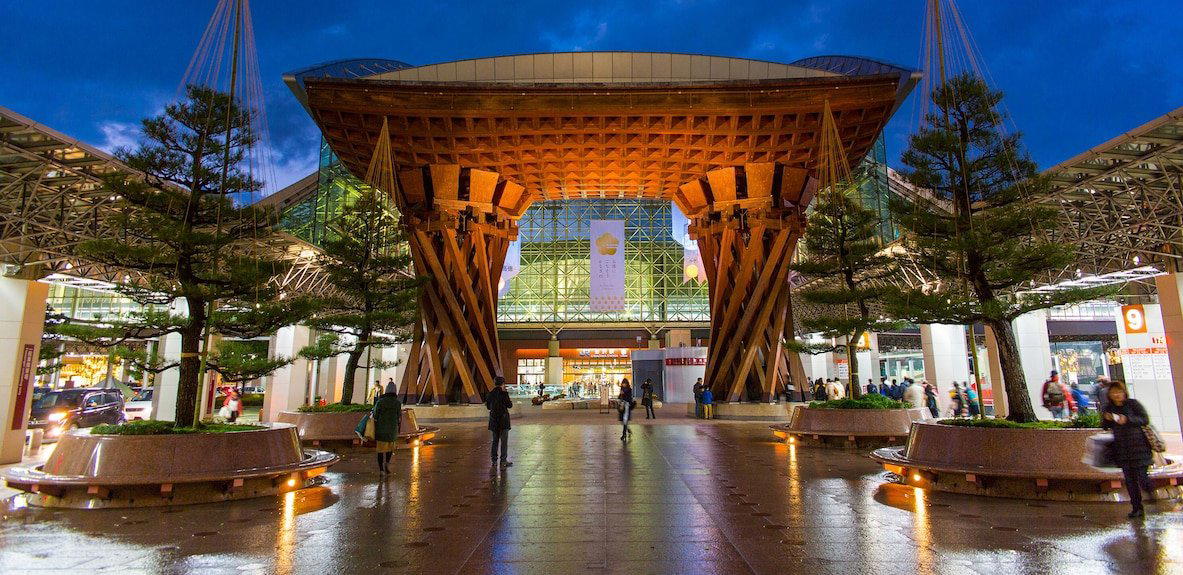
For visitors arriving at Kanazawa Station before moving on to the city's central districts, the Anto complex is the first food decision. The hall includes vendors covering a range of formats, from bento and confectionery to hot counters. Go! Go! Curry occupies a position within that mix that functions less as a destination and more as a logical refuelling point. It is worth understanding in relation to where you are going next: if dinner is reserved at one of Kanazawa's kaiseki or innovative Spanish restaurants like Budoonomori Les Tonnelles, a midday curry at the station does not compete with that. It sets a different register entirely.
Kanazawa's Broader Eating Spectrum
The city's culinary identity is often reduced to its premium tier: the gold leaf craft at Hakuichi, the wagashi tradition at Amanatto Kawamura, the seafood counter culture built on Noto Peninsula sourcing. Those elements are real and documented. But urban eating in any Japanese city operates across multiple price and format tiers simultaneously, and Kanazawa is no exception. The station curry shop and the twelve-seat kaiseki counter exist in the same city not despite each other but because of the same underlying food culture that prizes precision, repetition, and mastery at every price point.
Comparisons to other regional Japanese dining scenes are instructive. In Fukuoka, a bowl of ramen from a yatai stall carries cultural weight equivalent to a Michelin-recognised meal at a counter like Goh. In Kyoto, the teishoku lunch at a neighbourhood shop is understood as part of the same continuum that produces the formal kaiseki tradition at Gion Sasaki. Kanazawa operates similarly. Go! Go! Curry is not a footnote to the city's food reputation; it is part of how that reputation circulates through daily life.
The Editorial Case for Curry in a Kaiseki City
There is a tendency in travel writing to treat cities like Kanazawa as exclusively premium propositions, places where every meal should be an investment in tradition and refinement. That framing leaves out the texture of how cities actually function. The same visitor who books well in advance for a counter omakase in Tokyo, perhaps at a venue like Harutaka, or plans carefully around a Michelin-recognised itinerary in Nara at akordu, will also eat quickly on travel days without ceremony. Designing that quick meal around a regional product rather than an airport-generic option is a small but real editorial choice.
Go! Go! Curry at Kanazawa Station makes that choice easy. The address, 木ノ新保町1-1 within the Hyakubangai Anto complex, puts it directly within the station infrastructure. There is no meaningful walk involved, no neighbourhood to interpret, no booking to manage. For travellers passing through Kanazawa rather than staying, it is a functional and appropriate way to eat something local without consuming an evening. For those building out a longer Kanazawa itinerary, our full Kanazawa restaurants guide covers the range from format-casual to formally booked kaiseki.
Japan's regional curry culture is not, it should be said, a minor phenomenon. Cities including Osaka, Sapporo, and Kanazawa have each developed house styles with loyal followings that persist independently of any national trend cycle. The dark sauce model associated with Kanazawa curry draws on a different spice balance than the sweeter Osaka variants or the soup-curry format dominant in Hokkaido. Visitors who have eaten their way through informal counters at restaurants like Dokkan or worked through regional menus in other cities will find the comparative exercise here genuinely useful. Go! Go! Curry is not the only place to eat Kanazawa-style curry, but it is the most accessible entry point in the city, and its station location means the barrier to trying it is close to zero.
Planning Around It
The Hyakubangai Anto complex operates on station hours, which typically means early morning through late evening coverage suited to transit patterns. No reservation is required or possible; the format is walk-in. Pricing sits at the lower end of Japanese casual dining, consistent with a chain curry operation. For travellers who plan mornings around arrivals and evenings around dinner reservations, the midday slot at Anto fills itself logically. Visitors planning a more structured regional eating itinerary might also consider how Kanazawa compares to other mid-sized Japanese cities as a food destination — for reference points further afield, affetto akita in Akita and Aji Arai in Oita both illustrate how regional cities outside the Tokyo-Osaka-Kyoto axis sustain serious food cultures at multiple tiers. Kanazawa belongs to that same pattern, and the curry stall at its central station is, in its own limited way, evidence of it.
Comparison Snapshot
| Venue | Cuisine | Price |
|---|---|---|
| Go! Go! Curry (ゴーゴーカレー)This venue — the venue you are viewing | This venue | Not listed |
| Kataori | Kaiseki | Kaiseki |
| Respiracion | Innovative Spanish | Innovative Spanish |
| Zeniya | Kaiseki | Kaiseki |
| Sushi Kibatani | Chinese | Chinese |
| Hamagurizaka Maekawa | Yakitori | Yakitori |
Continue exploring
More in Kanazawa
Restaurants in Kanazawa
Browse all →
Bars in Kanazawa
Browse all →
Hotels in Kanazawa
Browse all →
Wineries in Kanazawa
Browse all →
At a Glance
- Lively
- Energetic
- Well Known
- Solo
- Casual Hangout
- Family
- Standalone
- Sake Program
Lively and utilitarian, with a quick counter-service station-complex feel suited to fast meals rather than lingering.
Know Before You Go
- Getting there
- 木ノ新保町1-1 (金沢百番街あんと), 金沢市, 石川県, 920-0858