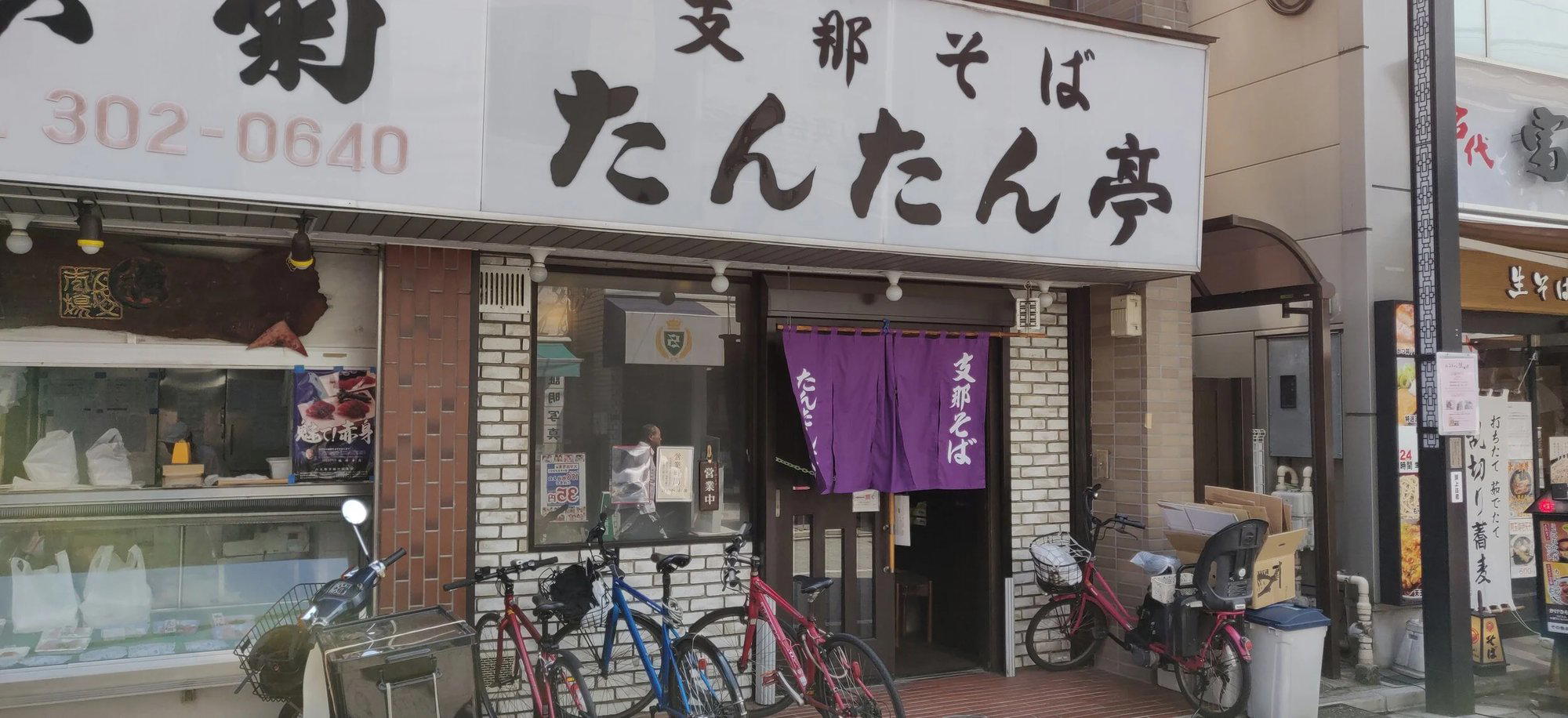
Tantantei occupies a specific position in Tokyo's dense fine-dining tier, where reputation is built through consistency and evolution rather than novelty. Positioned alongside the city's serious kaiseki and omakase counters, it draws a clientele that tracks culinary progression over multiple visits. For context on how it sits within the broader scene, see EP Club's full Tokyo restaurants guide.

Pearl is the En Primeur Club membership app — saves, bookings, and concierge access live there. Same editors, same standards.
Tokyo's Fine-Dining Middle Ground and Where Tantantei Sits
Tokyo operates among the more stratified restaurant markets on earth. At the leading sit the three-Michelin-star counters with multi-year wait lists and price points that exceed most European fine dining. Below that tier, a dense and competitive bracket of one- and two-star addresses competes for a clientele that reads reviews carefully, books months in advance, and returns repeatedly to the same rooms. It is in this second tier that reputation is built slowly, through accumulation rather than spectacle, and where the question of how a venue has evolved over time matters as much as what it serves tonight. Tantantei is a Tokyo restaurant serving Old-School Chuka Soba, priced at about $15 per person and set at a casual dress code.
The city's fine-dining scene has shifted considerably over the past decade. Japanese cuisine's internal categories, kaiseki, omakase sushi, and contemporary tasting menus, have each undergone revision. Kaiseki has moved from almost exclusively traditional formats toward rooms that fold in French technique or seasonal produce sourced through non-conventional channels. Sushi counters, once dominated by the Edo-mae orthodoxy of the Ginza district, now span a much wider range of regional interpretations. Meanwhile, a cohort of Tokyo restaurants that sit outside clean category definitions have developed their own loyal followings, attracting diners who are less interested in genre purity and more interested in what a kitchen is actually doing with its materials. Tantantei operates in this less easily classified space.
The Shape of Reinvention in Tokyo Dining
Restaurants that endure in Tokyo's upper tier tend to share one characteristic: they revise without abandoning what earned them their initial audience. The ones that pivot too sharply lose the repeat visitors who built their reservation books. Those that do not pivot at all gradually cede relevance to newer addresses. The path between these two outcomes is narrow, and the kitchens that walk it successfully attract a specific kind of attention from the city's serious dining community.
This pattern is visible across Tokyo's top tier. RyuGin, Seiji Yamamoto's kaiseki address, has maintained its three-Michelin-star standing while evolving its interpretation of seasonal Japanese technique over years of operation. L'Effervescence built its French-in-Tokyo identity through a sustained commitment to domestic produce sourcing that deepened rather than changed direction. Sézanne, with Daniel Calvert's kitchen holding two Michelin stars, represents a newer model of Western fine dining in Tokyo that positions itself through technical rigor rather than Japanese-French fusion. Each of these addresses offers a reference point for understanding how Tokyo's upper dining tier operates, and how evolution within that tier is measured.
Tantantei sits within this competitive context. A number of the city's most serious dining addresses deliberately maintain low digital footprints, relying on word-of-mouth recommendation and repeat clientele rather than search visibility. This is a pattern more common in Tokyo than in most other major dining cities, and it tends to correlate with rooms where the experience is designed for an audience that already knows what it is looking for.
Placing Tantantei in the Tokyo comparable set
For a frame of reference, the ¥¥¥¥ tier in Tokyo, where addresses like Harutaka in the sushi category and Crony in the contemporary French-influenced space operate, represents a price band where per-person spend typically moves well above ¥30,000 for a full tasting experience, often higher when beverage pairings are included. At this level, the competitive set is not defined by cuisine category alone. Diners choosing between an omakase counter, a kaiseki room, and a contemporary tasting menu are often making decisions based on prior visits, chef lineage, and the type of evening they want rather than a strict genre preference.
Japan's broader fine-dining geography offers useful context here. HAJIME in Osaka and Gion Sasaki in Kyoto each demonstrate how Japan's regional fine-dining addresses have developed distinct identities relative to the Tokyo market. Outside the major cities, places like akordu in Nara and Goh in Fukuoka show that Japan's serious dining network extends well beyond the capital's gravitational pull. Understanding Tantantei means placing it inside this national context as well as the Tokyo-specific one.
Further afield, international comparisons point toward how Tokyo addresses compare with their global counterparts. Le Bernardin in New York City offers a reference for how sustained reputation is built over decades in a high-competition market. Atomix in New York City, with its Korean fine-dining framework and two Michelin stars, illustrates how a non-Western culinary tradition can be positioned within the global tasting-menu format. Tokyo's upper-tier restaurants, Tantantei among them, operate inside a version of this same conversation at a city that continues to hold more Michelin stars than any other in the world.
What the Evolution Model Means for Visitors
The practical implication of a restaurant that evolves carefully over time is that first-time visitors and repeat diners have different experiences of the same room. For someone arriving with no prior context, the current format is simply what the restaurant is. For a repeat visitor who tracked the address through an earlier period, the current iteration carries the weight of that history. Tokyo's most serious dining rooms reward both relationships, but they tend to be designed with the latter in mind.
Visitors to Tokyo who are building a serious dining itinerary across multiple nights would do well to consider how addresses at this level fit into a broader sequence. Combining Tantantei with contrasting formats, a counter-service omakase at Harutaka, a kaiseki evening at RyuGin, or the contemporary French approach at L'Effervescence, produces a more useful read of the city's dining range than any single address can offer alone. Japan's regional addresses beyond the capital, including restaurants in Nanao, Sapporo, Takashima, and Nishikawa Machi, round out a picture of how Japanese fine dining operates at varying distances from the capital's density. Addresses like Birdland in Sakai and Bistro Ange in Toyohashi extend this map further into Japan's mid-city dining scene.
Just the Basics
Comparable venues nearby, for context on price, style, and recognition.
| Venue | Cuisine | Price | Notes |
|---|---|---|---|
| TantanteiThis venue — the venue you are viewing | Hamadayama, Old-School Chuka Soba | $$ | Not listed |
| AFURI Harajuku | Shibuya, Yuzu Ramen | $$ | Not listed |
| Sake to Misonikomi Misonikomin | Not listed | $$ | Bunkyō, Japanese Udon / Miso Nikomi |
| Mendokoro Kinari | Nakano, Modern Shoyu Ramen | $$ | Not listed |
| Hikiniku to Kome Shibuya | Not listed | $$ | Shibuya, Hamburger steak set menu (Japanese-style) |
| 甚六 | Shibuya, Shinjuku Private Room Izakaya | Not listed | Not listed |






At a Glance
- Classic
- Cozy
- Casual Hangout
- Beer Program
Historic, small counter-only space evoking ramen pioneer atmosphere.