Our verdict
Located in Shirokane, one of Tokyo's quieter residential districts, Roku sits in a part of the city where serious dining operates at a remove from Ginza's spectacle. The address places it within the Minato ward's upper-tier dining tier, where format discipline and neighbourhood atmosphere shape the experience as much as what arrives on the plate.

Pearl is the En Primeur Club membership app — saves, bookings, and concierge access live there. Same editors, same standards.
- Address
- Japan, 〒108-0072 Tokyo, Minato City, Shirokane, 6 Chome−23−3 WATOREI白金 1F
- Phone
- +81 3-3441-1436
- Website
- jinroku.jp
- Directions
- Get directions
- Booking
- Book on OpenTable
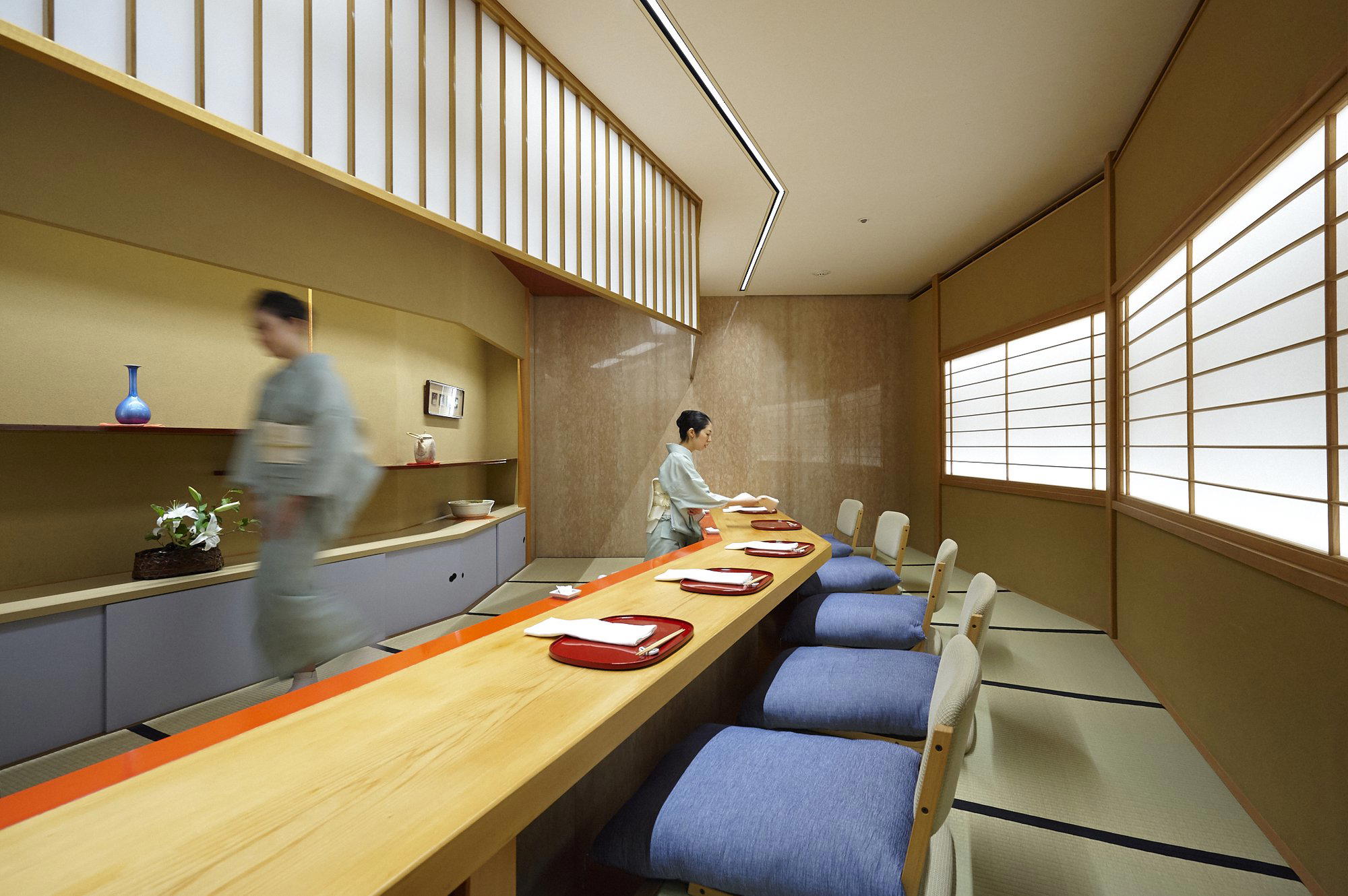
Shirokane and the Case for Quiet Dining
Tokyo's most discussed restaurants tend to cluster in Ginza, Roppongi, and Shinjuku, where foot traffic and visibility serve as proxies for relevance. Shirokane operates on different logic. The neighbourhood, in the southern reaches of Minato ward, is residential in character, low in tourist density, and home to a dining scene that earns attention through repeat visits rather than social-media saturation. Roku sits within that quieter register — a venue whose address in the WATOREI building on Shirokane 6-chome signals a deliberate distance from the city's high-visibility dining corridors.
In a city as segmented as Tokyo, neighbourhood placement is not incidental. Shirokane's dining rooms tend to attract a local, largely Japanese clientele rather than the international visitor traffic that fills the counters of Ginza's prestige-tier omakase houses. That composition shapes atmosphere as much as design does. Rooms feel less performative. Service cadence adjusts to regulars rather than first-timers. The experience, in culinary terms, is pitched at people who already understand the format. For visitors willing to cross into a residential district, that trade — less theatre, more substance, is generally the better one.
What the Address Tells You About the Format
The Shirokane 6-chome location places Roku in a part of Tokyo that has quietly accumulated serious dining options without developing the density or brand recognition of the city's major food corridors. This is not where you come to browse options; you come because you have already decided. That intentionality is itself a cue about the kind of experience on offer. Venues in this tier of the city tend to run tighter formats, smaller capacities, and more fixed menus than their counterparts in high-footfall districts, where operational scale and table turnover become commercial requirements.
The comparison to Ginza's premium omakase tier is instructive. Venues like Harutaka operate at the high end of the sushi counter format, where Michelin recognition and lineage credentials are part of the offer. Shirokane venues generally sit at a slight angle to that framework: the credentials may be equivalent, but the context strips away some of the ceremony. The result is a different relationship between kitchen and table, one less mediated by the weight of the address.
Tokyo's Residential Dining Tier in Context
Japan's broader fine-dining geography is worth understanding before arriving. Outside Tokyo, the segmentation between high-visibility and neighbourhood-serious dining is even more pronounced. In Osaka, HAJIME operates as a formally credentialled destination with a very different urban texture around it than Ginza. In Kyoto, Gion Sasaki sits within a neighbourhood framework where the room's context is inseparable from the cuisine. In Nara, akordu operates in a city that receives serious diners specifically because of its remove from Tokyo's density. The pattern across Japan is consistent: some of the most considered dining happens at a distance from the obvious nodes.
Tokyo itself contains multiples of this pattern. The city's residential dining scene, from Hiroo to Yoyogi-Uehara to Shirokane, hosts venues that rarely appear in international press cycles but maintain full rooms through local word-of-mouth and specialist recommendation. Roku operates within that distribution. It is not a venue that announces itself loudly, which in Tokyo is frequently a signal worth paying attention to rather than a reason to look elsewhere.
The Sensory Register of a Shirokane Room
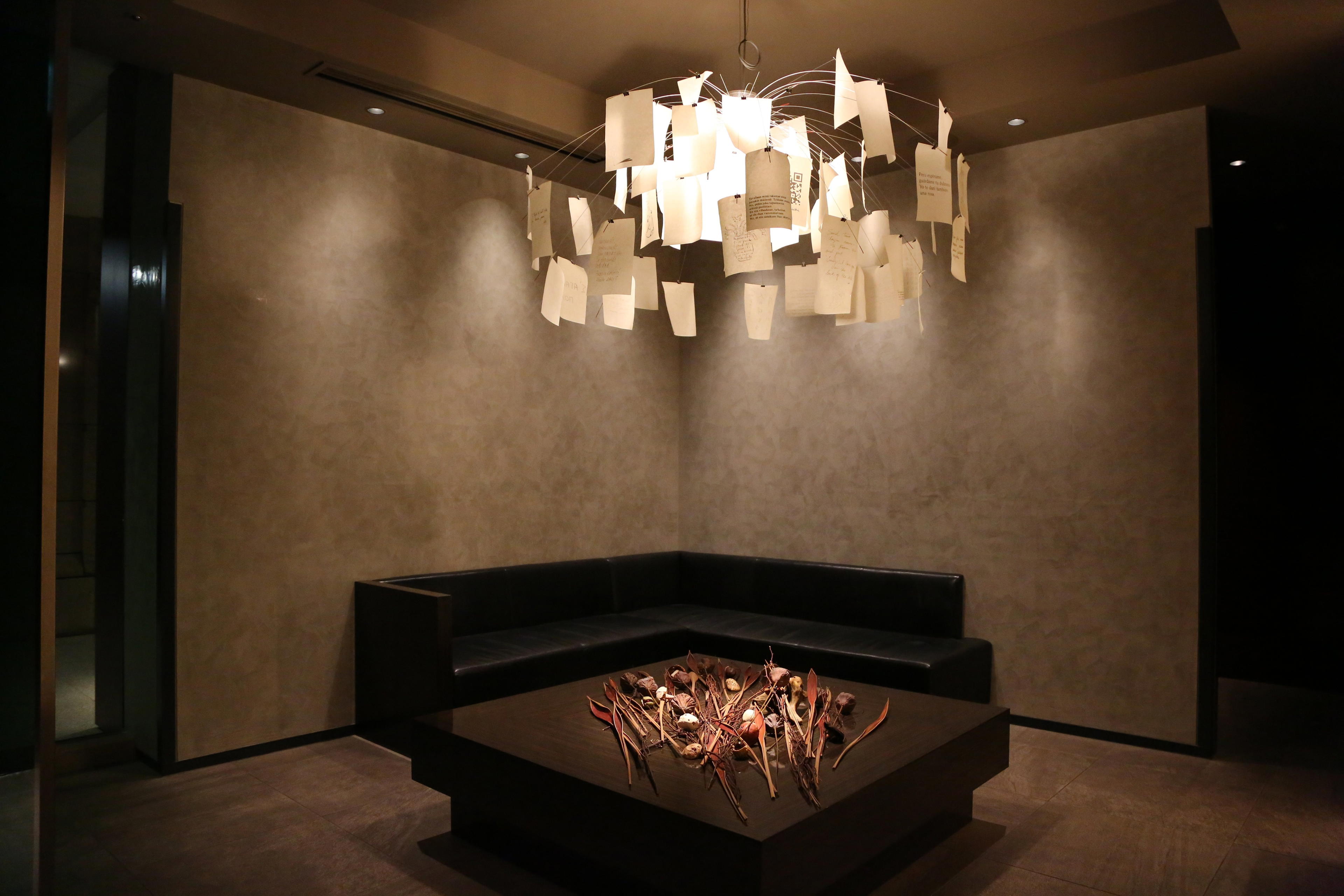
In neighbourhood dining contexts like Shirokane, the sensory environment is shaped partly by what is absent. There is no street-level spectacle on the approach: no queues, no signage designed for pedestrian discovery, no doorman visible from the pavement. The building address, the floor designation, and the WATOREI complex format suggest a room reached by intention rather than encounter. That entry experience carries forward into the atmosphere inside: quieter, more focused, lit for conversation rather than documentation.
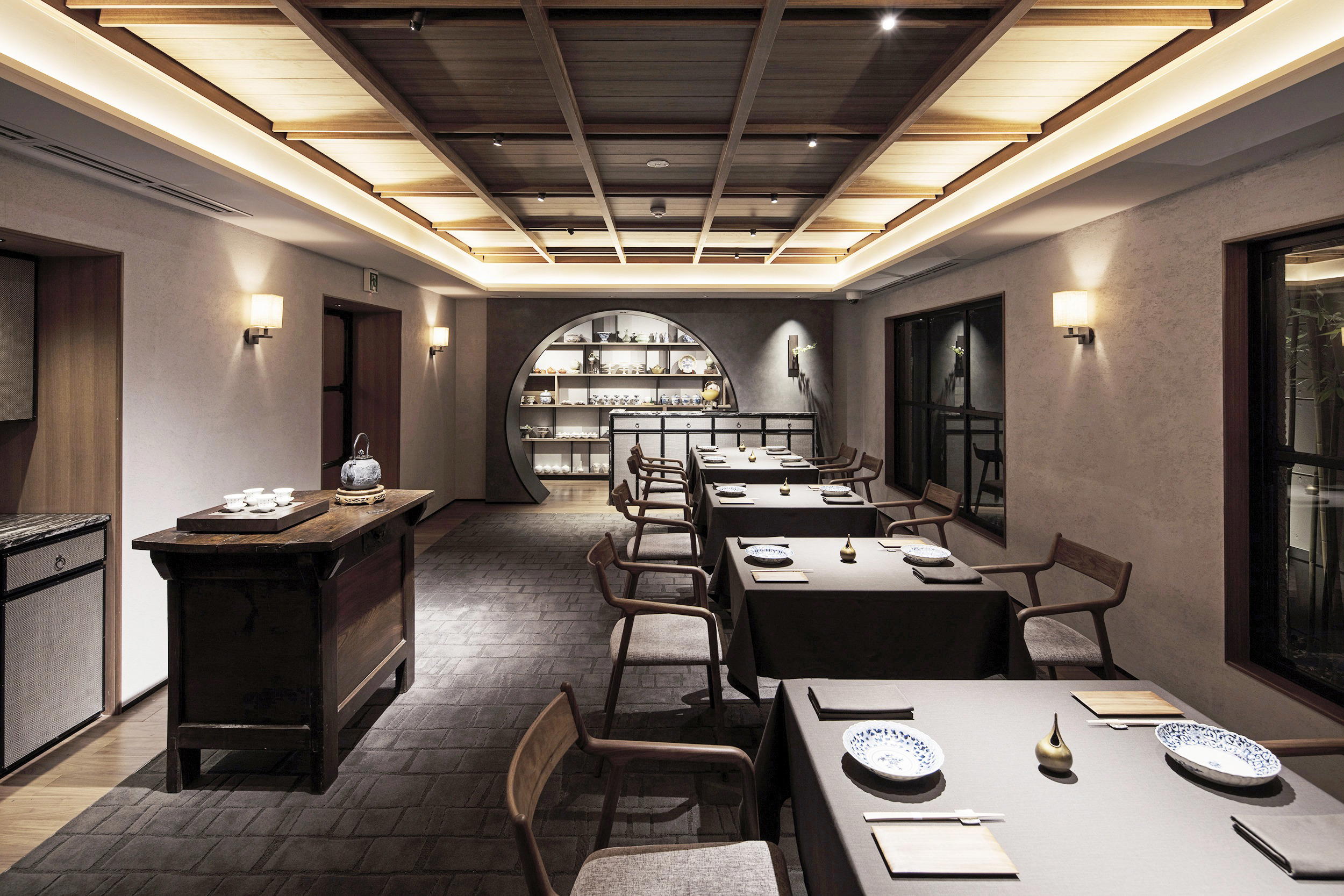
Japanese fine dining rooms in this register tend to prioritise acoustic calm and material restraint over visual drama. The contrast with Tokyo's larger, more theatrical venues, kaiseki rooms like RyuGin, or French-influenced kitchens like L'Effervescence and Sézanne, is deliberate rather than accidental. The latter venues carry Michelin weight and design investment that is itself part of the experience. Neighbourhood venues in Shirokane tend to redirect that investment toward the kitchen and the service relationship rather than the room's theatrical presence.
That pattern holds across Japan's serious dining scene beyond Tokyo. In Fukuoka, Goh operates with a precision that requires no particularly dramatic setting. In Ashiya, Abon functions within a suburban register that prioritises product and technique. In Sapporo, Aki Nagao draws serious diners to a city not typically associated with haute cuisine. Roku's Shirokane placement fits that national pattern: the room earns its attention through what happens inside it, not through the weight of its address.
Placing Roku in Tokyo's Broader Scene
Tokyo's fine-dining scene has split, over the past decade, between a prestige tier where Michelin stars, international press coverage, and high price points converge, and a specialist tier where format, consistency, and local reputation carry more operational weight than global recognition. Crony, with its Franco-Japanese positioning, represents one version of the specialist tier. The more introverted, neighbourhood-anchored format is another. Roku occupies the latter position.
For diners constructing a Tokyo itinerary around this distinction, the practical implication is that Shirokane venues require more research and more direct booking effort than their Ginza counterparts, where international booking platforms and English-language support are standard infrastructure. The effort is the point, in the same way that visiting affetto akita in Akita, Aji Arai in Oita, or Ajidocoro in Yubari District requires a deliberate detour. The venues that reward the most effort are rarely the ones most visible to casual search. Tokyo's residential tier, and Roku within it, operates on that principle.
For a fuller view of Tokyo's dining range, from the prestige-counter tier to neighbourhood rooms like Roku, see our full Tokyo restaurants guide. Comparable international examples of this same neighbourhood-serious format can be found at Le Bernardin in New York City and Lazy Bear in San Francisco, both of which operate in specific neighbourhood or format tiers that reward diners who understand the context. The pattern is not uniquely Japanese, but Japan executes it with particular consistency, and Shirokane is one of the cleaner examples of that execution within Tokyo.
Also worth considering for those moving beyond the capital: Akakichi in Imabari represents the same principle applied to a city that appears on almost no international dining itinerary. The serious dining available at a remove from Japan's headline destinations is one of the country's least-documented assets.
Know Before You Go
- Location: Shirokane 6-chome, Minato City, Tokyo (WATOREI Building)
- Nearest district: Shirokane, southern Minato ward, residential, low tourist density
- Format signal: Building-address format suggests fixed-format dining; arrive knowing your reservation details
- Booking: Reservation details not publicly listed; direct contact or specialist concierge recommended
- Language: English-language support not confirmed; Japanese-speaking assistance advisable for booking
- Timing: Evening service typical for serious neighbourhood dining in this tier; lunch availability unconfirmed
- Getting there: Shirokane-Takanawa Station (Mita and Namboku lines) serves the area; taxi from central Tokyo is practical
Frequently asked questions
What do regulars order at Roku?
In Tokyo's serious neighbourhood-dining tier, fixed or semi-fixed menus are the standard format, meaning the kitchen's selection rather than individual ordering drives the experience.
Do I need a reservation for Roku?
For any venue operating in Tokyo's residential fine-dining tier, advance reservation is the operational baseline rather than a precaution. Shirokane venues of this format do not typically accommodate walk-ins, and capacity in rooms of this type is generally small.
What makes Roku worth seeking out?
The case for Roku is primarily contextual: it operates in a part of Tokyo where serious dining happens without the pressure of Ginza's visibility tier. The Shirokane address, the building format, and the absence of public-facing booking infrastructure all point toward a venue that functions on local reputation and repeat clientele rather than international press positioning. For diners who understand that distinction, the format itself is the credential.
How does Roku's Shirokane location compare to Tokyo's more central fine-dining addresses?
Shirokane sits roughly three kilometres from Ginza and operates at a significant remove from the infrastructure that supports international dining tourism in Tokyo's central districts. Venues in Ginza's prestige tier typically offer English-language booking, international platform listings, and service teams experienced with non-Japanese guests. Roku's location and available data suggest a more locally oriented operation, which means diners should plan for a more self-directed booking and navigation process. That self-direction is itself an accurate preview of the experience.
Side-by-Side Snapshot
Comparable venues nearby, for context on price, style, and recognition.
| Venue | Cuisine | Price | Awards | Notes |
|---|---|---|---|---|
| 甚六This venue — the venue you are viewing | Shinjuku Private Room Izakaya | Not listed | Not listed | Not listed |
| Nonokura | Handmade Ultra-High Hydration Ramen | Not listed | Not listed | Kameari |
| WAGYU BURGER HIROKIYA | Japanese Wagyu Burgers | $20–30 | Tabelog 100 #83 | Minato |
| 渋谷 鮨一喜 | Traditional Edomae Sushi Omakase | $150–200 | Not listed | Shibuya |
| Hishida-ya Sakaba | Chinese-influenced Izakaya with Fresh Tuna | $30–50 | Tabelog 100 #79 | Meguro |
| Yakitori Ogawa | Yakitori | $50–100 | Tabelog 100 #41 | Shinjuku |










Details
- Family
- Private Dining
- Small Plates